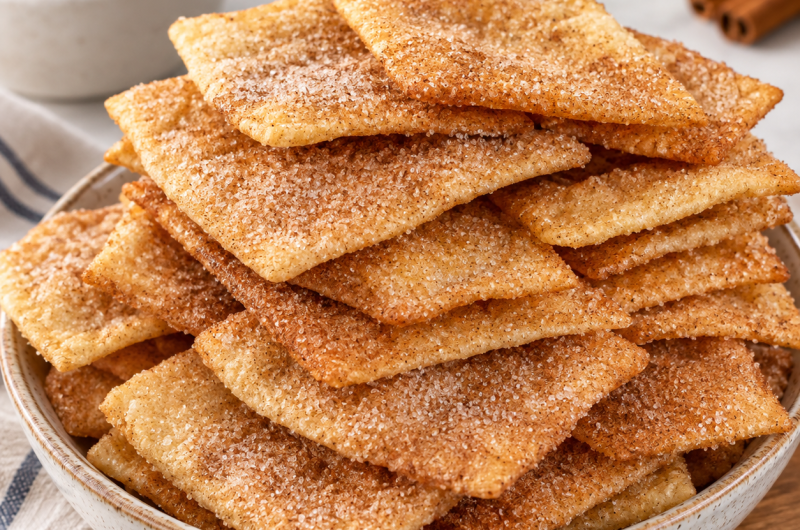
Sourdough Discard Cinnamon Sugar Crisps are a simple baked treat that turns leftover sourdough starter into something crisp, sweet, buttery, and lightly tangy. Instead of throwing away unused discard, you can combine it with everyday baking ingredients to make thin pieces of dough that bake into crunchy cinnamon-sugar snacks. The combination of sourdough discard, all-purpose flour, sugar, cinnamon, salt, and melted butter creates a surprisingly flavorful result with very little preparation. These homemade crisps are especially useful when you want a quick sourdough discard recipe without waiting for fermentation or preparing a complicated loaf. They can be served as a light dessert, afternoon snack, coffee-time treat, or crunchy topping alongside other sweet foods.
Why These Sourdough Discard Crisps Are Worth Making
There is something particularly satisfying about a recipe that uses an ingredient that might otherwise be discarded. Sourdough discard cinnamon crisps are an excellent example because they require only a handful of basic ingredients and a short baking time. The discard contributes a subtle fermented tang that balances the sweetness of the cinnamon sugar, while butter adds richness and helps the finished crisps develop a golden surface. Because the dough is rolled very thin, the pieces bake relatively quickly and become pleasantly crisp. This makes the recipe a practical choice for beginner sourdough bakers as well as experienced home cooks. If you regularly feed a sourdough starter, this recipe gives you another easy option for using discard beyond pancakes, crackers, muffins, and bread.
What Makes the Texture So Light and Crisp
The most important factor in achieving crisp cinnamon sugar snacks is the thickness of the dough. Unlike soft cookies or thick biscuits, these sourdough crisps are intentionally rolled to approximately one-eighth of an inch. A thin layer of dough allows moisture to escape efficiently during baking, leaving behind a crunchy texture. If the dough is rolled considerably thicker, the finished pieces may remain softer in the center and require additional baking. Keeping the thickness reasonably consistent also helps the crisps bake at the same rate. This is why rolling is one of the most important stages of the recipe. Take a little extra care to create an even sheet rather than having very thin edges and thick sections throughout the middle.
Understanding Sourdough Discard in This Recipe
Sourdough discard is the portion of starter that is removed before feeding an active sourdough culture. Although it is called discard, it still contains flour, water, and the flavor created by fermentation, which makes it useful in many recipes. In these cinnamon sugar crisps, the discard acts as a moist ingredient and contributes its characteristic mild tang. The recipe does not depend on the discard to make the crisps rise, so you do not need to wait for fermentation after mixing the dough. This is one reason the recipe can be completed in around 30 minutes. Depending on the age and condition of your discard, the flavor can range from very mild to more noticeably tangy, giving each batch a slightly different character.
The Role of Flour in the Dough
All-purpose flour provides the structure needed to create a dough that can be rolled thinly and transferred to a baking sheet. When combined with sourdough discard, it absorbs moisture and forms the basic framework of the crisps. It is important to avoid adding unnecessary flour while rolling because excessive flour can make the dough drier and may interfere with the finished texture. A lightly floured surface is enough to prevent sticking in most cases. The dough should come together without requiring extensive kneading. Since this is a crisp snack rather than a chewy bread, there is no need to develop a strong gluten network. Gentle mixing and careful rolling are sufficient to prepare the dough for baking.
How Cinnamon Creates the Signature Flavor
Cinnamon is the ingredient that gives these sourdough discard crisps their familiar warm dessert flavor. When paired with sugar and butter, cinnamon becomes especially fragrant during baking. The original recipe uses one teaspoon of cinnamon in the dough and additional cinnamon and sugar for sprinkling, giving you flavor both inside the dough and on its surface. Because the crisps are thin, even a relatively small amount of cinnamon can be noticeable in every bite. For the most balanced result, distribute the cinnamon sugar as evenly as possible. A generous but controlled layer gives the baked crisps their attractive golden-brown appearance and sweet, aromatic finish without completely covering the tangy flavor of the sourdough discard.
Why Melted Butter Is Brushed Over the Dough
Melted butter serves several purposes in this recipe. First, it adds richness to the otherwise simple combination of flour and sourdough discard. Second, brushing the butter over the rolled dough gives the cinnamon sugar something to cling to. Without the butter, much of the sugar mixture could remain loose and fall away from the surface. The butter also contributes to browning during baking, helping the crisps develop a pleasant golden color and a more appealing toasted flavor. Use the specified amount rather than heavily coating the dough, since too much butter can make thin crisps greasy or interfere with their ability to become dry and crunchy. A light, even brushing is all that is needed.
Preparing the Dough Without Overworking It
The dough comes together by combining the sourdough discard, all-purpose flour, sugar, cinnamon, and a pinch of salt. These ingredients should be mixed until they form a workable dough. There is no need to knead the mixture for several minutes as you would with traditional sourdough bread. Excessive mixing can make the dough unnecessarily elastic, which may make it more difficult to roll thinly. Once the ingredients have come together, move directly toward rolling. If the dough feels slightly sticky, use a lightly floured work surface rather than adding a large amount of extra flour directly to the dough. The goal is a smooth, manageable dough that can be rolled into a thin sheet without becoming dry or tough.
Rolling the Dough Thin Enough for Maximum Crunch
Rolling the dough to about one-eighth of an inch is perhaps the most important practical step in this recipe. Place the dough on a lightly floured work surface and use a rolling pin to gradually flatten it. Work from the center outward, rotating the dough when necessary so that it remains reasonably even. If it begins sticking, a small amount of flour can be used on the surface or rolling pin. Avoid pressing so aggressively that the dough tears. An evenly thin sheet will produce crisps with a more consistent texture, while thicker sections may remain somewhat tender after the thinner portions have already browned. If you want particularly crisp sourdough crackers or dessert crisps, focus on achieving a uniformly thin layer from edge to edge.
Adding the Cinnamon Sugar Before Baking
Once the dough has been rolled, brush it with the melted butter and sprinkle it generously with the additional cinnamon and sugar. Try to cover the surface fairly evenly so that every finished piece receives some of the sweet topping. The butter helps the mixture adhere while also encouraging caramelization during baking. As the crisps heat in the oven, the sugar begins to melt and the cinnamon releases its aroma. The result is a thin, golden snack with a lightly crisp surface and a warm spiced flavor. You can use a spoon to distribute the cinnamon sugar or sprinkle it directly with your fingers for better control. Avoid creating extremely thick piles of sugar in individual areas because those sections can brown more quickly than the rest.
Cutting the Dough Into Individual Crisps
After the cinnamon sugar has been added, the dough can be divided into individual pieces using a knife or pizza cutter. Squares are especially practical because they are easy to cut and bake evenly, but the exact shape is not essential. You can also create rectangles, diamonds, or other simple shapes if desired. Try to keep the pieces reasonably similar in size so that they finish baking at approximately the same time. A pizza cutter can make quick, clean cuts across a large sheet, while a sharp knife provides more control for smaller pieces. There is no need to make every crisp perfectly identical. Their rustic appearance is part of their charm, especially when serving them as a casual homemade snack.
Getting the Oven Temperature Right
The oven should be preheated to 350°F (175°C) before the crisps are placed inside. Preheating matters because thin dough reacts quickly to heat. If the oven is not fully heated, the crisps may spend too much time warming before they begin to brown and dry properly. At the correct temperature, the butter melts, the sugar begins to caramelize, and moisture gradually leaves the dough. These processes work together to create the crisp texture the recipe is designed to produce. Lining the baking sheet with parchment paper also makes cleanup easier and helps prevent the sugar from sticking directly to the pan. Arrange the pieces in a single layer so they have enough room to bake evenly.
Baking Until Golden and Crisp
The stated baking time is 15 to 20 minutes, but the exact timing can vary depending on the thickness of the dough and the characteristics of your oven. Start checking toward the earlier end of the baking window, particularly if you have rolled the dough very thin. The edges should become golden and the surface should look dry rather than soft or wet. Keep in mind that the crisps may continue to firm up as they cool, so they do not necessarily need to become extremely dark in the oven. If some pieces are thinner than others, they may finish first. In that situation, remove the browned pieces and allow thicker sections to continue baking if necessary, rather than risking burning the entire batch.
Why Cooling Completely Improves the Texture
It can be tempting to eat these cinnamon sugar crisps immediately after removing them from the oven, but allowing them to cool completely is an important part of the process. While hot, the baked dough may still contain enough residual moisture to feel slightly flexible. As the crisps cool, that moisture continues to redistribute and escape, helping the texture become firmer and crunchier. Cooling also allows the cinnamon sugar coating to set. Transfer the crisps carefully if necessary, and give them enough time to reach room temperature before placing them in an airtight container. Storing them while warm can trap steam and cause condensation, which can soften the crisp texture you worked to achieve.
How to Keep Homemade Crisps Crunchy
Proper storage is essential for maintaining the texture of thin baked snacks. Once the sourdough cinnamon crisps are completely cool, place them in an airtight container. Moisture from the surrounding environment can gradually soften them, particularly in humid conditions. Keeping the container sealed helps protect the crisp texture for longer. If the crisps become softer after storage, they can be returned to a warm oven briefly to restore some of their crunch. Allow them to cool again before sealing them in the container. This simple method can make the recipe more practical for preparing ahead of time. It is also useful when you want to serve the crisps over several days rather than eating the entire batch immediately.
Easy Flavor Variations for Cinnamon Sugar Crisps
Although cinnamon and sugar provide the classic flavor combination, this basic sourdough discard recipe can be adapted with other warm spices and citrus flavors. The supplied notes suggest trying cardamom sugar or citrus zest, both of which can give the crisps a different character without changing the basic preparation method. Cardamom creates a fragrant, slightly floral spice profile that pairs beautifully with sugar, while citrus zest provides a fresh contrast to the fermented tang of the sourdough discard. These variations are best treated as optional ideas rather than changes to the original recipe. The original ingredient list remains simple and balanced, making it a good starting point for experimenting with flavors when you are comfortable with the basic technique.
Serving Ideas for a Sweet Sourdough Snack
These cinnamon sugar crisps can be served in several simple ways. They make an excellent accompaniment to coffee, tea, hot chocolate, or other warm beverages because their crunchy texture provides a pleasant contrast to a smooth drink. They can also be arranged on a dessert plate alongside fresh fruit or other small sweets. Because the pieces are thin and crisp, they are convenient for casual snacking and can be placed in a lunchbox or served as a light afternoon treat. Their cinnamon aroma also makes them particularly inviting during autumn and winter. You do not need a complicated presentation; a simple serving bowl or plate is enough to show off their golden color and sugar-coated surface.
Common Mistakes to Avoid When Making the Recipe
A few mistakes can affect the final texture of sourdough discard cinnamon crisps. The most common is rolling the dough too thick, which prevents it from becoming properly crisp during the stated baking time. Another issue is uneven thickness, which can lead to some pieces becoming dark while others remain soft. Adding excessive flour during rolling can also make the finished crisps dry rather than pleasantly crisp. It is equally important not to skip the cooling period because warm crisps can seem softer than they actually are. Finally, storing them before they are completely cool can trap moisture inside the container. Paying attention to these simple details will make the baking process more predictable and help produce a consistently crunchy snack.
Notes for Making Crisp, Evenly Baked Results
For the best results, focus on consistency rather than complicated techniques. Keep the dough thickness close to one-eighth of an inch, distribute the melted butter evenly, and sprinkle the cinnamon sugar across the surface rather than concentrating it in a few areas. Cut the pieces into similar sizes and arrange them in a single layer on the prepared baking sheet. If your oven has hot spots, rotate the baking sheet carefully during baking if needed. Watch the color near the end of the cooking time because sugar can move from golden to overly dark relatively quickly. If the crisps soften after storage, re-crisp them briefly in a warm oven. These practical adjustments can help maintain the light, crunchy texture that makes this recipe enjoyable.
Why This Is a Useful Sourdough Discard Recipe
Many sourdough bakers search for simple discard recipes because maintaining a starter can produce more unused starter than they want to throw away. This recipe provides a straightforward solution without requiring long fermentation, complicated shaping, or specialty ingredients. The combination of sourdough discard and flour creates the base, while sugar, cinnamon, butter, and salt transform it into a sweet snack. The short total preparation time also makes it suitable for busy days when you want to bake something homemade without committing to a lengthy recipe. Rather than treating sourdough discard as waste, recipes like these make it a useful part of everyday baking and add variety to the usual sourdough routine.