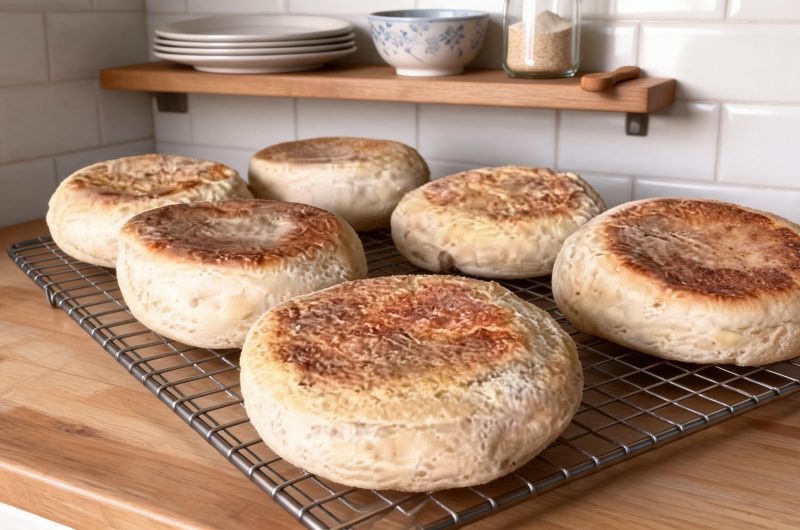
There is something deeply satisfying about making homemade English muffins from scratch, especially when they come out soft, fluffy, golden, and filled with those classic nooks and crannies. These Thermomix English muffins deliver a bakery-style texture using simple pantry staples and contain no preservatives or artificial additives. Once you experience the flavor and freshness of homemade muffins, store-bought versions often feel dry and bland in comparison.
If your family regularly buys packaged English muffins for breakfast, this easy Thermomix bread recipe can quickly become a household favorite. With minimal hands-on time and the help of the Thermomix kneading function, you can create thick, tender muffins that toast beautifully and hold up perfectly under butter, jam, eggs, or savory toppings.
Why Homemade English Muffins Are Worth the Effort
Making English muffins at home may sound like a big project, but the results are well worth it. First, you control every ingredient. There are no hidden stabilizers, preservatives, or artificial flavors. Second, the cost per muffin is significantly lower than supermarket versions, especially when baking in batches. Third, homemade muffins have a richer flavor and softer crumb, making them ideal for breakfast sandwiches or classic Eggs Benedict.
Batch baking also means you can freeze extras for later. Having freezer-friendly breakfast bread on hand saves time on busy mornings while still offering homemade quality.
What Makes These Muffins So Light and Fluffy
The secret to achieving fluffy English muffins lies in proper yeast activation, correct kneading, and allowing the dough to rise twice. Full-fat milk adds richness and moisture, while bread flour creates a strong gluten structure that supports height and texture. Keeping the dough thick during rolling ensures the muffins puff up during cooking rather than spreading flat.
The double-rise method is especially important. The first rise develops flavor and structure. The second rise enhances air pockets, helping create the classic interior texture English muffins are known for.
Ingredient Breakdown and Why Each One Matters
Each ingredient in this Thermomix English muffin recipe plays a specific role. Dried active yeast provides lift and structure. Full-fat milk contributes softness and flavor. Caster sugar feeds the yeast and encourages fermentation. Butter adds tenderness and improves crumb texture.
A large egg binds the dough and enhances structure. Bread flour is preferred for its higher protein content, though plain flour can be used if necessary. Sea salt strengthens gluten and balances flavor. Semolina prevents sticking and gives the muffins their traditional lightly textured exterior.
Step 1: Activating the Yeast
Begin by adding milk, yeast, and caster sugar to a clean Thermomix bowl. Gently heat to activate the yeast. Proper activation ensures reliable rising and fluffy texture. The mixture should appear slightly frothy, indicating the yeast is active.
Using warm—not hot—milk is essential. Excess heat can kill yeast, while insufficient warmth may slow fermentation.
Step 2: Forming the Dough
Add butter, egg, salt, and flour to the bowl. Mix until the dough comes together. The texture will feel slightly sticky, which is normal for enriched dough. Avoid adding extra flour at this stage, as the softness contributes to tenderness after cooking.
The Thermomix handles the mixing evenly, ensuring ingredients are well incorporated.
Step 3: Kneading for Structure
Use the kneading function to develop gluten properly. This step is crucial for forming a stable yet airy structure. Proper kneading strengthens the dough, allowing it to trap gas during rising.
The dough should remain soft but elastic. If it feels too dry, resist adding flour unless absolutely necessary.
Step 4: First Rise (Bulk Fermentation)
Transfer the dough to a lightly greased bowl or ThermoServer. Cover and place it in a warm, draft-free area. Allow it to rise for approximately one hour or until doubled in size.
Ideal proofing locations include inside a switched-off warm oven or near a sunny window. Avoid overheating, as excessive heat can damage yeast activity.
Step 5: Shaping the Muffins
Dust a clean surface with semolina. Turn out the risen dough and gently roll to about 2–3 cm thick. Thickness is important; rolling too thin prevents proper puffing during cooking.
Cut circles using a round cutter, approximately 9 cm wide. You should obtain around eight muffins. Place them on a semolina-dusted baking tray.
Step 6: Second Rise
Allow the shaped muffins to rest for about 20 minutes. During this time, they will puff slightly, preparing them for cooking. This second proof improves texture and helps create a soft interior.
Step 7: Cooking on the Stovetop
Unlike traditional oven-baked bread, English muffins are cooked in a frying pan or griddle. Heat a pan over medium heat and lightly sprinkle with semolina. Cook each muffin for 5–8 minutes per side until golden brown and fully cooked through.
The gentle heat allows the inside to cook without burning the outside. The finished muffins should feel firm yet soft.
Serving Suggestions
Once cooled, slice the muffins in half and toast before serving. Spread with butter and jam, top with scrambled eggs and bacon, or use as the base for avocado toast. They are also perfect for breakfast sandwiches or sweet toppings like peanut butter and honey.
Their versatility makes them suitable for breakfast, brunch, or even light dinners.
Storage and Freezing Instructions
Store English muffins in an airtight container at room temperature for up to three days. For longer storage, freeze them for up to three months. Slice before freezing for easy toasting straight from frozen.
Freezing ensures you always have homemade muffins available without daily baking.
Notes for Best Results
Use fresh yeast within date. Do not overheat milk when activating yeast. Keep dough thick when rolling. Allow both rises to complete fully. Cook over medium heat to prevent burning. These simple practices ensure consistent and fluffy results.
Nutritional Overview
Each muffin contains approximately 326 calories, 56 g carbohydrates, 11 g protein, 6 g fat, and 2 g fiber. Nutritional values may vary slightly depending on ingredient brands.
Making your own Thermomix English muffins transforms a simple breakfast staple into a fresh, flavorful experience. With careful preparation and proper rising, you can enjoy soft, golden muffins anytime.
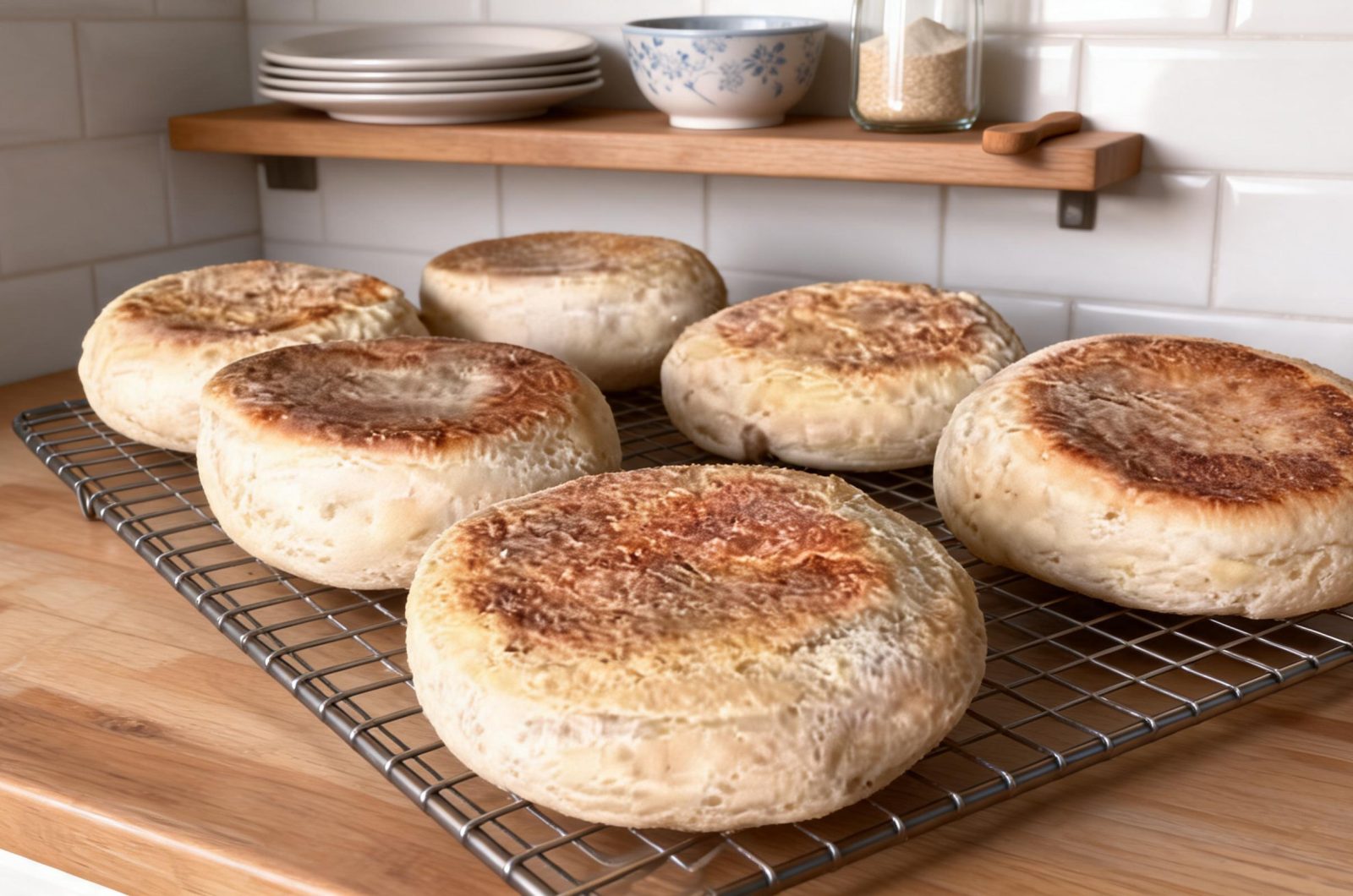
Fluffy Thermomix English Muffins
Our Thermomix English muffins are made from just a few basic ingredients, are so simple to make… and beat the store-bought versions every single time!
8
servings15
minutes15
minutes326
kcal80
1
hour50
minutesIngredients
2 teaspoons dried active yeast (or 30g fresh yeast)
300 g full-fat milk
30 g caster sugar
30 g butter, room temperature
1 large egg
Pinch of sea salt
540 g bread flour (or plain flour)
Semolina (or polenta) for dusting
Directions
- Place yeast, milk, and sugar into the Thermomix bowl. Heat for 2 minutes at 37°C on Speed 2.
- Add butter, egg, salt, and flour. Mix for 5 seconds on Speed 6.
- Scrape down sides and knead using Interval/Knead function for 2 minutes. (Dough will be sticky.)
- Transfer dough into a greased bowl or ThermoServer. Cover and let rise for 1 hour or until doubled in size.
- Sprinkle semolina onto a surface. Roll dough to 2–3 cm thick.
- Cut out 8 rounds using a 9 cm cutter.
- Place onto a semolina-dusted tray. Rest for 20 minutes.
- Heat frying pan over medium heat. Sprinkle with semolina.
- Cook muffins in batches for 5–8 minutes each side until golden.
- Cool completely. Store in airtight container up to 3 days or freeze up to 3 months.
- To serve, slice in half and toast.
Notes
- Recipe Notes
Dough should remain soft and slightly sticky.
Do not roll too thin — thickness ensures fluffiness.
Always toast before serving for best texture.
Freeze for convenient breakfast meal prep.
Nutrition Facts
- Serving Size: 16 g
- Total number of serves: 1
- Calories: 326kcal
- Fat: 6g
- Saturated Fat: 3g
- Cholesterol: 32mg
- Sodium: 54mg
- Potassium: 153mg
- Carbohydrates: 56g
- Fiber: 2g
- Sugar: 6g
- Protein: 11g
- Calcium: 56mg
- Iron: 1mg