Few appetizers deliver the same satisfaction as a perfectly crispy mozzarella stick with a center of hot, stretchy cheese, and this air fryer version manages to recreate that experience without a deep fryer or a pot of hot oil anywhere in sight. Built from just a handful of pantry staples, this recipe transforms ordinary string cheese into a golden, crunchy snack that comes together in a few straightforward steps. It is the kind of appetizer that works equally well for a casual night in, a game day spread, or a quick party bite that everyone reaches for first.
Why the Air Fryer Is the Right Tool for This Job
Deep frying mozzarella sticks traditionally requires heating a significant amount of oil, monitoring the temperature carefully, and dealing with the mess and cleanup that comes with frying at home. An air fryer sidesteps nearly all of that by circulating hot air rapidly around the food, producing a crispy, golden breading with only a light spray of oil rather than a full pot of it. This method not only simplifies the cooking process considerably but also results in a lighter final product, since the cheese sticks are not sitting in oil while they cook, yet the breading still achieves that satisfying crunch people expect from a fried appetizer.
Choosing the Right Cheese Sticks
String cheese, sold specifically as mozzarella cheese sticks, forms the foundation of this entire recipe, and its shape makes it particularly well suited to the breading and freezing process involved. Because each stick is cut in half before breading, this recipe yields sixteen smaller pieces from eight full sticks, giving you more individual portions to work with and share. The mild, meltable nature of mozzarella is exactly what creates that gooey, stretchy center once the sticks are cooked, contrasting beautifully with the crisp exterior that forms around it.
Building the Three-Station Breading Process
Setting Up the Flour Station
The first station in this breading process involves a shallow bowl of all-purpose flour mixed with kosher salt and black pepper. This initial flour coating serves an important purpose beyond simply adding flavor, since it gives the egg wash something to grip onto in the next step. Without this dry layer first, the egg mixture would have a much harder time adhering evenly to the smooth surface of the cheese, which could result in patchy breading once the sticks reach the panko stage.
Preparing the Egg Wash
The second station calls for whisking egg whites in a separate shallow dish until they reach a smooth, uniform consistency. This egg wash acts as the glue that holds the panko breading in place, and taking the time to whisk it thoroughly helps it coat each cheese stick evenly rather than leaving thick or uneven patches. Allowing any excess egg mixture to drip off before moving to the next station also helps prevent the breading from becoming overly clumpy or heavy in certain spots.
Creating a Flavorful Panko Coating
The final station combines panko breadcrumbs with garlic powder, dried oregano, and paprika, creating a seasoned coating that adds real flavor beyond what plain breadcrumbs alone would offer. Panko breadcrumbs are coarser and lighter than traditional breadcrumbs, which is part of why they crisp up so well in the air fryer, producing a texture with more crunch and less density. Mixing the seasonings directly into the breadcrumbs, rather than sprinkling them on separately, ensures every bite of the finished coating carries that same balanced, savory flavor.
The Double-Coating Technique
One detail that sets this recipe apart from simpler breaded appetizers is the double-coating process, where each cheese stick goes through the egg and panko stations not once but twice. After the first round of breading, the sticks are frozen for a period of time before being dipped back into the egg mixture and pressed into the panko crumbs a second time. This extra layer of breading is what helps create a thicker, sturdier crust capable of holding the cheese in during cooking, preventing the dreaded cheese leak that can happen with a single, thinner coating.
Why Freezing the Sticks Matters So Much
Freezing plays a critical role in this recipe, and skipping or shortening this step is one of the most common reasons homemade mozzarella sticks fall apart during cooking. The initial freezing period, lasting at least thirty minutes, firms up the first layer of breading enough to hold together through the second coating process without smearing or sliding off. After the second coating is applied, an additional thirty to sixty minutes in the freezer solidifies the cheese itself, which is essential for preventing it from melting out through any small gaps in the breading once the sticks hit the hot air of the fryer.
Getting the Air Fryer Ready
Preheating the air fryer for about five minutes at 390°F ensures the appliance has reached a consistent, high temperature before the mozzarella sticks go in, which helps the breading begin crisping immediately rather than slowly warming up alongside a cooler appliance. A light coating of olive oil spray on the basket itself, along with a light spray directly on the breaded sticks, is what gives the panko coating its final golden color and crisp texture, replicating the effect of frying without submerging anything in oil.
Arranging the Sticks for Even Cooking
Because proper air circulation is what makes an air fryer work, arranging the mozzarella sticks in a single layer with visible space between each one is an important step that should not be skipped. Overcrowding the basket blocks that circulation, which can result in uneven cooking, sticks that steam rather than crisp, or breading that never quite reaches that golden brown finish. Depending on the size of your air fryer basket, this recipe will likely need to be cooked in more than one batch to avoid overcrowding.
Watching for the Right Finish
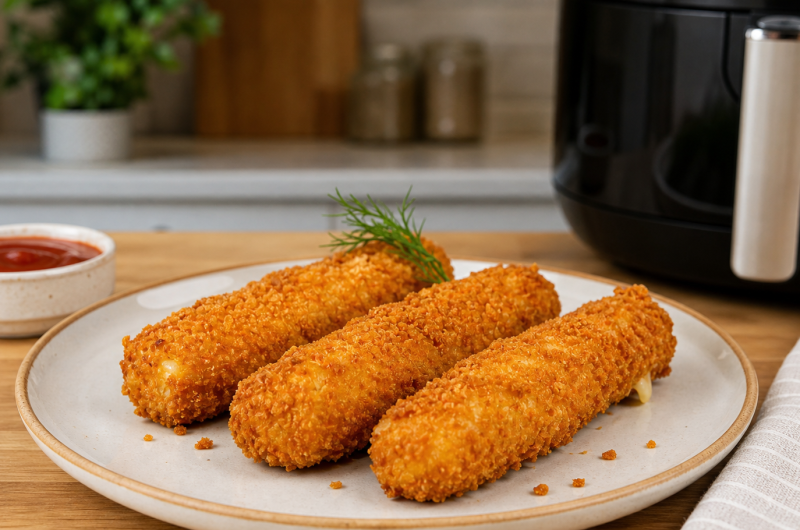
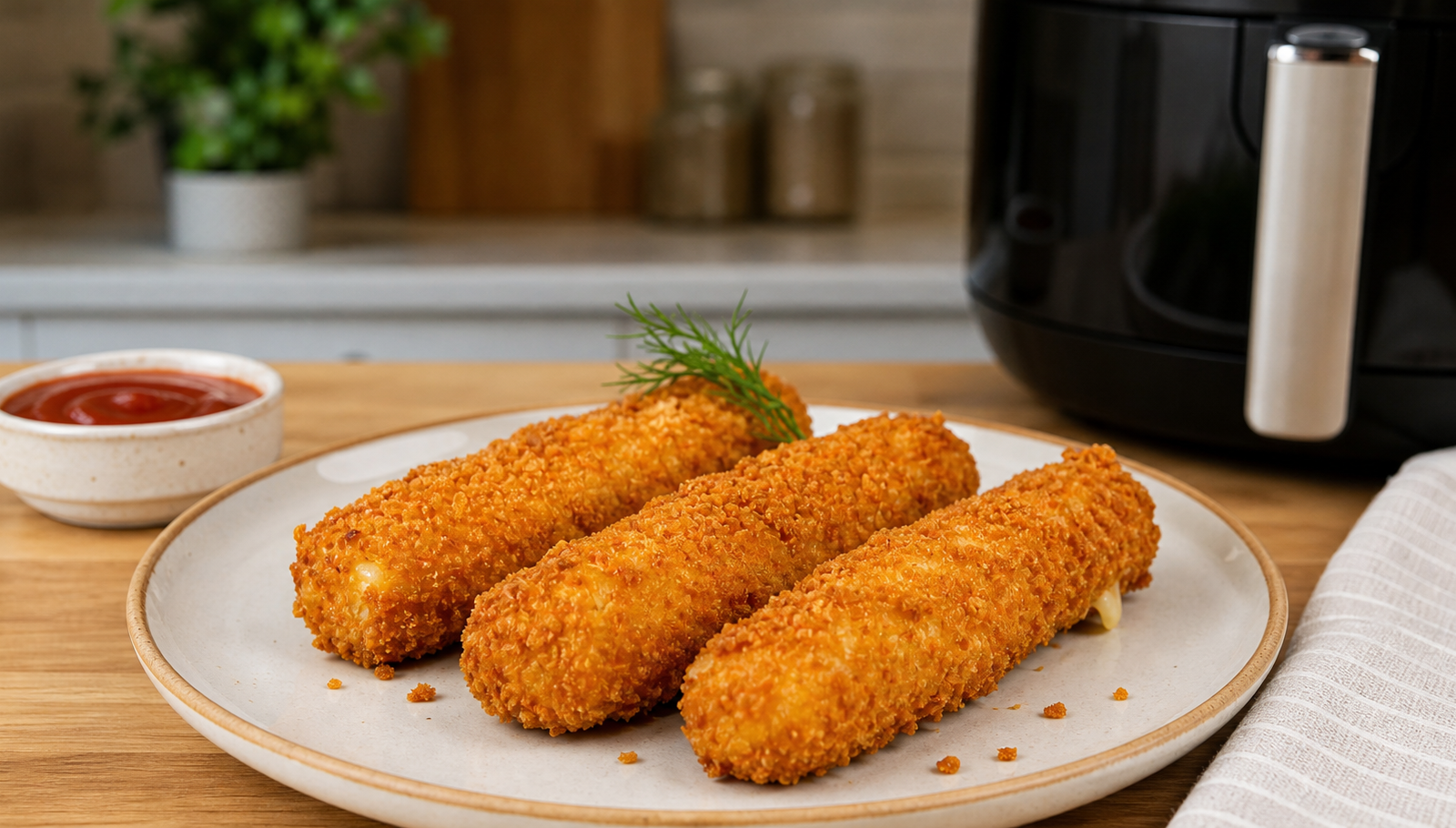
The mozzarella sticks are ready once the breading has turned a deep golden brown and the cheese inside has started to bubble slightly at the ends, which typically happens somewhere between five and eight minutes of cooking time. Because air fryer models vary somewhat in their actual cooking power, it is worth checking on the sticks starting around the five-minute mark rather than assuming they will need the full eight minutes every time. Pulling them out right as the cheese begins to bubble helps ensure a gooey center rather than one that has fully melted and started to leak out.
Notes on Making These Mozzarella Sticks Perfectly
Working in Batches Efficiently
Since most air fryer baskets cannot accommodate all sixteen halved sticks in a single layer at once, planning to cook in batches from the start makes the entire process smoother. Keeping the uncooked, breaded sticks in the freezer while earlier batches finish cooking helps maintain that firm, frozen texture that is so important for preventing cheese leakage, rather than letting them sit out and soften at room temperature while waiting their turn.
Handling the Egg Mixture Between Coatings
Because this recipe calls for dipping each stick into the egg wash twice, with a freezing period in between, it helps to refrigerate the egg mixture during that waiting period rather than leaving it out at room temperature. This keeps the egg wash food-safe and ready to use again once the first freezing period is complete, without needing to prepare a fresh batch for the second coating.
Getting a Consistent Golden Color
For the most even, appealing golden color across all of the mozzarella sticks, applying the olive oil spray in a light, even layer rather than a heavy coating tends to produce the best results. Too much oil can occasionally cause the panko coating to brown unevenly or turn slightly soggy in spots, while too little may leave some areas of the breading looking pale even after the full cooking time.
Serving Suggestions
These mozzarella sticks are best enjoyed immediately after cooking, while the cheese is still warm, gooey, and stretchy in the center. Pairing them with a warm marinara sauce or a simple garlic dipping sauce complements the garlic and oregano already present in the breading, rounding out the appetizer with a classic, familiar flavor combination that most people already know and love.
Air Fryer Mozzarella Sticks Recipe
Golden, crunchy mozzarella sticks with a gooey, melty center, made in the air fryer with a double-coated panko breading seasoned with garlic, oregano, and paprika. A lighter, mess-free take on a classic fried appetizer.
15
minutes7
minutes22
minutesIngredients
Mozzarella cheese sticks — 8
All-purpose flour — 1/3 cup
Kosher salt — 1/2 teaspoon
Black pepper — 1/4 teaspoon
Eggs — 2
Panko bread crumbs — 1 cup
Garlic powder — 1/2 teaspoon
Dried oregano — 1/2 teaspoon
Paprika — 1/2 teaspoon
Olive oil spray
Directions
- Set up the flour station: In a shallow bowl or pie plate, mix the flour, salt, and pepper, and set aside.
- Prepare the egg wash: In a separate shallow dish, whisk the egg whites until smooth.
- Season the panko: In a third shallow bowl, combine the panko breadcrumbs, garlic powder, oregano, and paprika.
- Cut the cheese sticks: Cut each mozzarella stick in half.
- Bread each stick: Working one at a time, coat a cheese stick in the flour, dust off the excess, dip it into the egg mixture, letting excess drip off, then press it into the panko breading.
- First freeze: Line the coated cheese sticks on a parchment-lined tray and freeze for at least 30 minutes. Refrigerate the egg mixture between uses.
- Double-coat: Remove from the freezer, dip each stick back into the egg mixture, then coat again in the panko crumbs. Return to the freezer for an additional 30–60 minutes.
- Preheat the air fryer: Preheat to 390°F (199°C) for 5 minutes.
- Arrange and spray: Spray the air fryer basket with olive oil spray, then place the mozzarella sticks in a single layer with space between each, working in batches as needed. Lightly spray the sticks with olive oil.
- Cook: Air fry for 5–8 minutes, or until the cheese is bubbling and the breading is crispy.