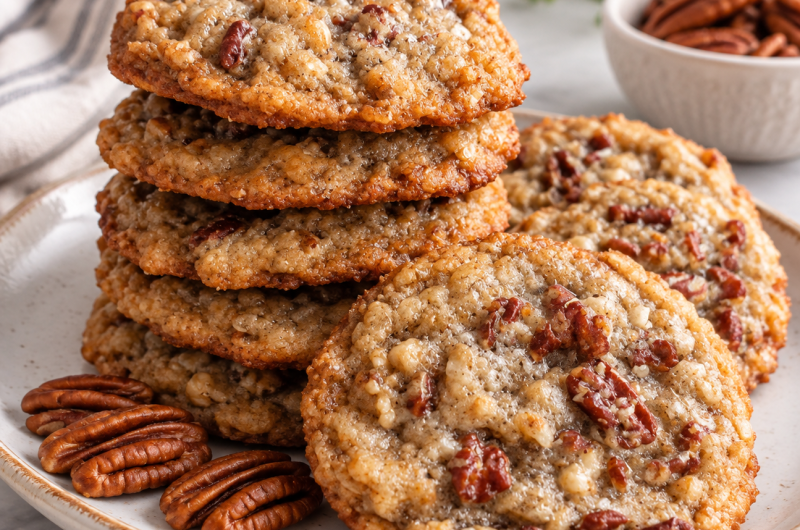
Sourdough Pecan Pie Cookies bring together two familiar desserts in one easy-to-serve treat: tender homemade cookies and the rich, buttery flavor of pecan pie. Each cookie has a soft, slightly crisp exterior with a sweet center made from chopped pecans, brown sugar, butter, corn syrup, vanilla, and a touch of cornstarch for thickness. The sourdough starter discard adds a subtle depth that works especially well with the buttery cookie dough without making the finished cookies strongly sour. These pecan pie cookies are particularly appealing during the holiday season, but there is no reason to reserve them only for Thanksgiving or Christmas. They are also excellent for cookie exchanges, dessert platters, afternoon coffee, bake sales, and whenever you have sourdough discard that needs a useful purpose.
Why Sourdough Discard Works So Well in Cookies
Sourdough discard is an especially useful ingredient for cookie recipes because it can add moisture and a gentle fermented flavor while helping home bakers reduce food waste. In these sourdough pecan cookies, the discard is combined with butter, sugar, egg, vanilla, and flour to create a dough that bakes into a tender cookie with a pleasant richness. The recipe uses sourdough starter discard rather than relying on it as the primary leavening ingredient, so there is no need to wait for fermentation or allow the shaped cookies to rise for hours. That makes this a practical sourdough discard dessert for anyone who maintains a starter and wants a straightforward recipe that can be prepared in a relatively short amount of time.
The Flavor Combination Makes These Cookies Special
The appeal of these cookies comes from the contrast between the simple buttery dough and the concentrated pecan pie filling placed in the center. The cookie itself has a mild sweetness from granulated white sugar, while the filling brings a deeper caramel-like character from light brown sugar and corn syrup. Chopped pecans provide a pleasant crunch and a naturally nutty flavor that becomes even more noticeable after baking. Vanilla extract rounds out the mixture and gives both the dough and filling a familiar dessert aroma. Because the filling is added to the center rather than mixed throughout the entire dough, every bite can have a distinct combination of soft cookie, gooey pecan mixture, and toasted nut flavor.
Choosing the Right Butter for the Cookie Dough
The butter is one of the most important ingredients in the cookie dough because it contributes both flavor and texture. The recipe specifically calls for unsalted butter at room temperature, and that detail is useful when preparing the dough. Soft butter blends more easily with granulated sugar, allowing the mixture to become lighter and smoother during creaming. Butter that is too cold may remain in small pieces, while melted butter can produce a completely different cookie texture. Allow the butter to soften naturally until it is pliable but still holds its shape. Room-temperature butter should not look oily or melted. Taking a little time to prepare the butter correctly can make the mixing process easier and helps create a more consistent sourdough cookie dough.
How the Sourdough Cookie Dough Comes Together
The cookie dough begins by beating the room-temperature butter and granulated sugar until the mixture becomes light and fluffy. This step should not be rushed because properly creamed butter and sugar help create a pleasant texture in the baked cookies. Once the butter mixture is ready, the egg, vanilla extract, and sourdough starter discard are incorporated. The mixture may look slightly different after the discard is added because sourdough starter contains moisture, but this is completely normal. The flour, fine sea salt, and baking powder are then mixed separately before being added to the wet ingredients. Combining the dry ingredients first helps distribute the salt and baking powder throughout the flour before they enter the dough.
Why You Should Avoid Overmixing the Dough
Once the flour mixture is added, the dough should be mixed only until the ingredients come together. Overworking cookie dough can encourage gluten development, which may make the finished cookies firmer and less tender than intended. This recipe is designed to produce soft and buttery cookies, so there is no advantage to mixing longer than necessary. A spatula or wooden spoon works well at first, and when the dough becomes too stiff, your hands can help bring the mixture together. The finished dough should be firm enough to shape into balls. If it seems slightly uneven while you are combining it, continue gently pressing the mixture together rather than vigorously kneading it like bread dough.
Preparing the Gooey Pecan Pie Filling
The pecan pie filling is what gives these cookies their signature character. It starts with a small cornstarch slurry made by combining water and cornstarch until smooth. This simple mixture helps thicken the filling later without leaving dry cornstarch pockets. In a saucepan, unsalted butter is melted before the chopped pecans, light brown sugar, corn syrup, and vanilla extract are added. The mixture is cooked briefly while being stirred continuously. Once it begins to bubble, the cornstarch slurry is incorporated. Continued cooking allows the filling to become thicker and glossy. It is important to let the filling cool slightly before using it in the cookies because extremely hot filling can be difficult to handle and may soften the dough.
Selecting and Preparing Pecans
Pecans are the defining ingredient in a pecan pie cookie, so their size can influence the final texture. The recipe calls for chopped pecans, which provide small pieces that are easy to incorporate into the filling and distribute over the cookie centers. For a more pronounced nutty texture, the pieces can remain slightly larger, while a finer chop creates a smoother filling. Whatever size you choose, try to keep the pieces reasonably consistent. Pecans naturally contain oils, so they should smell fresh and pleasantly nutty. If nuts have been stored for a long time, check them carefully before using. Fresh pecans will give the filling a much cleaner flavor and complement the buttery sourdough cookie base.
Shaping the Cookies for the Best Results
Once the dough is ready, portioning it consistently is important because cookies of different sizes will bake at different rates. Using approximately two tablespoons of dough for each cookie gives you substantial cookies with enough surface area for the pecan filling. Roll each portion into a smooth ball and place it onto the prepared baking sheet. The center is then pressed down with a thumb or the back of a cookie scoop to create a small well. This indentation is essential because it gives the filling a defined place to sit. Avoid pressing all the way through the dough. The goal is to create a shallow pocket while keeping a solid layer of cookie dough underneath the pecan mixture.
Adding the Pecan Filling Without Making a Mess
The filling should be added carefully so that it stays inside the cookie wells during baking. Approximately half a teaspoon of pecan pie filling is placed into the center of each shaped cookie. Because the filling contains butter, sugar, syrup, and pecans, it can spread slightly as it heats. Using too much filling may cause it to overflow onto the baking sheet. A modest amount gives you a better balance between cookie and topping while keeping the finished treats easier to handle. If desired according to the original preparation, additional chopped pecans can be sprinkled over the filled centers. This adds extra texture and makes the nutty appearance of the cookies even more noticeable after baking.
Baking Sourdough Pecan Pie Cookies
The cookies are baked in a preheated 350°F (176°C) oven for approximately 13 to 15 minutes. Before baking, make sure the oven has fully reached temperature because an oven that is still heating can affect the way cookies spread and set. During baking, the butter in the dough melts, the flour structure develops, and the baking powder contributes to the cookie’s final texture. At the same time, the pecan filling becomes warm and glossy. Watch the cookies toward the end of the baking time rather than relying only on the clock. Oven temperatures vary, so the appearance and texture of the cookies are useful indicators. They should be baked through while maintaining a tender texture.
How to Tell When the Cookies Are Done
Knowing when to remove cookies from the oven is important because they continue cooking from residual heat after they come out. For these sourdough pecan cookies, the edges should look set, while the centers can remain slightly soft. They do not need to become deeply browned throughout. Baking for too long can reduce the tenderness of the cookie and may cause the pecan filling to become overly firm. If you are uncertain, it is generally better to observe the edges and overall structure rather than waiting for the entire surface to become dark. The cookies will become more stable as they cool, so a slightly soft center immediately after baking does not necessarily mean that they are underbaked.
Cooling the Cookies Properly
After removing the cookies from the oven, leave them on the baking sheet for approximately 10 minutes. This resting period allows the cookie structure to firm up enough for safe handling. The pecan filling will also settle as it cools. Moving the cookies immediately while they are very hot can cause them to bend, break, or lose some of their filling. After the initial cooling period, carefully transfer them to a wire rack. Allow them to cool completely before stacking or storing. The final texture develops during this stage, with the cookie becoming tender but sturdy enough to hold the rich pecan center. Once completely cooled, the cookies are ready to serve or store.
Simple Ways to Serve These Pecan Cookies
Sourdough Pecan Pie Cookies are naturally suited to dessert trays because they are individual portions and do not require slicing or additional decoration. Serve them with coffee, black tea, hot chocolate, or a glass of cold milk for a simple afternoon dessert. During the holidays, they can be arranged with other homemade cookies on a large serving platter. Their pecan filling also makes them suitable for Thanksgiving dessert tables and Christmas cookie exchanges. If you are preparing them for guests, allow the cookies to cool completely before arranging them. The filling should remain visible in the center, creating an attractive contrast against the pale, buttery cookie dough.
Making the Dough Ahead of Time
One useful feature of this cookie recipe is that the dough can be refrigerated before baking. The prepared dough can be stored in the refrigerator for up to 24 hours according to the supplied recipe. Chilling can also make the dough easier to handle if it feels particularly soft during preparation. If you refrigerate shaped cookies, remember that cold dough will be firmer and may require a little additional time before it becomes comfortable to work with. Planning ahead can be especially helpful during holiday baking because the dough can be prepared in advance and baked later. This allows you to divide the work into manageable stages rather than completing every part of the recipe at once.
Storage at Room Temperature
After baking, the cookies should be allowed to cool completely before being placed in an airtight container. Storing them while still warm can trap steam inside the container and change their texture. Place parchment paper between layers if necessary to prevent the pecan filling from sticking to the cookies above it. At room temperature, these cookies can be stored for up to three days. Their texture should remain soft and tender during this period, although the filling can become somewhat sticky if the kitchen is warm. Keep the container away from direct sunlight, heat, or areas of high humidity. For the best eating experience, serve the cookies once they have reached a comfortable room temperature.
Refrigerating and Freezing the Cookies
For longer storage, the baked cookies can be refrigerated for up to one week. Because refrigeration can make butter-based cookies firmer, allow them to return to room temperature before serving. This helps restore a softer texture and makes the pecan filling more pleasant to eat. The cookies can also be frozen for up to two months. To freeze them, arrange the completely cooled cookies in a single layer on a baking sheet until firm, then transfer them to a freezer-safe container or bag. Thaw them at room temperature before serving. Freezing individual cookies in a single layer first helps prevent them from sticking together and makes it easier to remove only the number you need.
Helpful Notes for Consistent Results
A few practical details can make a noticeable difference when preparing these sourdough discard pecan cookies. Room-temperature butter, egg, and sourdough discard are easier to combine and help create a smoother dough. Avoid overmixing after adding the flour because the cookies are intended to remain tender. Make sure the cornstarch slurry is completely smooth before adding it to the pecan mixture so the filling thickens evenly. When shaping the cookies, keep the dough portions similar in size and make the center wells deep enough to hold the filling without breaking through the bottom. Finally, allow the baked cookies to cool on the baking sheet before transferring them, as the warm dough and filling will be delicate immediately after baking.
Why These Cookies Are Ideal for Holiday Baking
Pecan pie is a classic holiday dessert, but a full pie is not always convenient when you need something easy to portion and share. These sourdough pecan pie cookies capture some of those familiar flavors in a smaller format. The buttery dough, brown sugar, vanilla, and pecans create a combination that feels festive without requiring complicated decorating. Because the recipe produces approximately 15 cookies, it can work well for a small family gathering or be combined with other treats for a larger dessert spread. The cookies are also practical for gifting because they can be packed individually or arranged in a lined cookie box once completely cooled.
A Simple Sourdough Discard Dessert for Any Season
Although pecans and pie-inspired desserts are especially popular during the cooler months, there is no seasonal restriction on this recipe. Sourdough starter discard is produced throughout the year, and turning it into cookies is an easy way to make something enjoyable from an ingredient that might otherwise be thrown away. The recipe does not require complicated fermentation, special sourdough baking equipment, or advanced pastry techniques. The most important skills are creaming the butter and sugar properly, mixing the dough gently, preparing a thick filling, and shaping the cookies carefully. Once those steps become familiar, these cookies can become a reliable sourdough discard dessert for everyday baking as well as special occasions.