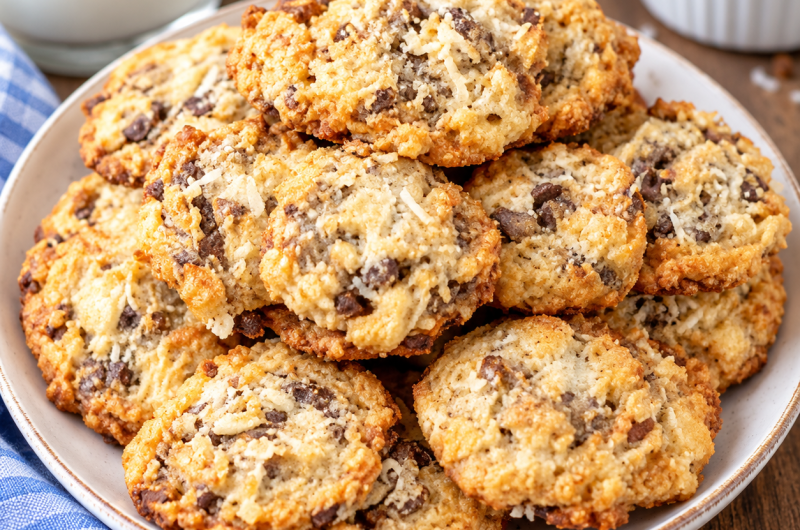
Keto Almond Joy Cookies bring together three classic dessert flavors: rich chocolate, sweet coconut, and crunchy almonds. Inspired by the familiar chocolate-covered coconut and almond combination, these homemade cookies offer a low-carb alternative for anyone who enjoys sweet treats while following a ketogenic lifestyle. Made with almond flour, coconut flour, unsweetened shredded coconut, sugar-free chocolate chips, and a powdered monk fruit and erythritol sweetener, these cookies deliver plenty of flavor without relying on traditional wheat flour or regular sugar. The butter creates a rich texture, while vanilla and coconut extracts add a pleasant aroma. Each cookie is finished with a drizzle of melted chocolate and a sprinkle of coconut, giving it an attractive bakery-style appearance that makes it suitable for everyday snacking, holiday dessert trays, and special occasions.
2. What Makes These Low-Carb Almond Coconut Cookies Special?
The appeal of these keto almond coconut cookies lies in their combination of textures and flavors. The cookie base is tender and buttery, the shredded coconut contributes a pleasant chew, and the chocolate chips provide little pockets of chocolate throughout each bite. A final chocolate drizzle adds another layer of richness, while the coconut topping creates the familiar flavor combination associated with almond and coconut candy bars. Unlike conventional cookies made with all-purpose flour and granulated sugar, this recipe uses low-carb baking ingredients designed for a different nutritional profile. Almond flour supplies a nutty foundation, while coconut flour helps absorb moisture and gives the dough structure. The result is a satisfying homemade dessert with a rich taste, a delicate coconut aroma, and a chocolate finish that makes each cookie feel like a small indulgence.
3. Why Keto Almond Joy Cookies Are Ideal for Low-Carb Baking
Low-carb baking often requires a different approach from traditional baking because almond flour, coconut flour, and sugar alternatives behave differently from wheat flour and ordinary sugar. This recipe combines two gluten-free flours to create a balanced cookie dough with enough structure to hold its shape. Almond flour contributes fat and a naturally mild nutty flavor, whereas coconut flour absorbs moisture efficiently, helping the cookies develop a firmer texture as they cool. Powdered monk fruit and erythritol sweetener replaces conventional powdered sugar, and stevia-sweetened chocolate chips add chocolate flavor without the usual amount of added sugar. These ingredients make the cookies suitable for many people who prefer lower-carbohydrate desserts. However, the precise carbohydrate count depends on the brands used, the amount of topping applied, and the size of each cookie, so checking product labels is important when tracking macros carefully.
4. Understanding the Role of Almond Flour and Coconut Flour
Almond flour and coconut flour are essential to the texture of these keto chocolate coconut cookies, but they cannot be treated as interchangeable ingredients. Almond flour is generally made from finely ground blanched almonds and contains natural fats that help baked goods remain tender. Coconut flour is much more absorbent, so a relatively small quantity can affect the moisture balance of a recipe. Using both flours allows the dough to hold together while retaining a soft, cookie-like texture. For the best results, measure the ingredients carefully and avoid substituting additional almond flour for the coconut flour without adjusting the recipe. Different brands can vary in fineness and absorbency, which may influence how easily the dough rolls into balls and how the finished cookies spread. If the dough feels slightly different from what you expect, allow the ingredients a little time to absorb moisture before deciding whether it needs further mixing.
5. The Importance of Unsweetened Shredded Coconut
Unsweetened shredded coconut provides the recognizable coconut flavor that makes these cookies reminiscent of almond and coconut candy bars. It adds texture to the dough and creates a more pronounced coconut taste without introducing the extra sugar commonly found in sweetened coconut products. The coconut also contributes to the cookies’ appearance, especially when a little is sprinkled over the tops before baking. As the cookies cook, the coconut can develop a light golden color and a toasted aroma. Because shredded coconut varies in size and moisture content, the texture may differ slightly depending on the brand you choose. Use the specified quantity to maintain the intended balance between the flours, butter, and other ingredients. During the final stage of baking, watch the coconut carefully if using the broiler, because the thin shreds can brown rapidly. A brief period under the broiler is enough to add color, but excessive heat can burn the topping.
6. Choosing the Right Sugar-Free Chocolate Chips
Chocolate is one of the defining ingredients in Keto Almond Joy Cookies, appearing both inside the dough and in the decorative topping. Stevia-sweetened chocolate chips are specified for this recipe, making them a useful option for people who want to limit conventional added sugar. The chocolate chips folded into the dough distribute rich chocolate flavor throughout the cookies, while the melted chocolate topping gives them a polished finish. When selecting a product, check the nutrition label because sugar-free and stevia-sweetened chocolates can differ in carbohydrate content, sweeteners, and serving sizes. Some products contain sugar alcohols or other ingredients that affect how carbohydrates are calculated. For the topping, gently melting the chocolate with coconut oil helps create a smoother consistency that is easier to drizzle. Avoid overheating the chocolate, since excessive heat can cause it to become thick or grainy. Allow the finished drizzle to set before stacking the cookies or placing them in a storage container.
7. How Butter Creates a Rich and Tender Cookie
Butter gives these low-carb almond cookies their rich flavor and contributes to the texture of the dough. The recipe calls for softened salted butter, which should be pliable enough to mix smoothly with the eggs, extracts, and sweetener. Butter that is too cold can leave lumps, making it difficult to distribute the wet ingredients evenly. On the other hand, butter that is excessively warm or melted may change the consistency of the dough and affect how the cookies hold their shape. Allowing the butter to soften naturally at room temperature is a practical way to prepare it for mixing. Since salted butter is specified, avoid adding extra salt beyond the amount listed in the ingredient list. Properly creaming or beating the butter with the sweetener and eggs helps produce a cohesive mixture, making it easier to incorporate the dry ingredients without leaving pockets of flour or coconut flour in the finished dough.
8. Why Eggs and Extracts Matter in This Recipe
Eggs help bind the ingredients together and provide structure as the cookies bake. Bringing the eggs to room temperature before mixing can help them blend more evenly with softened butter, reducing the chance of a separated-looking mixture. Vanilla extract adds a familiar sweetness and rounds out the chocolate flavor, while coconut extract strengthens the tropical character of the cookies. Almond extract is optional, but it can emphasize the nutty flavor associated with chocolate-covered almond and coconut treats. Because almond extract can be quite strong, the specified quantity should be measured carefully if you decide to include it. Combining these flavorings with the butter and sweetener before adding the dry ingredients helps distribute their flavor throughout the dough. The extracts should complement the coconut and chocolate rather than overpower them, so keeping the measurements consistent is particularly useful when preparing a batch for guests or making the cookies regularly.
9. Preparing Your Kitchen Before Baking
A little preparation makes low-carb cookie baking easier and helps prevent mistakes once the dough is mixed. Begin by preheating the oven to 350°F and preparing a baking sheet with a light coating of grease, as directed in the recipe. Gather the almond flour, coconut flour, shredded coconut, xanthan gum, baking soda, salt, chocolate chips, butter, eggs, sweetener, and extracts before you start. Measuring everything in advance makes it easier to follow the recipe in the correct order and reduces the chance of forgetting a small but important ingredient. Set aside the additional chocolate chips and coconut needed for the topping so they do not accidentally end up in the cookie dough. It is also useful to have a cooling rack and a microwave-safe bowl ready for the chocolate drizzle. Since the cookies are delicate while hot, planning for a full cooling period is just as important as preparing the baking sheet.
10. Mixing the Dry Ingredients for Even Results
The first mixing stage combines the almond flour, coconut flour, salt, unsweetened shredded coconut, xanthan gum, and baking soda. Stir these ingredients thoroughly in a medium bowl so that the leavening agent and xanthan gum are evenly distributed. This step matters because small amounts of baking soda and xanthan gum can influence the texture of the entire batch. Xanthan gum helps provide cohesion in gluten-free baking, where the dough does not have the gluten network found in wheat-based cookies. Thorough mixing also prevents concentrated pockets of salt or baking soda from affecting individual bites. Break up any visible clumps in the flours before proceeding. Once the dry ingredients are evenly combined, set the bowl aside while preparing the butter mixture. Keeping the two mixtures separate until the wet ingredients are ready makes it easier to combine everything without overworking the dough.
11. Creating a Smooth Butter and Sweetener Mixture
In a separate large bowl, combine the softened salted butter, powdered monk fruit and erythritol sweetener, room-temperature eggs, vanilla extract, coconut extract, and optional almond extract. Beat the ingredients until they are well combined and the mixture looks relatively smooth. The goal is to distribute the sweetener and flavorings throughout the butter rather than leave large streaks or pockets of unmixed ingredients. Powdered sweetener is particularly useful in recipes like this because its fine texture blends more readily than coarse granules. Scrape down the sides of the bowl as needed so that all the ingredients are incorporated. If the mixture appears slightly uneven, continue mixing briefly until it becomes more uniform. Avoid adding the dry ingredients before the wet mixture is ready, because doing so can make the dough harder to combine evenly. A well-prepared butter mixture gives the cookies a consistent flavor and makes the next stage of mixing much simpler.
12. Bringing the Cookie Dough Together
Add the dry ingredient mixture to the bowl containing the butter, eggs, sweetener, and extracts. Mix until a cohesive dough forms and no large patches of dry flour remain. Because coconut flour absorbs moisture differently from almond flour, the dough may feel thicker than a traditional wheat-based cookie dough. This is expected for a recipe built around low-carb flours. Scrape the sides and bottom of the bowl to make sure the ingredients are distributed evenly, then fold in the stevia-sweetened chocolate chips. Mixing just until combined helps keep the dough manageable and prevents unnecessary handling. The finished mixture should be firm enough to portion into small balls by hand. If you are preparing the recipe for the first time, pay attention to the dough’s consistency before shaping the cookies, as different brands of flour and sweetener can influence its feel. Keep the original ingredient quantities unchanged for the most reliable result.
13. Shaping the Cookies for Even Baking
Portion the dough into tablespoon-sized balls and arrange them on the prepared baking sheet, leaving space between them for handling and heat circulation. Gently roll each portion between your hands to make a reasonably smooth ball. Then press each ball down partially to create a thicker cookie shape rather than leaving it as a completely round mound. The aim is to give the cookies a consistent size so they bake at a similar rate. Try to keep the portions uniform, because smaller cookies may finish sooner while larger ones may need additional time. After shaping, prepare the tops with the intended almond and shredded coconut decoration if using the topping as described. Handle the dough gently, particularly if it feels soft from warm butter. A consistent shape makes the finished cookies more attractive and provides a stable surface for the chocolate drizzle that will be added after baking and cooling.
14. Baking Keto Almond Joy Cookies Without Drying Them Out
Bake the shaped cookies in the preheated 350°F oven for approximately eight minutes, following the original recipe’s timing. Since ovens can vary in temperature and baking performance, begin checking their appearance near the end of this period. The cookies should be set enough to handle eventually, but they may still feel delicate while hot. The recipe also calls for a brief period under the broiler to crisp the coconut topping. If you use this step, watch the cookies continuously and remove them as soon as the coconut begins to turn lightly golden. Broilers can brown small toppings very quickly, so even an extra minute may make a noticeable difference. Avoid extending the initial bake simply because the cookies seem soft straight from the oven. Low-carb cookies often become firmer as they cool, and leaving them in the oven too long can make them dry or overly crumbly.
15. Why Cooling Is Essential for Low-Carb Cookies
Allowing the cookies to cool completely on the baking sheet is one of the most important steps in this recipe. Almond flour and coconut flour cookies can be more fragile while hot than conventional cookies made with wheat flour. As the cookies cool, the butter firms and the ingredients settle into a more stable structure. Moving them too soon can cause the edges to break or the centers to crumble, especially if the cookies are still soft after baking. Leave them undisturbed until they are cool enough to lift without bending or falling apart. Once they have set, transfer them carefully to a wire rack before adding the melted chocolate topping. This cooling period may feel longer than expected, but it helps preserve the cookies’ shape and improves their texture. It also prevents the warm cookies from melting the chocolate drizzle excessively, making it easier to create a neat finish.
16. Making a Smooth Chocolate and Coconut Oil Drizzle
The finishing drizzle adds extra chocolate flavor and gives the cookies their signature candy-inspired appearance. Place the specified topping chocolate chips and coconut oil in a microwave-safe bowl. Heat them in short 30-second intervals, stirring after each interval until the chocolate is melted and smooth. Short heating periods reduce the risk of scorching and allow the chocolate to melt evenly. If a few small pieces remain, stir the mixture and let the residual warmth soften them before heating again. Once smooth, arrange the cooled cookies on a wire rack with a baking sheet underneath to catch excess chocolate. Use a spoon to drizzle the melted chocolate across each cookie, allowing some lines to remain thick and others to fall more lightly across the surface. The coconut oil helps loosen the chocolate, making it easier to drizzle without changing the listed ingredients. Let the topping set before storing the cookies.
17. How to Get the Best Chocolate Coconut Almond Flavor
The most enjoyable results come from balancing the three main flavors rather than allowing one to dominate. Coconut provides sweetness and texture, almond contributes a warm nutty note, and chocolate adds depth and richness. The vanilla extract helps tie these flavors together, while the optional almond extract can give the cookies a stronger candy-bar character. For the best balance, measure the extracts carefully and use the specified amount of shredded coconut in the dough. The extra coconut topping provides another layer of texture, while the chocolate drizzle brings the finished cookie closer to the familiar combination that inspired the recipe. Since sugar-free chocolate chips vary by brand, the final sweetness may be slightly different from one batch to another. Taste preferences also vary, so choosing a chocolate product you already enjoy can make a noticeable difference. These cookies are particularly appealing when the chocolate has set and each bite contains a mix of coconut, cookie, and chocolate.
18. Serving Suggestions for Keto Almond Joy Cookies
Keto Almond Joy Cookies can be served as an afternoon snack, a small dessert after dinner, or a sweet addition to a low-carb party platter. Their chocolate and coconut flavor pairs well with black coffee, unsweetened tea, or a glass of unsweetened almond milk. For a dessert table, arrange the cookies on a platter and allow the chocolate topping to remain visible rather than stacking them while it is still soft. They can also be served alongside other low-carb treats, such as almond flour brownies or sugar-free chocolate truffles, if you want a varied dessert selection. Because the cookies are rich, one or two may be enough to satisfy a sweet craving. If you prefer a firmer texture, chill them before serving; if you like the butter and chocolate flavors to feel softer, allow refrigerated cookies to sit briefly at room temperature. Both options work well, depending on personal preference.
19. Storing Cookies at Room Temperature, in the Refrigerator, or Freezer
Proper storage helps preserve the flavor and texture of homemade keto cookies. Once the chocolate topping has completely set, place the cookies in an airtight container or a zip-top bag. If keeping them at room temperature, choose a cool, dry location away from direct sunlight and sources of heat. For longer storage, refrigerate the cookies so the chocolate topping stays firm and the butter-based cookie texture remains stable. You can also freeze the cookies after the topping has set, arranging them carefully in a freezer-safe container to reduce breakage. If stacking them, place parchment paper between the layers to prevent the chocolate from sticking. Frozen cookies can be thawed in the refrigerator or briefly at room temperature before serving. The original recipe recommends freezer storage and notes that the cookies are enjoyable either warm or cold, with a preference for the chilled texture.
20. Common Mistakes to Avoid When Making Keto Cookies
Several small mistakes can affect the final results of keto almond coconut cookies. Using cold butter instead of softened butter can make the dough uneven, while overly warm butter may leave the mixture too soft to shape neatly. Incorrect flour measurements can also change the balance between moisture and structure, especially because coconut flour absorbs liquid so readily. Another common mistake is trying to remove the cookies from the baking sheet while they are still hot. These cookies need time to firm up before being moved. The broiler step also requires care because coconut can burn quickly under direct heat. Finally, overheating the chocolate topping may cause it to become thick or grainy, making it harder to drizzle. Measure the ingredients accurately, mix the dough thoroughly, watch the oven closely, and allow enough cooling time. These simple habits make the process more predictable and help produce cookies that look as appealing as they taste.
21. Notes on Carbohydrates and Keto-Friendly Ingredients
The supplied recipe lists approximately 1.6 grams of net carbohydrates per cookie and 110 calories per serving, along with 10 grams of fat, 2.4 grams of protein, and 3.6 grams of fiber. These figures should be treated as estimates rather than guaranteed nutritional values because brands, serving sizes, and topping quantities can change the totals. Net carbohydrates are commonly calculated by subtracting fiber from total carbohydrates, although individual tracking methods may differ, particularly when sugar alcohols are present. Monk fruit and erythritol sweeteners and stevia-sweetened chocolate chips may have different nutrition-label values depending on their formulation. If you follow a ketogenic diet for a specific carbohydrate target, calculate the recipe using the exact products you use and divide the total by the number of cookies produced. Almond flour and coconut flour are naturally lower in carbohydrates than many conventional baking flours, but the overall nutritional profile still depends on the complete ingredient list.
22. Frequently Asked Questions About Keto Almond Joy Cookies
Can I leave out the almond extract? Yes. Almond extract is marked optional in the ingredient list, so the cookies can be made without it. The vanilla and coconut extracts will still provide plenty of flavor. Why do the cookies seem soft when they first come out of the oven? They are delicate while hot and become firmer as they cool, so allow them to set fully before moving them. Can I use regular chocolate chips? You can, but doing so changes the carbohydrate and sugar content. Can the cookies be frozen? Yes. Once the chocolate topping has set, place them in a freezer-safe container and separate layers with parchment paper if necessary. Why is my dough unusually dry or sticky? Flour brands and measuring methods can affect absorption. Check that the ingredients were measured correctly and remember that coconut flour behaves differently from ordinary flour.
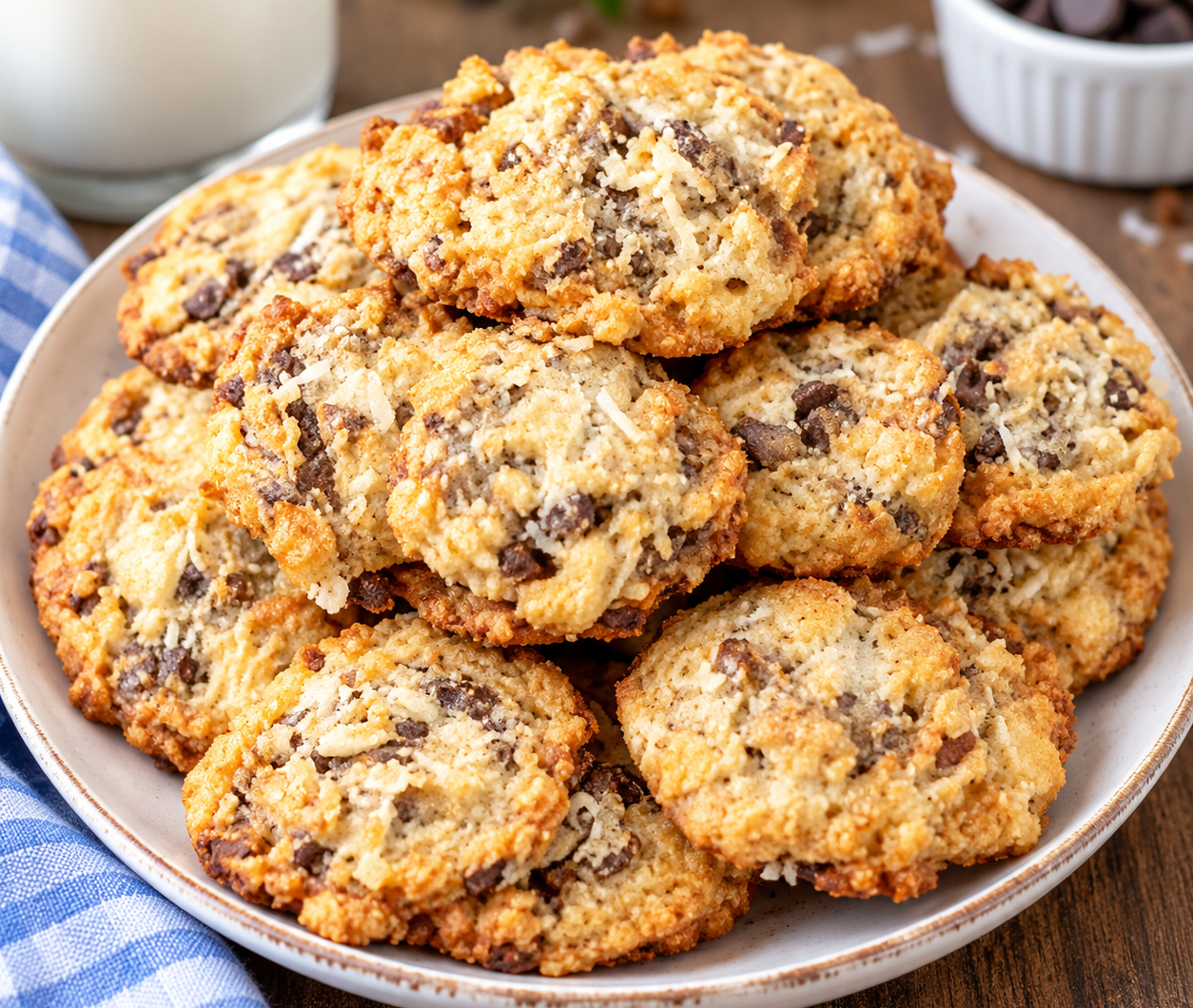
Keto Almond Joy Cookies
These Keto Almond Joy Cookies combine buttery almond and coconut flour dough with sugar-free chocolate chips, coconut flavor, and a smooth chocolate drizzle. Inspired by classic chocolate, coconut, and almond candy bars, they make a delicious low-carb dessert for everyday treats, celebrations, and holiday cookie platters.
15
servings15
minutes40
minutes110
kcalApproximately 8 minutes, plus up to 1 minute under the broiler
Allow additional time
Approximately 25–35 minutes, excluding cooling and setting time
Ingredients
- For the Cookie Dough
¾ cup (85 g) almond flour
½ cup plus 2 tablespoons (70 g) coconut flour
½ teaspoon salt
½ cup (60 g) unsweetened shredded coconut
½ teaspoon xanthan gum
½ teaspoon baking soda
¾ cup (180 g) softened salted butter
½ cup (approximately 100 g) powdered monk fruit and erythritol sweetener
2 large eggs, at room temperature
1 teaspoon vanilla extract
1 teaspoon coconut extract
1 teaspoon almond extract (optional)
¼ cup stevia-sweetened chocolate chips
- For the Chocolate Topping
¼ cup plus 2 tablespoons (90 g) stevia-sweetened chocolate chips
1 teaspoon (5 g) coconut oil
2–3 tablespoons (30–45 g) unsweetened shredded coconut
Directions
- Preheat the Oven: Heat the oven to 350°F (175°C). Lightly grease a baking sheet or prepare it with parchment paper.
- Combine the Dry Ingredients: In a medium bowl, mix the almond flour, coconut flour, salt, shredded coconut, xanthan gum, and baking soda until evenly distributed.
- Mix the Wet Ingredients: In a separate large bowl, beat the softened butter, powdered sweetener, eggs, vanilla extract, coconut extract, and optional almond extract until well combined.
- Make the Dough: Add the dry mixture to the wet ingredients. Mix until a cohesive dough forms, then gently fold in the ¼ cup of stevia-sweetened chocolate chips.
- Shape the Cookies: Scoop tablespoon-sized portions of dough and roll them into balls. Arrange them on the prepared baking sheet, leaving space between each portion. Press each ball down slightly to form a thick cookie.
- Add the Coconut Topping: Sprinkle the prepared shredded coconut over the cookie tops as desired. Keep an eye on the topping during baking to prevent excessive browning.
- Bake: Bake for approximately 8 minutes. Check that the cookies are beginning to set. If using the original broiler-finishing method, broil briefly for up to 1 minute to lightly crisp the coconut, watching continuously.
- Cool Completely: Remove the cookies from the oven and leave them on the baking sheet until fully cooled and firm. Avoid lifting them while they are still warm, as almond flour cookies can crumble easily.
- Melt the Chocolate: Combine the topping chocolate chips and coconut oil in a microwave-safe bowl. Heat in 30-second intervals, stirring between each interval until the chocolate is smooth.
- Drizzle the Cookies: Transfer the cooled cookies to a wire rack placed over a baking sheet. Drizzle the melted chocolate over each cookie and add the remaining shredded coconut as desired.
- Allow the Topping to Set: Refrigerate the cookies until the chocolate firms. Serve chilled or allow them to soften slightly at room temperature.
Notes
- Notes
The reported carbohydrate figure may refer to net carbohydrates rather than total carbohydrates. Verify the calculation using the nutrition labels of your specific ingredients.
Almond flour and coconut flour vary by brand, so accurate measuring is important.
Let the cookies cool completely before removing them from the baking sheet or adding the chocolate topping.
Avoid extending the baking time unnecessarily, as the cookies can become dry.
Store cooled cookies in an airtight container. Refrigerate for a firmer texture or freeze in a sealed container once the chocolate has set.
The recipe does not specify a whole-almond topping, so no additional whole almonds have been included in the ingredient list.