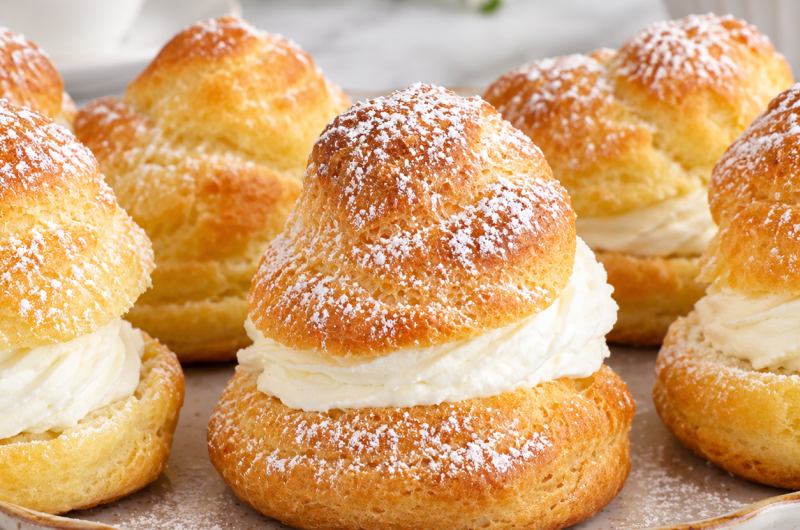
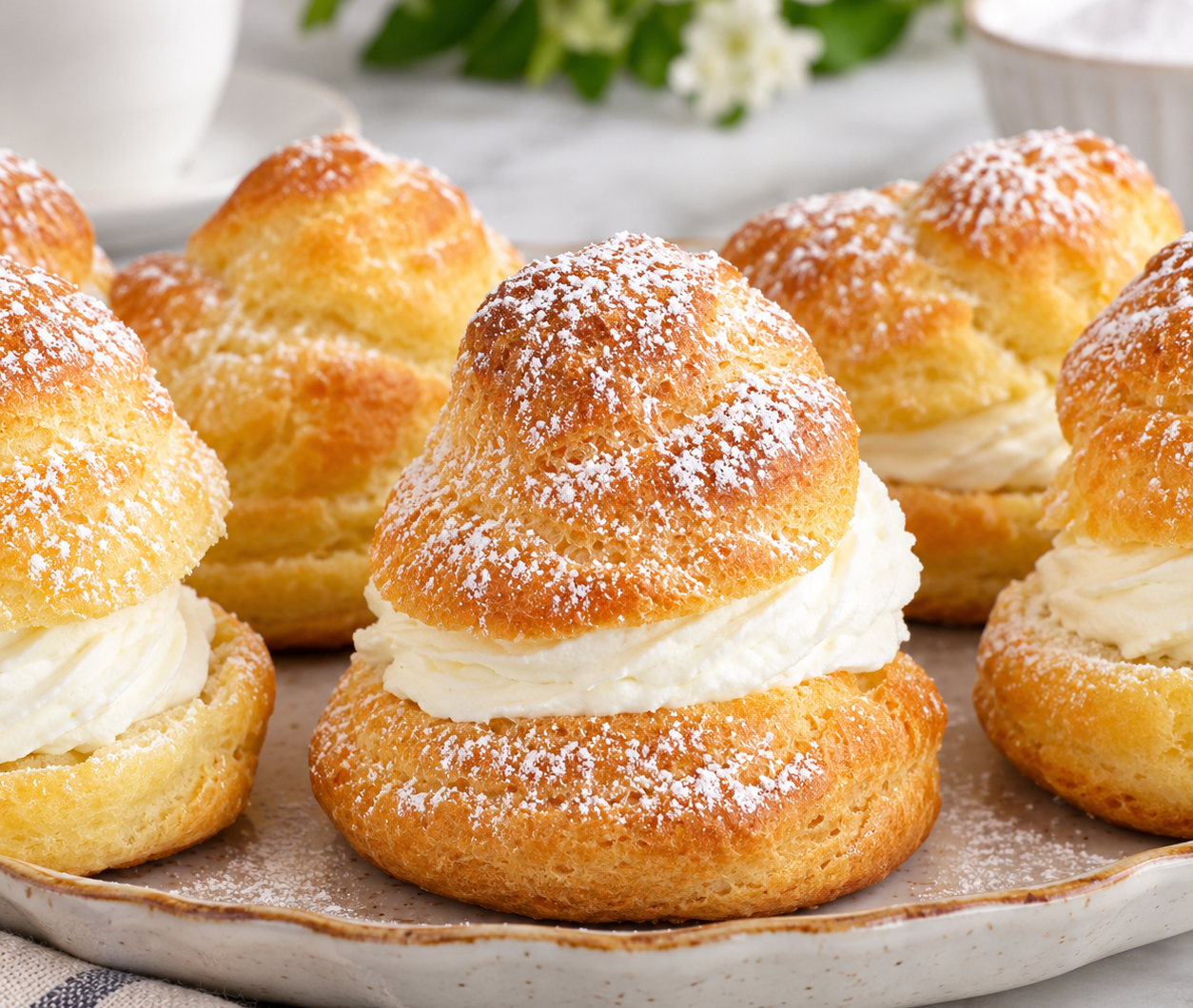
Sourdough cream puffs are light, delicate pastries with golden, slightly crispy shells and soft, creamy centers. Made with sourdough starter and traditional choux pastry techniques, these homemade treats offer a gentle tangy flavor that pairs beautifully with sweet vanilla whipped cream.
They are perfect for family gatherings, afternoon tea, holiday desserts, or whenever you want to prepare something special. Unlike sourdough bread, these pastries do not require hours of fermentation. Instead, steam helps the dough rise in the oven, creating hollow shells ready for your favorite filling.
Why You’ll Love These Sourdough Cream Puffs
These homemade sourdough cream puffs combine simple ingredients with an impressive finished appearance. Their crisp outer shells contrast beautifully with the smooth whipped cream filling, creating a dessert that feels light without sacrificing flavor. The sourdough starter adds a subtle depth that makes them different from traditional cream puffs.
Another advantage is their versatility. You can prepare the shells ahead of time, choose different fillings, and decorate them with powdered sugar or chocolate. Although choux pastry requires careful mixing and baking, the process becomes straightforward once you understand the correct dough consistency.
What Makes Sourdough Cream Puffs Different?
Traditional French cream puffs are prepared using choux pastry made from liquid, butter, flour, and eggs. This sourdough version incorporates ripe sourdough starter into the pastry mixture, adding a mild fermented flavor. The starter contributes to the dough’s overall composition, but it is not responsible for the main rise. Instead, moisture inside the pastry turns into steam during baking, expanding the dough and forming its characteristic hollow center. This method allows sourdough bakers to enjoy another creative use for their starter without following the lengthy fermentation process associated with homemade bread.
Ingredients for Homemade Sourdough Cream Puffs
This easy sourdough cream puff recipe requires sourdough starter, milk, unsalted butter, granulated sugar, salt, and eggs for the pastry shells. Each ingredient contributes to the final texture and flavor. Milk provides moisture, butter adds richness, and eggs create structure while helping the pastry expand. Sugar gives the shells a gentle sweetness, while salt balances the flavors.
For the filling, heavy whipping cream, sugar, and vanilla extract create a smooth, fluffy mixture. A light dusting of powdered sugar completes the dessert. Accurate measurements are especially important because small differences in moisture can affect choux pastry consistency.
Choosing the Best Sourdough Starter
A ripe, active sourdough starter works well for making cream puffs because it provides a balanced flavor and a predictable consistency. The recipe uses approximately 40 grams of starter, which should appear bubbly and smell pleasantly fermented.
If your starter has been refrigerated, feeding it before baking can help restore its activity. Thick sourdough discard may also work, although its acidity and moisture content can vary. Avoid using starter that has become excessively watery, as additional moisture may change the pastry texture. Measuring the starter by weight helps maintain the correct balance between the ingredients.
Understanding the Perfect Choux Pastry Texture
Successful sourdough cream puffs depend on preparing choux pastry with the correct consistency. Before piping, the dough should look smooth, glossy, and thick enough to hold its shape. When lifted with a mixer attachment, it should fall slowly and form a soft V-shaped ribbon.
Dough that is too stiff may not expand properly, while an overly loose mixture can spread across the baking sheet. Because egg sizes and starter consistency vary, adding the eggs gradually is important. Watching the texture rather than relying entirely on mixing time helps produce cream puffs with attractive golden shells and airy centers.
Preparing the Dough for Baking
Begin by combining the sourdough starter and milk in a saucepan until smooth. Add the melted unsalted butter, granulated sugar, and salt, stirring until everything is evenly incorporated. Heat the mixture over medium heat while continuously scraping the bottom and sides of the saucepan. As the mixture cooks, it gradually thickens and forms a cohesive ball of dough.
Continue stirring until the mixture looks smooth and no wet patches remain. Transfer the cooked dough into a mixing bowl and allow it to cool slightly. This cooling period prevents the eggs from cooking immediately when they are added.
Adding Eggs for Light and Airy Pastry
Eggs provide the moisture and structure necessary for cream puffs to rise properly. This recipe calls for three large eggs, weighing approximately 160 grams without their shells. Beat the eggs separately before gradually incorporating them into the slightly cooled dough. Mix thoroughly after each addition, allowing the pastry to absorb the liquid before adding more.
The dough should eventually become smooth, glossy, and suitable for piping. Stop adding egg once it reaches the desired V-shaped consistency, even if a small amount remains. Adding too much egg can weaken the dough and cause the pastries to spread during baking.
How to Shape Sourdough Cream Puffs
Transfer the prepared choux pastry into a piping bag fitted with a suitable opening. Pipe small mounds approximately two inches wide and one inch tall onto a parchment-lined baking sheet. Leave about one and a half inches between each portion because the pastries expand during baking. Keeping the mounds similar in size helps them cook evenly.
If pointed peaks appear on top, gently flatten them using a slightly damp fingertip. Avoid pressing too firmly or spreading the dough unnecessarily. Once shaped, place the pastries into the preheated oven promptly rather than allowing them to sit for an extended period.
Baking Cream Puffs Until Golden and Crisp
Preheat the oven to 400°F (200°C) and bake the cream puffs for approximately 20 minutes. The initial high temperature encourages rapid steam formation, helping the pastries expand and develop hollow centers. Without opening the oven door, reduce the temperature to 350°F (175°C) and continue baking for another 20 minutes. This second stage allows the shells to become golden and dry. Opening the oven too early may cause the pastries to collapse before their structure becomes stable. Properly baked cream puffs should feel firm and appear lightly crisp rather than soft, pale, or damp.
Cooling the Pastry Shells Properly
Once the sourdough cream puffs are fully baked, transfer them to a wire cooling rack. Allow approximately 20 minutes for cooling, or longer if the pastries still feel warm. This step is important because trapped heat can melt whipped cream and make the pastry shells soggy. The exterior should feel dry, while the inside should have enough space for filling. After cooling, carefully slice each puff horizontally using a serrated knife. Handle the shells gently because their delicate structure can crack under pressure. Completely cooled pastries are easier to fill and maintain their shape during serving.
Making Homemade Vanilla Whipped Cream
The whipped cream filling adds a soft, sweet contrast to the lightly crisp sourdough pastry. Combine 120 grams of cold heavy whipping cream with five to ten grams of granulated sugar and approximately two grams of vanilla extract. Beat the mixture until medium peaks form and the cream holds its shape while remaining smooth. Avoid overmixing, as whipped cream can become grainy and eventually separate. Using a chilled mixing bowl can make whipping easier, particularly in warm kitchens. Once ready, transfer the cream to a piping bag and keep it refrigerated until the pastry shells are completely cooled.
Filling and Decorating Your Cream Puffs
Arrange the cooled pastry bottoms on a clean serving tray and pipe a generous amount of vanilla whipped cream into each shell. Carefully replace the pastry tops without pressing down too firmly. Finish with a light dusting of powdered sugar for a classic homemade appearance. If you prefer a richer dessert, melted chocolate can be drizzled over the tops. Other filling choices include vanilla pastry cream, chocolate custard, or lightly sweetened cream paired with fresh berries. For the best texture, assemble the cream puffs shortly before serving so the filling does not soften the pastry shells too quickly.
How to Store Sourdough Cream Puffs
Filled sourdough cream puffs should be kept in an airtight container in the refrigerator for approximately two to three days. However, they taste best when enjoyed soon after assembly because moisture from the cream gradually softens the pastry. For make-ahead preparation, storing the unfilled shells separately is usually the better option. Once completely cooled, the shells can also be frozen in a freezer-safe container for several weeks. Thaw them before briefly warming them in the oven to restore crispness, then cool completely before filling. Keep all dairy-based fillings refrigerated until serving.
Frequently Asked Questions
Why did my cream puffs collapse?
Cream puffs commonly collapse when the shells are underbaked, contain too much moisture, or experience a sudden temperature drop during baking.
Can I prepare sourdough cream puffs ahead of time?
Yes. Prepare the pastry shells in advance and store them unfilled. Add the whipped cream closer to serving time for better texture.
Can I use chocolate or custard filling?
Absolutely. Chocolate pastry cream, vanilla custard, and other suitable fillings work well with the mildly tangy sourdough pastry.
Sourdough Cream Puffs
Description: Light and airy sourdough cream puffs made with homemade choux pastry and filled with lightly sweetened vanilla whipped cream. Their crisp, golden shells and creamy centers make them a lovely dessert for afternoon tea, brunch, parties, and special occasions.
20
servings20
minutes40
minutes90
kcal1
hourIngredients
- For the sourdough choux pastry
40 g ripe, active sourdough starter (about 1 cup, as listed in the source recipe)
120 g milk (about ½ cup; 2% or whole milk)
113 g unsalted butter, melted (½ cup)
12 g granulated sugar (about 2 teaspoons, as listed in the source recipe)
2 g salt (about ¼ teaspoon)
3 large eggs, approximately 160 g without shells
- For the optional whipped cream filling
120 g heavy whipping cream (about ½ cup)
5–10 g granulated sugar (about 1–2 teaspoons)
2 g vanilla extract (about ½ teaspoon)
Powdered sugar, for dusting
Directions
- Preheat the oven to 400°F (200°C). Line a large baking sheet with parchment paper.
- In a medium saucepan, whisk together the sourdough starter and milk until smooth. Add the melted butter, granulated sugar, and salt, mixing until evenly combined.
- Place the saucepan over medium heat. Stir continuously with a spatula, scraping the bottom and sides. Continue cooking until the mixture thickens, forms a cohesive ball, and no longer has visible wet patches.
- Transfer the cooked dough to a mixing bowl and let it cool enough that the eggs can be incorporated without cooking prematurely.
- Beat the eggs in a separate bowl. Using a hand mixer, gradually add the beaten egg to the dough, mixing well after each addition. Stop when the pastry is smooth, glossy, and forms a V-shaped ribbon from the beaters.
- Transfer the dough to a piping bag or a zip-top bag with one corner snipped off. Pipe approximately 20 mounds, each about 2 inches wide and 1 inch tall, onto the prepared baking sheet. Leave around 1½ inches between them. Smooth any pointed tips with lightly dampened fingers.
- Bake at 400°F (200°C) for 20 minutes. Without opening the oven door, reduce the temperature to 350°F (175°C) and bake for another 20 minutes, or until the puffs are lightly golden and dry on the outside.
- Transfer the baked pastries to a cooling rack. Allow them to cool completely before cutting or filling.
- Pour the cold heavy whipping cream into a clean bowl. Add the sugar and vanilla extract. Beat until medium peaks form and the cream holds its shape while remaining soft.
- Cut each cooled cream puff horizontally. Pipe whipped cream onto the bottom half, replace the top, and finish with a light dusting of powdered sugar. Serve promptly for the best texture.
Notes
- Use ripe, active sourdough starter or thick sourdough discard, as appropriate for your starter’s consistency.
- Add the eggs gradually because the amount absorbed can vary. The finished dough should be smooth and pipeable rather than runny.
- Pipe the dough soon after mixing instead of leaving it to sit for an extended period.
- Avoid opening the oven during the first 20 minutes of baking.
- Make sure the shells are completely cool before filling them with whipped cream.
- You can substitute vanilla pastry cream or chocolate pastry cream for the whipped cream filling.
- Store filled cream puffs in an airtight container in the refrigerator for up to 2–3 days.
- Unfilled shells can be frozen for several weeks. Thaw and briefly re-crisp them in the oven before filling.
Nutrition Facts
- Serving Size: 1 g
- Total number of serves: 20
- Calories: 90kcal
- Fat: 8g
- Saturated Fat: 5g
- Monounsaturated Fat: 2g
- Cholesterol: 48mg
- Sodium: 54mg
- Potassium: 27mg
- Carbohydrates: 4g
- Fiber: 0.1g
- Sugar: 1g
- Protein: 2g
- Iron: 0.1mg