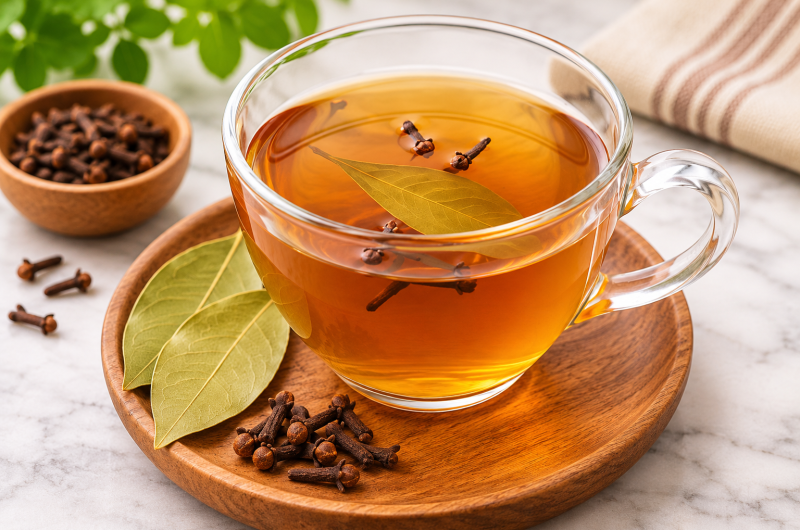
Bay leaf and clove tea is a comforting homemade herbal drink prepared with dried bay leaves, whole cloves, and water. This easy herbal tea recipe has a pleasant earthy taste, a warm spicy aroma, and a naturally caffeine-free character. It is an excellent choice for anyone who enjoys simple beverages made with familiar kitchen ingredients. Unlike traditional black tea or green tea, this infusion does not require tea leaves or complicated preparation. The bay leaves provide a mild herbal flavor, while the cloves contribute a distinctive sweetness and gentle warmth. Optional ingredients such as cinnamon, ginger, honey, and lemon juice allow you to adjust the taste without changing the basic recipe. Whether you want a soothing evening beverage, a warm drink after dinner, or a homemade alternative to packaged herbal teas, this bay leaf and clove tea recipe offers an easy way to prepare something flavorful in approximately 20 minutes.
Why Bay Leaf and Clove Tea Is a Popular Homemade Herbal Drink
Homemade herbal teas are appealing because they allow you to control the ingredients, flavor, and strength of every cup. Bay leaf and clove tea is particularly convenient because the two main ingredients are commonly found in spice cabinets and can be stored for long periods when kept properly. There is no need for special tea bags, expensive equipment, or advanced cooking skills. The preparation involves heating water, gently simmering the herbs and spices, allowing them to steep, and straining the finished infusion. Another advantage is its versatility. You can enjoy the tea without sweetener, add a little honey, or brighten the flavor with lemon juice. Cinnamon and fresh ginger are also included as optional ingredients for people who prefer a more fragrant drink. This easy bay leaf tea with cloves is suitable for quiet evenings, relaxed weekends, and everyday occasions when a freshly prepared warm beverage sounds appealing.
Understanding the Flavor of Bay Leaves in Herbal Tea
Bay leaves are aromatic leaves frequently used to season soups, stews, sauces, rice dishes, and slow-cooked meals. When steeped in hot water, culinary bay leaves release a subtle combination of herbal, earthy, and slightly woody flavors. Their taste is generally less intense than that of cloves, which makes them a useful base for this simple homemade tea. Dried bay leaves are recommended in the original recipe because they are easy to measure and provide a consistent flavor. It is important to use culinary bay leaves sold for cooking rather than unidentified leaves collected from gardens or ornamental plants. Not every plant commonly called a bay or laurel is safe for consumption. For this recipe, two dried culinary bay leaves are enough to give two cups of water a recognizable herbal character. Breaking the leaves into smaller pieces before simmering can help expose more of their surface to the hot water.
How Whole Cloves Create a Warm and Fragrant Infusion
Cloves are dried flower buds with a concentrated aroma and a naturally sweet, spicy taste. They are widely used in baking, savory cooking, spice blends, and warm beverages. In this bay leaf and clove tea recipe, four to five whole cloves provide the characteristic spicy fragrance without requiring any ground seasoning. Whole cloves are especially practical for homemade herbal drinks because they can be removed easily with a fine-mesh strainer after simmering. Their flavor develops gradually as the hot water extracts their aromatic compounds, creating a balanced drink when combined with bay leaves. Cloves are powerful in flavor, so using the specified quantity helps prevent the tea from becoming overly sharp or bitter. Although ground cloves are sometimes used in cooking, they are not the preferred choice here because the powder can remain suspended in the liquid. Whole cloves produce a cleaner-looking tea and make the final straining process much easier.
The Complete Ingredient Combination and Its Purpose
The basic ingredients for this recipe are two dried bay leaves, four to five whole cloves, and two cups of water. These three ingredients form the foundation of the tea and create its earthy, lightly spicy flavor. The recipe also includes several optional ingredients that can be used according to personal preference. One small cinnamon stick provides a sweeter spice aroma, while two to three thin slices of fresh ginger add a warming, slightly peppery note. One teaspoon of honey can soften the stronger herbal flavors, and one to two teaspoons of fresh lemon juice introduce a refreshing citrus finish. Each ingredient serves a different purpose, but none of the optional additions is necessary for the tea to work. Keeping the original quantities makes it easier to reproduce the same result every time. The combination is simple enough for beginners while still offering several ways to create a drink that suits different tastes.
Choosing Good-Quality Bay Leaves and Whole Cloves
The quality of dried herbs and spices can make a noticeable difference in the finished beverage. When preparing bay leaf and clove tea, select dried culinary bay leaves that are intact, clean, and pleasantly aromatic. Leaves that have been stored for a very long time may lose much of their fragrance, resulting in a weaker infusion. Whole cloves should have a recognizable spicy smell and should be free from visible moisture or mold. Store both ingredients in tightly closed containers away from direct sunlight, excessive heat, and humidity. Fresh water is also important because it allows the natural flavors of the herbs and spices to come through clearly. If you choose to include ginger, use a firm, fresh piece and slice it shortly before preparing the tea. For the optional lemon juice, freshly squeezed juice gives the drink a bright flavor. Choosing suitable ingredients is a simple way to improve the overall taste without making the recipe more complicated.
Preparing the Ingredients Before Heating the Water
Organizing the ingredients before cooking helps make this herbal tea recipe quick and straightforward. Begin by measuring two dried bay leaves and four to five whole cloves. Examine the bay leaves to make sure they are clean, and rinse them gently if needed. Pat them dry and break them into two or three smaller pieces if you want to expose more surface area during simmering. Measure two cups of water into a small saucepan. If using the optional cinnamon stick, have it ready to add alongside the cloves and bay leaves. Fresh ginger should be cut into two or three thin slices so its flavor can spread evenly through the water. Keep the honey and lemon juice separate because they are added after the tea has been cooked and strained. This preparation method avoids unnecessary interruptions and ensures that the ingredients are added at the appropriate stages.
The Best Way to Simmer Bay Leaf and Clove Tea
Gentle simmering is the main cooking technique used in this easy homemade herbal tea. Start by placing two cups of water in a small saucepan and bringing it to a gentle boil over medium heat. Once the water begins bubbling, add the dried bay leaves and whole cloves. If you are making the cinnamon or ginger version, add those optional ingredients at the same time. Reduce the heat so the water continues to simmer gently rather than boiling rapidly. Allow the mixture to cook for approximately eight to ten minutes, which is enough time for the herbs and spices to release their aroma into the water. Keeping the saucepan partially covered helps limit evaporation while allowing the ingredients to infuse. The tea will gradually develop a light golden-brown color. There is no need to stir constantly, but an occasional gentle stir can help keep the ingredients moving through the water.
Why the Extra Steeping Time Improves the Taste
After the simmering stage, turning off the heat does not mean the flavor development has completely finished. Allowing the bay leaves and cloves to remain in the hot water for another three to five minutes gives the infusion a little more time to develop its characteristic taste. Covering the saucepan during this period helps retain warmth and fragrance. This additional steeping stage is useful because it allows the ingredients to continue releasing flavor without prolonged active boiling. The result is a warm herbal drink with a more rounded aroma. However, leaving the spices in the water for much longer than recommended can make the flavor stronger than intended, especially because cloves are naturally intense. Following the original steeping time provides a practical starting point for most preferences. Once the tea has rested, it should be strained promptly to prevent the herbs and spices from continuing to flavor the liquid.
Straining the Tea for a Smooth and Pleasant Drink
Proper straining is an important part of preparing bay leaf and clove tea because the whole spices and leaves are intended to flavor the water rather than remain in the serving cup. Place a fine-mesh strainer over a heat-resistant teapot, jug, or mug. Carefully pour the hot infusion through the strainer, allowing the liquid to pass through while catching the bay leaves, cloves, and any optional ginger or cinnamon. Check that no small pieces of bay leaf remain in the finished tea. Bay leaves can stay firm and have sharp edges even after cooking, so they should always be removed before drinking. Whole cloves should also be discarded after steeping. Once strained, the tea should look clear to lightly golden-brown, depending on the strength of the ingredients. This simple finishing step creates a cleaner beverage that is easier and more enjoyable to drink.
Adding Honey and Lemon Without Overpowering the Herbs
Honey and lemon juice are optional additions that can change the overall flavor of the tea without requiring any changes to the cooking process. After straining the infusion, allow it to cool slightly before stirring in one teaspoon of honey if a sweeter drink is preferred. Honey adds a gentle sweetness that can soften the stronger spice notes of the cloves. For a brighter finish, add one to two teaspoons of fresh lemon juice. The lemon provides a fresh, slightly tart contrast to the earthy bay leaves and warm spices. Both ingredients can be used together, or either can be omitted according to taste. The tea is also suitable for serving completely unsweetened. Because the recipe already includes strongly flavored herbs and spices, it is best to begin with the specified amounts rather than adding large quantities of extra ingredients. A light hand helps preserve the original character of the beverage.
Making Bay Leaf, Clove, and Cinnamon Tea
Cinnamon is one of the optional ingredients included in the original recipe, and it pairs naturally with the warm aroma of cloves. To prepare this variation, add one small cinnamon stick to the saucepan when the bay leaves and whole cloves are introduced. Allow all the ingredients to simmer together for the same eight to ten minutes, followed by the usual three-to-five-minute steeping period. The cinnamon adds a gentle sweetness and a deeper spice fragrance, making the tea particularly appealing during cooler weather. Using a whole cinnamon stick is convenient because it can be removed easily during straining. This variation does not require additional sugar, although the optional teaspoon of honey may be added after cooking. The cinnamon should complement the bay leaves rather than dominate them, which is why the original quantity of one small stick is a useful guide for the two-cup recipe.
Preparing a Ginger-Flavored Bay Leaf Herbal Tea
Fresh ginger offers another way to develop the flavor of this homemade herbal drink. The original recipe allows two to three thin slices of fresh ginger, which can be added directly to the saucepan with the bay leaves and cloves. Ginger contributes a slightly peppery, warming taste that works well with the natural sweetness of the cloves. Thin slices are useful because they expose the cut surface of the ginger to the hot water, allowing its flavor to infuse during simmering. The ginger may be peeled before slicing, although clean, thoroughly washed ginger can also be prepared with its skin intact. Once the tea has simmered and steeped, strain out the ginger along with the other ingredients. This version is especially suitable for people who enjoy ginger tea but want a different combination of flavors. Cinnamon can also be included if both optional ingredients are desired.
Creating a Refreshing Lemon and Honey Herbal Tea
For a slightly lighter and brighter flavor, the tea can be finished with the optional lemon juice and honey. Prepare the bay leaf and clove infusion using the standard cooking method, then strain it into a clean serving container. Once the tea has cooled slightly, stir in one to two teaspoons of fresh lemon juice and one teaspoon of honey, depending on your preference. Lemon changes the flavor by introducing a citrus note that balances the deeper, warmer taste of the spices. Honey makes the drink a little sweeter without requiring granulated sugar. This combination is particularly pleasant when the tea is served warm after a meal or during a quiet afternoon. The amount of lemon juice should remain modest so the drink does not become overly sour. For people who prefer unsweetened herbal beverages, the lemon can be added on its own without honey.
Is Bay Leaf and Clove Tea Naturally Caffeine-Free?
Bay leaf and clove tea is naturally caffeine-free when prepared with the ingredients listed in this recipe. Neither culinary bay leaves nor whole cloves contains the caffeine associated with traditional tea leaves or coffee. This makes the beverage an option for people who prefer to avoid caffeine in the evening or want a warm drink without relying on black tea, green tea, or coffee. The optional cinnamon, ginger, honey, and lemon juice also do not introduce caffeine. However, caffeine-free does not automatically mean that a drink is appropriate for everyone in unlimited quantities. Strong herbal preparations may interact with certain medications or be unsuitable for some individuals. For ordinary culinary enjoyment, this tea is best viewed as a flavorful homemade beverage rather than a treatment or concentrated herbal supplement. Its main appeal lies in its simple preparation, fragrant ingredients, and warming taste.
Understanding the Traditional Uses of Bay Leaves and Cloves
Bay leaves and cloves have long histories as culinary ingredients in many regions of the world. Both are valued for their ability to add aroma and depth to food and beverages. Bay leaves are often associated with slow-cooked dishes, while cloves appear in spice mixtures, baked goods, and warm drinks. Some traditional practices also use these ingredients in herbal infusions, but historical use should not be confused with proven medical benefits. There is not enough reliable clinical evidence to claim that this particular tea treats inflammation, controls blood sugar, causes weight loss, or cures digestive conditions. Although bay leaves and cloves contain naturally occurring plant compounds, their effects depend on many factors, including preparation and quantity. For a food website, the most accurate way to describe this recipe is as a warm, aromatic herbal tea. Readers can enjoy its taste without expecting it to replace medical care or prescribed treatment.
When to Enjoy a Cup of Bay Leaf and Clove Tea
One of the advantages of this simple herbal beverage is that it can be served at different times of the day. Some people enjoy a warm cup after lunch or dinner because the earthy aroma pairs nicely with a relaxed moment following a meal. Others prefer it in the evening as an alternative to caffeinated drinks. The tea can also be prepared during the afternoon when a hot beverage sounds appealing but coffee or traditional tea is not desired. There is no established medical reason to drink bay leaf and clove tea at a particular hour, and there is no need to consume it on an empty stomach. The best serving time is simply the one that suits your preferences and routine. Because the recipe produces two cups, it is also convenient for sharing. Serve it freshly strained while warm to appreciate the aroma of the bay leaves and cloves.
Serving Ideas for a Beautiful Homemade Herbal Beverage
Presentation can make a simple cup of bay leaf and clove tea feel more inviting without requiring complicated garnishes. A clear heat-resistant glass mug allows the light golden-brown color of the infusion to remain visible, while a ceramic cup helps create a cozy serving style. The tea may be served plain or finished with the optional lemon juice and honey. A small cinnamon stick or a thin lemon slice can be used for presentation when those ingredients are already part of the chosen variation. The beverage pairs well with light snacks, breakfast foods, and simple afternoon treats. For an evening serving, a warm cup can be enjoyed on its own without additional food. Avoid leaving whole bay leaves or cloves floating in the drinking cup, as these ingredients should be removed during straining. Serving the tea freshly prepared provides the clearest flavor and the most pleasant aroma.
How to Store Leftover Bay Leaf and Clove Tea
Although this herbal tea is best enjoyed shortly after preparation, leftover tea can be stored for later use. Allow the finished infusion to cool briefly, then transfer it to a clean, airtight container and refrigerate it promptly. The original recipe recommends keeping leftovers in the refrigerator for one to two days. For the best quality, the tea should be strained before storage so the bay leaves and cloves do not continue releasing flavor into the liquid. When ready to serve, pour the desired amount into a saucepan and reheat gently until warm. The tea can also be enjoyed chilled if that is your preference. Avoid leaving the prepared beverage at room temperature for extended periods, and discard it if its smell or appearance changes unexpectedly. Because the recipe uses only two cups of water, preparing a fresh batch is usually simple enough to avoid storing large amounts.
Notes for Avoiding Common Herbal Tea Preparation Problems
A few small details can affect the flavor and appearance of bay leaf and clove tea. One common issue is using too many cloves, which can make the finished drink taste unusually strong or sharp. The recommended four to five whole cloves provide a useful balance for two cups of water. Another issue is boiling the ingredients too vigorously, causing unnecessary evaporation and producing a more concentrated infusion. A gentle simmer is sufficient. Using old or poorly stored spices can lead to weak flavor, while leaving the ingredients in the tea for too long can create excessive bitterness. Straining is also essential because whole bay leaves should never be swallowed. If the tea tastes stronger than expected, it can be diluted with a little hot water before serving. Following the specified simmering and steeping times will help produce a consistent result.
Notes on Ingredient Substitutions and Recipe Flexibility
The original recipe uses dried bay leaves and whole cloves, and these ingredients should remain the foundation of the drink. Fresh culinary bay leaves may produce a different flavor, but the exact strength can vary, so dried leaves are preferable when following the stated quantities. Whole cloves are recommended over ground cloves because they provide a cleaner infusion and are easier to remove. Honey is entirely optional, making the unsweetened version suitable for people who do not want added sugar. The optional cinnamon stick and ginger slices can be used individually or together, while lemon juice may be added after straining. If preparing a larger batch, the ingredients can be multiplied in the same proportions. The cooking method remains similar, although a larger saucepan may be needed. These adjustments are serving choices rather than changes to the original ingredient list, which is preserved in the recipe card below.
Important Safety Considerations for Herbal Tea Drinkers
Bay leaf and clove tea should be prepared with culinary-grade ingredients intended for food use. Only use properly identified edible bay leaves, since some ornamental plants with similar names are not safe to consume. Always strain out the bay leaves and whole cloves before serving. This tea is intended as an ordinary beverage, not as a concentrated herbal remedy. People who are pregnant or breastfeeding, take regular medications, have chronic medical conditions, or plan to drink strong herbal preparations frequently should consult a qualified healthcare professional. Cloves contain compounds that may be relevant to medication interactions, particularly when consumed in concentrated forms. There is also insufficient evidence to establish the safety of daily medicinal use of this specific combination. It is therefore best to avoid claims that the tea detoxifies the body, treats disease, or guarantees health improvements. Enjoying it occasionally for its pleasant flavor is a more appropriate approach.
Making a Larger Batch for Family or Guests
The two-cup recipe is convenient for everyday preparation, but the same method can be used when serving several people. If more tea is needed, multiply the bay leaves, whole cloves, and water by the same factor to preserve the original balance. Optional ingredients such as cinnamon, ginger, honey, and lemon juice can also be increased proportionally if they are being used. Choose a saucepan large enough to hold the additional water comfortably, allowing space for gentle simmering. Bring the water to a boil, add the ingredients, reduce the heat, and follow the same simmering and steeping process. Afterward, strain the entire batch into a heat-resistant serving jug or teapot. Sweetening individual cups is a convenient option when guests have different preferences. Preparing the tea shortly before serving helps preserve its fresh aroma, while refrigeration is suitable for any leftovers that will be used within the recommended storage period.
Why This Simple Bay Leaf Tea Recipe Works So Well
The success of this homemade bay leaf and clove tea comes from using a small number of complementary ingredients and allowing enough time for their flavors to develop. Bay leaves provide a gentle herbal foundation, while whole cloves contribute warmth and fragrance. The optional cinnamon and ginger create deeper spice notes, and honey or lemon juice can be added to adjust the finished drink. The process requires no special equipment beyond a saucepan, measuring utensils, and a strainer, making it accessible to beginners. Because the recipe contains no traditional tea leaves, it is naturally caffeine-free and can be served at different times of the day. The most important details are using culinary-grade ingredients, simmering gently, allowing a short steeping period, and removing all whole herbs and spices before drinking. With these simple steps, the result is a pleasant herbal beverage that can become part of a varied collection of homemade drinks.
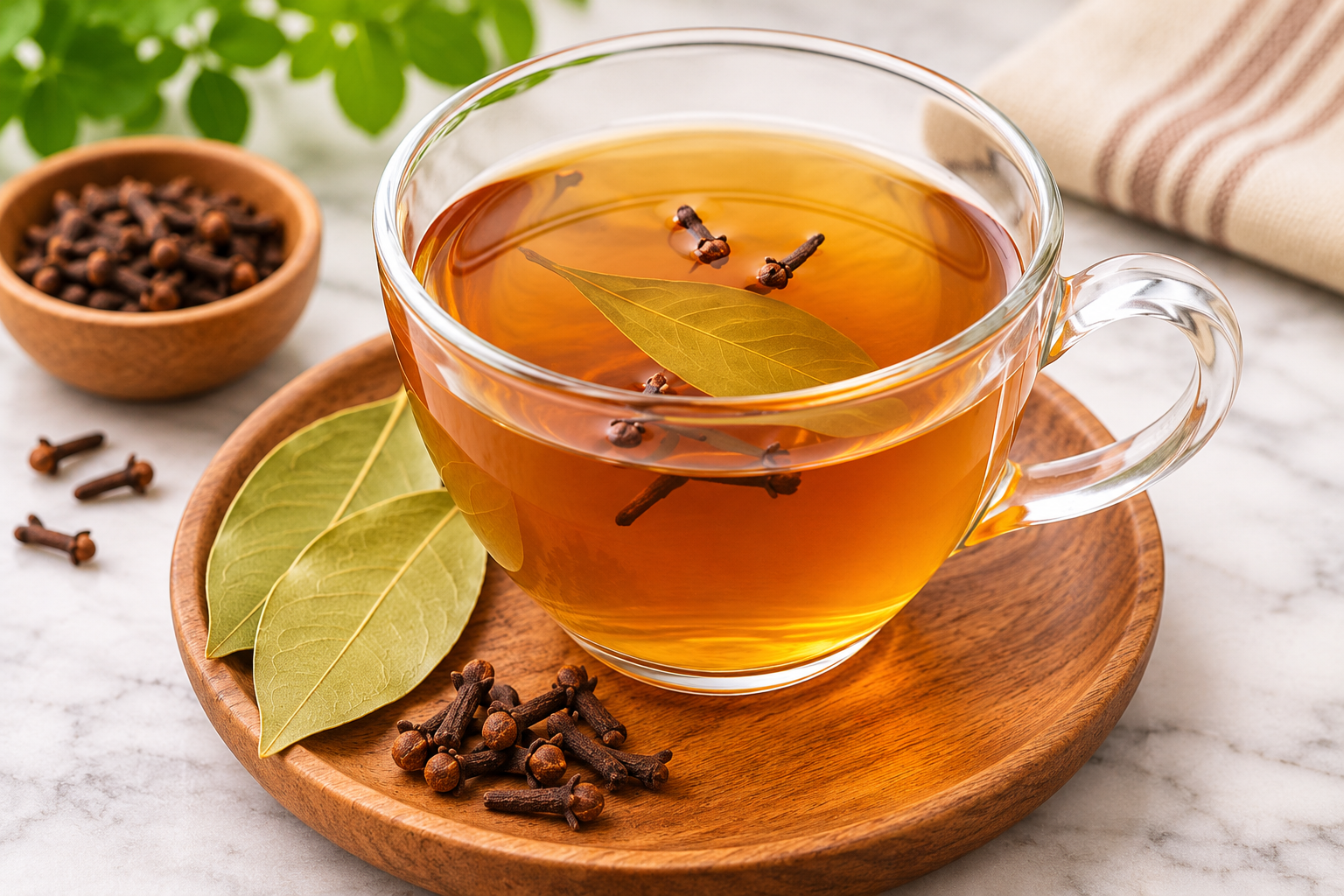
Easy Bay Leaf and Clove Tea Recipe – A Warm, Aromatic Homemade Herbal Drink
A naturally caffeine-free herbal tea made by gently simmering dried bay leaves and whole cloves in water. This fragrant homemade drink has a mild earthy taste and a warm, spicy aroma. Optional cinnamon, ginger, honey, and lemon juice can be added for extra flavor.
2
servings5
minutes10
minutes5
kcal15
minutesIngredients
- Main Ingredients
2 dried bay leaves
4–5 whole cloves
2 cups water
- Optional Ingredients
1 small cinnamon stick
2–3 thin slices fresh ginger
1 teaspoon honey
1–2 teaspoons fresh lemon juice
Directions
- Check that the dried culinary bay leaves are clean. Rinse if necessary, pat dry, and break into smaller pieces if desired.
- Pour 2 cups of water into a small saucepan.
- Place the saucepan over medium heat and bring the water to a gentle boil.
- Add 2 dried bay leaves and 4–5 whole cloves. Include the optional cinnamon stick and ginger slices if using.
- Reduce the heat to low and simmer for approximately 8–10 minutes, keeping the saucepan partially covered.
- Turn off the heat, cover the saucepan, and let the tea steep for another 3–5 minutes.
- Pour the infusion through a fine-mesh strainer to remove all bay leaves, cloves, and optional whole spices.
- Let the tea cool slightly, then stir in 1 teaspoon honey and 1–2 teaspoons fresh lemon juice if desired.
- Divide the warm tea between two cups and enjoy.
Notes
- Recipe Notes
Use only edible, culinary-grade bay leaves.
Whole cloves are recommended because they are easy to strain.
Avoid adding more cloves than specified, as the flavor can become overpowering.
Keep the water at a gentle simmer rather than a rapid boil.
Remove all bay leaves and whole spices before drinking.
Honey, lemon, cinnamon, and ginger are optional.
Refrigerate leftover strained tea promptly in an airtight container for up to 1–2 days.
Reheat gently before serving if desired.
This tea is naturally caffeine-free when made with the listed ingredients.
It is intended as a flavorful beverage, not a treatment for medical conditions.
Seek medical advice before consuming concentrated herbal preparations regularly if pregnant, breastfeeding, taking medication, or managing a medical condition.