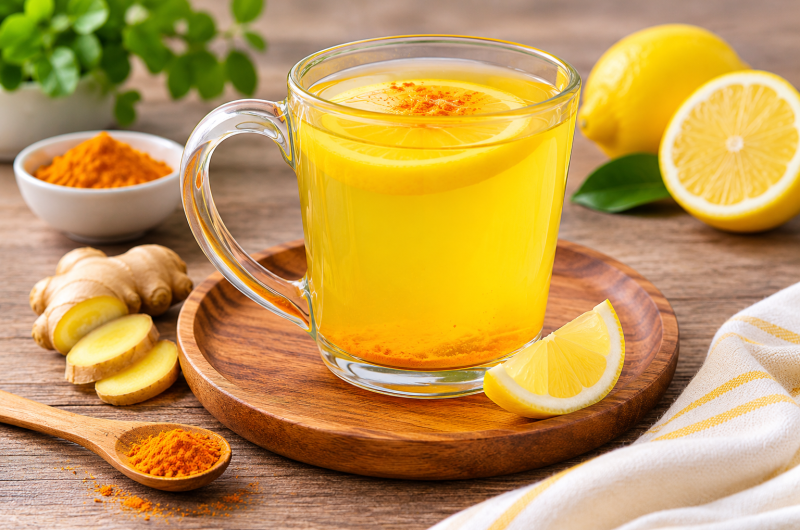
Ginger lemon water is a simple homemade beverage that combines the bright, tangy flavor of fresh lemon with the warm, slightly spicy taste of ginger. This easy ginger lemon water recipe also includes a small amount of ground turmeric, with optional black pepper and cayenne pepper for extra warmth. Made with hot water and a handful of familiar kitchen ingredients, it takes approximately five minutes to prepare and makes two servings. The finished drink is naturally light, refreshing, and suitable for anyone looking for a caffeine-free alternative to coffee, sweetened beverages, or traditional tea. Fresh lemon provides a pleasant citrus aroma, while sliced ginger gradually releases its distinctive flavor into the hot water. Turmeric adds a golden color and earthy undertone that complements both ingredients. Whether enjoyed in the morning, after a meal, or during a quiet afternoon, this homemade lemon ginger drink offers an uncomplicated way to enjoy a warm, flavorful beverage without requiring special equipment or complicated preparation.
Why Ginger Lemon Water Is a Popular Morning Beverage
Warm ginger lemon water has become a familiar choice for people who enjoy starting their day with a homemade drink. Its popularity comes largely from its simplicity, refreshing flavor, and short preparation time. Unlike smoothies or freshly extracted juices, ginger lemon water does not require a blender, juicer, or large collection of ingredients. A kettle, two mugs, a knife, and a citrus juicer are enough to prepare the recipe. The combination of lemon and ginger creates a pleasant balance between acidity and warmth, making the drink flavorful without needing added sugar. Ground turmeric contributes an additional layer of flavor, while optional black pepper and cayenne can make the infusion more warming. Some people describe this beverage as a detox drink, but it is more accurate to enjoy it as a refreshing way to increase fluid intake. The body already relies on the liver, kidneys, and other organs to process waste products. Ginger lemon water can be part of a balanced routine, but it does not replace those natural processes.
What Makes This Easy Lemon Ginger Drink Different
This homemade ginger lemon water recipe uses a preparation method that allows the ingredients to infuse directly in the serving mugs. Instead of simmering ginger in a saucepan or blending the ingredients into a concentrated mixture, the recipe begins by squeezing fresh lemon juice into two cups. The squeezed lemon halves are then placed into the mugs, allowing additional citrus flavor to develop as the hot water is added. Sliced ginger and a dash of ground turmeric complete the basic mixture. Optional black pepper and cayenne pepper can be included when a stronger, spicier drink is preferred. This approach is convenient because it requires very little cleanup and allows each serving to develop its flavor naturally. The hot water gradually extracts aroma from the lemon peel and ginger slices, creating a drink that becomes slightly stronger as it stands. The recipe is particularly useful for people who prefer freshly prepared beverages and do not want to spend much time in the kitchen.
Understanding the Main Ingredients in Ginger Lemon Water
Although this beverage is commonly called three-ingredient ginger lemon water, the supplied recipe contains fresh lemon, fresh ginger, ground turmeric, and water, with optional black pepper and cayenne pepper. The three main flavoring ingredients are lemon, ginger, and turmeric, while water forms the base of the drink. Each ingredient has a distinct purpose. Lemon contributes acidity, fragrance, and a bright citrus taste. Ginger introduces warmth and a mild spicy sensation, while turmeric adds an earthy flavor and a subtle golden appearance. Hot water brings these flavors together and allows the ingredients to infuse without prolonged cooking. The optional spices are included in very small amounts, so they can be omitted without affecting the basic preparation method. This combination creates a drink that is more flavorful than plain hot water but lighter than a sweetened juice or syrup-based beverage. Keeping the ingredient quantities unchanged helps maintain the intended balance of citrus, ginger, and turmeric.
Fresh Lemon Adds Brightness and Natural Citrus Flavor
Fresh lemon is the ingredient that gives this homemade ginger lemon drink its characteristic tangy flavor. The recipe uses one large lemon, divided equally between two serving mugs. Before cutting the lemon, rinse it thoroughly under running water to remove surface dirt. This is especially important because the squeezed lemon halves are placed directly into the hot water, allowing the peel to contribute additional aroma. After washing, cut the lemon in half and squeeze one half into each mug. The fresh juice creates an immediate citrus flavor, while the remaining lemon halves continue releasing fragrance as the drink infuses. Lemon contains vitamin C and naturally occurring plant compounds, although the exact amount transferred into the beverage depends on the size of the fruit and preparation method. Because the lemon is used fresh rather than cooked for a long period, the drink maintains a lively citrus taste. Choosing a firm, fresh lemon with an aromatic peel helps create the most pleasant result.
How Fresh Ginger Creates a Warm and Aromatic Infusion
Fresh ginger provides the warming flavor that balances the sharp acidity of lemon juice. The original recipe calls for one two-inch piece of fresh ginger, rinsed thoroughly before slicing. Peeling is optional, so the skin may be left on when the ginger has been cleaned properly. Ginger has a distinctive aroma and contains naturally occurring compounds, including gingerols, that contribute to its spicy character. When sliced ginger is placed in hot water, its flavor gradually spreads through the liquid. Thin slices expose more surface area to the water, helping the infusion develop without requiring a blender or grater. The ginger can remain in the mug while the drink is enjoyed, although the flavor may become stronger over time. Fresh ginger is preferable for this specific recipe because the method depends on sliced pieces releasing their aroma into hot water. The finished drink should have a noticeable ginger warmth without becoming excessively sharp or overpowering.
Why Ground Turmeric Complements Lemon and Ginger
Ground turmeric is included in this ginger lemon water recipe to provide an earthy flavor and a warm golden color. The original quantity is one dash, which is enough to introduce turmeric without making the drink excessively strong. Turmeric has a distinctive taste that can become bitter when used in large quantities, so the small measurement is appropriate for a light herbal-style infusion. The spice contains curcuminoids, including curcumin, which have been studied for their biological properties. However, the amount of turmeric used in this recipe is small, and the finished beverage should not be considered a concentrated source of curcumin or a medical treatment. Turmeric may not dissolve completely in water, so a little sediment at the bottom of the mug is normal. Stirring before drinking helps distribute the spice more evenly. Its mild earthiness works particularly well with the bright lemon juice and the spicy aroma of fresh ginger.
The Role of Optional Black Pepper in Turmeric Ginger Water
Freshly ground black pepper is listed as an optional ingredient in this recipe. Only one pinch is needed if you choose to include it. Black pepper contributes a gentle spicy note that complements ginger and turmeric, making the finished drink taste slightly warmer and more complex. Black pepper contains piperine, a compound that has been studied for its ability to influence the absorption of curcumin under certain conditions. However, the effect of a small pinch of pepper in an ordinary cup of turmeric water cannot be assumed to match findings from studies involving concentrated preparations. Its main practical role in this recipe is to add flavor. Because black pepper is optional, the beverage can be prepared without it if a milder taste is preferred. Adding more than the stated pinch is unnecessary and may make the drink harsh. The best approach is to follow the original quantity and allow the lemon, ginger, and turmeric to remain the dominant flavors.
Optional Cayenne Pepper for a Spicier Morning Drink
Cayenne pepper is another optional ingredient that can change the flavor of ginger lemon water. The original recipe calls for just one pinch, making it a small addition rather than a major component. Cayenne contains capsaicin, which is responsible for its characteristic heat. When added to hot water, even a tiny amount can create a noticeable warming sensation. This can appeal to people who enjoy spicy drinks, but it is not necessary for the recipe to taste refreshing. Lemon and ginger already provide plenty of flavor without cayenne. Anyone sensitive to spicy foods, acidic beverages, or stomach irritation may prefer to leave it out. The spice should not be added in larger quantities in an attempt to increase health benefits or speed up metabolism. This drink is intended as a flavorful beverage, not a weight-loss treatment. Keeping cayenne optional allows the recipe to suit a wider range of preferences while preserving its original ingredient list.
Why Hot Water Is Essential for This Infusion Method
Hot water is the ingredient that brings the lemon, ginger, and turmeric together into one beverage. The recipe requires two cups, approximately 480 milliliters, of boiling water, divided between two mugs. Heating the water allows the sliced ginger and lemon peel to release their aromas more readily than they would in cold water. It also helps distribute the ground turmeric throughout the liquid. Unlike a traditional herbal tea that may require several minutes of simmering, this recipe uses freshly boiled water poured directly over the ingredients. The mugs are then left to stand briefly so the flavors can infuse. Because the water is extremely hot, use heat-resistant mugs and handle the kettle carefully to prevent burns. The finished drink should be allowed to cool to a comfortable temperature before sipping. There is no need to continue boiling the mixture after combining the ingredients, which keeps the preparation quick and helps preserve the fresh citrus character.
Preparing the Lemon and Ginger Before Making the Drink
Preparing the ingredients correctly helps the recipe come together smoothly in just a few minutes. Begin by rinsing the large lemon under running water, paying attention to the peel because the squeezed halves will remain in the mugs during infusion. Rinse the two-inch piece of ginger as well, removing any visible dirt. Peeling the ginger is optional, so it can be left unpeeled when thoroughly cleaned. Slice the ginger into thin pieces that will fit comfortably inside the serving mugs. Cut the lemon in half and prepare two heat-resistant cups. Measure the ground turmeric and set aside the optional black pepper and cayenne pepper if using them. Bring two cups of water to a boil in a kettle. Having everything ready before the water finishes heating makes it easy to assemble both servings while the water is still hot. This simple preparation method is one reason the recipe works well for a busy morning routine.
How to Make Ginger Lemon Water in Five Minutes
The preparation method begins with freshly boiled water and two serving mugs. Once the lemon has been rinsed and cut in half, squeeze one half into each mug, dividing the juice evenly. Place the squeezed lemon halves into their respective mugs rather than discarding them immediately. Add the sliced ginger, distributing the two-inch piece between the servings. Sprinkle in a dash of ground turmeric, dividing it between the mugs. If desired, add a pinch of freshly ground black pepper and a pinch of cayenne pepper, distributing these optional spices according to preference. Carefully pour the two cups of boiling water over the ingredients, using approximately one cup per mug. Allow the drink to stand for a few minutes so the ginger and lemon peel can release their flavors. Stir gently before serving. The finished beverage can be enjoyed once it has cooled enough to drink comfortably.
Why Leaving the Lemon Halves in the Mug Adds Flavor
One distinctive detail in this ginger lemon water recipe is the instruction to place the squeezed lemon halves into the mugs after extracting their juice. This allows the hot water to come into contact with the lemon peel and any remaining pulp, producing a more aromatic citrus infusion. Lemon peel contains fragrant oils that contribute to the familiar fresh lemon scent. The peel can also release some bitterness if it remains in hot water for an extended period, so the flavor may change as the drink stands. If you prefer a milder taste, the lemon halves can be removed after the desired infusion time. Thorough washing is important because the peel comes into direct contact with the beverage. The original recipe uses one large lemon for two servings, ensuring that each mug receives both fresh juice and a portion of the peel. This method creates a fuller citrus flavor without requiring additional lemon juice or other ingredients.
Letting Ginger and Turmeric Infuse Naturally
After the boiling water has been poured into the mugs, the ingredients need a short period to release their flavors. The original recipe recommends waiting a few minutes before drinking. During this time, the sliced ginger gradually adds warmth, while the lemon peel contributes a fresh citrus aroma. Ground turmeric disperses into the water, although some particles may settle at the bottom. A gentle stir helps distribute the spice before serving. The strength of the drink depends partly on how long the ginger and lemon remain in the water. A shorter infusion produces a lighter flavor, while a longer rest generally creates a more noticeable ginger taste. There is no need to boil the ingredients together or leave them steeping for an extended period. The recipe is designed to be quick and convenient, making it suitable for preparing immediately before breakfast or whenever a warm drink sounds appealing.
What Does Ginger Lemon Turmeric Water Taste Like?
This homemade ginger lemon turmeric water has a distinctive combination of bright citrus, gentle spice, and earthy warmth. The lemon provides the strongest initial flavor, giving the drink a refreshing tanginess. Fresh ginger follows with a mild warming sensation that becomes more noticeable as the infusion develops. Turmeric contributes an earthy undertone and a soft golden tint, while optional black pepper and cayenne add extra heat. Because the recipe does not contain a required sweetener, the finished drink is naturally tart rather than sweet. People who usually drink sweetened lemonade may find the flavor stronger than expected, but the hot water helps soften the lemon’s acidity. The taste can also vary depending on the size and ripeness of the lemon and the freshness of the ginger. Served warm, the beverage feels aromatic and comforting, while its light consistency makes it suitable for regular sipping.
Is Ginger Lemon Water a Detox Drink?
Ginger lemon water is often described online as a detoxifying morning drink, but this description should be understood carefully. The body already has organs and systems that process waste products and maintain internal balance, including the liver and kidneys. Drinking lemon water does not replace these processes or remove toxins in a special way. What this recipe can do is provide fluid along with the flavors of fresh lemon, ginger, and turmeric. For people who enjoy warm beverages, it may encourage regular hydration as part of a balanced daily routine. Lemon and ginger also contain naturally occurring plant compounds, but the amount present in a single serving does not establish that the beverage can treat illness or prevent disease. It is better to appreciate this recipe for its refreshing taste, convenience, and caffeine-free character rather than expecting dramatic cleansing effects. Healthy eating patterns, adequate sleep, physical activity, and appropriate medical care remain more important for overall wellness.
Ginger Lemon Water and Everyday Hydration
One practical advantage of ginger lemon water is that it provides a flavorful way to consume fluids. The recipe contains two cups of water, divided into two servings, so each mug contributes approximately one cup of liquid. For people who find plain water uninteresting, the addition of fresh lemon and ginger can make hydration more enjoyable. Warm beverages may be especially appealing during cooler weather or early in the morning, although there is no requirement to drink water hot to receive hydration benefits. The optional spices contribute flavor but do not make the beverage a substitute for a balanced diet. Daily fluid needs vary according to age, activity level, climate, health conditions, and other factors. This recipe can be included alongside plain water and other suitable drinks throughout the day. Its value is mainly in making an ordinary cup of water more aromatic and enjoyable without relying on large amounts of added sugar.
Understanding the Nutritional Value of Lemon Ginger Water
The supplied recipe provides an estimated 17 calories per serving, along with approximately 5 grams of carbohydrates, 1 gram of fiber, and 1 gram of sugar. These values reflect the original nutrition information and should be treated as estimates rather than exact laboratory measurements. The actual nutritional content of the strained or infused liquid may vary depending on how much lemon juice is extracted and whether any fruit pulp or ginger pieces are consumed. Lemon contributes small amounts of vitamin C and other nutrients, while ginger and turmeric provide naturally occurring plant compounds. However, because the recipe uses modest ingredient quantities, it should not be relied upon as a major source of vitamins or minerals. The drink contains no required added sugar and is naturally low in fat. Optional sweeteners such as honey or maple syrup would increase its calorie and sugar content, so they are best considered separate additions rather than part of the original formula.
The Best Time to Drink Warm Ginger Lemon Water
There is no scientifically established time of day when ginger lemon water must be consumed to provide special benefits. Many people enjoy it in the morning because it is easy to prepare and offers a refreshing alternative to coffee or sweetened breakfast drinks. Others prefer it after meals or during the afternoon when they want something warm without caffeine. The recipe can also be enjoyed in the evening, provided the citrus and spices do not cause discomfort. People who experience acid reflux or sensitivity to acidic foods may find that drinking lemon water on an empty stomach is uncomfortable. In that case, having the beverage with food or choosing a different drink may be more suitable. The best time is simply whenever it fits your preferences and routine. Consistency with general hydration habits is more meaningful than following claims that lemon water must be consumed before breakfast or at a particular hour.
Can Ginger Lemon Water Be Enjoyed Cold?
Although the original recipe uses boiling water and is designed to be served warm, the prepared infusion can also be chilled after it has cooled safely. This creates a refreshing lemon ginger drink that may be more appealing during warm weather. The basic ingredient quantities remain unchanged, and the same preparation method can be followed before refrigeration. Allow the lemon, ginger, and turmeric to infuse in hot water for a few minutes, then remove the lemon halves or ginger slices if the flavor has reached the desired strength. Transfer the drink to a clean, covered container and refrigerate promptly. Once cold, stir before serving because turmeric particles may settle. The original recipe recommends consuming the beverage fresh and allows refrigerated storage for up to 24 hours. It is not recommended for freezing. Serving it chilled does not transform the recipe into a different beverage; it simply provides another way to enjoy the same citrus and ginger flavors.
Optional Flavor Additions for a Different Taste
The original recipe notes that raw honey, maple syrup, or a bag of herbal tea such as chamomile may be used as additional flavor options. These ingredients are not part of the main recipe and should remain clearly optional. Honey or maple syrup can soften the sharpness of lemon and make the drink more appealing to people who prefer lightly sweetened beverages. However, both add sugar and calories, so they change the nutritional profile. A chamomile tea bag can contribute a gentle floral aroma that works well with ginger and lemon. If using an herbal tea bag, allow it to steep according to its package instructions rather than leaving it in the mug indefinitely. The basic recipe already has a complete flavor profile, so additional ingredients are unnecessary for a successful result. Preparing the original version first is the easiest way to understand the balance between lemon, ginger, turmeric, and optional spices before experimenting.
Notes on Choosing Fresh Ginger and Lemon
The quality of the fresh ingredients can noticeably influence the finished drink. Choose a lemon that feels heavy for its size and has a clean, fresh citrus aroma. Because the peel is placed in the mug, wash the fruit thoroughly before cutting it. For ginger, look for a firm piece with smooth skin and a fresh spicy smell. Avoid ginger that feels soft, appears moldy, or has dried out excessively. The recipe allows the ginger peel to remain in place, but it should be rinsed carefully before slicing. Thin, even slices make it easier for the ginger to infuse into the hot water. There is no need to grate or blend the ginger because the original preparation method relies on sliced pieces. Fresh ingredients provide the most recognizable lemon and ginger flavors, while the small amount of ground turmeric supplies the earthy background note.
Notes on Avoiding an Overly Strong or Bitter Drink
Ginger lemon water should taste refreshing rather than unpleasantly bitter or excessively spicy. One reason bitterness can develop is leaving the squeezed lemon halves in hot water for too long, allowing more compounds from the peel and white pith to enter the drink. Ginger can also become increasingly strong as it infuses, especially when sliced very thinly. The original recipe recommends waiting only a few minutes before drinking, which is a useful starting point. Optional cayenne pepper and black pepper should be added in the specified small pinches rather than large amounts. Too much cayenne can overwhelm the lemon and ginger, while excessive turmeric may create an earthy or bitter aftertaste. If the flavor becomes stronger than preferred, removing the lemon halves and ginger slices can prevent further infusion. Following the original ingredient quantities and preparation time helps maintain a balanced drink.
Notes on Turmeric Sediment and Natural Separation
Ground turmeric does not dissolve completely in water in the same way that sugar or salt does. As a result, some of the spice may remain suspended in the beverage while other particles settle toward the bottom of the mug. This is a normal characteristic of using ground turmeric in a simple hot-water infusion. A quick stir before drinking helps redistribute the spice and maintain a more consistent flavor. Black pepper and cayenne, when included, may also leave small visible particles. There is no need to strain the drink unless you prefer a clearer appearance. The original recipe serves the ingredients directly in the mugs, allowing the lemon and ginger to continue contributing flavor. If preparing the drink ahead of time, natural separation may become more noticeable during refrigeration. Stirring gently after reheating is usually sufficient to restore an even appearance without changing the recipe.
Notes on Storing Ginger Lemon Water for Later
This homemade ginger lemon water is best enjoyed immediately after preparation, when the citrus aroma is fresh and the ginger flavor is balanced. The original recipe states that the drink can be stored in the refrigerator for up to one day. If you plan to save a serving, allow it to cool briefly, then transfer it to a clean, covered container and refrigerate promptly. Leaving the lemon halves in the liquid for the entire storage period may make the drink increasingly bitter, so removing the solids after the initial infusion can help preserve the flavor. When ready to drink, reheat the beverage gently until warm rather than repeatedly bringing it to a vigorous boil. The recipe is not freezer-friendly, so freezing is not recommended. Preparing only the amount you expect to consume within 24 hours is the simplest way to maintain freshness and avoid unnecessary waste.
Notes on Ginger Lemon Water and Digestive Comfort
Ginger is widely used as a culinary ingredient and has been studied for certain effects on nausea and digestive comfort. However, the quantity of ginger extracted into a cup of homemade lemon water is not standardized, and this recipe should not be presented as a treatment for digestive disorders. Lemon juice is acidic, while ginger and optional cayenne can produce warming or spicy sensations. Some people find these flavors pleasant, but others may experience discomfort, particularly if they have acid reflux, sensitive stomachs, or difficulty tolerating spicy foods. If the drink causes irritation, it is reasonable to omit the optional spices or avoid the beverage. People who take medications or have medical conditions should seek personalized advice before using concentrated ginger or turmeric preparations regularly. The small culinary amounts in this recipe are intended for flavor, not for replacing prescribed treatment or professional healthcare.
Notes on Protecting Tooth Enamel When Drinking Lemon Water
Because fresh lemon juice is acidic, frequent exposure to lemon water may contribute to tooth enamel erosion over time, particularly when acidic drinks are sipped continuously throughout the day. This does not mean that an occasional serving of ginger lemon water must be avoided, but sensible habits can help reduce unnecessary exposure. Enjoy the beverage within a reasonable period rather than keeping it beside you for hours. Rinsing the mouth with plain water afterward may help clear residual acidity. Avoid brushing teeth immediately after consuming acidic drinks, since enamel can be temporarily softened. The original recipe includes one large lemon divided between two servings, so each mug contains a noticeable amount of citrus juice. People with sensitive teeth or dental concerns may wish to discuss their usual consumption of acidic beverages with a dental professional. These considerations are especially relevant for anyone planning to make lemon water a daily habit.
Notes on Making the Recipe Suitable for Different Preferences
One advantage of this ginger lemon water recipe is that the two optional spices can be adjusted without changing the core preparation. The original drink uses lemon, ginger, turmeric, and hot water, while black pepper and cayenne are optional. Someone who prefers a gentle citrus infusion can leave out both peppers. A person who enjoys a warming, spicy drink may include the small pinches listed in the recipe. The original notes also suggest honey, maple syrup, or chamomile tea as separate optional additions. These choices make the drink flexible without requiring major substitutions. The basic version contains no dairy, eggs, or wheat ingredients and is suitable for vegan and gluten-free eating patterns when the individual ingredients are free from cross-contact. Anyone following a medically necessary gluten-free diet should check packaged spice labels and handling information when appropriate.
Why This Homemade Ginger Lemon Water Is Worth Keeping in Your Recipe Collection
This easy ginger lemon water recipe is a practical choice for anyone who enjoys simple homemade beverages with fresh ingredients. It takes approximately five minutes to prepare, makes two servings, and requires no complicated cooking techniques. Fresh lemon supplies a bright citrus flavor, sliced ginger creates a gentle warmth, and ground turmeric adds an earthy note and golden color. Optional black pepper and cayenne provide additional spice for those who enjoy a stronger taste. The recipe is naturally caffeine-free, contains no required added sweetener, and can be enjoyed warm or chilled after preparation. Although it is sometimes described as a detox drink, its real appeal lies in its refreshing flavor and its ability to make an ordinary cup of hot water more enjoyable. With minimal preparation, easy cleanup, and familiar ingredients, this homemade lemon ginger turmeric water can fit comfortably into a varied everyday beverage routine.