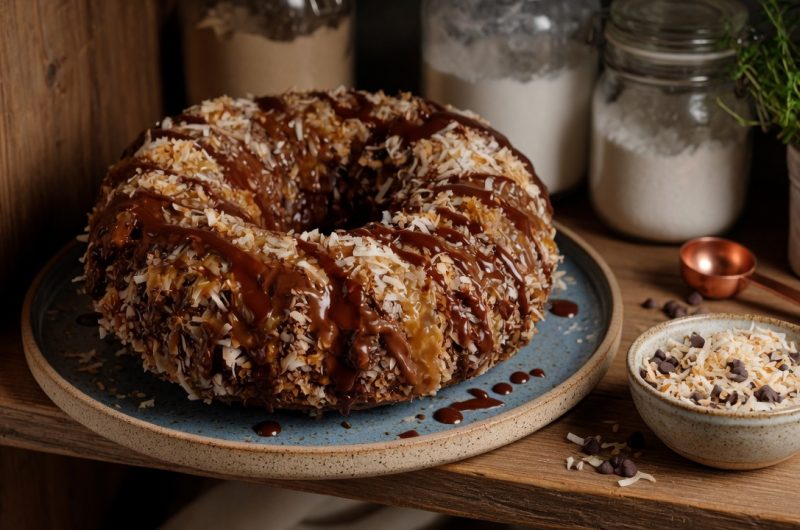
Samoa Bundt Cake brings together the classic flavors of the popular Girl Scout cookie in an easy homemade dessert. This chocolate cake features deep cocoa flavors paired with sweet caramel and crunchy toasted coconut. The combination creates a rich dessert that works for special occasions or weekend baking projects. The bundt pan shape makes an attractive presentation without requiring fancy decorating skills. Each slice delivers the sweet and satisfying taste that fans of Samoa cookies love, but in a soft, moist cake form.
Understanding the Chocolate Base
The chocolate flavor in this cake comes from melted semi-sweet chocolate chips mixed directly into the batter. This method creates a deeper chocolate taste compared to using only cocoa powder. The chocolate chips melt smoothly and blend with the other wet ingredients to distribute flavor throughout every bite. Semi-sweet chocolate provides balanced sweetness without being too bitter or too sugary. The melted chocolate also adds moisture to the cake, helping it stay soft for several days after baking.
How Brown Sugar Affects the Cake
Light brown sugar serves as the main sweetener in this recipe and does more than just add sweetness. The molasses content in brown sugar contributes to the cake’s moisture and creates a tender crumb. Brown sugar also adds a subtle caramel undertone that complements the caramel frosting used later. When creamed with butter, brown sugar helps create air pockets that make the cake light rather than dense. This ingredient works better than white sugar for achieving the soft texture you want in a bundt cake.
The Role of Sour Cream in Baking
Sour cream is a key ingredient that makes this cake exceptionally moist and tender. The acidity in sour cream reacts with the baking soda to create a light, fluffy texture. This dairy product also adds richness without making the cake feel heavy or greasy. The slight tanginess balances the sweetness from the sugar and caramel, preventing the finished cake from tasting overly sweet. Using full-fat sour cream gives the best results, though low-fat versions can work in a pinch.
Why Hot Water Goes in Cake Batter
Adding hot water to chocolate cake batter might seem unusual, but it serves an important purpose. The hot liquid helps dissolve the sugar completely and creates a smoother, more pourable batter. This thinner batter bakes into a moister cake because the liquid distributes more evenly throughout. Hot water also helps bloom the chocolate flavor, making it more pronounced in the finished cake. The batter will look thin when you pour it into the pan, but this is exactly what you want for a moist result.
Preparing Your Bundt Pan Properly
Getting the cake out of the bundt pan without it sticking requires proper preparation before you add the batter. Grease every ridge and crevice of the pan thoroughly with butter or shortening. After greasing, dust the pan with flour, tapping out any excess. You can also use baking spray that contains flour, which simplifies this step. Make sure to coat the center tube completely since this area often causes sticking problems. Taking time to prepare the pan well prevents the frustration of a cake that breaks apart when you try to remove it.
Getting the Right Flour Measurement
Measuring flour correctly makes the difference between a light cake and a heavy one. Too much flour creates a dry, dense cake that lacks the tender crumb you want. The best method involves fluffing the flour in its container with a spoon or whisk first. Then spoon the flour into your measuring cup rather than scooping directly from the bag. Finally, level off the top with a straight edge like a knife. This technique ensures you use the right amount without packing extra flour into the cup.
Creaming Butter and Sugar Correctly
The step where you beat butter and brown sugar together builds the foundation for your cake’s texture. This process should take about five minutes with an electric mixer on medium speed. During this time, the mixture becomes lighter in color and fluffy in texture. The sugar crystals cut into the butter, creating tiny air pockets that help the cake rise. Rushing this step results in a denser cake, so take the full time even if it seems long. Room temperature butter creams much more easily than cold butter straight from the refrigerator.
Adding Eggs One at a Time
Adding eggs individually rather than all at once helps them incorporate better into the batter. Beat each egg completely into the mixture before adding the next one. This gradual method creates a stable emulsion that holds the fat and liquid together. If you add all the eggs at once, the mixture might look curdled or separated. Each egg should disappear into the batter before you add another. Room temperature eggs blend more smoothly than cold eggs, so let them sit out for about thirty minutes before baking.
Alternating Dry and Wet Ingredients
The technique of alternating flour mixture and sour cream prevents overmixing the batter. Start and end with the flour mixture, typically dividing it into three additions. Add about one-third of the flour, mix briefly, then add half the sour cream. Continue this pattern until all ingredients are incorporated. Mix only until you no longer see dry flour streaks. Overmixing develops too much gluten, which makes the cake tough instead of tender. This method keeps the batter smooth while maintaining the delicate texture.
Checking for Doneness
Bundt cakes need thorough baking to cook all the way through, especially near the center tube. Start checking at fifty-five minutes by inserting a wooden pick or cake tester into the thickest part. The tester should come out clean or with just a few moist crumbs. If you see wet batter, bake for another five minutes and check again. The top of the cake should spring back when lightly pressed. The edges will start to pull away slightly from the pan sides when the cake is done.
Cooling the Cake Properly
Let the baked cake cool in the pan for exactly ten minutes after removing it from the oven. This brief cooling period allows the cake to firm up enough to hold its shape. Cooling too long makes the cake stick to the pan, while removing it too soon causes it to break apart. After ten minutes, place a wire cooling rack over the top of the pan. Flip the whole thing over quickly and lift off the bundt pan. If the cake sticks, let it sit upside down for a minute and gently tap the pan.
Making Smooth Caramel Frosting
The caramel frosting starts by beating softened butter with jarred caramel sauce until the mixture is creamy and smooth. This takes about two minutes with an electric mixer. Then add powdered sugar gradually, mixing on low speed to avoid creating a sugar cloud in your kitchen. The frosting will seem thick at first, but adding heavy cream or milk loosens it to spreadable consistency. Beat the frosting on medium-high speed for a minute at the end to make it light and fluffy.
Toasting Coconut Without Burning
Toasted coconut adds crunch and nutty flavor to the finished cake, but it burns easily and requires attention. Spread sweetened shredded coconut in an even layer on a baking sheet. Place it in an oven heated to three hundred fifty degrees. Stir the coconut every two minutes to ensure even browning. Watch carefully after five minutes because coconut goes from golden to burnt very quickly. Remove it from the oven when it reaches a light golden brown color. It will continue darkening slightly as it cools on the pan.
Assembling All the Layers
Wait until the cake cools completely before adding any frosting or toppings to prevent melting. Spread the caramel frosting over the top of the cake, letting some drip down the sides naturally. The frosting does not need to be perfect or completely smooth. Press the toasted coconut onto the frosting while it is still soft so the coconut sticks well. For extra flavor, drizzle additional caramel sauce over the coconut. Add stripes of hot fudge sauce across the top for a finish that looks bakery-quality.
Storage Tips for Maximum Freshness
This cake stays moist at room temperature for up to three days when stored properly. Place it in an airtight container or cover it tightly with plastic wrap. The frosting remains soft at room temperature, so you do not need to refrigerate unless your kitchen is very warm. For longer storage, refrigerate the cake for up to five days. Let refrigerated cake sit at room temperature for thirty minutes before serving for the best taste and texture. The flavors blend and improve after the first day, making day-old cake especially delicious.
Common Problems and Solutions
If your cake turns out dry, you may have added too much flour or baked it too long. Check your measurements and oven temperature accuracy. A cake that sinks in the middle usually means the oven temperature was too low or the cake needed more baking time. Cracks on top happen when the oven is too hot, so reduce the temperature by twenty-five degrees next time. If the cake sticks in the pan, you did not grease it thoroughly enough or left it in the pan too long before turning it out.
Serving Suggestions
This rich cake needs nothing more than a cold glass of milk or hot cup of coffee. The sweetness and dense texture make small slices satisfying, so cut thin pieces for serving. The cake works well for birthday celebrations, potluck dinners, or holiday dessert tables. Serve it at room temperature for the softest texture and most pronounced flavors. You can also warm individual slices in the microwave for fifteen seconds to slightly melt the caramel frosting for a different experience.
Making the Recipe Your Own
While this recipe is delicious as written, you can adjust it to suit your preferences. Use dark chocolate chips instead of semi-sweet for a more intense chocolate flavor. Replace the sweetened coconut with unsweetened if you prefer less sugar. Add a tablespoon of instant espresso powder to the batter to enhance the chocolate taste. Sprinkle chopped toasted pecans over the coconut for extra crunch. You can also use homemade caramel sauce instead of jarred if you have the time and skills to make it.
Why Bundt Pans Work Well
Bundt pans create cakes with attractive shapes that look impressive without requiring decorating skills. The tube in the center allows heat to reach the middle of the cake, ensuring even baking throughout. The ridged designs of most bundt pans add visual interest to the finished cake. These pans typically hold ten to twelve cups of batter, making them perfect for feeding a crowd. The shape also allows frosting and toppings to cascade down the sides naturally for an appealing presentation.
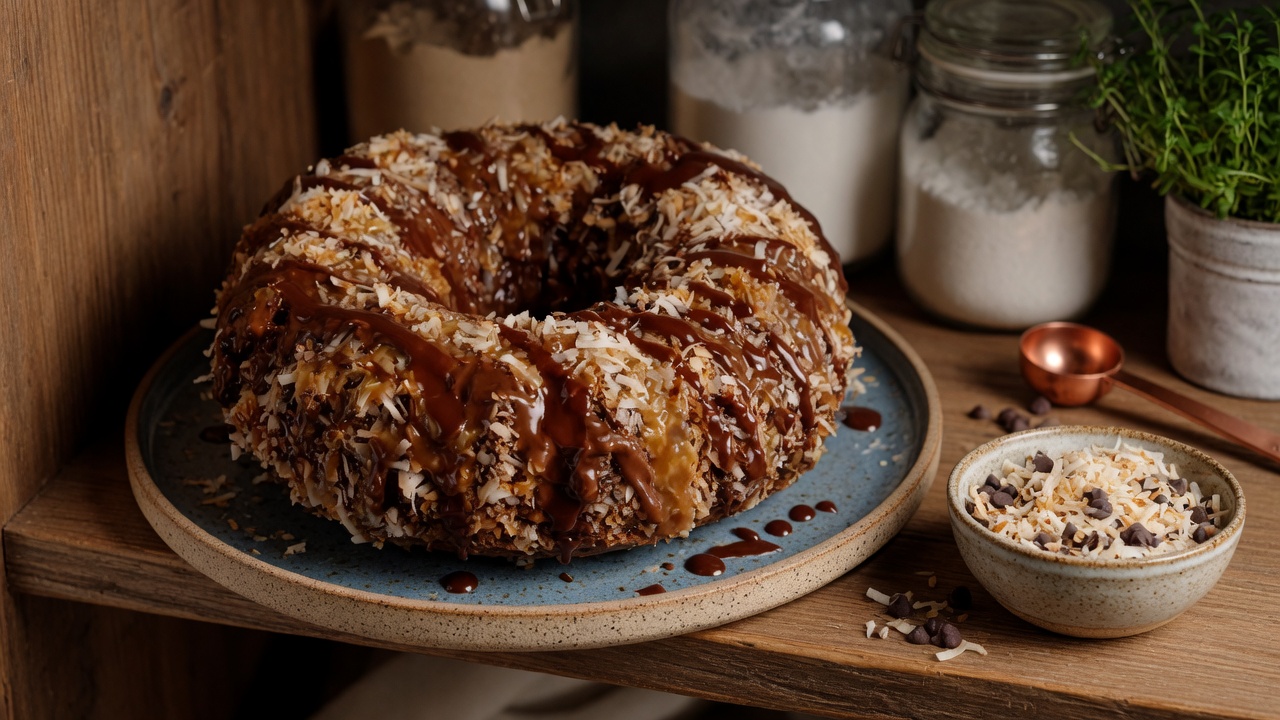
Scouts Samoa Cookies Pound Cake
This Samoa Bundt Cake is a show-stopping dessert that’s perfect for special occasions or whenever you’re craving something sweet and indulgent. The combination of chocolate, caramel, and coconut is simply irresistible, and the cake itself is moist and tender, making it a crowd-pleaser every time.
16
servings20
minutes55
minutes572
kcal1
hour15
minutesIngredients
- For the Cake:
1 1/2 cups semi-sweet chocolate chips
1/2 cup butter, softened
1 (16-ounce) package light brown sugar
3 large eggs
2 cups all-purpose flour
1 teaspoon baking soda
1/2 teaspoon salt
1 (8-ounce) container sour cream
1 teaspoon vanilla extract
1 cup hot water
- For the Caramel Frosting:
3/4 cup butter (1 1/2 sticks)
1/4 cup jarred caramel sauce
3 cups powdered sugar
1 1/2 to 2 tablespoons heavy cream or milk
- For the Toppings:
1 1/2 cups sweetened shredded coconut, toasted
Caramel Sauce
Hot Fudge Sauce
Directions
- Preheat and Prepare Pan: Preheat your oven to 350°F (175°C). Grease and flour a Bundt pan or use baking spray.
- Melt Chocolate Chips: Microwave chocolate chips in 20-second intervals until smooth, stirring between intervals. Set aside.
- Cream Butter and Sugar: Beat softened butter and brown sugar with an electric mixer for about 5 minutes until light and fluffy.
- Add Eggs and Chocolate: Beat in eggs one at a time, then add the melted chocolate and mix until combined.
- Combine Dry Ingredients: Sift together flour, baking soda, and salt in a separate bowl.
- Alternate Mixing: Add flour mixture to the butter mixture in thirds, alternating with the sour cream, beginning and ending with the flour mixture.
- Incorporate Water and Vanilla: Slowly add hot water and vanilla extract with the mixer on low speed until combined.
- Bake the Cake: Pour the batter into the prepared Bundt pan and bake for 55-60 minutes or until a wooden pick comes out clean. Cool in the pan for 10 minutes, then invert onto a wire rack to cool completely.
- Make Frosting: Beat butter and caramel sauce until creamy. Gradually add powdered sugar, beating until smooth. Adjust consistency with heavy cream or milk.
- Toast Coconut: Toast shredded coconut in a 350°F oven for 5-7 minutes until golden.
- Assemble: Spread frosting on the cooled cake, sprinkle with toasted coconut, and drizzle with caramel and hot fudge sauce.
Nutrition Facts
- Calories: 572kcal
- Fat: 28g
- Carbohydrates: 78g
- Protein: 5g