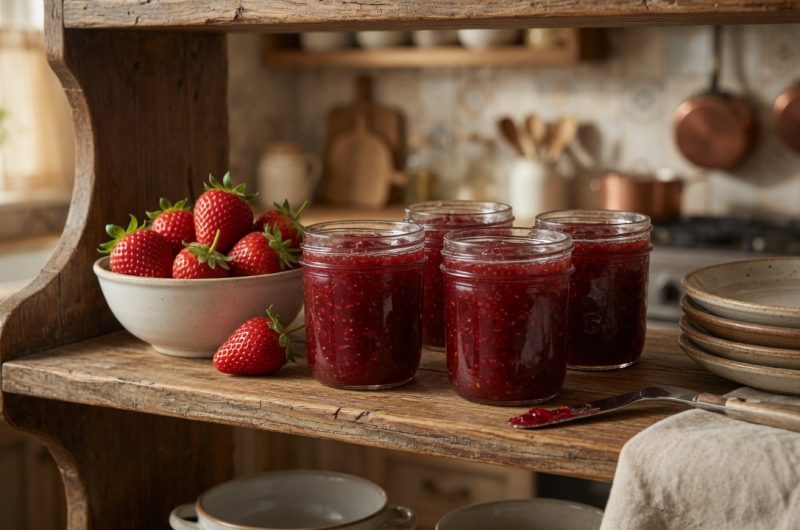
Christmas jam combines the flavors of winter berries and citrus with warm holiday spices. The tart cranberries blend with sweet strawberries to create a balanced flavor. Fresh orange and its zest add brightness that cuts through the sweetness. Spices like cinnamon, cloves, and allspice bring warmth that reminds you of the holiday season. This jam works perfectly as a spread for morning toast or as a filling for festive pastries. The deep red color also makes it an attractive homemade gift during the Christmas season.
Understanding the Role of Cranberries
Cranberries provide natural tartness that balances the sweetness from sugar and strawberries. These berries are packed with antioxidants and vitamin C, adding nutritional value to the jam. Fresh cranberries work best in this recipe, though frozen ones are acceptable if fresh are unavailable. The cranberries also contain natural pectin, which helps the jam set properly. Their firm texture breaks down during cooking to create a chunky jam consistency. The bright red color of cranberries gives the finished jam its festive appearance.
Why Strawberries Work Well
Strawberries add natural sweetness that complements the tart cranberries perfectly. Fresh strawberries deliver the best flavor and texture to the jam. Frozen strawberries can substitute for fresh ones if you make this jam outside of strawberry season. Make sure to thaw frozen berries completely and drain excess water before using them. The strawberries soften during cooking and blend with the cranberries to create a smooth yet textured spread. Their mild flavor allows the holiday spices and citrus to shine through.
Adding Orange for Brightness
Fresh orange brings a citrus note that brightens all the other flavors in the jam. Both the juice and the flesh of the orange go into the recipe. The orange zest contains essential oils that add intense citrus aroma and flavor. Remove the white pith from the orange sections because it tastes bitter. Chop the orange into small pieces so it distributes evenly throughout the jam. The natural acidity in oranges also helps preserve the jam and balance the sweetness.
Choosing Holiday Spices
Ground cinnamon adds warmth and a familiar holiday flavor to the jam. Cloves contribute a strong, aromatic quality that reminds you of mulled wine and Christmas cookies. Allspice brings a complex flavor that combines notes of cinnamon, nutmeg, and cloves. These three spices together create the signature taste of Christmas in every spoonful. Use fresh ground spices if possible for the most intense flavor. The spices infuse into the fruit as the jam cooks, creating layers of flavor.
Understanding Sugar’s Purpose
Cane sugar sweetens the jam while also acting as a preservative. The sugar helps extract juice from the fruit during cooking. It also works with pectin to create the gel-like consistency of jam. Do not reduce the sugar amount significantly or the jam may not set properly. The sugar concentration prevents bacteria growth, allowing sealed jars to be stored safely. White granulated sugar works best, though you can experiment with honey as a substitute.
Why Pectin Matters
Powdered fruit pectin helps the jam achieve the right texture and consistency. Pectin is a natural substance found in fruit that creates a gel when combined with sugar and acid. Adding commercial pectin ensures consistent results every time you make jam. Without added pectin, the jam would need much longer cooking time to thicken. Cranberries and oranges contain natural pectin, but adding powder guarantees proper setting. Follow the pectin package directions carefully for best results.
Sterilizing Jars Properly
Clean jars prevent bacteria from growing in your preserved jam. Wash jars, lids, and rings in hot soapy water and rinse them thoroughly. Fill the jars two-thirds full with water and place them in a water-bath canner. Cover the jars completely with water and bring to a gentle boil. The boiling water sterilizes the jars and keeps them hot until you are ready to fill them. Hot jars prevent cracking when you pour in the hot jam. Leave the jars in the hot water until you need them.
Preparing the Fruit Mixture
Peel the orange and remove all the white pith, which adds bitterness to jam. Separate the orange into sections and remove any seeds. Put the cranberries and orange sections into a blender or food processor. Pulse the mixture until the fruit is coarsely chopped but not pureed. You want some texture remaining in the finished jam. Transfer the chopped cranberries and orange to a large bowl. Chop the strawberries by hand or in the blender to a similar consistency.
Adding Zest and Spices
Grate the orange peel using the fine holes of a grater to create zest. Only grate the colored part of the peel, avoiding the white pith underneath. The zest contains flavorful oils that enhance the citrus taste. Add the orange zest to the bowl with the chopped fruit. Measure the cinnamon, cloves, and allspice and add them to the fruit mixture. Stir everything together so the spices distribute evenly throughout the fruit. Let the mixture sit for a few minutes to allow the flavors to begin blending.
Starting the Cooking Process
Transfer the fruit mixture to a large five-quart stockpot or heavy-bottomed pan. Add half a cup of water to help the fruit start breaking down. Sprinkle the powdered pectin over the fruit and stir it in thoroughly. The pectin needs to dissolve completely before the sugar is added. Add about half a teaspoon of butter to reduce foaming during cooking. The butter breaks the surface tension and prevents excessive foam from forming.
Bringing to a Rolling Boil
Place the pot over high heat and stir constantly as the mixture heats. Bring the fruit to a full rolling boil that cannot be stirred down. A rolling boil continues bubbling vigorously even when you stir the mixture. Once you reach this stage, add all the sugar at once. Stir constantly to dissolve the sugar and prevent burning on the bottom. Return the mixture to a full rolling boil. Time exactly one minute once the boil returns, stirring the entire time.
Testing for Proper Gel
The sheeting test determines if your jam has reached the gel stage. Dip a clean metal spoon into the boiling jam. Lift the spoon out and hold it horizontally over the pot. Watch how the jam drips off the spoon. If it forms two drops that merge and sheet off together, the jam is ready. If the jam runs off in separate drops, cook it a bit longer and test again. This test ensures your jam will be the right consistency when cooled.
Filling the Jars
Remove the hot jars from the canner one at a time using jar lifters. Pour out the water from inside each jar back into the canner. Place a canning funnel in the jar opening to prevent spills. Ladle the hot jam into each jar, leaving one-quarter inch of space at the top. This space is called headspace and allows for expansion during processing. Wipe the rim of each jar with a clean, damp cloth to remove any jam residue. Place a lid on each jar and screw on the ring until it is fingertip tight.
Processing in Water Bath
Place the filled jars back into the water-bath canner on the rack. Make sure the jars are covered by at least two inches of water. Put the lid on the canner and bring the water to a full boil. Process the jars for ten minutes, counting from when the water reaches a full boil. After ten minutes, turn off the heat and remove the canner lid. Let the jars sit in the hot water for five more minutes. This gradual temperature change prevents the jars from cracking.
Cooling and Checking Seals
Use jar lifters to remove the jars from the canner carefully. Place the hot jars on a towel-lined counter with space between them. Do not disturb the jars for twenty-four hours while they cool and seal. You may hear popping sounds as the lids seal, which is normal. After twenty-four hours, press the center of each lid. A sealed lid will not move or make a popping sound. Any jars that did not seal should go in the refrigerator for immediate use.
Storing Your Christmas Jam
Properly sealed jars can be stored in a cool, dark pantry or cupboard. The jam will keep for up to one year when stored in ideal conditions. Keep the jars away from direct sunlight and temperature fluctuations. Once you open a jar, store it in the refrigerator and use within three weeks. Label your jars with the date so you know when you made them. The flavor of the jam may actually improve after a few weeks as the flavors blend.
Fixing Jam That Is Too Thick
Sometimes jam becomes too thick after it has cooled and set. Open the jar and scoop the jam into a saucepan. Heat it gently over low heat, stirring constantly. Add a small amount of apple juice or port wine to thin it out. Stir until the jam reaches your desired consistency. You can return it to clean jars or simply store it in the refrigerator. Adding liquid maintains the flavor while adjusting the texture.
Correcting Runny Jam
If your jam did not set and remains too thin, you can recook it. Measure how much runny jam you have and calculate the needed ingredients. For each half pint of jam, add two teaspoons of sugar and two teaspoons of juice. Add half a tablespoon of lemon juice and one teaspoon of powdered pectin. Combine everything in a pot and bring to a hard boil for one minute. Re-jar the jam in clean, sterilized jars and process again in the water bath.
Using Honey Instead of Sugar
Honey can replace some or all of the sugar in this jam recipe. Use about three-quarters as much honey as the amount of sugar called for. Honey changes how pectin sets, so consider using low-sugar pectin. The honey flavor will come through in the finished jam. Choose a mild honey that will not overpower the fruit flavors. The jam may have a slightly different texture but will still taste delicious.
Making Jam Without Added Pectin
Cranberries and orange peels naturally contain pectin. You can make this jam without adding commercial pectin if you prefer. The cooking time will be longer to allow natural pectin to activate and the jam to thicken. Cook the fruit mixture at a steady boil for thirty to forty minutes. Test frequently for the gel stage using the sheeting test. Natural pectin jam has a softer set than jam made with added pectin.
Gifting Your Homemade Jam
Christmas jam makes a thoughtful homemade gift for friends and family. Decorate the jars with festive fabric circles tied with ribbon. Create custom labels with the jam name and the date you made it. Include serving suggestions or recipe ideas with each gift. Package jars in gift boxes with crackers and cheese for a complete present. The beautiful red color and holiday flavors make this jam perfect for Christmas giving.
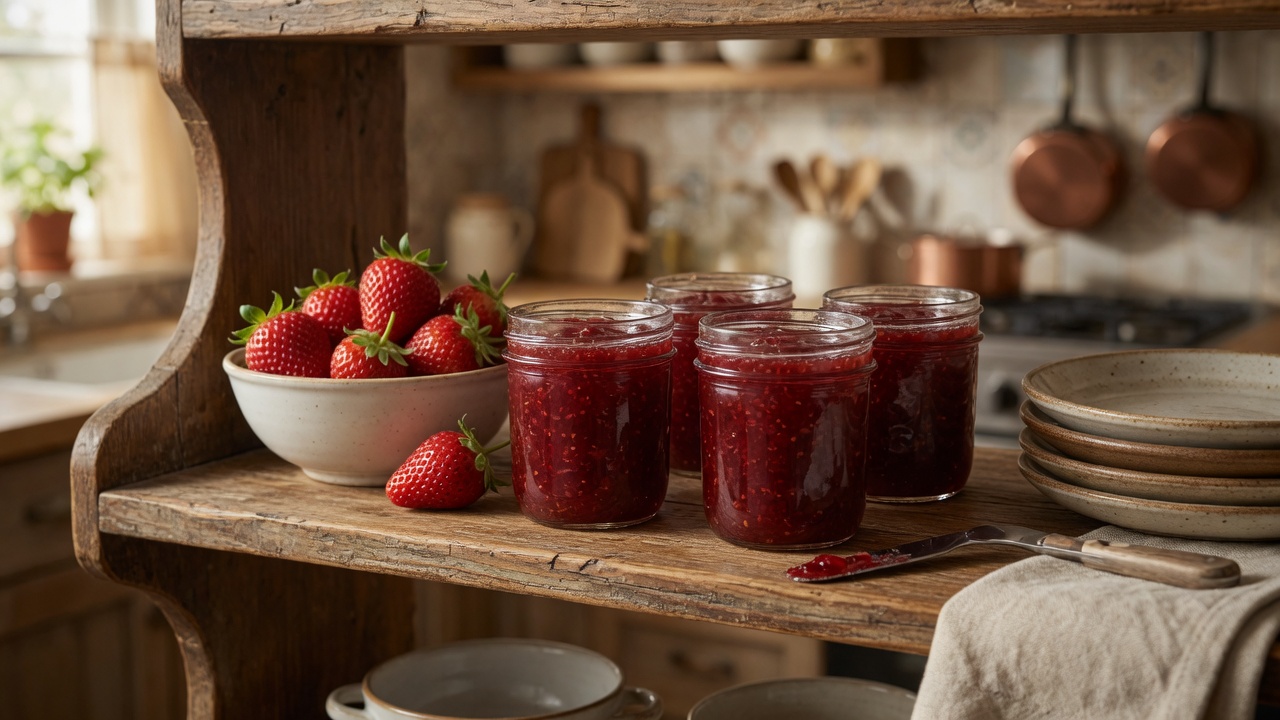
Homemade Christmas Jam
A festive holiday jam combining tart cranberries, sweet strawberries, fresh orange, and warm spices for a perfect Christmas spread.
20
minutes20
minutes37
kcal40
minutesIngredients
12 oz fresh or frozen cranberries (thawed, if frozen)
1 peeled orange
2 tsp orange zest
16 oz fresh or frozen strawberries (thawed, if frozen)
1/4 tsp ground cloves
1/4 tsp allspice
1/4 tsp ground cinnamon
4 cups cane sugar
1 – 1.75 oz powdered fruit pectin
1/2 cup water
Directions
- Sterilize jars and lids in a water-bath canner.
- Coarsely chop cranberries and orange in a blender.
- Add strawberries, orange zest, and spices to the mix. Blend until finely chopped.
- Transfer the fruit mixture to a large pot, add water, and stir in the pectin.
- Bring the mixture to a boil, then add sugar. Boil for 1 minute.
- Remove from heat and skim off foam.
- Ladle the hot jam into jars, leaving 1/4 inch of headspace.
- Process jars in a water-bath canner for 10 minutes.
- Cool jars for 24 hours. Check seals before storing.
Nutrition Facts
- Calories: 37kcal
- Fat: 0g
- Carbohydrates: 10g
- Sugar: 9g
- Protein: 0g