Butter adds richness and moisture to steak that you cannot achieve with oil alone. The fat in butter coats each piece of meat and carries flavors throughout every bite. As the butter melts over the hot steak, it seeps into the surface and creates a glossy coating. This coating helps keep the meat juicy while adding a layer of flavor. Butter also contains milk solids that brown and create a nutty taste. The combination of butter with garlic creates an aromatic sauce that makes simple steak taste restaurant-quality.
Choosing the Right Steak Cut
Sirloin steak works perfectly for this recipe because it has good flavor without being too expensive. This cut contains enough marbling to stay tender when cut into small pieces. Ribeye is another excellent choice if you want more fat and a richer taste. The extra marbling in ribeye means more juice and flavor in every bite. Tenderloin or filet mignon creates the most tender steak bites possible. These cuts cost more but deliver a melt-in-your-mouth texture. Strip steak offers a middle ground between flavor and tenderness at a reasonable price. Any of these cuts work well when cooked properly on a hot griddle.
Understanding High Smoke Point Oils
Avocado oil has a smoke point of around five hundred degrees Fahrenheit. This high smoke point prevents the oil from burning when you cook on a very hot griddle. Burning oil creates smoke and unpleasant flavors that can ruin your steak. The neutral flavor of avocado oil lets the steak and garlic butter shine through. Olive oil works as a substitute but has a lower smoke point around four hundred degrees. Canola oil and vegetable oil both have high smoke points and neutral flavors. Coconut oil adds a subtle sweet flavor that some people enjoy with steak.
Cutting Steak into Bite-Sized Pieces
Cut your steak into pieces about one to one and a half inches on each side. Pieces this size cook quickly while still allowing you to achieve a good sear. Cutting too small results in overcooked, dry steak that loses its juice. Pieces that are too large take longer to cook and may not develop a proper crust. Try to make all the pieces roughly the same size so they cook evenly. Cut against the grain when possible to ensure the steak stays tender. The grain refers to the direction of the muscle fibers in the meat.
Seasoning with Salt and Pepper
Salt and pepper are the foundation of good steak seasoning. Salt enhances the natural beef flavor and helps create a flavorful crust. The salt draws moisture to the surface where it evaporates, concentrating the flavors. Black pepper adds a subtle heat and aromatic quality that complements the garlic. Use freshly ground black pepper for the best flavor and aroma. Season generously on all sides of the steak pieces before cooking. The high heat of the griddle will intensify these simple seasonings.
Adding Garlic for Aromatic Flavor
Fresh minced garlic provides an aromatic punch that pairs perfectly with butter and beef. The garlic cooks briefly in the hot butter, releasing its oils and flavors. Minced garlic from a jar can work in a pinch but fresh garlic tastes better. One tablespoon of minced garlic equals about three to four cloves. The garlic should cook for only thirty to sixty seconds to prevent burning. Burnt garlic tastes bitter and can overpower the other flavors. The brief cooking time is enough to release the garlic aroma without burning.
Using Fresh Parsley as Garnish
Fresh chopped parsley adds a bright green color that makes the dish look more appealing. The mild, fresh flavor of parsley complements the rich butter and garlic. Parsley also adds a slight peppery note that balances the richness. Use flat-leaf Italian parsley or curly parsley depending on what you prefer. Chop the parsley just before serving to keep it fresh and vibrant. Dried parsley can substitute but lacks the bright flavor and color of fresh. The parsley garnish transforms a simple dish into something that looks restaurant-worthy.
Exploring Other Seasoning Options
Pre-made steak seasoning blends simplify the process by combining multiple spices. These blends typically include salt, pepper, garlic powder, and other herbs. Fresh or dried rosemary adds a piney, aromatic quality that works well with beef. Thyme contributes an earthy flavor that pairs nicely with garlic and butter. Smoked paprika brings a smoky depth without needing to grill the steak. Experiment with different combinations to find your favorite flavor profile. Each seasoning variation creates a different taste experience while using the same basic cooking method.
Cooking on a Blackstone Griddle
A Blackstone griddle provides a large, flat cooking surface that heats evenly. The griddle retains heat well, which helps create a good sear on the steak. Preheating the griddle to four hundred fifty degrees Fahrenheit is essential for proper browning. This high heat caramelizes the outside of the steak while keeping the inside tender. The flat surface allows you to cook many pieces of steak at once. You can also cook side dishes on the same surface while making the steak. The griddle makes outdoor cooking easy and cleanup simpler than using a grill.
Using a Cast Iron Skillet Instead
If you do not have a griddle, a cast iron skillet works almost as well. Cast iron retains heat extremely well and creates excellent searing. Preheat the skillet over high heat for several minutes before adding oil. Add only enough steak pieces to fit in a single layer without touching. Overcrowding the pan causes the steak to steam instead of sear. Cook the steak in batches if necessary to maintain proper spacing. The cooking method and times remain the same as using a griddle.
Preheating to the Right Temperature
Allow the griddle to preheat for at least ten to fifteen minutes. The surface should be very hot before you add any oil or steak. You can test the temperature by flicking a few drops of water on the surface. The water should sizzle and evaporate immediately when the griddle is ready. Proper preheating ensures the steak develops a golden-brown crust. Starting with a cold or warm griddle results in gray, steamed meat. The high initial heat is what creates that delicious caramelized exterior.
Spreading Oil on the Griddle
Pour the avocado oil directly onto the preheated griddle surface. Use a spatula to spread the oil across the cooking area. The oil should shimmer and move easily across the hot surface. A thin, even layer of oil prevents sticking and helps with browning. Too much oil can cause the steak to fry rather than sear. The oil also helps conduct heat from the griddle to the steak. This even heat transfer creates uniform browning on all the pieces.
Arranging Steak on the Griddle
Place the seasoned steak pieces on the oiled griddle in a single layer. Leave space between each piece so air can circulate and steam can escape. Pieces that touch each other will steam instead of developing a crust. The steak should sizzle loudly when it hits the hot griddle. If there is no sizzle, the griddle is not hot enough. Work quickly to get all the pieces on the griddle so they cook evenly. Do not move or flip the steak immediately after placing it down.
Searing for a Golden Crust
Let the steak cook undisturbed for two full minutes. This waiting period allows the meat to develop a golden-brown crust. Moving the steak too soon prevents proper browning and can cause sticking. The crust forms as proteins on the surface caramelize in the high heat. This caramelization creates deep, savory flavors that make steak taste so good. You will see the edges of the steak turn brown when it is ready to flip. Resist the urge to constantly move or flip the steak pieces.
Tossing and Continuing to Cook
After the initial sear, use a spatula to flip and toss the steak pieces. Continue cooking for another two to three minutes, tossing occasionally. The total cooking time depends on how well-done you like your steak. Medium-rare steak should cook for about four to five minutes total. Medium steak needs about six to seven minutes of cooking time. The small size of the pieces means they cook much faster than whole steaks. Check the internal temperature with a meat thermometer if you are unsure.
Checking Internal Temperature
Insert a meat thermometer into the thickest piece of steak to check doneness. For medium-rare, you want an internal temperature of one hundred thirty to one hundred thirty-five degrees. Medium steak should reach one hundred thirty-five to one hundred forty-five degrees. Well-done steak cooks to one hundred fifty-five degrees or higher. Remember that the steak continues cooking slightly after you remove it from heat. Pull the steak off about five degrees before your target temperature. Let it rest for a minute or two before adding the butter and garlic.
Adding Butter and Garlic
Reduce the griddle heat to medium before adding the butter. Place the butter directly on top of the cooked steak pieces. Add the minced garlic at the same time as the butter. The butter will melt quickly on the hot steak and griddle. Toss the steak pieces to coat them evenly with the melted butter and garlic. Cook for only thirty to sixty seconds until the garlic becomes fragrant. Watch carefully to ensure the garlic does not burn. The brief cooking time is enough to release the garlic flavor without bitterness.
Bringing Steak to Room Temperature
Take the steak out of the refrigerator thirty minutes before cooking. Room temperature steak cooks more evenly than cold steak straight from the fridge. Cold steak can develop a crust on the outside while remaining raw inside. Letting the meat warm up slightly ensures even cooking throughout. This step is especially important for thicker pieces of steak. Set the steak on a plate on the counter while you prepare other ingredients. Never leave raw meat at room temperature for more than one hour.
Garnishing with Fresh Parsley
Remove the steak from the griddle and transfer it to a serving dish. Sprinkle the freshly chopped parsley over the top of the hot steak. The heat will slightly wilt the parsley and release its fresh aroma. The bright green color provides a nice contrast to the brown steak. Toss the steak gently to distribute the parsley evenly. The parsley should coat most pieces without clumping in one spot. This final touch makes the dish look finished and professional.
Serving Suggestions and Pairings
These steak bites pair well with many different side dishes. Mashed potatoes or roasted potatoes soak up the delicious garlic butter sauce. Steamed or roasted vegetables like broccoli, asparagus, or green beans add color and nutrition. A fresh garden salad with vinaigrette provides a light contrast to the rich steak. Crusty bread or dinner rolls are perfect for soaking up any remaining butter sauce. Rice or pasta also work well as a base for the steak bites. The versatile nature of this dish makes it suitable for casual dinners or special occasions.
Storing Leftover Steak Bites
Place any leftover steak in an airtight container once it cools to room temperature. Store the container in the refrigerator for up to five days. The butter sauce may solidify when cold, which is completely normal. Proper storage prevents the steak from drying out or absorbing other flavors. Label the container with the date so you know when you made it. Leftover steak bites make great additions to salads, wraps, or grain bowls. The pre-cooked steak saves time when assembling quick lunches.
Reheating for Best Results
Reheat leftover steak bites in a skillet over medium heat. Add a small amount of butter or oil to the pan to prevent drying. Heat for three to four minutes, stirring occasionally until warmed through. The skillet method maintains the texture better than microwaving. Microwaving can make steak rubbery and tough. If you must use a microwave, heat in short intervals and cover the dish. Add a tablespoon of water or broth to create steam and prevent drying. Reheated steak will not be quite as tender as fresh but still tastes good.
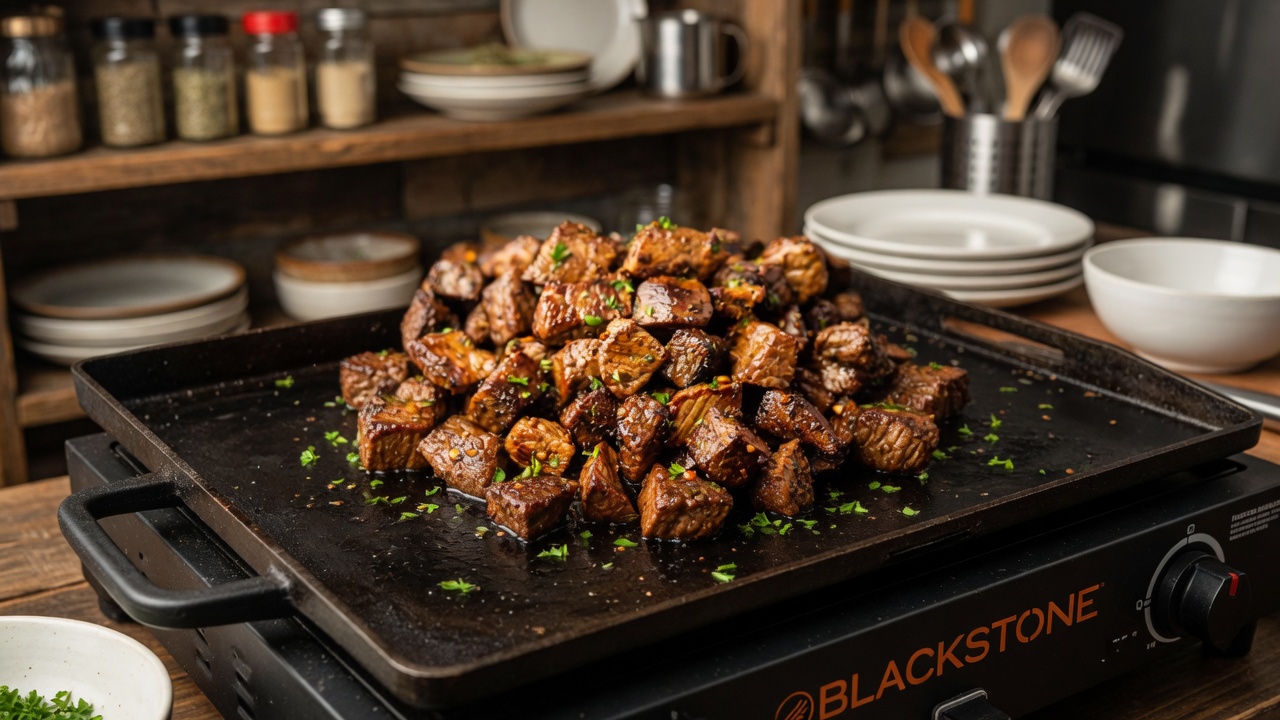
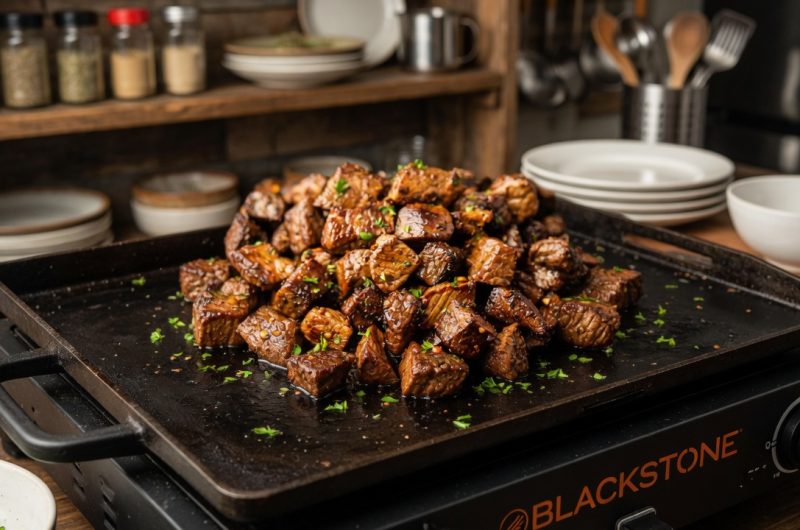
Blackstone Garlic Butter Steak Bites
Tender bite-sized pieces of sirloin steak seared on a hot griddle and tossed in melted garlic butter for a quick and flavorful meal.
6
servings10
minutes5
minutes432
kcal15
minutesIngredients
1 Tablespoon Avocado Oil
3 pounds Sirloin Steak, cut into bite-sized pieces
1 teaspoon Salt
1 teaspoon Pepper
6 Tablespoons Butter
1 Tablespoon Minced Garlic
1 Tablespoon Fresh Parsley (chopped)
Directions
- Preheat Blackstone Griddle to 450°F and drizzle oil onto the surface.
- Add steak pieces to the griddle, seasoning with salt and pepper.
- Cook steak for 2 minutes without flipping to get a good sear.
- Toss steak and cook for 2-3 more minutes until browned.
- Reduce heat to medium, add garlic and butter, and cook for 30-60 seconds until butter melts.
- Garnish with parsley and serve warm. Enjoy!
Nutrition Facts
- Calories: 432kcal
- Fat: 24g
- Carbohydrates: 1g
- Sugar: 0.04g
- Protein: 50g
- Calcium: 74mg
- Iron: 4mg