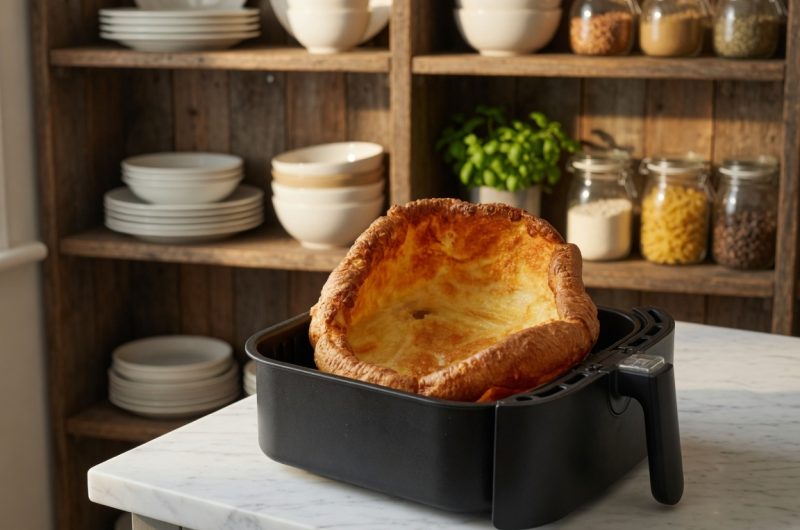
Yorkshire pudding represents one of the most beloved traditional British side dishes, particularly cherished during holiday meals and special occasions when families gather for hearty dinners. This golden, puffy creation has graced dinner tables for centuries, traditionally requiring careful oven management and precise timing to achieve the characteristic rise that makes it so appealing.
The modern air fryer has revolutionized Yorkshire pudding preparation by delivering consistently perfect results in a fraction of the traditional cooking time. This straightforward recipe proves that you do not need extensive cooking experience or culinary training to create restaurant-quality Yorkshire pudding at home. Air fryer versions cook in just twelve minutes compared to twenty to thirty minutes in a conventional oven, making this recipe ideal for busy weeknights when you want impressive sides without extensive preparation.
The beauty of air fryer Yorkshire pudding lies in its simplicity: just four basic ingredients mixed together create a batter that transforms into something spectacular under the intense, circulating heat of the air fryer. Whether you are planning a special holiday dinner, hosting guests for Sunday roast, or simply want to elevate an ordinary weeknight meal, this recipe delivers impressive results that seem to require more effort than they actually do.
Understanding Yorkshire Pudding and Its Cultural Significance
Yorkshire pudding originated in northern England centuries ago as a way to stretch meat portions by creating a filling, budget-friendly dish that could accompany smaller portions of expensive protein. Despite its humble origins, Yorkshire pudding evolved into a celebrated dish served at formal dinners and holiday meals throughout Britain and beyond. The dish traditionally accompanies roasted meats, particularly beef, where it soaks up flavorful drippings and gravy.
The characteristic rise of Yorkshire pudding comes from the interaction of eggs, heat, and moisture in the batter, creating a chemistry that produces puffy, golden results when conditions are exactly right. Traditional oven baking requires preheating to high temperatures and careful monitoring to ensure the pudding rises properly without collapsing or burning.
The air fryer simplifies this process by providing consistent, intense heat from all directions, eliminating the guesswork involved in traditional oven baking. Understanding the science behind Yorkshire pudding’s rise helps you appreciate why the air fryer works so effectively and why certain techniques matter.
The Science Behind Yorkshire Pudding Rising and Cooking
Yorkshire pudding rises through a combination of steam and protein coagulation that occurs when a simple egg-based batter meets intense heat. The eggs in the batter contain proteins that unfold and bond together when heated, creating a structure that traps air bubbles. Simultaneously, the milk in the batter converts to steam as it heats, creating pressure that pushes the structure upward.
This rising only occurs under specific conditions: the ramekins must be hot before the batter is added, and the heat must be intense and consistent. The air fryer excels at creating these exact conditions because it rapidly preheats to the specified temperature and maintains consistent heat distribution throughout cooking.
The rapid air circulation in an air fryer ensures even cooking without the hot spots and cold spots that traditional ovens sometimes create. This combination of factors explains why air fryer Yorkshire pudding achieves such reliable, impressive results compared to traditional oven methods that require more precision and careful monitoring.
Selecting the Right All-Purpose Flour for Perfect Results
All-purpose flour forms the dry ingredient base of Yorkshire pudding batter, providing structure and body that allows the pudding to rise and hold its shape. The protein content in all-purpose flour, typically around ten to twelve percent, develops just enough gluten to support the pudding without creating a tough, dense result.
Using all-purpose flour rather than bread flour or cake flour achieves the ideal balance of structure and tenderness that defines quality Yorkshire pudding. The flour should be measured accurately because too much flour creates dense pudding while insufficient flour results in puddings that do not rise properly. Many home cooks use a kitchen scale for measuring, which eliminates guesswork and ensures consistency across multiple batches.
If measuring by cups without a scale, spooning flour into the measuring cup and leveling off with a knife provides more accurate measurement than scooping directly from the bag, which compacts flour and results in too much being used.
Understanding Milk’s Role in Creating Moisture and Steam
Milk serves as the liquid component of Yorkshire pudding batter, providing moisture that is essential for creating the steam that causes the pudding to rise. The fat content in milk contributes to the richness and browning of the finished pudding, creating that appealing golden exterior. Using whole milk rather than skim milk produces superior results because the fat content creates better browning and richer flavor. The milk should be cold when added to the batter; some bakers even refrigerate the completed batter for an hour before cooking to ensure moisture content remains optimal. The two cups of milk specified in the recipe has been carefully calibrated to create a batter with the correct consistency for rising. Too little milk produces thick batter that does not rise adequately, while excessive milk creates thin batter that splatters and does not develop proper structure.
The Critical Role of Eggs in Creating Structure and Rise
Eggs are perhaps the most important ingredient in Yorkshire pudding, serving multiple critical functions that determine success or failure. The proteins in eggs create the structural network that traps air and steam, allowing the pudding to rise and maintain its shape. The fat in egg yolks contributes to richness and helps achieve the golden color that makes Yorkshire pudding so appealing. The whipping action when mixing eggs incorporates air into the batter, which contributes to the rise. Using large eggs rather than medium or extra-large ensures proper ratios with the other ingredients. Eggs should ideally be at room temperature before mixing because they incorporate more smoothly and completely into the batter than cold eggs. Some traditional recipes separate eggs and whip the whites separately before folding them in to maximize air incorporation, though this more complicated approach is unnecessary with the air fryer’s effective heat distribution.
Salt as a Flavor Enhancer and Binding Agent
One teaspoon of salt seems like a small amount but serves important purposes in Yorkshire pudding batter. Salt enhances all the other flavors, preventing the pudding from tasting bland or one-dimensional. Beyond flavor enhancement, salt strengthens the gluten network slightly, helping the pudding structure support itself better. Salt also activates enzymes in the flour that strengthen the dough, contributing to better rise and structure. The specified amount of salt has been carefully calibrated to provide flavor enhancement without making the pudding taste salty. For people on low-sodium diets, the salt can be reduced, though this will slightly diminish the flavor complexity.
Mixing the Batter to Achieve Proper Consistency
Combining the eggs, flour, milk, and salt requires careful mixing to create a uniform batter without overworking the flour. Starting with the wet ingredients and gradually incorporating the flour helps prevent lumps from forming. Mixing until the batter appears smooth and uniform ensures that flour is fully hydrated and ingredients are evenly distributed. Over-mixing can develop too much gluten, resulting in tough pudding rather than the light, tender texture desired. Some cooks prefer using an electric mixer on low speed, while others use a whisk and mix by hand. Either method works as long as the batter reaches smooth consistency without excessive mixing. The finished batter should have the consistency of thin pancake batter, pourable but not watery.
Preparing Ramekins with Cooking Spray for Even Cooking
Using non-stick cooking spray to generously coat ramekins serves multiple important purposes that affect the pudding’s success. The cooking spray prevents sticking, which could tear the delicate pudding when removing from the ramekin. The fat in the cooking spray also contributes to browning the bottom and sides of the pudding, creating the appealing golden color. Generously coating the ramekin ensures complete coverage, including the sides which will be exposed to direct air circulation. Some cooks prefer using butter instead of cooking spray, which works equally well but requires more careful application to ensure complete coverage. The ramekins themselves should be oven-safe and appropriate for air fryer cooking, typically ceramic or glass that can withstand the temperature.
Filling Ramekins to the Correct Level for Optimal Rising
Filling ramekins at least halfway with batter provides sufficient volume for the pudding to rise without overflowing. Filling too full results in batter spilling over and creating a mess, while underfilling results in insufficient pudding height. Filling to approximately two-thirds full balances these concerns, providing ample room for rising while creating an adequate-sized finished pudding. The batter level is important because puddings need space to expand upward, and if ramekins are too full, the pudding cannot rise properly. Consistent filling across all ramekins ensures they cook in the same amount of time and achieve the same level of doneness.
Arranging Ramekins in the Air Fryer Basket for Even Cooking
Properly arranging filled ramekins in the air fryer basket is crucial for ensuring even cooking and preventing overcrowding that blocks air circulation. Ramekins should be placed in a single layer with space between each one to allow hot air to circulate around all sides. Most standard air fryers hold four to six ramekins in a single layer without crowding. If you have more than one batch to cook, preparing multiple batches maintains consistency better than attempting to stack or crowd ramekins. Standing ramekins upright ensures the batter cooks evenly from bottom to top. Some air fryer models have removable racks that allow stacking, though single-layer cooking generally produces more consistent results.
Setting Air Fryer Temperature and Understanding the Cooking Process
Setting the air fryer to three hundred eighty degrees Fahrenheit provides the intense, consistent heat necessary for Yorkshire pudding to rise properly. This temperature is high enough to create rapid egg protein coagulation and steam generation without burning the pudding. Different air fryer models may vary slightly in actual temperature, so the first batch helps you understand your specific machine. If puddings are not rising adequately, slightly increasing the temperature by ten degrees for the next batch may help. Conversely, if puddings are browning too quickly, reducing the temperature by ten degrees may improve results. The twelve-minute cooking time is specifically calibrated for this temperature and ramekin size.
Monitoring Puddings During the Cooking Process
Checking puddings after the twelve-minute cooking time determines whether they are fully cooked and ready to serve. Completely cooked puddings should be puffed, golden brown, and feel firm when gently touched. If any puddings appear underdone with a pale interior visible, they need additional cooking time. Adding two to three additional minutes typically completes cooking for underdone puddings. Some air fryers cook slightly faster or slower depending on heating element design and air circulation patterns, so monitoring helps you understand your specific machine’s characteristics. Keeping detailed notes about cooking times helps ensure consistent results across multiple batches.
Removing Puddings from Air Fryer and Serving Immediately
Removing cooked Yorkshire puddings from the air fryer must be done carefully because they are fragile immediately after cooking while still hot. Using tongs or a small spatula helps safely remove ramekins from the basket without burning yourself on the hot ceramic or glass. Puddings are best served immediately while still warm and puffy, as they will gradually deflate as they cool. The puddings maintain their best texture and appearance for five to ten minutes after cooking, making timing important for presentations. Serving on a warm plate helps maintain the temperature longer.
Serving Yorkshire Pudding with Traditional Accompaniments
Yorkshire pudding traditionally accompanies roasted meats, particularly beef, where it soaks up flavorful drippings and gravy. The puddings work equally well with roasted chicken, pork, or lamb, and vegetarian main dishes. Serving with rich gravy is traditional and enhances the pudding’s flavor significantly. The puddings also work as a side dish with vegetables, roasted potatoes, or salad. Some people enjoy eating Yorkshire pudding with savory fillings, while others prefer it as a simple side dish. The versatility of Yorkshire pudding makes it suitable for formal dinners and casual family meals alike.
Storage and Reheating for Leftover Puddings
Although Yorkshire puddings are best eaten immediately, leftovers can be stored for later enjoyment. Leftover puddings can be refrigerated in an airtight container for up to two days without significant quality loss. Reheating in the air fryer at three hundred fifty degrees Fahrenheit for three to five minutes restores warmth and crispness better than microwave reheating, which can make puddings tough. Some puddings may not re-crisp fully but will still taste good and be pleasant to eat. Freezing cooked puddings is possible but not recommended because freezing and thawing affect the texture significantly.
Troubleshooting Common Yorkshire Pudding Problems
If puddings do not rise, several factors could be responsible. Insufficient heat, improper batter consistency, or ramekins not being adequately coated with cooking spray are common culprits. Ensuring the air fryer is fully preheated and the ramekins are hot when batter is added improves rising. If puddings brown too quickly while remaining raw inside, the temperature is too high or the cooking time is insufficient for your specific air fryer. Reducing temperature by ten to fifteen degrees helps balance browning and cooking time. If puddings collapse after cooking, they may have been overcooked slightly, or the air fryer temperature may have been insufficient to properly set the structure.
Customizing Yorkshire Pudding with Flavor Additions
While traditional Yorkshire pudding uses only basic ingredients, variations are possible and can add interest. Adding a small amount of herbs like thyme or rosemary to the batter creates subtle flavor variation. A pinch of mustard powder adds savory depth. Some cooks add a small amount of freshly grated Parmesan cheese for richness. These additions should be minimal to avoid overpowering the traditional Yorkshire pudding flavor. Any additions should be dry ingredients mixed with the flour before adding wet ingredients to avoid creating lumps in the batter.
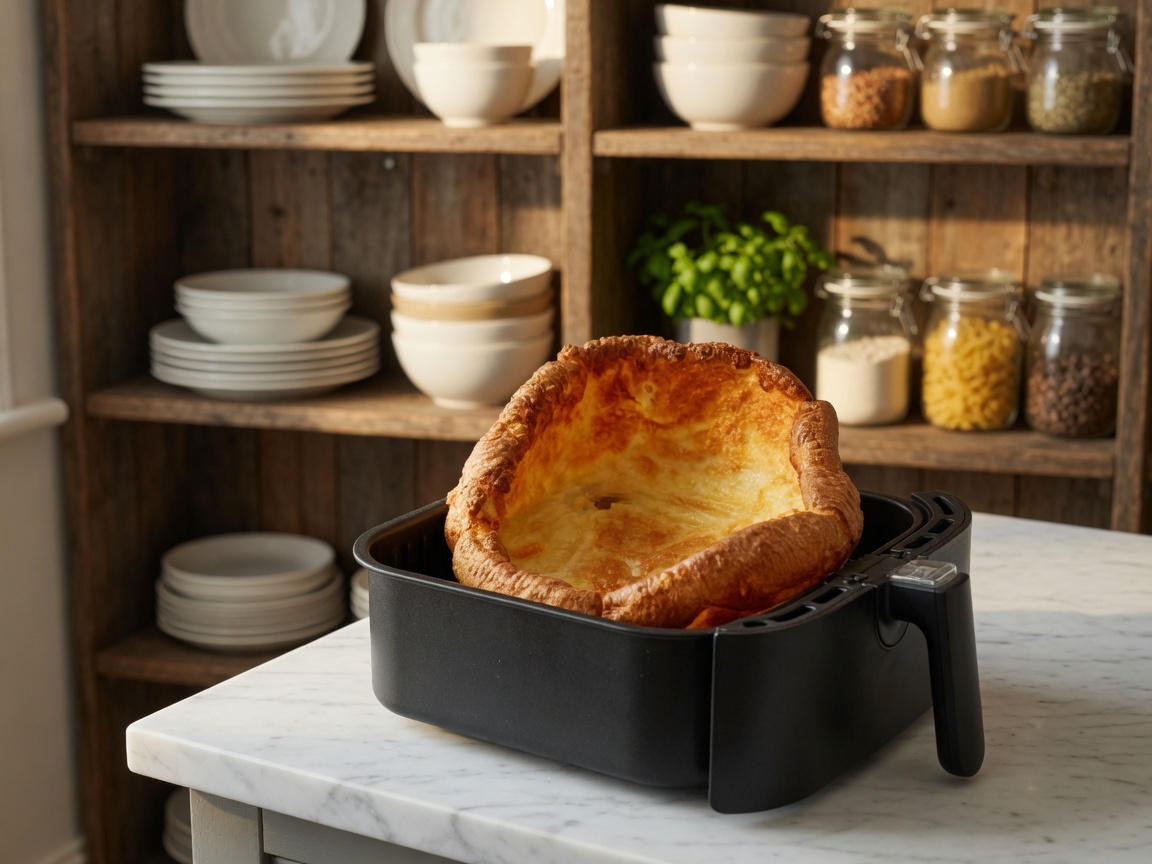
Air Fryer Yorkshire Pudding
Bake perfect Yorkshire pudding in your air fryer in just twelve minutes. This simple recipe produces golden, puffy puddings that rival traditional oven-baked versions without the hassle.
10
minutes12
minutes22
minutesIngredients
- For the Batter:
2 cups all-purpose flour
2 cups whole milk (cold)
4 large eggs, at room temperature
1 teaspoon salt
- For Preparing Ramekins:
Non-stick cooking spray
Directions
- Combine flour and salt in a bowl. Whisk together milk and eggs in another bowl. Pour wet ingredients into dry ingredients and mix until smooth with no lumps. The batter should resemble thin pancake batter.
- Set air fryer to three hundred eighty degrees Fahrenheit and preheat for three to five minutes. Preheating is essential for proper rising.
- Generously coat the inside of ramekins with non-stick cooking spray, covering all surfaces including bottom and sides.
- Pour batter into each ramekin until approximately two-thirds full. Ensure consistent filling across all ramekins for even cooking.
- Place filled ramekins in a single layer in the air fryer basket with space between each one. Do not overcrowd or stack.
- Set timer for twelve minutes and cook at three hundred eighty degrees Fahrenheit without opening the basket during cooking.
- After twelve minutes, puddings should be puffed and golden brown. If underdone, add two to three more minutes of cooking time.
- Carefully remove hot ramekins from the air fryer using tongs. Serve immediately while still warm and puffy for best results.
- If needed, repeat steps three through eight with remaining ramekins. Air fryer requires no additional preheating between batches.
Notes
- Egg Temperature: Room temperature eggs mix more smoothly into the batter than cold eggs. Remove eggs from the refrigerator approximately thirty minutes before baking.
- Air Fryer Preheating: Fully preheating is essential for adequate rising and golden color. Skipping preheating results in pale, inadequately risen puddings.
- Heat Safety: Ramekins are extremely hot immediately after cooking. Use tongs for removal and warn family members about the heat hazard.
- Immediate Serving: Serve immediately after cooking while still warm and puffy. Puddings deflate as they cool.
- Professional Results: Successful batches showcase your cooking skills and impress dinner guests with minimal effort.