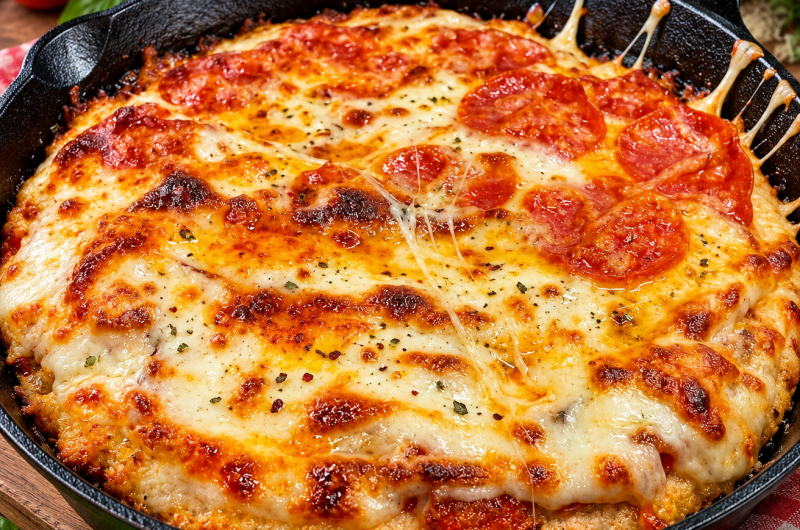
Making homemade pizza does not always require a traditional yeast dough, several hours of rising, or the effort of rolling and stretching a pizza base. This easy sourdough discard skillet pizza offers a practical alternative for anyone who enjoys freshly baked pizza but wants a simpler preparation method. Using sourdough discard as the foundation, this recipe creates a delicious cast-iron pizza with crisp, golden edges, a tender center, melted mozzarella cheese, and flavorful toppings. The entire crust comes together without kneading, additional yeast, or a separate fermentation period, making it particularly useful for busy weeknights and last-minute meals. A thoroughly heated cast-iron skillet helps the discard cook quickly and develop the browned bottom that makes skillet pizza so appealing. With a few pantry ingredients, leftover sourdough starter, and your favorite pizza toppings, you can prepare a satisfying homemade pizza while putting excess starter to good use.
Why This No-Knead Sourdough Pizza Is Worth Making
One of the greatest advantages of this sourdough discard pizza recipe is its uncomplicated preparation. Traditional pizza dough often requires careful mixing, kneading, resting, and shaping before it is ready for the oven. This version eliminates those steps by using the natural consistency of sourdough discard to form the crust directly inside a hot skillet. The method is especially convenient for home bakers who regularly maintain a sourdough starter and want a useful way to incorporate discard into everyday cooking. Another appealing feature is the flexibility of the finished pizza. You can make the crust thinner for a crispier result or leave it slightly thicker for a softer texture. The combination of Italian seasoning, garlic powder, pizza sauce, and mozzarella creates familiar pizza flavors without requiring a complicated ingredient list. Because the crust is baked before the toppings are added, it also has a better opportunity to develop structure and resist becoming soggy.
Understanding How Sourdough Discard Creates Pizza Crust
Sourdough discard is the portion of a sourdough starter that is removed during routine feeding and maintenance. It generally contains flour, water, natural yeast, and bacteria that contribute to sourdough’s characteristic flavor. Although discard is often less active than freshly fed starter, it remains useful in recipes that do not depend on a long fermentation or a strong yeast-driven rise. In this skillet pizza, the discard acts as the main crust mixture rather than being combined with additional flour to make a conventional dough. When poured into a very hot cast-iron pan, its moisture begins evaporating and the flour gradually sets into a firm base. The crust can develop bubbles and a lightly airy interior while its edges become browned and crisp. For the most predictable results, use discard with a relatively thick, pourable consistency similar to pancake batter. Very watery discard may produce a thinner, less sturdy pizza base.
The Secret Behind a Crispy Cast-Iron Pizza Crust
The cast-iron skillet is central to the success of this homemade sourdough pizza. Cast iron holds heat well, making it particularly useful for foods that benefit from a deeply browned surface. When the empty skillet is heated thoroughly inside a hot oven, it stores enough heat to begin cooking the sourdough discard as soon as the mixture touches the pan. This immediate contact helps the bottom of the pizza develop a firmer texture and encourages the edges to become crisp. The recipe calls for a 10-inch skillet, which provides enough surface area for approximately one cup of discard without spreading it excessively thin. Preheating the skillet for at least 20 minutes after the oven reaches 450°F is important because the oven air may reach the desired temperature before the heavy pan is fully heated. A lightly oiled skillet also helps prevent sticking and encourages an attractive golden crust.
Choosing the Right Sourdough Discard for Homemade Pizza
Not every batch of sourdough discard has exactly the same thickness, acidity, or flavor. These differences depend on the flour used, the starter’s hydration, its age, and how long it has been stored between feedings. A relatively young discard usually has a mild sourdough taste, while older refrigerated discard may develop a stronger tangy flavor. Both can work for this easy skillet pizza when the starter has been stored properly and shows no signs of spoilage. For the recipe’s original measurements, use one cup of discard weighing approximately 225 to 240 grams. This quantity is intended for a 10-inch skillet and creates a manageable pizza crust without needing additional flour. Allowing refrigerated discard to stand at room temperature for 30 to 60 minutes helps prevent it from cooling the hot skillet too quickly. The mixture should be easy to pour and spread gently with a spoon.
How Simple Seasonings Improve the Pizza Base
A good pizza crust needs enough flavor to complement the toppings rather than simply supporting them. This recipe uses salt, Italian seasoning, and optional garlic powder to enhance the natural flavor of the sourdough discard. Salt brings out the savory qualities of the crust, while Italian seasoning contributes an aromatic blend of herbs commonly associated with traditional pizza. Garlic powder adds another layer of flavor without introducing additional moisture, making it particularly suitable for a thin skillet crust. The seasoning is placed in the lightly oiled pan before the discard is poured in, allowing it to become part of the bottom surface as the crust cooks. This simple approach creates a flavorful base without the need for a separate dough-mixing stage. The optional garlic powder can be omitted when a milder flavor is preferred, while the original quantities of the other seasonings remain unchanged.
Why Avocado Oil Works Well for Skillet Pizza
Avocado oil plays an important role in helping this sourdough discard pizza develop a browned, crisp surface. The recipe uses one tablespoon in total, divided between coating the hot skillet and finishing the outer edge of the crust. Approximately two teaspoons are added to the preheated pan before the discard, while the remaining teaspoon is drizzled around the outside after the crust mixture has been spread. This distribution helps the bottom and edges cook more evenly while reducing the likelihood of sticking. Avocado oil is well suited to high-temperature cooking because refined varieties generally tolerate substantial heat. It also has a relatively mild flavor that allows the sourdough, herbs, sauce, and cheese to remain the main focus. Because the skillet is extremely hot, the oil should be added carefully while the pan rests on a stable, heat-safe surface. Tilting the pan slowly helps distribute the oil without unnecessary splashing.
Preparing Pizza Sauce and Mozzarella for the Best Results
The topping ingredients are intentionally straightforward, allowing the flavor of the crust to remain noticeable. One-third cup of pizza sauce provides enough tomato flavor for a 10-inch pizza without overwhelming the base with liquid. Using too much sauce can soften the crust, particularly near the center, so it is better to spread the measured amount into a relatively thin, even layer. The recipe also calls for one to one and a half cups of shredded mozzarella cheese. Mozzarella is a popular pizza cheese because it melts smoothly and develops an appealing stretchy texture. Shredding the cheese before the crust finishes baking makes the topping stage faster and prevents the skillet from sitting outside the oven for too long. For additional flavor, the recipe allows optional grated Parmesan cheese, red pepper flakes, and fresh or dried herbs. These finishing ingredients can be used according to preference without changing the essential crust preparation.
Selecting Pizza Toppings Without Making the Crust Soggy
One of the most enjoyable features of homemade cast-iron pizza is the freedom to choose toppings according to personal taste. Pepperoni is a convenient option because it adds a familiar savory flavor and generally requires very little preparation. Other preferred toppings can also be used, provided they are suitable for the short finishing bake. The main consideration is moisture. Ingredients that release large amounts of water can interfere with the crust’s texture and prevent the cheese from browning properly. Mushrooms, zucchini, and spinach are examples of vegetables that benefit from being cooked and drained before being placed on the pizza. Raw meat must also be cooked thoroughly before it is used as a topping because the final eight to ten minutes of baking may not be sufficient to cook it safely. Keeping the toppings relatively light allows the sourdough crust to remain crisp while still providing a flavorful, satisfying pizza.
Bringing Refrigerated Starter to the Proper Temperature
Although sourdough discard can be stored in the refrigerator, using it straight from a very cold container may affect how quickly the crust begins cooking. The original method recommends allowing the measured discard to rest at room temperature for approximately 30 to 60 minutes before baking. This short waiting period helps the mixture become easier to spread and reduces the temperature difference between the discard and the preheated skillet. Measure the discard into a clean glass measuring cup or bowl, cover it if necessary, and leave it on the counter while gathering the remaining ingredients. The discard does not need to double in volume or become particularly bubbly because this is not a traditional sourdough bread recipe. Its main purpose is to form the pizza base when exposed to high heat. Avoid leaving the mixture at room temperature unnecessarily long, especially in a warm kitchen, and always begin with starter that has been stored safely.
Preheating the Oven and Cast-Iron Skillet Correctly
Proper preheating is one of the most important steps in this quick sourdough discard pizza recipe. Begin by placing the empty 10-inch cast-iron skillet inside the oven before turning on the heat. Set the oven to 450°F (232°C), allowing the skillet to warm gradually along with the oven. Once the oven indicates that it has reached the selected temperature, continue heating the skillet for at least another 20 minutes. This additional time helps ensure that the thick metal is hot enough to produce the desired crust. If your oven tends to run hotter than its displayed temperature, 425°F (218°C) can be used instead, although the crust may need slightly longer to bake. While the pan heats, prepare the pizza sauce, shred the mozzarella, and arrange the preferred toppings. Having everything ready in advance makes the process safer and more efficient once the extremely hot skillet is removed.
Creating the Pizza Base Without Rolling or Kneading
Unlike a traditional pizza dough, this sourdough discard crust does not need to be rolled with a rolling pin or stretched by hand. Once the skillet is fully heated, carefully remove it from the oven using thick, dry oven mitts and place it on a heat-resistant surface. Add approximately two teaspoons of avocado oil and carefully tilt the pan to coat the bottom. Sprinkle the measured salt, Italian seasoning, and optional garlic powder over the oiled surface. Next, pour the room-temperature sourdough discard into the center of the skillet. The mixture should begin setting as it meets the hot pan. Use the back of a spoon to guide it outward if necessary, working carefully to avoid touching the hot metal. Spreading the discard into a thinner layer creates a crispier pizza, while keeping it slightly thicker produces a softer center. Finish by drizzling the remaining teaspoon of avocado oil around the outer edge.
Baking the Crust Before Adding the Toppings
Prebaking the sourdough discard crust is what makes this recipe different from many traditional homemade pizzas. Instead of adding sauce and cheese to uncooked dough, the crust is first baked on its own for approximately 10 to 12 minutes. During this initial baking stage, the discard changes from a wet mixture into a structured pizza base. Its surface gradually becomes firmer, while the outer edges begin to brown. Small bubbles or larger puffed areas may appear as moisture turns to steam and expands inside the crust. These bubbles are normal and do not indicate that anything has gone wrong. The important sign of readiness is that the top no longer appears wet or runny. If the center still looks glossy or unset after the suggested time, continue baking briefly before adding the toppings. This separate crust-baking stage helps produce a sturdier pizza that can support the sauce, mozzarella, and chosen toppings.
Adding the Sauce, Cheese, and Finishing Ingredients
Once the crust has become firm, remove the skillet carefully and set it on a stable, heat-safe surface. If a very large bubble has formed in the middle, gently press it down with a suitable utensil so the toppings can sit evenly. Avoid flattening the entire crust because the small pockets of air contribute to its texture. Spread the one-third cup of pizza sauce across the surface, leaving a narrow border around the outside. This uncovered edge helps create the appearance and texture of a traditional pizza crust. Sprinkle one to one and a half cups of shredded mozzarella evenly over the sauce, then arrange pepperoni or another preferred topping. Optional Parmesan cheese can be added for extra savory flavor, while red pepper flakes and herbs can be used to create a more aromatic finish. Work efficiently during this stage so the skillet retains as much heat as possible before returning to the oven.
Achieving Melted Cheese and Beautiful Golden Edges
The final baking stage transforms the prepared crust and toppings into a finished skillet pizza. Return the skillet to the oven and bake for approximately eight to ten minutes, or until the mozzarella has melted completely and the cheese begins developing lightly browned spots. The exact time depends on the oven, the thickness of the crust, and the amount of cheese and toppings used. A pizza with a generous layer of mozzarella may require slightly more attention to ensure the cheese melts evenly without overbaking the edges. For a darker, more restaurant-style cheese finish, the pizza can be placed under the broiler for approximately 30 seconds to two minutes. Broiling requires continuous supervision because cheese and exposed crust edges can burn very quickly. Once the topping is bubbling and the edges look crisp, remove the skillet carefully. The pizza should have a firm bottom, a tender center, and a flavorful combination of melted cheese and tomato sauce.
Resting, Removing, and Slicing the Finished Pizza
Allowing the finished pizza to rest for a few minutes improves both its texture and handling. After removing the skillet from the oven, place it on a heat-safe surface and leave the pizza undisturbed for approximately five minutes. This short resting period allows the melted cheese to settle slightly and helps the crust become easier to lift without tearing. The skillet will remain extremely hot, so keep its handle protected and avoid touching the metal directly. Use a thin spatula to gently loosen the outer edges, working around the pizza before sliding the utensil underneath the center. Once released, carefully transfer the pizza to a cutting board. Cutting directly inside the cast-iron skillet is not necessary and can make handling more difficult. Use a pizza wheel or sharp knife to divide the pizza into the desired number of slices. Serve while warm for the best combination of crisp crust, melted mozzarella, and fresh pizza flavor.
Adjusting Crust Thickness for Different Skillet Sizes
The thickness of sourdough discard pizza depends largely on how much starter is used and the diameter of the skillet. The original recipe is designed around a 10-inch cast-iron pan and approximately one cup of sourdough discard. This combination produces a crust that can be spread evenly without becoming excessively thin. An 8-inch skillet generally works with about three-quarters of a cup of discard, while a 12-inch skillet may require approximately one and one-quarter to one and one-half cups. These measurements are useful when adapting the method, although the main recipe card retains the original quantities. A thinner crust usually cooks more quickly and develops a crunchier texture, making it appealing for people who enjoy crisp pizza. A thicker layer produces a softer, breadier result and may need additional baking time before the toppings are added. Regardless of skillet size, the crust should be fully set before the sauce and cheese are introduced.
Serving Ideas for a Quick Homemade Pizza Dinner
This easy sourdough skillet pizza is versatile enough to serve as a simple lunch, casual dinner, or weekend snack. Because the crust already contains flavorful seasonings and the topping includes melted mozzarella and tomato sauce, it can be enjoyed on its own without elaborate accompaniments. For a more complete meal, serve the pizza alongside a fresh green salad, roasted vegetables, or a bowl of vegetable soup. A light salad with a tangy dressing pairs especially well with the richness of the cheese and the crisp edges of the crust. The pizza also works as an appetizer when sliced into smaller portions for sharing. Fresh herbs can be scattered over the finished pizza just before serving to add color and aroma. For anyone who enjoys a little heat, the optional red pepper flakes provide an easy finishing touch. Serve the pizza shortly after baking, when its texture and flavor are at their best.
Making Sourdough Discard Pizza Part of Your Weekly Meal Planning
Keeping a sourdough starter often means having leftover discard available throughout the week. Instead of treating this excess starter as waste, it can become the foundation of convenient homemade recipes. Skillet pizza is particularly useful because it does not require a separate dough preparation session or an overnight rise. The only substantial waiting periods are bringing the discard closer to room temperature and heating the cast-iron skillet thoroughly. During that time, the sauce, cheese, and toppings can be prepared, making the final assembly relatively quick. This approach works well for people who prefer homemade meals but do not always have time for lengthy bread-making projects. The recipe is also flexible enough to use different toppings on different occasions while keeping the crust ingredients consistent. With a reliable skillet and properly maintained sourdough starter, this method provides an easy way to enjoy freshly baked pizza without following the usual steps required for traditional pizza dough.
Notes for Preventing a Soft or Undercooked Pizza Center
A soggy center is one of the most common challenges when making pizza from sourdough discard. Because the crust begins as a wet, pourable mixture, it needs sufficient heat and baking time to develop structure before the toppings are added. The first precaution is to preheat the cast-iron skillet thoroughly rather than placing the discard into a pan that has only warmed slightly. The second is to use discard with a reasonably thick consistency. Very thin starter can spread too quickly and may take longer to firm up. Another important consideration is the amount of sauce. The recipe calls for only one-third cup, which provides tomato flavor without adding excessive moisture. Watery vegetables should be cooked beforehand, and raw meat should always be fully cooked before topping the pizza. Finally, avoid rushing the initial baking stage. If the center still appears wet after 10 to 12 minutes, allow it to bake longer before proceeding with the cheese and sauce.
Notes on Safe Handling and Proper Sourdough Storage
Food safety is especially important when working with a very hot skillet and fermented ingredients. Always use thick, dry oven mitts when removing or repositioning cast iron because the handle and sides can retain dangerous levels of heat long after the pan leaves the oven. Keep the skillet on a stable surface away from children and pets, and avoid pouring water into the hot pan. When selecting sourdough discard, use starter that has been stored in a clean container and refrigerated appropriately. A sour aroma is normal, but visible mold, pink or orange discoloration, or a rotten smell indicates that the starter should be discarded. Do not attempt to rescue visibly spoiled starter by removing the affected area. Once the pizza is baked, refrigerate leftovers promptly in a covered container. For the best eating quality, reheat slices in a skillet or oven until hot rather than relying on a long microwave cycle, which can soften the crust.
The Difference Between Sourdough Discard Pizza and Traditional Pizza Dough
Traditional pizza dough is generally made by combining flour, water, yeast or active sourdough starter, salt, and sometimes oil. It is mixed into a dough, developed through kneading or folding, and allowed to ferment before shaping. Sourdough discard skillet pizza follows a different approach. The existing starter mixture serves as the crust, eliminating the need to create a separate dough or wait for a significant rise. This difference affects the final texture. A conventional pizza crust often has a chewy, stretchy structure, while discard pizza tends to have a thinner, more delicate base with crisp edges and a tender interior. The sourdough flavor may also be more noticeable depending on the age and acidity of the discard. Neither style needs to replace the other. Traditional pizza is useful when a classic chewy crust is desired, while this skillet version is particularly appealing when convenience, simplicity, and efficient use of sourdough discard are the priorities.
Why This Easy Cast-Iron Sourdough Pizza Is a Reliable Recipe
The appeal of this homemade sourdough discard skillet pizza comes from its balance of simplicity and satisfying results. A small number of ingredients creates a flavorful crust, while the hot cast-iron skillet provides the heat needed for browning. The two-stage baking process gives the base time to firm up before it is covered with sauce and cheese, helping the finished pizza maintain its structure. The recipe also avoids complicated shaping techniques, making it approachable for beginners who may not have experience working with traditional bread dough. Its topping options provide variety without changing the basic method, and the original quantities are suitable for a convenient single-skillet pizza. Whether you are looking for a no-knead pizza recipe, an easy sourdough discard dinner, or a practical way to use leftover starter, this method offers a dependable starting point. The result is a warm, cheesy pizza with crisp edges, a tender center, and the distinctive flavor of homemade sourdough.