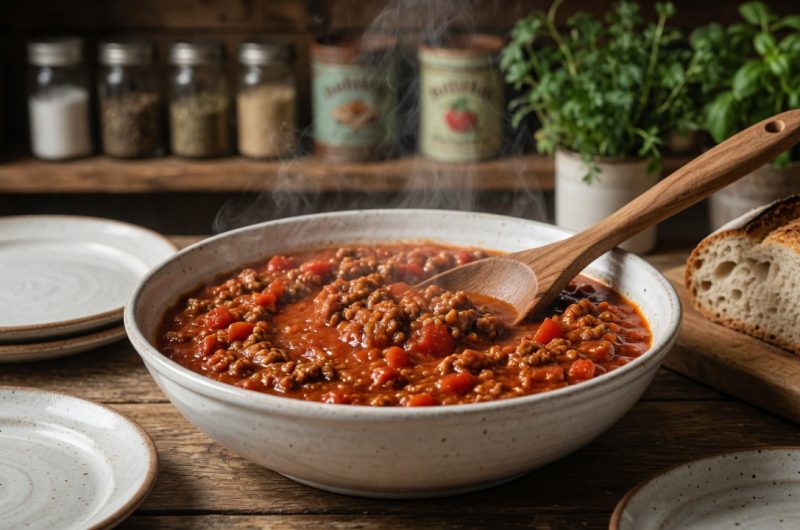
This hearty meat sauce combines ground beef and Italian sausage to create a rich, flavorful base for many Italian dishes. The combination of two types of meat adds depth and complexity that you cannot achieve with just one protein. The sauce uses simple ingredients you likely already have in your pantry like canned tomatoes, garlic, and basic seasonings. A touch of sugar balances the acidity of the tomatoes and creates a well-rounded flavor. This versatile sauce works with pasta, zoodles, lasagna, and many other dishes. Making a large batch saves time since you can freeze portions for future meals.
Choosing Your Ground Meat
Using both ground beef and Italian sausage gives this sauce the best flavor and texture. Ground beef provides a meaty base while Italian sausage adds herbs and spices already mixed into the meat. Buy one pound of each type of meat for the right balance. Lean ground beef works well if you want less fat in your sauce. The fat from the Italian sausage provides enough richness even if you use lean beef. You can drain the excess fat after browning if you prefer a lighter sauce. The combination of these two meats creates a sauce that tastes like it simmered for hours.
Understanding the Sugar Question
Adding sugar to tomato sauce is a personal preference that divides cooks into different camps. Some people never add sugar to their sauce and enjoy the natural tomato flavor. Others add a small amount to balance the acidity of the tomatoes. You can adjust the sugar from zero up to half a cup depending on how sweet you like your sauce. Start with a small amount and taste as you go. The sugar does not make the sauce taste dessert-like but rather smooths out any sharp tomato flavor. Remember that you can always add more sugar but cannot take it out once added.
Making Your Own Italian Seasoning
Italian seasoning is a blend of dried herbs commonly used in Italian cooking. You can buy pre-made Italian seasoning or make your own at home. Combine dried basil, oregano, rosemary, thyme, and marjoram in equal parts. Store your homemade blend in an airtight container for up to six months. Fresh herbs work even better if you have them available in your garden or store. Use about three times more fresh herbs than dried since fresh herbs are less concentrated. Adding herbs gives the sauce that authentic Italian restaurant flavor people love.
Why Fennel Seeds Matter
Fennel seeds have a slight licorice flavor that complements Italian sausage perfectly. Many Italian sausages already contain fennel seeds as part of their seasoning blend. Adding extra fennel seeds to the sauce enhances that traditional Italian sausage flavor. If you do not like the taste of fennel or licorice, you can skip this ingredient. Some people prefer a purely sweet tomato sauce without any fennel flavor. In that case, use only ground beef instead of sausage and omit the fennel seeds entirely. You might want to increase the sugar slightly if you go this route.
Browning the Meat Properly
Start by heating a large pot or Dutch oven over medium heat before adding any ingredients. Add the ground beef, Italian sausage, and chopped onion all at once. Break up the meat with a wooden spoon as it cooks. Continue cooking for about five minutes until the meat is mostly browned with just a little pink remaining. The onion should become soft and translucent during this time. If a lot of fat accumulates in the pot, you can drain some of it off. Leave a little fat for flavor but remove excess grease if you prefer a lighter sauce.
Adding Garlic at the Right Time
Garlic burns easily and becomes bitter if you add it too early in the cooking process. Wait until after the meat has browned before stirring in the minced garlic. Cook the garlic for only about thirty seconds, just until you can smell its aroma. This brief cooking time is enough to take away the raw garlic bite without burning it. Fresh minced garlic tastes better than jarred garlic or garlic powder in this recipe. Use two to three cloves depending on how much you enjoy garlic flavor. The garlic will continue to cook and mellow as the sauce simmers.
Combining the Tomato Products
This sauce uses three different tomato products that each serve a specific purpose. Crushed tomatoes provide chunks and texture to the sauce. Tomato sauce adds smooth liquid that helps everything blend together. Tomato paste contributes concentrated tomato flavor and helps thicken the sauce. Combining all three creates a sauce with the perfect consistency and depth of flavor. Make sure to stir everything together thoroughly so the tomato paste does not stay in clumps. The different tomato products work together to create a complex tomato base.
Simmering for Best Flavor
After combining all ingredients, let the sauce simmer uncovered for at least thirty minutes. This simmering time allows the flavors to blend and develop. The sauce will thicken as some of the liquid evaporates during cooking. Stir the sauce occasionally to prevent it from sticking to the bottom of the pot. The longer you simmer, the richer the flavor becomes. Some cooks like to simmer their sauce for an hour or more. Taste the sauce after thirty minutes and decide if you want to continue cooking. Add salt and pepper at the end of cooking so you can judge the right amount.
Proper Seasoning Technique
Wait until the end of the cooking time to add salt and pepper to your sauce. The sauce reduces as it simmers, which concentrates the flavors including any salt you added. If you salt too early, the sauce might become too salty as it cooks down. Taste the sauce before adding any salt since the Italian sausage and canned tomatoes already contain sodium. Start with one teaspoon of salt and half a teaspoon of pepper. Add more gradually if needed, tasting after each addition. Proper seasoning makes the difference between good sauce and great sauce.
Serving Suggestions and Pairings
This versatile meat sauce works with many different dishes and bases. The classic pairing is with spaghetti or other long pasta shapes. You can also serve it over penne, rigatoni, or any pasta shape you prefer. For a low-carb option, spoon the sauce over spiralized zucchini noodles called zoodles. The sauce is essential for making traditional lasagna with layers of pasta, cheese, and meat sauce. It also works wonderfully in baked ziti, stuffed shells, or manicotti. Pour it over spaghetti squash for another low-carb alternative.
Storage and Make-Ahead Tips
This recipe makes eight cups of sauce, which is more than most families need for one meal. Store leftover sauce in airtight containers in the refrigerator for up to four days. You can also make the sauce up to three days before you plan to use it. Cool the sauce quickly by placing the pot in a large bowl filled with ice water. Stir the sauce frequently as it cools to help it reach a safe temperature faster. Quick cooling prevents bacteria growth and keeps your sauce safe to eat. Making sauce ahead actually improves the flavor as the ingredients have more time to blend.
Freezing for Long-Term Storage
Meat sauce freezes beautifully and keeps for up to three months in the freezer. Let the sauce cool completely to room temperature before freezing. Transfer cooled sauce to freezer-safe containers, leaving a little space at the top for expansion. Flat freezer bags work well because they stack easily and thaw quickly. Label each container with the date so you know when you made it. Thaw frozen sauce overnight in the refrigerator rather than at room temperature. You can also thaw it in the microwave using the defrost setting if you need it quickly.
Making a Lighter Version
Substitute ground chicken or turkey for the beef and pork sausage to reduce fat and calories. Ground chicken creates a very mild-flavored sauce that works well with bold seasonings. Turkey has slightly more flavor than chicken and browns better in the pan. You may need to add a little olive oil when browning lean poultry since it releases less fat. The sauce will have a lighter color and less rich flavor but still tastes delicious. This lighter version works particularly well if you are watching your fat intake or prefer poultry to red meat.
Adding Fresh Herbs
Fresh herbs added at the end of cooking brighten the flavor of the sauce. Chopped fresh basil is the classic choice for Italian meat sauce. Parsley adds a fresh, green flavor and looks pretty sprinkled on top. You can stir fresh herbs into the sauce just before serving or use them as a garnish. Fresh herbs lose their flavor when cooked for long periods, so add them at the last minute. Keep some fresh basil or parsley on hand to finish the dish right before serving. The bright green herbs make the sauce look more appetizing and restaurant-quality.
Making It Spicy
Add red pepper flakes to give your meat sauce some heat. Start with just a quarter teaspoon and increase from there based on your spice tolerance. Stir the red pepper flakes in with the other seasonings so they have time to infuse the sauce. You can also add hot Italian sausage instead of mild or sweet varieties. Fresh diced jalapeños or other hot peppers work well too. Remember that spice builds as the sauce simmers, so taste before adding more. You can always pass extra red pepper flakes at the table for people who want more heat.
Creating a Creamy Version
Turn this meat sauce into a creamy tomato sauce by stirring in heavy cream. Add a quarter cup of cream at a time, stirring well after each addition. Taste after each addition to decide if you want the sauce creamier. The cream softens the tomato flavor and creates a pink, velvety sauce. Add the cream after the sauce has finished simmering and you have turned off the heat. Too much heat can cause the cream to separate or curdle. The creamy version pairs especially well with penne or rigatoni pasta.
Making It Richer
A tablespoon or two of butter stirred in at the end makes the sauce taste richer and more luxurious. The butter adds a silky texture and subtle flavor that enhances the other ingredients. You can also drizzle in good quality olive oil for a similar effect. Add the butter or oil after removing the pot from heat so it does not break down from high temperatures. This small addition makes the sauce taste like it came from an expensive Italian restaurant. The fat coats your mouth and carries the flavors more effectively.
Thickening the Sauce
If your sauce seems too thin, you have several options for thickening it. The easiest method is to continue simmering uncovered until more liquid evaporates. You can also add an extra can of tomato paste and stir it in well. Another option is to make a slurry with cornstarch and cold water, then stir it into the simmering sauce. Some cooks mash some of the meat and tomatoes against the side of the pot to release starches. A thicker sauce clings better to pasta and does not make the dish watery.
Making Vegetarian Sauce
Create a meatless version by omitting all the meat and adding extra vegetables instead. Dice bell peppers, carrots, and celery very small so they blend into the sauce. Mushrooms add a meaty texture and umami flavor without any actual meat. You can also add lentils for protein and a ground meat-like texture. Increase the amount of garlic and herbs to compensate for the missing meat flavor. The vegetarian version cooks faster since you do not need to brown any meat. This option works well for vegetarian guests or meatless Monday meals.
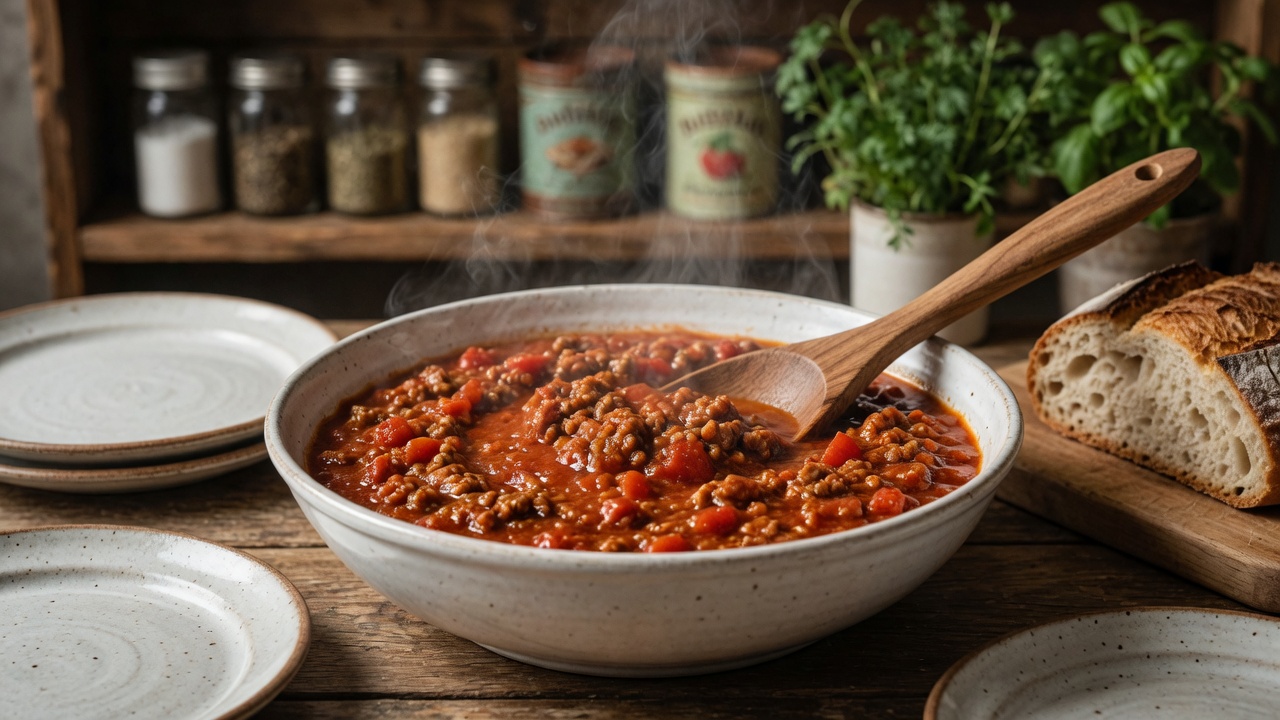
MEAT SAUCE
This quick and easy meat sauce combines beef, Italian sausage, and a blend of spices, perfect for lasagna, spaghetti, or zoodles.
16
servings5
minutes25
minutes171
kcal30
minutesIngredients
1 pound ground beef
1 pound ground Italian sausage
1 medium onion, chopped
4 cloves garlic, minced
1 (28 oz) can crushed tomatoes
1 (15 oz) can tomato sauce
1 (6 oz) can tomato paste
2 tablespoons sugar (optional)
1 ½ teaspoons dried basil
1 teaspoon Italian seasoning
1 teaspoon fennel seeds
1 bay leaf
Salt and pepper to taste
Directions
- In a large saucepan or Dutch oven, cook ground beef, Italian sausage, and chopped onion over medium-high heat until browned, about 5 minutes. Drain excess fat if desired.
- Add minced garlic and cook for 30 seconds until fragrant.
- Stir in crushed tomatoes, tomato sauce, tomato paste, sugar, basil, Italian seasoning, fennel seeds, and bay leaf.
- Simmer uncovered for 20 minutes, stirring occasionally. Season with salt and pepper.
- Serve over pasta or zoodles.
Notes
- Storage: Store in the refrigerator for up to 4 days.
Nutrition Facts
- Calories: 171kcal
- Fat: 12g
- Cholesterol: 40mg
- Potassium: 319mg
- Carbohydrates: 6g
- Protein: 11g
- Calcium: 36mg
- Iron: 2mg