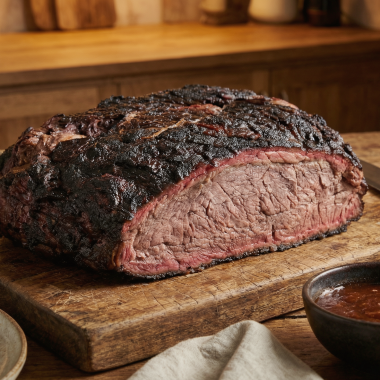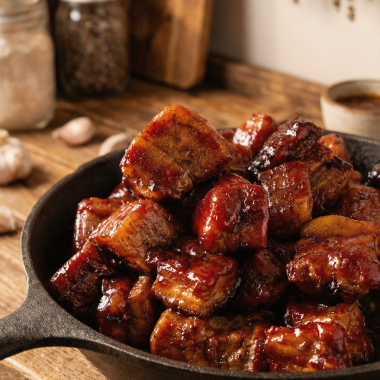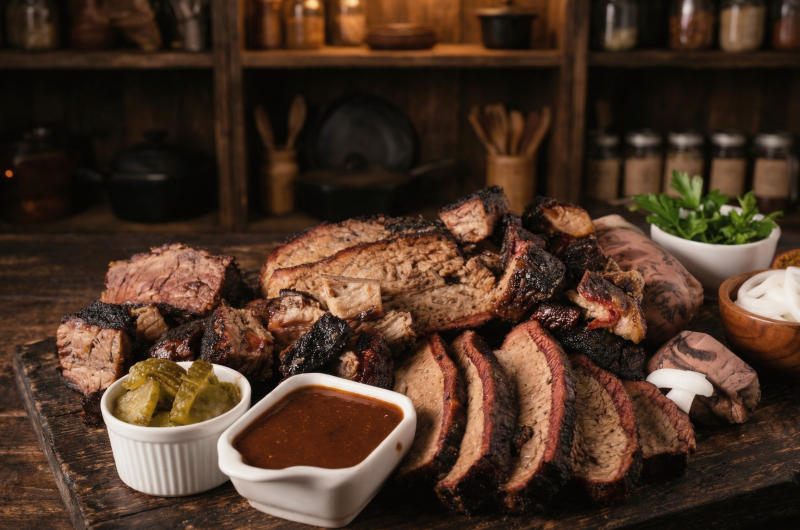
If you have ever admired the deep black bark and juicy slices of brisket served at iconic Texas BBQ restaurants, this authentic Texas-style smoked brisket recipe will bring that same flavor and texture to your backyard. Slow-smoked over hardwood at low temperatures, seasoned with a simple salt-and-pepper rub, and wrapped at the right moment, this brisket method delivers bold smoky flavor, tender texture, and a beautiful pink smoke ring that defines true Central Texas barbecue.
Texas smoked brisket is more than just a recipe—it is a technique rooted in patience, heat control, and respect for quality beef. When done correctly, each slice is moist, flavorful, and layered with natural beefiness enhanced by wood smoke. You do not need to be a professional pitmaster to master this process. With proper preparation and attention to detail, you can create restaurant-quality brisket in your own smoker.
Why Texas-Style Brisket Is So Popular
Texas brisket has become one of the most searched barbecue recipes because of its distinct simplicity. Unlike heavily sauced barbecue styles, Texas brisket relies on minimal seasoning to highlight the quality of the meat. The bark—dark, crusty exterior formed during smoking—provides texture and flavor contrast to the tender interior.
Another reason for its popularity is its versatility. It can be sliced for traditional brisket plates, chopped for sandwiches, or diced for tacos. It also feeds large groups, making it perfect for family gatherings, holidays, and summer cookouts.
Understanding the Brisket Cut
The best choice for smoking brisket is a whole packer brisket, which includes both the flat and the point. The flat is leaner and slices neatly, while the point contains more fat and produces rich, juicy bites.
Choosing a brisket between 12 and 14 pounds allows for balanced cooking and generous portions. USDA Prime grade brisket is ideal due to higher marbling, which translates to improved tenderness and moisture retention during long cooking sessions.
The Power of a Simple Brisket Rub
In authentic Texas barbecue, the rub is intentionally simple. A blend of coarse Kosher salt and coarse black pepper forms the base, sometimes enhanced with garlic powder. This combination allows the beef flavor and wood smoke to take center stage.
Complex spice blends are not necessary. The coarse texture of the seasoning also contributes to bark formation, which is a defining characteristic of well-smoked brisket.
Preparing and Trimming the Brisket
Proper trimming is critical for even cooking and optimal bark development. Begin by placing the brisket fat-side down on a clean cutting board. Remove silver skin and hard fat from the flat side. Trim loose edges and reduce the fat cap to about one-quarter inch thickness.
Trimming excess fat allows smoke penetration and ensures even heat distribution. Keeping the brisket cold during trimming makes the process easier and cleaner.
Seasoning the Brisket
After trimming, apply the dry rub generously across the entire surface. Press the seasoning gently into the meat without rubbing aggressively. Allow the brisket to rest at room temperature for about 30 minutes before placing it in the smoker.
This rest period allows seasoning to adhere properly and prepares the meat for consistent smoking.
Setting Up the Smoker
For authentic Texas-style brisket, maintain a consistent smoker temperature of 225°F (107°C). Oak wood is traditional, but hickory also works well. Avoid strong woods like mesquite unless you prefer intense smoke flavor.
Whether using a pellet smoker, offset smoker, or kamado grill, the key is steady indirect heat. Stable temperature prevents uneven cooking and maintains moisture.
The Low and Slow Smoking Phase
Place the brisket in the smoker with the point facing the primary heat source. Smoke at 225°F until the internal temperature reaches 165°F. This stage typically takes around 8 hours depending on size and smoker consistency.
During this period, the bark forms and smoke flavor penetrates deeply. Avoid frequently opening the smoker lid, as this disrupts temperature and extends cooking time.
Wrapping the Brisket
When the internal temperature reaches 165°F and the bark is well-developed, wrap the brisket tightly in uncoated butcher paper. Wrapping helps push the meat through the “stall,” a phase where temperature plateaus due to moisture evaporation.
Return the wrapped brisket to the smoker and continue cooking at 225°F until it reaches an internal temperature of 202°F.
Determining Doneness
The most reliable indicator of doneness is texture rather than temperature alone. When probing the brisket, the thermometer should slide in with minimal resistance, similar to inserting into soft butter.
Reaching 202°F is typical, but always test for tenderness. This final stage may take an additional 5 to 8 hours depending on brisket size.
Resting for Maximum Juiciness
Once the brisket is fully cooked, remove it from the smoker while still wrapped. Allow it to rest for at least one hour in a cooler or warm oven. Resting redistributes juices and ensures moist slices.
Skipping the resting stage can result in dry brisket. Patience at this step is essential.
Slicing Against the Grain
After resting, unwrap the brisket and slice against the grain using a long, sharp slicing knife. Cutting against the grain shortens muscle fibers and ensures tenderness in every bite.
Separate the flat and point if desired, as they run in slightly different directions.
Notes for Perfect Texas Brisket
Maintain steady smoker temperature. Avoid over-seasoning. Use butcher paper for wrapping if possible. Always rest before slicing. Choose quality beef with good marbling.
These steps guarantee authentic texture and flavor.
Serving Suggestions
Serve sliced brisket with pickles, onions, and white bread for a traditional Texas plate. Pair with coleslaw, potato salad, or baked beans.
Leftovers can be used for brisket sandwiches, tacos, or breakfast hash.
Storage and Reheating
Store leftover brisket in an airtight container in the refrigerator for up to four days. Reheat gently at 250°F until warmed through.
Brisket can also be vacuum-sealed and frozen for up to three months.
Why This Recipe Works
This Texas-style smoked brisket recipe relies on time, temperature control, and simplicity. The combination of minimal seasoning and hardwood smoke allows the natural beef flavor to shine.
With careful preparation and patience, it becomes a dependable and impressive centerpiece for any barbecue gathering.
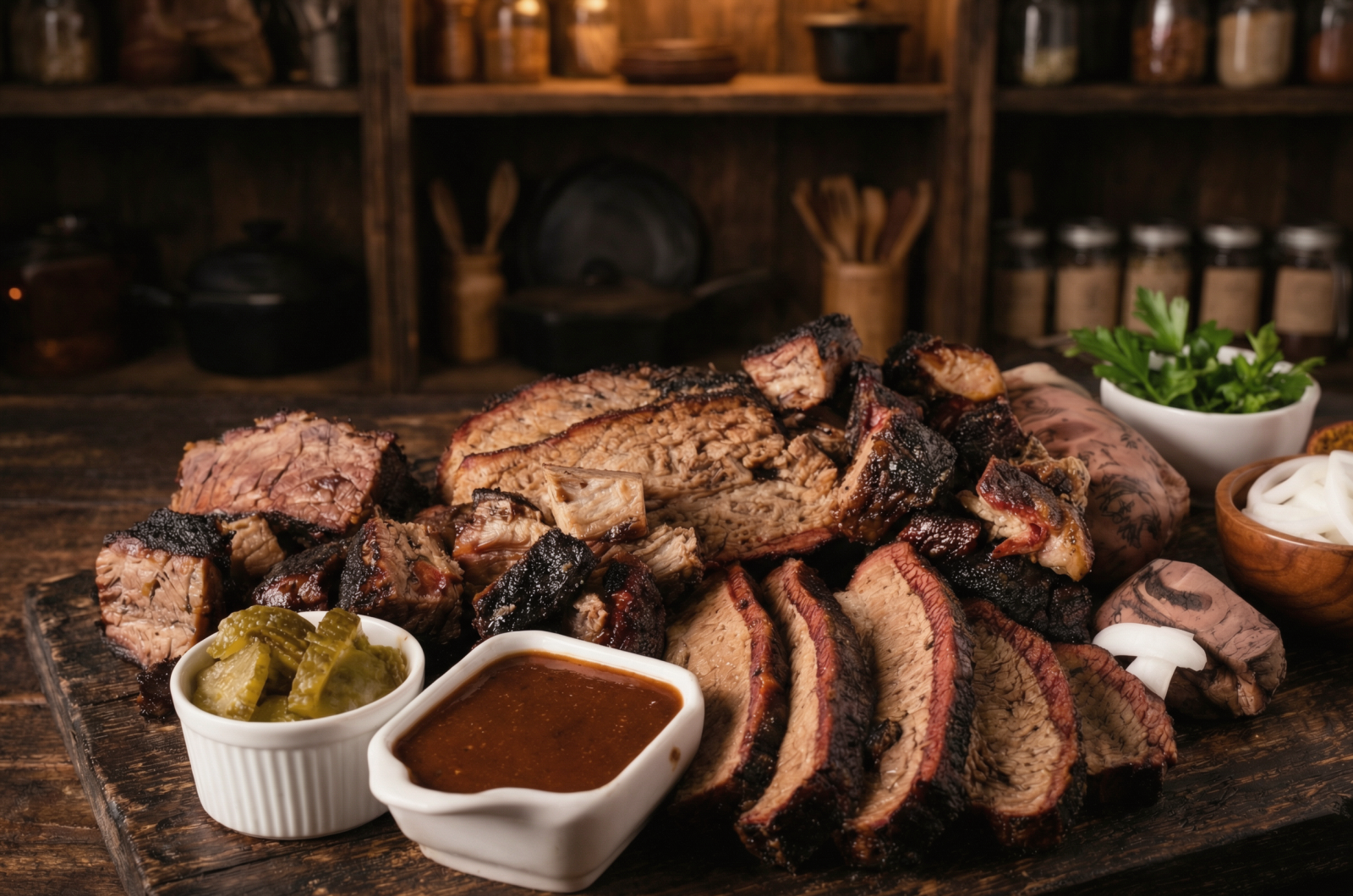
Smoked Brisket Recipe
a mouthwatering brisket with a blackened bark, succulent pink smoke ring, and that signature melt-in-your-mouth texture.
18
servings30
minutes15
hours551
kcal15
hours30
minutesIngredients
1 whole packer brisket (12–14 lbs)
2 tbsp coarse Kosher salt
2 tbsp coarse black pepper
2 tbsp garlic powder (optional)
Directions
- Keep brisket cold for easier trimming. Trim off silver skin, excess fat, and shape into a smooth cut. Leave ¼” fat cap on top.
- Mix salt, pepper, and garlic powder (if using). Apply evenly on all sides.
- Set to 225°F using oak or hickory for authentic Texas flavor.
- Place brisket in smoker with point facing heat source. Smoke until internal temp reaches 165°F (~8 hours).
- Wrap in butcher paper or foil, return to smoker, and cook until internal temp reaches 202°F (another 5–8 hours).
- Let rest for 1 hour wrapped before slicing.
- Use a sharp knife and slice against the grain.
Notes
- Serving Suggestions:
Classic brisket plates
BBQ brisket sandwiches
Brisket tacos or burritos
Leftovers for hash or chili
Nutrition Facts
- Serving Size: 18 g
- Total number of serves: 1
- Calories: 551kcal
- Fat: 26g
- Cholesterol: 219mg
- Sodium: 1055mg
- Carbohydrates: 1g
- Protein: 73g
- Iron: 7mg