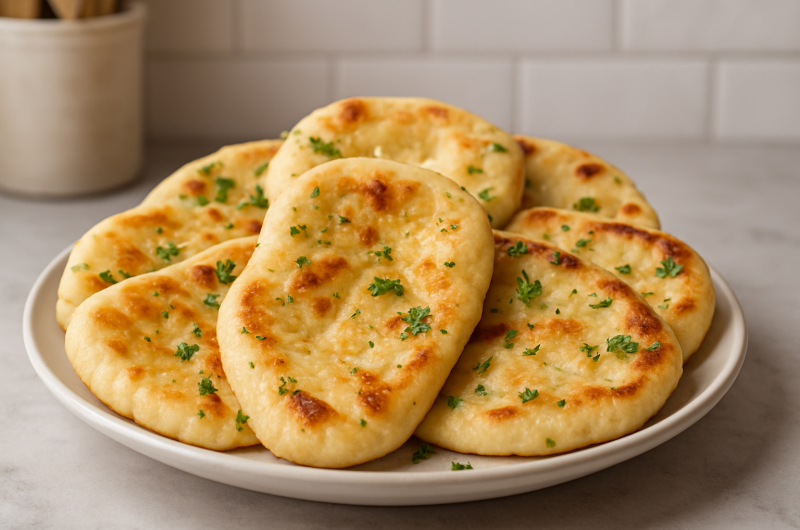
If you have been searching for a gluten-free naan recipe that actually delivers on softness, chew, and beautiful puffing, this homemade version is exactly what you need. Unlike many gluten-free flatbread recipes that turn out dense or brittle, this naan achieves a soft, flexible texture with golden charred spots that resemble traditional Indian-style naan. Even better, it is completely yeast-free, meaning you can prepare it in about 45 minutes from start to finish.
This gluten-free no-yeast naan is ideal for busy weeknights, quick lunches, or when you want fresh bread without waiting for dough to rise. Thanks to baking powder as the leavening agent, you eliminate the long fermentation time typically required in yeast-based recipes. Despite the shorter preparation time, the final result feels just as satisfying as classic naan bread.
Why This Gluten-Free Naan Recipe Works
One of the biggest challenges in gluten-free baking is creating elasticity and structure without wheat gluten. In this recipe, the combination of millet flour and tapioca starch provides the right balance between structure and flexibility. Whole psyllium husk acts as a natural binder, mimicking gluten’s elasticity and giving the dough a supple, stretchable quality.
The result is a flatbread that is soft inside, slightly chewy, and capable of puffing beautifully when cooked in a hot skillet. This puffing effect creates airy pockets, enhancing both texture and appearance.
Understanding the Role of Psyllium Husk
Whole psyllium husk (or powdered psyllium) is essential for achieving the right texture in gluten-free naan. When mixed with warm water, it forms a thick gel. This gel binds the flour and starch together, allowing the dough to stretch and hold shape. Without psyllium, the naan would crumble easily and lack elasticity.
Using the correct amount ensures that the dough is neither too sticky nor too dry. The gel also helps trap steam during cooking, which contributes to the puffing effect.
The Importance of Warm Water
Warm water activates the psyllium husk and allows it to form its gel-like structure. It also helps hydrate the flours properly. Proper hydration ensures a smooth, pliable dough that is easy to roll.
If the water is too cold, the gel formation may be incomplete. If it is too hot, it can negatively affect texture. Warm, not boiling, water provides the ideal consistency.
Millet Flour and Tapioca Starch – The Perfect Balance
Millet flour (or brown rice flour as an alternative) provides structure and a mild whole-grain flavor. Tapioca starch adds lightness and chewiness. This starch is responsible for the springy texture that makes the naan feel authentic.
The balance between these two ingredients ensures the dough remains workable and the final bread stays soft after cooking. Substitutions such as potato starch or arrowroot can work, but tapioca starch gives the best elasticity.
Adding Flavor with Yogurt and Olive Oil
Plain or Greek-style yogurt adds moisture, slight tanginess, and richness. It enhances the dough’s softness and improves flavor depth. Olive oil contributes additional tenderness and makes rolling easier.
Together, these ingredients create a dough that feels supple and produces a flatbread with a delicate crumb.
Step 1 – Creating the Psyllium Gel
In a bowl, combine whole psyllium husk with warm water. Stir quickly. Within about 30 to 45 seconds, the mixture thickens into a gel. This step is critical for structure.
Allow the gel to fully form before proceeding. It should feel thick and slightly elastic.
Step 2 – Mixing the Dry Ingredients
In a separate large bowl, whisk together millet flour, tapioca starch, sugar, baking powder, and salt. Even distribution ensures consistent flavor and proper leavening.
This dry mixture forms the structural base of the dough.
Step 3 – Combining Wet and Dry Mixtures
Add yogurt and olive oil to the psyllium gel. Stir until incorporated. Pour this wet mixture into the bowl of dry ingredients.
Mix with a spatula or wooden spoon until a dough begins to form. Knead gently by hand until smooth and elastic. The dough should feel supple, not sticky.
Step 4 – Dividing and Shaping
Turn the dough onto a lightly floured surface. Divide into eight equal portions. Roll each portion into a ball. Keep unused portions covered to prevent drying.
Roll each ball into a round or oval shape approximately 7–8 inches across and 4–6 mm thick. Even thickness ensures proper puffing and even cooking.
Step 5 – Cooking in a Hot Skillet
Heat a cast-iron or non-stick skillet over medium-high heat. When hot, place one rolled naan onto the surface. Cook for 1–2 minutes until bubbles appear and the underside develops golden brown spots.
Flip and cook the other side for about 1 minute. Adjust heat if browning occurs too quickly. Proper temperature ensures puffing without burning.
Step 6 – Finishing Touch
Immediately after cooking, brush the naan with melted ghee or butter. Sprinkle with chopped parsley or cilantro for freshness.
Wrapping the breads in a clean towel traps steam and keeps them warm and soft until serving.
Notes for Perfect Gluten-Free Naan
Always keep the dough cold during preparation if your kitchen is warm. Roll evenly to prevent uneven cooking. Do not roll too thin or too thick. Maintain skillet heat at medium-high for proper puffing.
Following these guidelines ensures bakery-style results.
Serving Suggestions
This gluten-free naan pairs perfectly with curries, soups, stews, grilled meats, or vegetable dishes. It also works well as a wrap for sandwiches or breakfast fillings.
Because it is yeast-free, it can be prepared quickly whenever needed.
Storage and Reheating
Store in an airtight container for 2–3 days. Reheat in a skillet or microwave. Lightly sprinkle with water before reheating to maintain softness.
Avoid refrigeration, as it can dry out the bread.
Substitutions and Adjustments
If using brown rice flour instead of millet flour, add a small amount of extra warm water if the dough feels dry. Other flour alternatives may absorb moisture differently.
Adjust hydration carefully to maintain soft, elastic dough.
Why This Recipe Is Trending
Searches for gluten-free flatbread, yeast-free naan, and easy skillet bread continue to grow. This recipe satisfies those needs with minimal complexity.
It offers authentic texture without long fermentation and delivers consistent results.
A Practical Gluten-Free Bread Solution
This homemade naan proves that gluten-free bread does not have to be dense or complicated. With proper technique and ingredient balance, you can achieve a soft, flexible flatbread that rivals traditional versions.
Its quick preparation time and satisfying texture make it a dependable addition to any gluten-free kitchen.
Softest Gluten-Free Naan
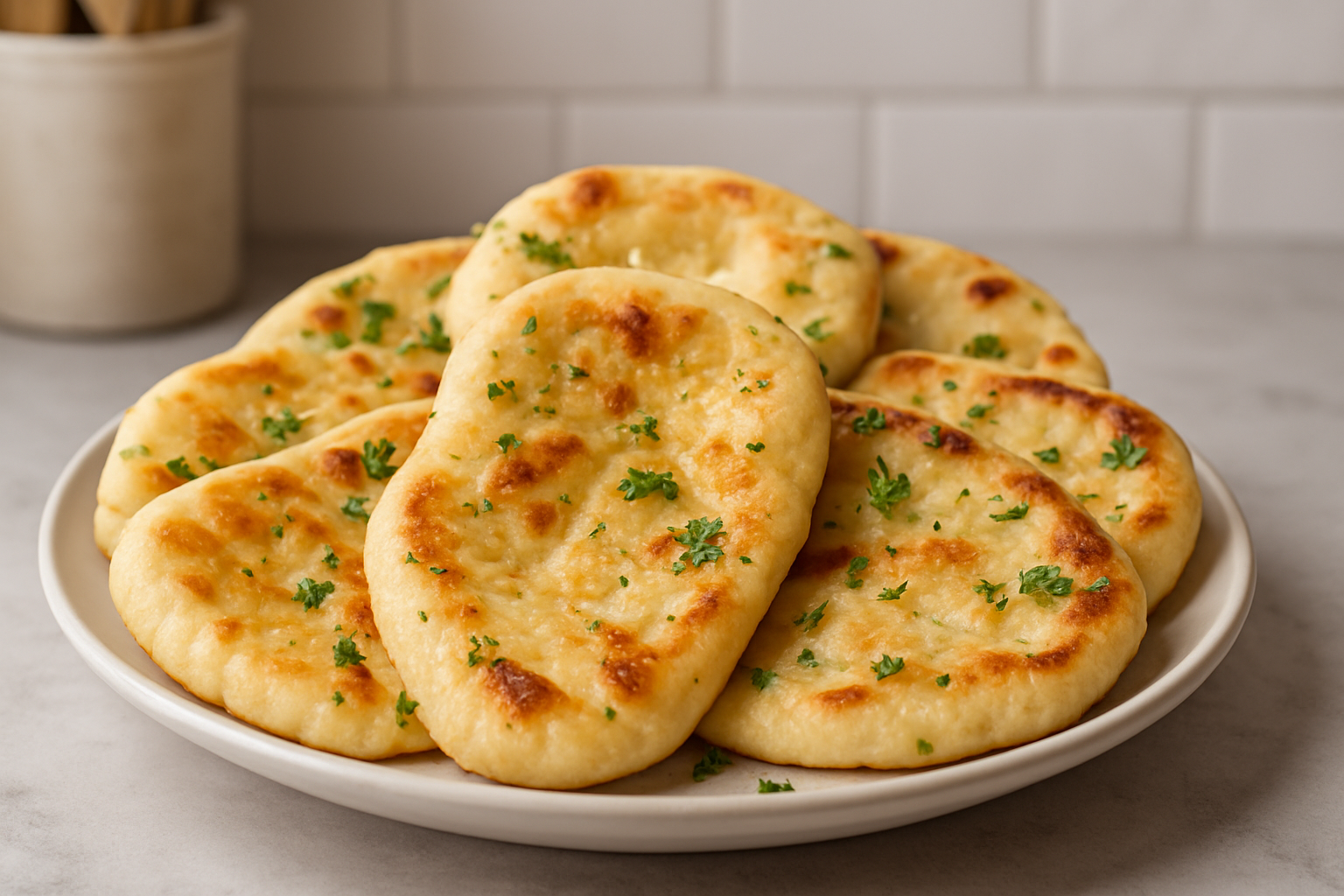
This is perfect for weeknight dinners, or anytime you want a comforting bread without gluten or kneading drama. The dough is surprisingly easy to handle: it rolls out smoothly, holds together well, and cooks up in a skillet or pan with charming golden-charred spots that give it a rustic appeal.
8
servings25
minutes20
minutes45
minutesIngredients
20 g (4 tbsp) whole psyllium husk (or 17 g if using psyllium husk powder)
360 g warm water
235 g (1¾ cups) millet flour (or equal weight brown rice flour)
130 g (1 cup + 2½ tbsp) tapioca starch (or substitute cornstarch/potato-starch/arrowroot)
1 tbsp caster/superfine or granulated sugar
1½ tsp baking powder
1 tsp salt
75 g (⅓ cup) unsweetened plain or Greek-style yoghurt (room temperature)
25 g (2 tbsp) olive oil (or sunflower/vegetable oil)
45 g (3 tbsp) ghee or butter, melted (for brushing)
Finely chopped parsley or cilantro (for garnish)
Directions
- In a bowl, mix together the psyllium husk with the warm water. After ~30-45 seconds a gel will form.
- In a separate large bowl, whisk together millet flour, tapioca starch, sugar, baking powder and salt.
- Add the yoghurt and olive oil to the psyllium gel, then pour this mixture into the dry ingredients. Mix with a spoon until the dough starts to come together.
- Knead the dough (by hand or using a mixer with dough hook) until all flour pockets are gone and the dough pulls away from the bowl, with a springy, slightly tacky feel.
- Turn the dough onto a lightly floured surface and shape into a ball. Divide into 8 equal portions (~110 g each). Shape into individual dough balls, cover with a dish towel as you work through them.
- Roll each dough ball on a lightly floured surface into a round or oval shape about 7-8 inches (18-20 cm) in diameter and ⅛-¼ inch (4-6 mm) thick. Dust as needed to avoid sticking.
- Pre-heat a large skillet or cast-iron pan over medium-high heat (water drop should sizzle). Place one rolled naan into the hot pan. Cook ~1-2 minutes until bubbles form and underside is deep golden or slightly charred. Flip and cook for ~1 minute until golden brown. Adjust heat as necessary.
- Immediately brush the cooked naan with melted ghee or butter, sprinkle with chopped parsley or cilantro. Cover with a dish towel to keep warm while you cook the remaining breads.
- Serve warm. Store leftovers in an airtight container for 2–3 days. To re-heat: microwave 30-45 seconds, or heat in a skillet with a splash of water and lid on ~45-60 seconds each side, or warm in a 350°F (180°C) oven for ~3-5 minutes with a little water sprayed to prevent drying.
Notes
- Notes & Substitutions:
If substituting millet flour with sorghum, corn (maize) flour, light buckwheat flour or white teff flour, add ~45-60 g extra warm water to compensate for higher absorption.
If naan isn’t puffing: check dough thickness (shouldn’t be too thin or too thick), check dough moisture (should be soft not dry), check pan heat (too low = no puff, too high = underside burns).
Enjoy your homemade gluten-free naan — soft, pillowy, flavourful, and no yeast required!