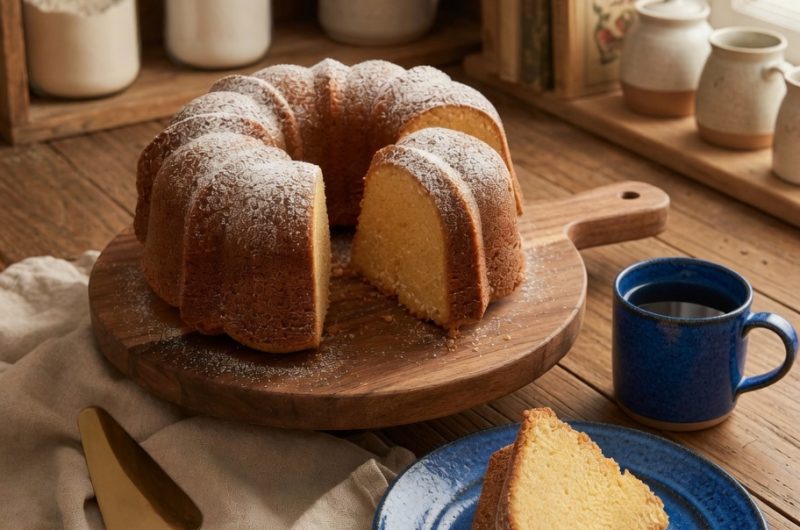
Pound cake has been a favorite dessert for generations, and adding sour cream to the recipe creates something truly special. This traditional cake gets its name from the original recipe that called for a pound each of flour, butter, sugar, and eggs. Over time, bakers have refined the recipe to create lighter, more tender versions while keeping that classic rich flavor. The sour cream version stands out because it adds moisture and a subtle tang that balances the sweetness perfectly. This cake works for any occasion, from casual family dinners to special celebrations.
Why Sour Cream Makes This Pound Cake Better
Adding sour cream to pound cake batter creates a texture that regular pound cakes simply cannot match. The acidity in sour cream reacts with the baking soda to help the cake rise while keeping it incredibly moist. Unlike cakes that can become dry after a day or two, this version stays soft and tender for several days when stored properly. The sour cream also adds a slight tanginess that prevents the cake from tasting too sweet, even though it contains a generous amount of sugar. This balance of flavors makes each slice satisfying without being overwhelming.
What You Need To Make This Cake
The ingredient list for this sour cream pound cake includes pantry staples that you likely already have at home. You will need all-purpose flour as the base, which provides structure to the cake. Salt enhances all the flavors and balances the sweetness. Baking soda works with the sour cream to give the cake a slight lift and tender crumb. Unsalted butter provides richness and flavor, while giving you control over the salt content. Granulated sugar sweetens the cake and helps create that golden crust. Fresh eggs bind everything together and add richness. Pure vanilla extract brings depth to the flavor. Finally, full-fat sour cream creates that signature moist texture and subtle tang that makes this recipe special.
Getting Your Ingredients Ready
Before you start mixing your cake batter, you need to prepare your ingredients properly for the best results. Temperature matters quite a bit when baking pound cake, so plan ahead. Take your butter, eggs, and sour cream out of the refrigerator about an hour before you plan to bake. Room temperature ingredients blend together much more smoothly than cold ones, which helps create a uniform batter. Cold butter will not cream properly with the sugar, and cold eggs can cause the batter to curdle or separate. The sour cream needs to be at room temperature so it incorporates evenly without creating lumps or cooling down your batter.
Preparing Your Bundt Pan Correctly
The way you prepare your baking pan makes a huge difference in whether your finished cake releases cleanly or sticks stubbornly to the sides. A standard Bundt pan holds twelve to sixteen cups and has intricate ridges and a center tube. You can use traditional butter and flour to coat the pan, which creates a reliable nonstick surface. Apply soft butter to every surface using a pastry brush or paper towel, making sure to get into all the grooves and corners. Then dust the buttered pan with flour, tapping out any excess. Some bakers prefer using baking spray with flour already in it, which saves time and works well too.
Mixing The Dry Ingredients Together
Start your cake preparation by combining all the dry ingredients in a medium mixing bowl. Measure out the flour carefully, spooning it into your measuring cup and leveling it off rather than scooping directly from the bag. This prevents packing too much flour into the cup, which would make your cake dense and dry. Add the salt and baking soda to the flour. Use a whisk to stir everything together thoroughly for at least thirty seconds. This distributes the salt and baking soda evenly throughout the flour, so you do not end up with pockets of salty or soapy-tasting baking soda in your finished cake.
Creaming Butter And Sugar Properly
The creaming process is one of the most important steps in making a successful pound cake. Place your room temperature butter in a large mixing bowl or the bowl of your stand mixer. Add all the sugar at once. Using the paddle attachment on medium speed, beat the butter and sugar together for two to three minutes. The mixture should become noticeably lighter in color, almost pale yellow, and the texture should look fluffy rather than dense. This process incorporates air into the batter, which helps create a lighter cake. Scrape down the sides of the bowl at least once during creaming to make sure everything mixes evenly.
Adding Eggs The Right Way
After your butter and sugar are properly creamed, you need to add the eggs carefully to avoid curdling the batter. Crack each egg into a small bowl first to check for shell pieces, then add it to your mixing bowl. Beat on medium speed until that egg is completely incorporated before adding the next one. You should add six eggs total, one at a time. This slow addition allows each egg to emulsify properly with the butter mixture. If you dump all the eggs in at once, the batter can break or separate, which affects the final texture. Remember to scrape down the bowl sides between additions so everything mixes uniformly. Once all eggs are incorporated, add the vanilla extract and mix briefly.
The Alternating Method For Adding Flour And Sour Cream
Professional bakers use the alternating method when adding dry and wet ingredients to prevent overmixing, which can make cakes tough. Turn your mixer to low speed before adding any flour mixture. Add about one third of the flour mixture and mix just until you can barely see it anymore. Then add half of the sour cream and mix until barely combined. Add another third of the flour, then the remaining sour cream, and finish with the last portion of flour. Mix only until you cannot see dry flour streaks. Stop the mixer and scrape down the bowl, then give it one or two more brief pulses if needed. The batter should look smooth and thick but not overmixed.
Filling The Pan And Removing Air Bubbles
Once your batter is ready, pour it carefully into your prepared Bundt pan. Use a spatula to scrape all the batter from the bowl, then smooth the top gently. Large air pockets can create holes in your finished cake, so you need to release them before baking. Hold the filled pan a few inches above your counter and tap it firmly on a folded kitchen towel or cutting board. Do this three or four times, rotating the pan slightly each time. You will see some air bubbles rise to the surface and pop. This simple step helps ensure an even crumb throughout your cake.
Baking Time And Temperature Tips
This sour cream pound cake bakes at a lower temperature than many cakes to prevent the outside from browning too quickly before the inside cooks through. Set your oven to three hundred twenty-five degrees and make sure it has fully preheated before you put the cake in. Position your oven rack in the lower third of the oven so the top of the cake does not get too dark. The cake needs about one hour and twenty minutes to bake completely. Every oven is slightly different, so start checking around the one-hour mark. Insert a wooden skewer or thin knife into the thickest part of the cake. It should come out clean or with just a few moist crumbs attached. If you see wet batter, continue baking and check again in five-minute intervals.
Cooling The Cake Without Sticking
Proper cooling is just as important as proper baking when it comes to pound cake. When you remove the hot pan from the oven, set it on a wire cooling rack. Let the cake cool in the pan for exactly ten to fifteen minutes. This cooling time allows the outer crust to firm up slightly and contract away from the pan sides. If you try to remove the cake immediately, the soft crust can stick and tear. Place your wire cooling rack on top of the pan, then quickly flip everything over together. Gently lift the pan off, and the cake should release cleanly. If any spots stick, carefully work them loose with a butter knife. Let the cake cool completely on the rack before slicing.
How To Store Your Pound Cake
This sour cream pound cake stays fresh and moist for up to three days when stored correctly at room temperature. Wait until the cake has cooled completely to room temperature before wrapping or covering it. If you wrap a warm cake, condensation will form and make the crust soggy. Use plastic wrap to cover the cake tightly, or place it in an airtight container or cake keeper. Store it on your kitchen counter away from direct sunlight and heat sources. The cake actually tastes even better on the second day after the flavors have had time to develop fully. You can also freeze pound cake for up to three months wrapped well in plastic wrap and then aluminum foil.
Common Questions About Making Pound Cake
Many bakers wonder why their pound cake turns out dense instead of tender. The most common cause is using too much flour, which happens when you scoop the measuring cup directly into the flour bag. Always spoon flour into your measuring cup and level it off with a straight edge. Another frequent question involves substituting ingredients. You can use salted butter if that is what you have, but reduce the added salt to one quarter teaspoon to prevent the cake from tasting too salty. Some people ask about using Greek yogurt instead of sour cream. This substitution works, but choose full-fat Greek yogurt for the best texture and flavor.
Why Your Cake Might Stick To The Pan
Even when you grease and flour your pan carefully, pound cakes can sometimes stick. One common mistake is coating the pan too early. If you use baking spray and apply it at the beginning of your recipe, it can slowly drip down the sides and pool at the bottom during the time you mix your batter. This creates sticky spots and can leave marks on your cake. Either use the traditional butter and flour method, or if using spray, wait to coat your pan until right before you pour in the batter. Another reason for sticking is removing the cake too quickly or leaving it in the pan too long. That ten to fifteen minute window is important.
Getting Clean Slices From Your Pound Cake
The way you slice pound cake affects both how it looks and how moist it stays. Always wait until the cake has cooled completely before cutting into it. When you slice a hot or warm cake, steam escapes from the cut surfaces as it continues to cool. This steam carries moisture with it, leaving you with a drier cake. Use a long, thin serrated knife for the cleanest slices. Wipe the blade clean between cuts to prevent crumbs from building up. You can also warm your knife under hot water and dry it before slicing, which helps it glide through the cake more smoothly. Cut slices about one inch thick for a nice portion size.
Simple Ways To Serve This Cake
This sour cream pound cake tastes wonderful on its own without any additions, but you can dress it up in many ways. Serve slices with fresh berries and a dollop of whipped cream for a simple but pretty dessert. A light dusting of powdered sugar over the top adds a nice finishing touch for special occasions. During summer, serve pound cake slices topped with macerated strawberries or peaches. In cooler months, warm a slice slightly and serve it with vanilla ice cream. The cake also makes an excellent base for trifles or can be toasted and served with butter for breakfast.
Notes About This Recipe
If you decide to use baking spray to prepare your pan, remember to spray it just before adding the batter rather than at the start of mixing. This prevents the spray from sliding down and creating problems. Let your cake cool in the pan for ten to fifteen minutes before turning it out onto a cooling rack. This timing is important because it gives the crust time to firm up without steaming and sticking. Make sure the cake cools completely on the wire rack before you slice into it. Cutting while still warm releases steam through the cut sides, which dries out the cake. Room temperature ingredients mix together more smoothly than cold ones, so plan ahead and take your butter, eggs, and sour cream out of the refrigerator about an hour before you start baking.
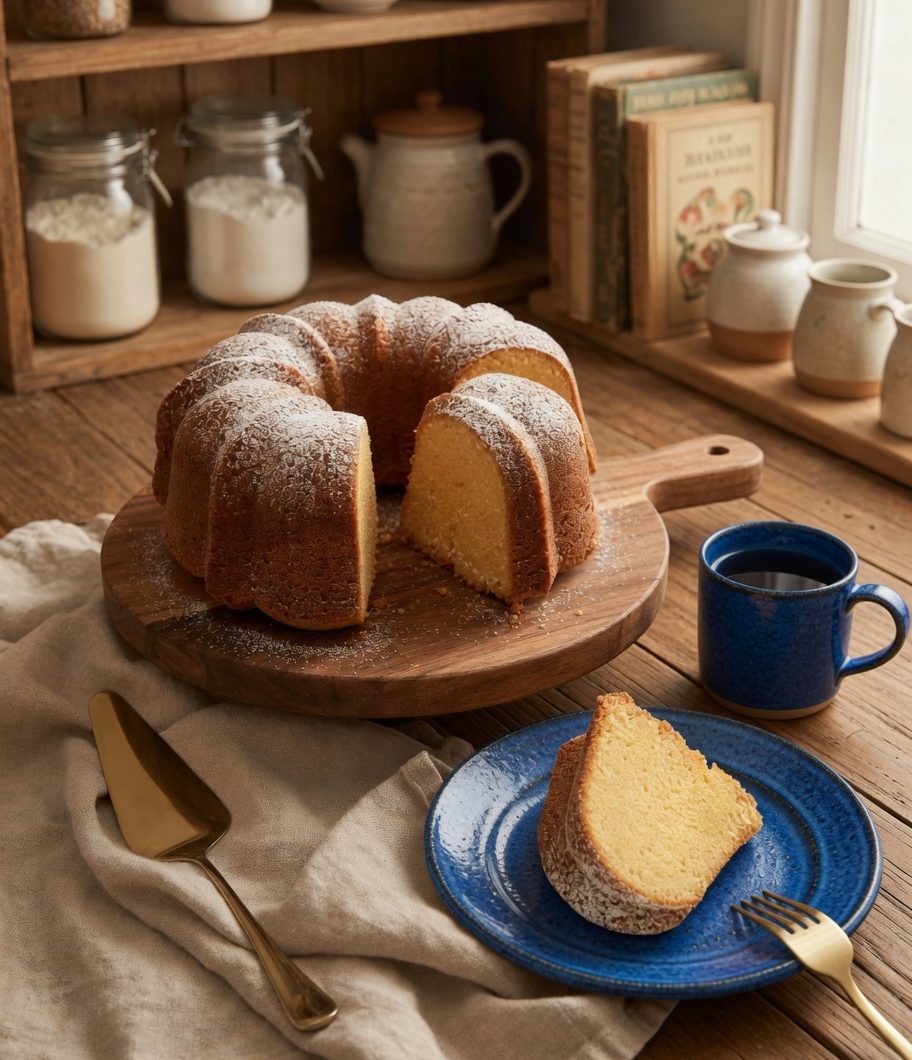
Sour Cream Pound Cake
A moist and tender pound cake made with sour cream for extra richness. This classic dessert has a soft crumb and stays fresh for days, perfect for any occasion.
12
servings15
minutes1
hour20
minutes514
kcal1
hour35
minutesIngredients
3 cups all-purpose flour (360g)
1 teaspoon kosher salt, or ½ teaspoon fine salt
½ teaspoon baking soda
1 cup unsalted butter, at room temperature (226g)
3 cups granulated sugar (600g)
6 large eggs, at room temperature
1 tablespoon vanilla extract
1 cup sour cream, at room temperature (240g)
Directions
- Heat your oven to 325 degrees. Prepare a large Bundt pan that holds twelve to sixteen cups by coating it with butter and flour.
- Take a medium bowl and add the flour, salt, and baking soda. Whisk everything together until well combined.
- Put the butter and sugar in a large bowl or stand mixer bowl with the paddle attachment. Beat on medium speed for two to three minutes until the mixture looks light and fluffy.
- Keep the mixer running on medium speed and add the eggs one at a time. Wait until each egg is fully mixed in before adding the next one. Stop and scrape the bowl sides as you add the eggs. Mix in the vanilla extract once all eggs are incorporated.
- Turn the mixer to low speed. Add one third of the flour mixture, then half of the sour cream. Add another third of the flour, the remaining sour cream, and finish with the last portion of flour. Mix only until combined, scraping down the bowl and mixing once more if needed.
- Pour all the batter into your prepared pan. Tap the pan gently on a towel-covered counter or cutting board to settle the batter and remove large air bubbles. Bake for one hour and twenty minutes, or until a skewer poked into the center comes out clean.
- Let the cake cool in the pan for ten minutes, then turn it out onto a wire rack to cool completely. Store in an airtight container for up to three days.
Nutrition Facts
- Total number of serves: 12
- Calories: 514kcal
- Fat: 22g
- Saturated Fat: 12g
- Polyunsaturated Fat: 1g
- Monounsaturated Fat: 6g
- Carbohydrates: 75g
- Fiber: 1g
- Sugar: 51g
- Protein: 7g