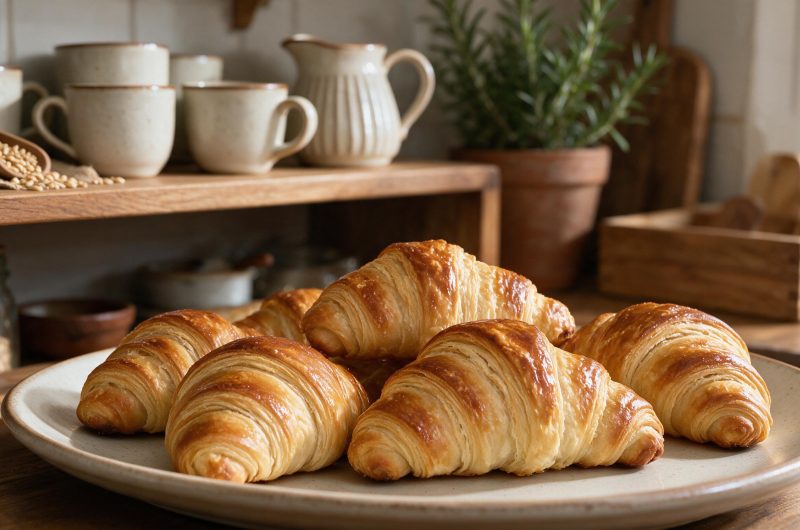
There is something truly special about biting into a freshly baked croissant. The delicate crackle of the golden crust gives way to a soft, airy interior layered with buttery richness. These homemade Thermomix croissants bring that authentic French bakery experience into your own kitchen using simple pantry ingredients and a carefully structured method.
Croissants are famous for their laminated dough technique, where butter is folded into dough repeatedly to create hundreds of thin layers. While that may sound intimidating at first, the Thermomix simplifies key steps like mixing and kneading, making this classic French croissant recipe more accessible. With patience and attention to detail, you can achieve light, flaky croissants that rival professional bakeries.
Why Homemade Croissants Are Worth the Effort
Many people assume croissants are too complicated to make at home. However, once you understand the process, it becomes a rewarding baking project rather than a difficult one. Homemade croissants allow you to control ingredients, choose high-quality butter, and adjust sweetness and texture to your preference.
Freshly baked croissants also have a flavor and texture that store-bought versions rarely match. The layers are more pronounced, the crust is crisp yet delicate, and the aroma of butter fills your kitchen as they bake. This experience alone makes the effort worthwhile.
What Makes These Thermomix Croissants Stand Out
These croissants stand out for several reasons. First, they use the authentic laminated dough technique, ensuring proper layering and flakiness. Second, the Thermomix handles the mixing and kneading precisely, preventing overworking the dough. Third, high-quality butter creates that rich, classic flavor.
The combination of a crisp outer shell and soft, airy crumb defines a perfect croissant. Achieving this balance requires careful lamination, proper proofing, and controlled baking temperature.
Understanding Laminated Dough
Lamination is the key to flaky croissants. The process involves encasing a butter block inside dough and rolling and folding it multiple times. Each fold multiplies the layers. When baked, steam from the butter lifts the dough, creating that signature honeycomb structure inside.
Keeping the dough cold throughout this process is essential. If butter melts prematurely, the layers blend together, and the croissants lose their flakiness. Chilling between folds ensures clean layers and a crisp result.
Ingredient Breakdown and Their Roles
Each ingredient in this recipe serves a specific purpose. All-purpose flour provides structure while maintaining lightness. Milk contributes softness and mild richness. Sugar feeds the yeast and adds subtle sweetness. Salt enhances flavor and strengthens gluten formation.
Yeast, whether fresh or dry, allows the dough to rise and develop air pockets. Butter plays a dual role: it enriches the dough and forms the layered structure. The egg wash applied before baking creates a glossy, golden finish.
Step 1 – Preparing the Dough
Begin by gently warming the milk in the Thermomix to activate the yeast. Combine yeast, sugar, flour, butter, and salt to form a soft dough. Kneading in the Thermomix ensures consistent gluten development without overworking the mixture.
After kneading, chill the dough. This resting period relaxes gluten and makes rolling easier during lamination. Proper chilling at this stage sets the foundation for successful layering.
Step 2 – Creating the Butter Block
The butter block must be firm yet pliable. Shape cold butter into a square and chill it. If the butter is too hard, it will crack when rolled. If too soft, it will leak during folding. Achieving the right consistency is crucial for even lamination.
This step determines how well the butter layers integrate into the dough.
Step 3 – Folding and Laminating
Roll the chilled dough into a rectangle. Place the butter block in the center and fold the dough over it like an envelope. Roll out and fold again, repeating the process multiple times with chilling intervals in between.
Each fold increases the number of layers, building the structure needed for flakiness. Patience is key. Rushing can cause butter to melt or layers to merge.
Step 4 – Shaping the Croissants
After lamination, roll the dough thinly to approximately 4mm thickness. Cut into triangles and roll each one tightly from the base to the tip. Slightly curve the ends to form the traditional crescent shape.
Proper shaping ensures even baking and a uniform rise. The tight roll helps maintain defined layers inside the croissant.
Step 5 – Proofing for Light Texture
Proofing is often underestimated but essential. Allow the shaped croissants to rise until doubled in size and visibly puffy. They should feel soft and slightly jiggly when touched.
Under-proofed croissants will be dense. Over-proofed croissants may collapse during baking. Proper proofing ensures a light and airy crumb.
Step 6 – Baking to Golden Perfection
Preheat the oven to a high temperature. Apply egg wash for a glossy finish. Bake until croissants turn deep golden brown.
During baking, steam from the butter separates the layers, creating a honeycomb interior. The outer shell becomes crisp, while the inside remains tender and airy.
Notes for Best Results
Always chill between folds to maintain clean layers. Use high-fat butter for richer flavor and better lamination. Avoid adding excessive flour while rolling. Maintain a cool kitchen environment. Allow full fermentation and proofing for optimal texture.
These practices ensure bakery-quality croissants.
Creative Croissant Variations
Once comfortable with the base recipe, experiment with variations. Insert chocolate batons before rolling for chocolate croissants. Add almond cream filling and sliced almonds for almond croissants. Include savory ingredients like cheese or ham for a breakfast option.
The laminated dough technique supports endless customization.
Storage and Freezing Guidelines
Croissants are best enjoyed fresh. Store at room temperature in an airtight container for one to two days. For longer storage, freeze before baking for best results.
Baked croissants can be frozen for up to one month. Reheat in an oven at 180°C for five minutes to restore crispness. Avoid refrigeration, as it can dry out the layers.
Common Mistakes to Avoid
Avoid letting butter melt during folding. Do not skip chilling steps. Ensure yeast is active. Avoid under-proofing or over-proofing. Do not over-handle the dough.
Following these guidelines prevents common texture issues.
Nutritional Overview
Croissants are an indulgent pastry rich in butter and carbohydrates. They provide energy from flour and fats from butter. While not a daily staple, they can be enjoyed in moderation as part of a balanced diet.
These homemade Thermomix croissants combine traditional French baking techniques with modern kitchen convenience. With careful lamination and proofing, you can produce flaky, buttery croissants that look and taste professional.
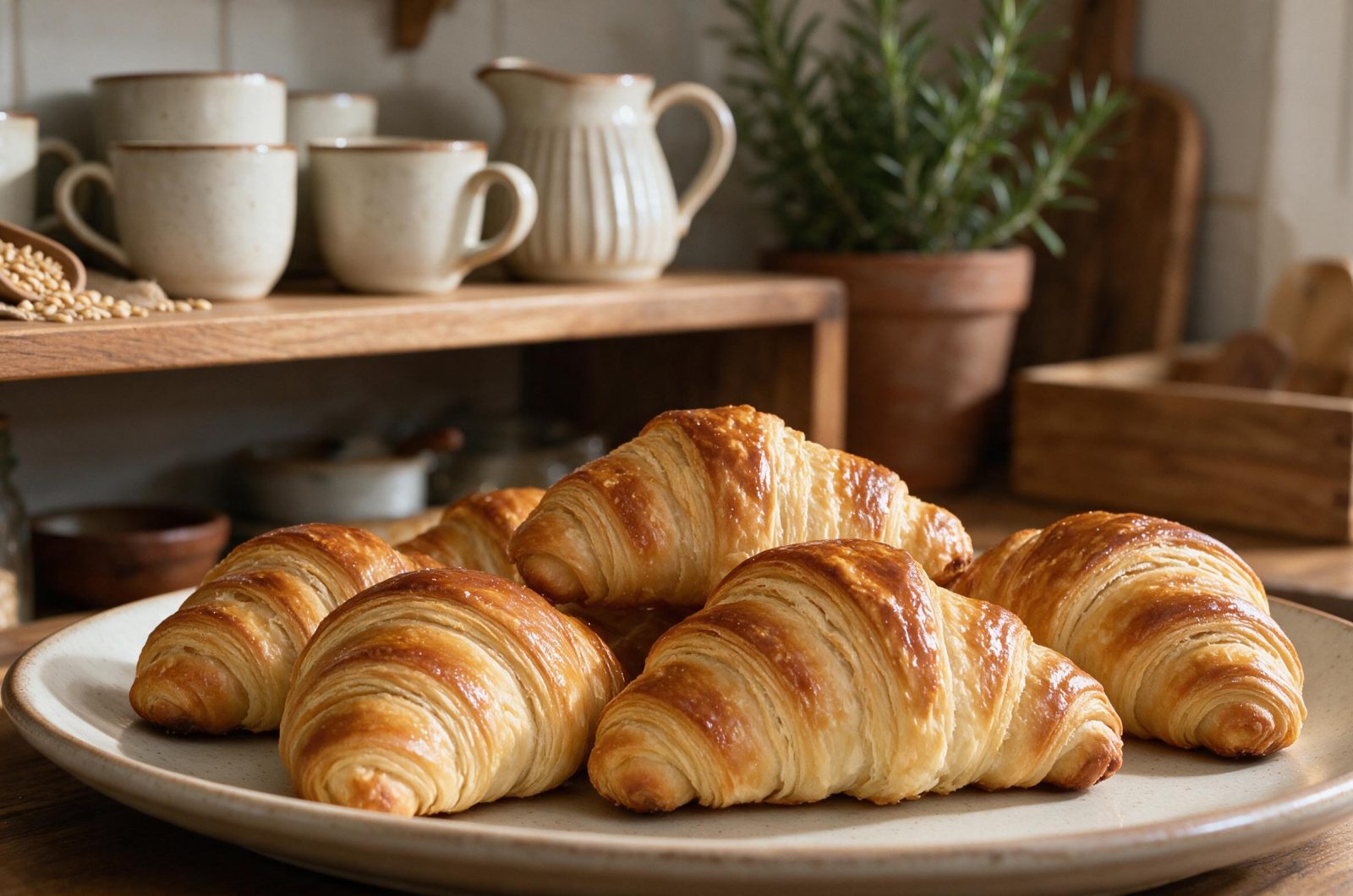
Thermomix Croissants
These classic Croissants are made using laminated dough—layers of butter folded into yeast dough—to create that signature flaky texture. The Thermomix simplifies kneading and mixing, but the folding process still gives you authentic results.
10
servings40
minutes20
minutes230
kcal60
Ingredients
- Dough:
250 g all-purpose flour
140 ml milk
40 g sugar
5 g salt
10 g fresh yeast (or 5 g dry yeast)
30 g softened butter
- Butter Layer:
150 g cold unsalted butter
- Egg Wash:
1 egg
1 tbsp milk
Directions
- Prepare Dough
- Add milk, sugar, and yeast to Thermomix
👉 2 min / 37°C / Speed 2
Add flour, salt, and butter
👉 3 min / Dough mode
Shape into ball, cover, chill 1–2 hours - Make Butter Block
- Place butter between baking paper
Roll into 15×15 cm square
Refrigerate until firm - Laminate Dough
- Roll dough into rectangle
Place butter in center
Fold like envelope
Roll and fold into thirds
Chill 30 minutes
Repeat folding 3 times - Shape Croissants
- Roll dough to 4 mm thickness
Cut triangles
Roll from base to tip
Shape into crescents - Proof
- Let rise 1.5–2 hours
Until doubled in size - Bake
- Preheat oven to 200°C
Brush with egg wash
Bake 15–20 minutes until golden
Notes
- Notes
Keep dough cold during folding
Do not skip resting time
Best eaten fresh
Nutrition Facts
- Serving Size: 10 g
- Total number of serves: 1
- Calories: 260kcal
- Fat: 12g
- Carbohydrates: 25g
- Fiber: 1g
- Sugar: 5g
- Protein: 5g