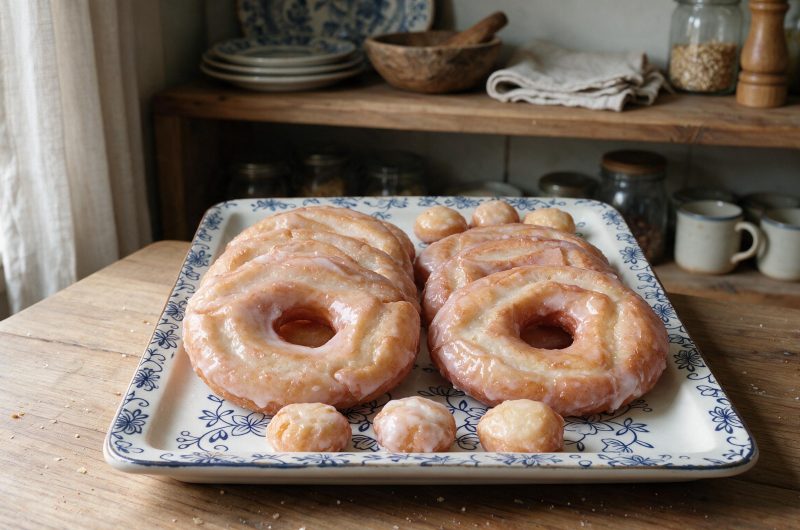
If you have ever dreamed of recreating that iconic melt-in-your-mouth donut experience at home, these Sourdough Krispy Kreme–Style Donuts will quickly become your favorite baking project. Soft, airy, and delicately sweet, these homemade glazed donuts use natural sourdough fermentation instead of commercial yeast. The result is a pillowy interior with a subtle depth of flavor, finished with a glossy vanilla glaze that sets beautifully over warm donuts.
Unlike standard donut recipes that rely solely on instant yeast, this version uses an active sourdough starter. This not only enhances flavor complexity but also contributes to a more refined crumb structure. When prepared correctly, the donuts taste remarkably similar to classic glazed bakery donuts, but with a homemade touch and improved digestibility from natural fermentation.
Why Sourdough Donuts Are Worth the Effort
Sourdough baking has grown in popularity because of its natural fermentation process and flavor development. Applying sourdough techniques to donuts creates a more balanced sweetness and improved texture. The fermentation time allows gluten to develop gradually, resulting in a soft yet structured dough that fries beautifully.
These donuts stand out because they are not overly sweet or greasy. Instead, they are light, slightly chewy inside, and delicately crisp on the outside. The thin vanilla glaze melts into the surface, creating that signature shiny coating reminiscent of Krispy Kreme–style donuts.
What Makes These Donuts “Krispy Kreme–Style”
The texture and finish of these donuts come from a specific combination of steps. The enriched dough includes milk, egg, butter, and sugar, creating richness and tenderness. The dough is rolled to the correct thickness, proofed until airy, and fried at the ideal temperature to produce a light golden crust.
Glazing while the donuts are still warm allows the coating to adhere smoothly and form a thin, glossy shell. This technique replicates the classic bakery-style finish that donut lovers recognize instantly.
Ingredient Breakdown and Their Roles
Each ingredient plays a critical part in achieving the desired texture and flavor. Active sourdough starter is the foundation, providing rise and subtle tang. Warm milk softens the dough and enhances richness. Egg contributes structure and tenderness. Sugar supports fermentation and sweetness.
Melted butter adds moisture and depth. Vanilla extract introduces warmth and aroma. All-purpose flour forms the structural base. Salt balances sweetness and strengthens gluten development. Neutral frying oil ensures the flavor of the dough remains clean and light.
For the glaze, powdered sugar provides smooth sweetness, milk adjusts consistency, and vanilla extract enhances flavor.
Preparing the Dough Correctly
To begin, combine active sourdough starter, warm milk, egg, sugar, melted butter, and vanilla extract in a large bowl. Mix until smooth. Gradually incorporate flour and salt, forming a soft dough.
Knead for 8 to 10 minutes until the dough becomes elastic and smooth. Proper kneading builds gluten strength, which is essential for trapping air during proofing and frying. The dough should be soft but not sticky.
Bulk Fermentation for Flavor Development
Place the dough in a lightly greased bowl and cover. Allow it to rise at room temperature for 6 to 8 hours or overnight. This slow fermentation enhances flavor and improves structure.
The dough should double in size. Under-proofed dough may result in dense donuts, while proper fermentation ensures lightness and elasticity.
Shaping the Donuts
Once the dough has risen, roll it out to approximately half an inch thick. Using a donut cutter or two round cutters, cut out donut shapes.
Transfer the shaped donuts to a parchment-lined tray and cover lightly. Allow them to rest for 1½ to 2 hours until noticeably puffy. This second rise is crucial for achieving a soft and airy crumb.
Frying for the Perfect Texture
Heat neutral oil to 175°C (350°F). Carefully place donuts into the hot oil in small batches. Fry for 30 to 45 seconds per side until lightly golden.
Avoid overcrowding the pan, as this lowers oil temperature and affects texture. Remove donuts promptly once golden to prevent overcooking. Transfer briefly to paper towels to remove excess oil.
Creating the Classic Vanilla Glaze
Whisk together powdered sugar, milk, and vanilla extract until smooth. The glaze should be thin but not watery.
While the donuts are still warm, dip each one into the glaze. Place them on a wire rack and allow the coating to set for 5 to 10 minutes. The glaze will form a thin, glossy finish characteristic of classic glazed donuts.
Notes for Perfect Results
Use an active, bubbly sourdough starter for proper rise. Do not add excessive flour when kneading. Maintain consistent oil temperature during frying. Always glaze while donuts are warm. Avoid over-frying to preserve softness.
These steps ensure bakery-quality results at home.
Flavor Variations and Customization
Although the original ingredients remain unchanged, the finished donuts can be adapted. For chocolate glaze, mix cocoa powder into the glaze. For cinnamon sugar donuts, skip glazing and coat warm donuts in cinnamon sugar. For filled donuts, omit the center hole and inject custard after frying.
These options allow flexibility while maintaining the base recipe.
Storage and Serving Recommendations
These sourdough glazed donuts are best enjoyed fresh. Store at room temperature for up to 24 hours. If needed, reheat briefly in the microwave for 8 to 10 seconds to restore softness.
Because they are glazed, freezing is not recommended.
Nutritional Overview
Each donut contains approximately 260 calories, 36 grams of carbohydrates, 5 grams of protein, 10 grams of fat, and 18 grams of sugar. Nutritional values may vary depending on portion size and ingredient brands.
These Sourdough Krispy Kreme–Style Donuts combine traditional fermentation with classic donut technique. With patience during proofing and careful frying, you can achieve a light, airy, and beautifully glazed homemade treat that rivals bakery versions.
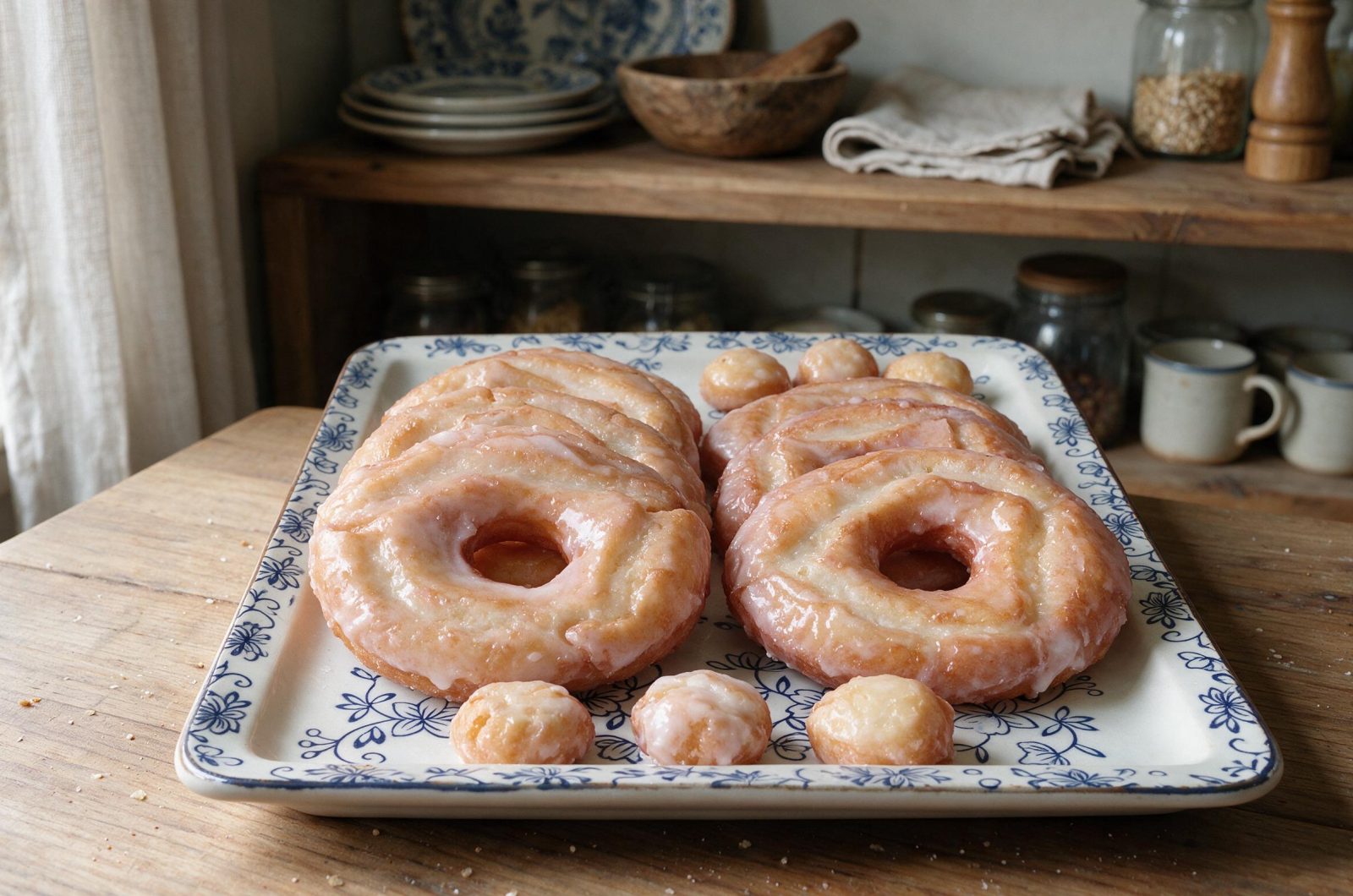
Fluffy Sourdough Glazed Donuts
Made with natural sourdough fermentation, these donuts have better flavor, texture, and digestibility than regular yeast donuts. Perfect for weekend baking, special treats, or when you want bakery-quality donuts from your own kitchen.
4
servings30
minutes40
minutes260
kcal1
hour10
minutesIngredients
- Donut Dough
¾ cup active sourdough starter
¾ cup warm milk
1 large egg
¼ cup sugar
¼ cup melted butter
1 teaspoon vanilla extract
3½ cups all-purpose flour
1 teaspoon salt
- For Frying
Neutral oil (vegetable or canola)
- Classic Glaze
2 cups powdered sugar
¼ cup milk
1 teaspoon vanilla extract
Directions
- In a bowl, mix sourdough starter, warm milk, egg, sugar, melted butter, and vanilla.
- Add flour and salt. Mix into a soft dough.
- Knead for 8–10 minutes until smooth.
- Cover and let rise 6–8 hours or overnight until doubled.
- Roll dough to ½-inch thickness. Cut donut shapes.
- Place on lined tray and let rise 1½–2 hours until puffy.
- Heat oil to 175°C (350°F).
- Fry donuts 30–45 seconds per side until lightly golden.
- Drain briefly on paper towels.
- Mix glaze ingredients until smooth.
- Dip warm donuts into glaze and place on rack to set.
Notes
- Notes
• Use active sourdough starter for best results
• Do not over-fry
• Glaze while donuts are warm
• Best eaten fresh
Nutrition Facts
- Serving Size: 1 g
- Total number of serves: 1
- Fat: 10g
- Carbohydrates: 36g
- Sugar: 18g
- Protein: 5g