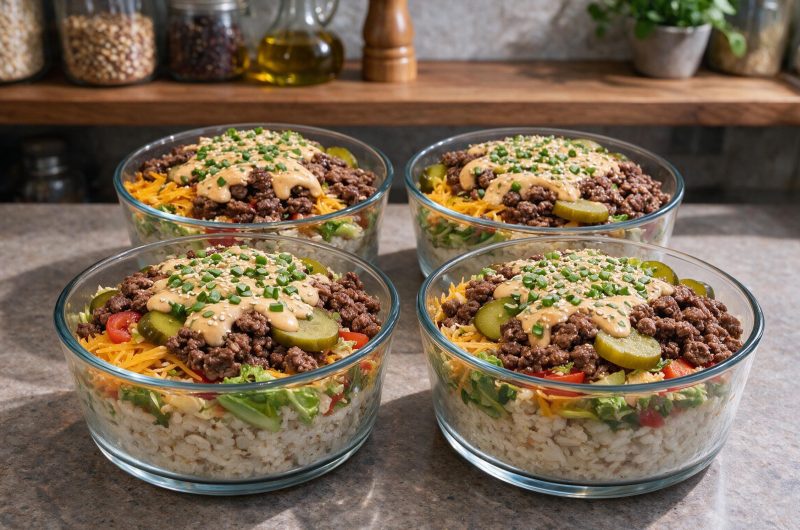
If you love the bold flavor of a classic fast-food cheeseburger but want a healthier, low-carb alternative, this Big Mac Cheeseburger Protein Bowl delivers everything you crave without the bun. It includes juicy seasoned lean beef, crisp shredded lettuce, tangy dill pickles, melted cheddar cheese, fresh tomatoes, diced onions, and a creamy Big Mac-style sauce layered into one satisfying high-protein meal.
This healthy cheeseburger bowl recipe is ideal for low-carb diets, keto meal plans, weight management programs, and high-protein meal prep. By removing the bread and focusing on lean protein and fresh vegetables, the dish feels lighter while still offering the nostalgic burger taste people love.
From start to finish, you can prepare this easy burger bowl in about 15 to 20 minutes, making it perfect for busy lunches, weeknight dinners, or batch cooking for the week.
Why This Low-Carb Burger Bowl Is So Popular
Many people search for healthy comfort food recipes that do not sacrifice flavor. This Big Mac-inspired protein bowl meets that need perfectly. It keeps all the key burger elements—savory beef, cheese, pickles, and sauce—while significantly reducing carbohydrates.
The combination of lean protein, fresh vegetables, and a tangy sauce creates a balanced meal that feels indulgent yet nutritious. It proves that eating healthy does not mean giving up favorite flavors.
The Inspiration Behind the Big Mac Bowl
This recipe takes inspiration from the iconic burger known for its layered flavor profile and distinctive sauce. Instead of stacking ingredients between buns, everything is served over a bed of crisp lettuce.
The famous tangy sauce ties the bowl together, delivering that signature sweet and savory flavor. The result is a deconstructed cheeseburger that feels fresh, balanced, and satisfying.
Ingredient and Their Uses
Each ingredient contributes to the overall taste and texture of the bowl. Extra-lean beef mince serves as the main protein source. Using 90–97% lean beef keeps the meal lighter while still flavorful.
Shredded lettuce replaces the bun, providing crunch and freshness. Diced tomatoes add natural sweetness and moisture. Diced onions offer mild sharpness. Dill pickles introduce tangy acidity that enhances the overall burger taste.
Reduced-fat cheddar cheese melts gently over warm beef, adding creamy richness. The Big Mac-style sauce blends mayonnaise or Greek yogurt, mustard, ketchup, pickle juice, and spices to create the classic burger flavor.
Step 1 – Cooking the Lean Beef
Heat a non-stick skillet over medium heat. Add the extra-lean beef mince and break it apart into small crumbles. Season with salt, black pepper, garlic powder, and onion powder.
Cook for 6 to 8 minutes until browned and fully cooked. If excess fat appears, drain it to maintain a lighter texture. Proper browning enhances flavor and creates that authentic burger taste.
Step 2 – Preparing the Big Mac-Style Sauce
In a small bowl, combine light mayonnaise or Greek yogurt, sugar-free ketchup, yellow mustard, pickle juice, paprika, onion powder, and garlic powder. Whisk until smooth.
Taste and adjust if needed. Extra pickle juice intensifies tanginess, while a small pinch of sweetener can enhance sweetness if desired. This sauce is what transforms the bowl into a true Big Mac-inspired experience.
Step 3 – Building the Protein Bowl
Start with a base of shredded lettuce in each serving bowl. Add a layer of warm cooked beef. Sprinkle shredded cheddar cheese over the beef so it melts slightly.
Top with diced tomatoes, onions, and sliced pickles. Drizzle generously with the prepared sauce. You can keep the layers intact or gently toss before serving.
Texture and Flavor Balance
This burger bowl works because of its layered texture. The warm beef contrasts with cool lettuce. The creamy sauce complements the crisp vegetables. The pickles add brightness that cuts through richness.
Every bite contains a combination of savory, creamy, crunchy, and tangy elements, making the bowl satisfying without feeling heavy.
Nutritional Benefits of This High-Protein Meal
This Big Mac protein bowl provides approximately 350 calories per serving, with 35 to 45 grams of protein and only 6 to 8 grams of carbohydrates. The high protein content supports muscle maintenance and satiety.
Removing the bun significantly lowers carbohydrate intake, making this recipe suitable for low-carb and keto diets. Fresh vegetables add fiber, vitamins, and antioxidants.
Ideal for Meal Prep
One of the biggest advantages of this recipe is how well it works for meal prep. Cook the beef ahead of time and store it in airtight containers. Keep vegetables and sauce separate to maintain freshness.
Assemble bowls just before eating. Prepared ingredients stay fresh for 3 to 4 days in the refrigerator. This makes it a reliable option for work lunches and post-workout meals.
Customization Options
This burger bowl is easy to customize while keeping the original ingredients intact. Add a fried egg for extra protein. Increase spice with hot sauce or cayenne. For a vegetarian variation, substitute plant-based mince and vegan cheese.
These small adjustments allow you to adapt the recipe to your preferences without altering its core structure.
Notes for Best Results
Choose high-quality lean beef for better flavor. Season thoroughly to enhance the burger profile. Use crisp lettuce for texture. Add sauce just before serving when meal prepping. Balance creamy and crunchy components carefully.
Following these simple steps ensures consistent and delicious results every time.
Storage and Serving Tips
Store assembled bowls without sauce if preparing ahead. Keep sauce in a separate container. Reheat beef gently before assembling.
Serve chilled lettuce and warm beef for the best contrast in texture and temperature. Garnish with fresh herbs if desired.
Why This Recipe Fits Modern Nutrition Goals
This Big Mac cheeseburger protein bowl aligns with contemporary healthy eating trends. It is high in protein, low in refined carbohydrates, and adaptable for keto or low-carb diets.
It offers a balanced alternative to fast food while maintaining flavor and satisfaction. For anyone seeking healthy burger alternatives, this recipe provides both convenience and nutrition.
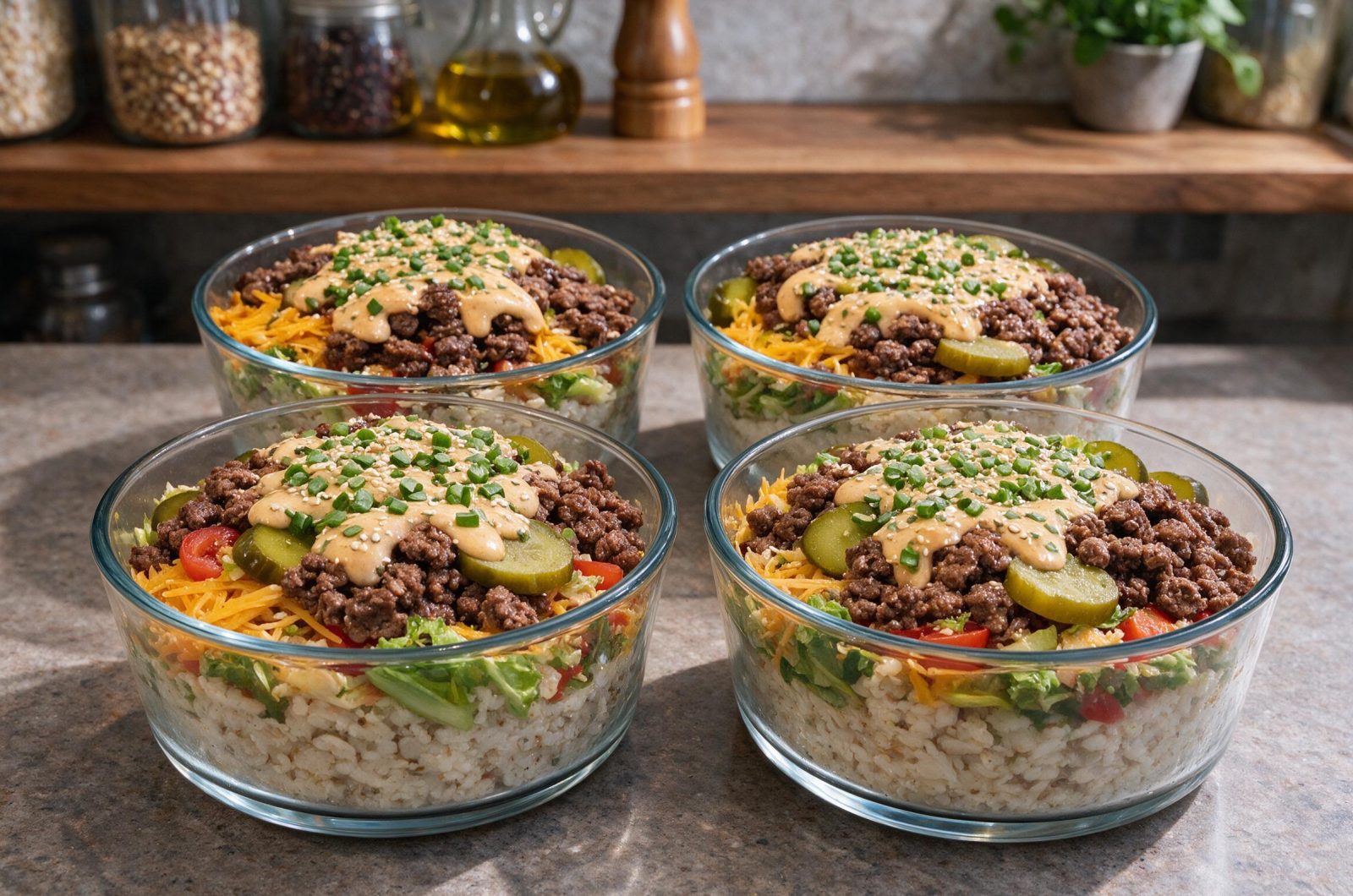
Big Mac Cheeseburger Protein Bowl
This high-protein burger bowl recipe is designed for anyone looking to enjoy the iconic burger experience in a healthier way. this dish becomes ideal for low-carb diets, keto meal plans, weight management programs, bariatric-friendly eating, and high-protein meal prep.
1
servings10
minutes10
minutes350
kcal20
minutesIngredients
- Burger Bowl
150–170 g extra-lean beef mince (or turkey mince)
Salt & black pepper to taste
1 cup shredded lettuce (iceberg or romaine)
¼ cup diced tomatoes
¼ cup diced onions (optional)
Sliced dill pickles
¼ cup reduced-fat shredded cheddar cheese
- Big Mac-Style Sauce
2 tbsp light mayonnaise (or Greek yogurt)
1 tbsp sugar-free ketchup
1 tsp yellow mustard
1 tsp pickle juice
½ tsp paprika
½ tsp onion powder
½ tsp garlic powder
Optional: tiny pinch of sweetener
Directions
- Heat a non-stick skillet over medium heat.
- Add beef mince and cook for 6–8 minutes, breaking apart with a spatula.
- Season with salt, pepper, garlic powder, and onion powder.
- Cook until browned and crumbly. Drain excess fat if needed.
- In a small bowl, whisk together mayonnaise (or Greek yogurt), ketchup, mustard, pickle juice, paprika, onion powder, and garlic powder.
- Place shredded lettuce in a bowl.
- Add cooked beef on top.
- Sprinkle shredded cheddar cheese over the warm beef.
- Add diced tomatoes, onions, and sliced pickles.
- Drizzle sauce over the bowl and serve.
Notes
- Notes
• Store prepared ingredients separately for meal prep.
• Refrigerate for up to 4 days.
• Add sauce just before serving to maintain freshness.
Nutrition Facts
- Serving Size: 1 g
- Total number of serves: 1
- Calories: 350kcal
- Fat: 15g
- Carbohydrates: 6g
- Protein: 45g