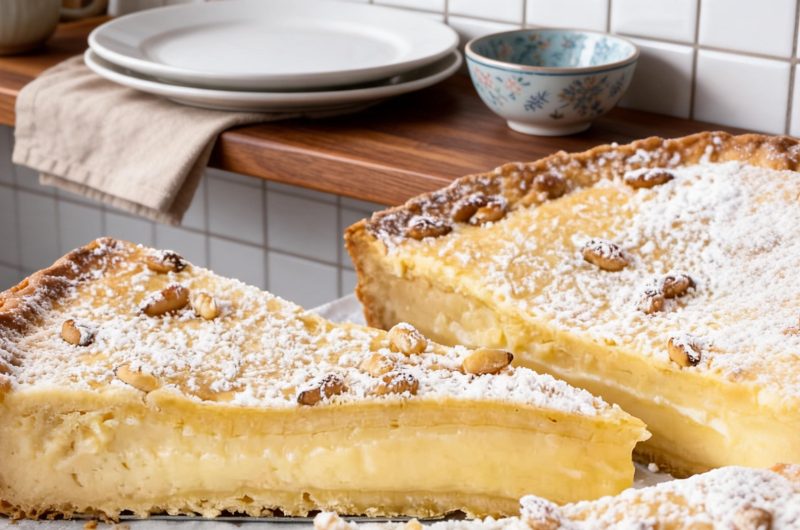
Torta della Nonna, meaning “Grandmother’s Cake,” is one of the most beloved traditional Italian desserts. Originating in Tuscany, this rustic yet elegant tart features a tender buttery shortcrust pastry filled with smooth vanilla pastry cream and topped with toasted pine nuts and a delicate dusting of powdered sugar. Every bite captures the essence of classic Italian baking—simple ingredients, balanced sweetness, and comforting flavor.
If you are searching for an authentic Italian custard tart recipe, a traditional Tuscan dessert, or a homemade pastry cream pie that feels both nostalgic and refined, this Torta della Nonna is the perfect choice. It is a timeless recipe that combines crisp pastry with silky crema pasticcera, creating a dessert that is satisfying without being heavy.
Why Torta della Nonna Is So Popular
Torta della Nonna remains a staple in Italian households because it strikes the perfect balance between texture and flavor. The pasta frolla crust is buttery and slightly crumbly, providing structure without overshadowing the filling. The vanilla pastry cream is rich yet smooth, with just enough sweetness to complement the crust. Pine nuts add subtle crunch and nutty aroma, while powdered sugar enhances presentation.
This dessert fits many occasions. It can be served after Sunday lunch, presented at festive gatherings, or enjoyed as an afternoon treat with espresso. Its elegant appearance makes it suitable for celebrations, yet its simplicity keeps it accessible for everyday baking.
The Essence of Crema Pasticcera
The heart of this Italian custard tart is crema pasticcera, a smooth pastry cream infused with vanilla. Proper preparation of the custard is essential for achieving the correct texture. Whole milk creates richness, egg yolks provide structure, and flour thickens the mixture into a stable filling that slices cleanly.
Heating the milk gently prevents scorching, while constant whisking avoids lumps. Allowing the custard to boil briefly after thickening ensures that the flour taste disappears and the cream becomes silky. Cooling with plastic wrap pressed directly on the surface prevents a skin from forming.
Ingredient Spotlight – Whole Milk
Whole milk contributes creaminess and body to the custard. Lower-fat milk can produce a thinner filling, which may not hold shape when sliced. The fat content in whole milk enhances mouthfeel and ensures that the crema pasticcera remains rich and smooth.
Heating the milk slowly allows it to blend seamlessly with the egg mixture. This gentle process maintains texture and prevents curdling.
Ingredient Spotlight – Egg Yolks
Egg yolks are essential for thickening and stabilizing the pastry cream. When whisked with sugar, they create a pale, creamy mixture that integrates smoothly with warm milk.
The proteins in the yolks coagulate gently during cooking, transforming the liquid mixture into a thick custard. Proper temperature control prevents scrambling and ensures a uniform consistency.
Ingredient Spotlight – Flour
All-purpose flour thickens the custard and helps it set once cooled. It provides structure without making the filling dense. Cooking the custard for at least one minute after thickening removes any raw flour taste.
Measuring flour accurately ensures a balanced texture that is firm yet creamy.
Preparing the Buttery Pasta Frolla
The shortcrust pastry, known as pasta frolla, forms the base and top of the tart. Unlike flaky pie crust, pasta frolla is tender and slightly crumbly. Cold unsalted butter is rubbed into flour until the mixture resembles breadcrumbs. Sugar, eggs, and lemon zest add sweetness and aroma.
Handling the dough lightly prevents toughness. Chilling the dough before rolling allows the butter to firm up and makes shaping easier.
The Role of Lemon Zest
Lemon zest adds brightness and subtle citrus aroma to the crust. It balances the sweetness of the custard and enhances overall flavor.
Although optional in some variations, lemon zest gives this tart a characteristic freshness associated with Tuscan baking.
Assembling the Tart
Once both components are ready, assembling the tart becomes straightforward. Roll the larger portion of dough into a circle and place it in a greased tart pan. Press gently into the corners without stretching the dough.
Fill the shell evenly with cooled pastry cream. Roll the remaining dough and place it over the filling. Seal the edges carefully and create a small vent in the center to release steam.
Adding Pine Nuts
Before baking, soak pine nuts briefly in water to prevent burning. Drain and scatter evenly across the surface. Pine nuts add texture and mild sweetness, complementing the custard.
Their golden color after baking enhances visual appeal and flavor.
Baking to Golden Perfection
Bake the tart at 350°F (180°C) for approximately 40 minutes or until the crust turns golden brown. Positioning the rack appropriately ensures even cooking of both base and top crust.
Allow the tart to cool completely before removing it from the pan. Cooling helps the custard set firmly, allowing clean slices.
Notes for Best Results
Always use cold butter when preparing the crust. Avoid over-kneading the dough. Cook the custard gently and whisk constantly. Allow full cooling before slicing. Soak pine nuts briefly to avoid over-browning.
These steps ensure consistency and bakery-quality texture.
Serving Suggestions
Dust the cooled tart generously with powdered sugar before serving. Torta della Nonna pairs beautifully with espresso, cappuccino, or dessert wine such as Vin Santo. It can also be served chilled for a firmer texture.
For added indulgence, serve with a small scoop of vanilla gelato.
Storage and Freezing
Store leftovers in the refrigerator for up to four days. Cover to maintain freshness. Individual slices can be wrapped and frozen for up to two months. Thaw overnight in the refrigerator before serving.
Reheat gently in a low oven if a warm slice is preferred.
Why This Recipe Endures
Torta della Nonna continues to be a favorite because it combines simplicity with elegance. Its layered textures and balanced sweetness appeal to a wide audience.
This classic Italian custard tart demonstrates how traditional recipes remain relevant when prepared with care and quality ingredients.
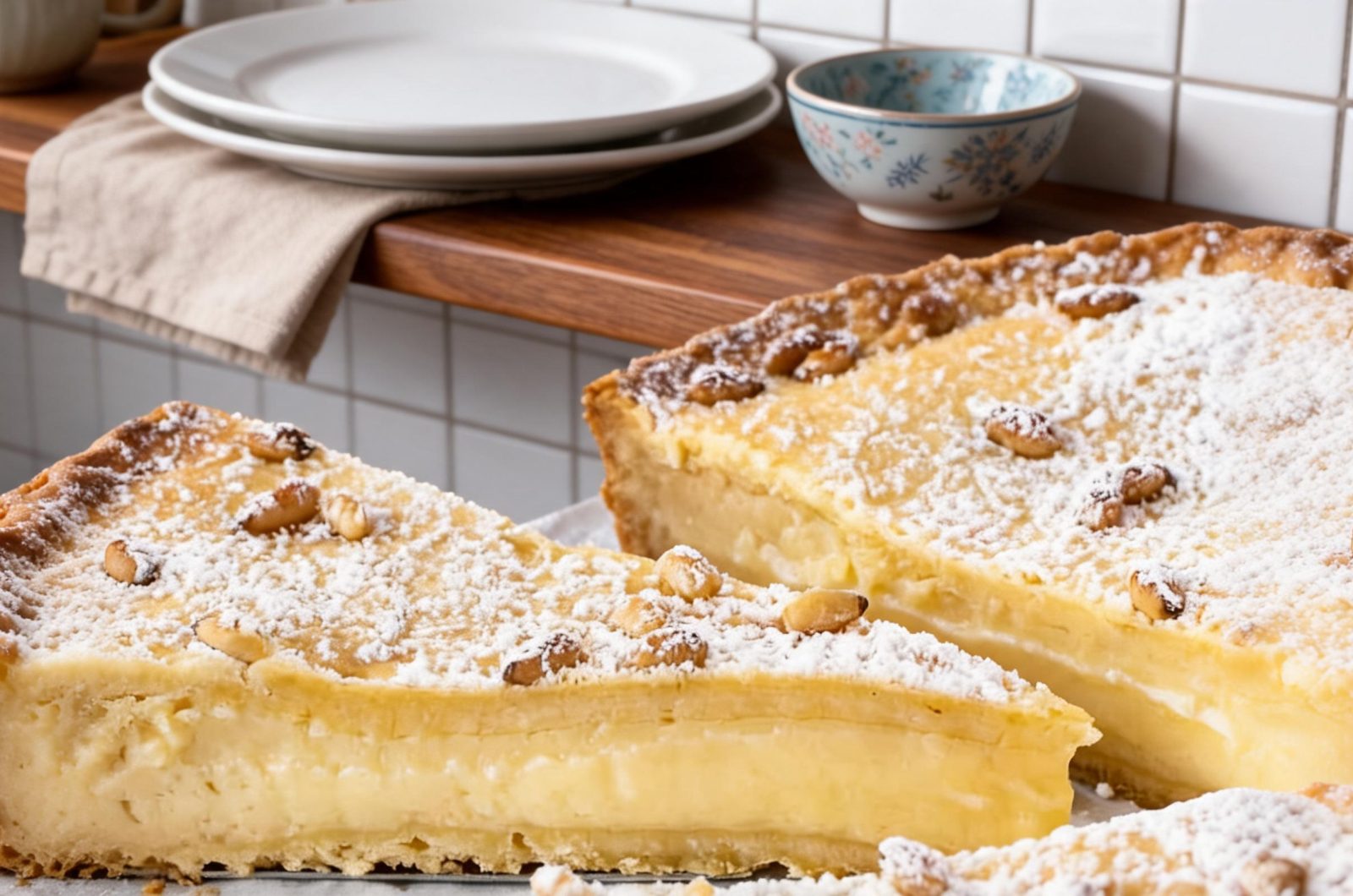
Torta Della Nonna
Torta della Nonna translates to “Grandmother’s cake” and is a favorite Sunday lunch dessert. The tender, buttery crust is filled with vanilla pastry and topped with pinenuts then baked until golden brown and irristible.
12
servings30
minutes40
minutes232
kcal60
2
hours10
minutesIngredients
- For Pastry Cream:
2½ cups whole milk
2 tsp vanilla extract
4 egg yolks
¾ cup sugar
¼ cup all-purpose flour
- For Crust:
2½ cups all-purpose flour (+ extra for rolling)
1 tsp lemon zest
¾ tsp baking powder
Pinch of salt
6 oz cold unsalted butter, cubed
⅔ cup sugar
1 egg + 1 yolk
1 tbsp pine nuts
- To Finish:
Powdered sugar for dusting
Directions
- Make Pastry Cream: Heat milk and vanilla. Whisk yolks, sugar, and flour in a bowl. Slowly add warm milk, whisk, then return to heat until thick. Cover with plastic wrap and cool.
- Make Crust: Mix flour, zest, baking powder, and salt. Cut in butter until crumbly. Add sugar, egg, and yolk. Form a dough, wrap, and chill 1 hour.
- Assemble: Soak pine nuts. Roll half the dough into a tart pan, fill with pastry cream, top with remaining dough, and seal edges.
- Bake: Sprinkle pine nuts on top. Bake at 350°F (180°C) for 40 minutes until golden.
- Serve: Cool completely, dust with powdered sugar, and enjoy!
Nutrition Facts
- Serving Size: 1 g
- Total number of serves: 12
- Calories: 232kcal
- Fat: 15g
- Saturated Fat: 8g
- Trans Fat: 1g
- Polyunsaturated Fat: 1g
- Monounsaturated Fat: 4g
- Cholesterol: 144mg
- Sodium: 29mg
- Carbohydrates: 42g
- Fiber: 1g
- Sugar: 24g
- Protein: 6g
- Calcium: 85mg
- Iron: 1mg