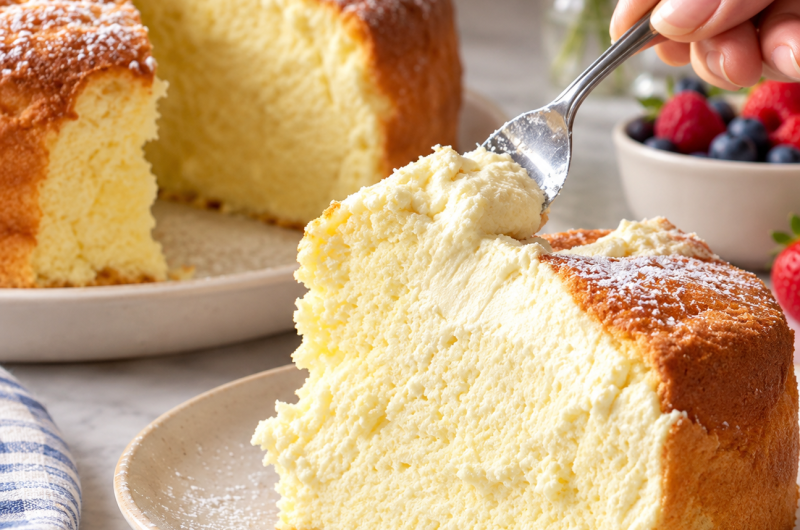
Sourdough Cloud Cake is a delicate, airy dessert made with simple pantry ingredients and sourdough discard. Unlike dense cakes that rely heavily on butter or rich frosting, this recipe gets much of its soft, cloud-like texture from carefully whipped egg whites folded into a smooth sourdough batter. The result is a tender cake with a gentle sweetness, subtle fermented flavor, and a beautifully light crumb. It is an excellent sourdough discard recipe when you want to turn leftover starter into an easy homemade dessert. Serve this fluffy sourdough cake with powdered sugar, fresh berries, whipped cream, tea, or coffee for a simple treat. The recipe is straightforward, but a few details—especially egg temperature, whipping technique, folding, and baking time—make a noticeable difference in the final texture.
What Makes This Sourdough Cake So Airy
The defining feature of this sourdough cloud cake is its unusually light texture. Instead of depending entirely on baking powder for lift, the recipe separates the eggs and uses whipped egg whites to introduce air into the batter. When egg whites are beaten with sugar until glossy and softly structured, they create a network of tiny air bubbles. Folding those whites gently into the sourdough mixture allows the bubbles to remain suspended in the batter as the cake goes into the oven. During baking, the trapped air expands and helps the cake rise. This technique produces a soft, tender crumb that feels lighter than many traditional cakes. Sourdough discard contributes flavor and moisture, while flour provides structure and the remaining ingredients balance sweetness, richness, and tenderness.
Why Sourdough Discard Works Beautifully in Cake
Sourdough discard is often associated with pancakes, waffles, crackers, muffins, and bread recipes, but it can also be used in delicate desserts such as this sourdough cloud cake. The discard brings a mild fermented character that gives the cake more depth than a basic vanilla sponge. Because this recipe already contains baking powder and whipped egg whites, the sourdough discard does not need to be highly active to contribute to the finished cake. Using unfed discard is therefore a convenient way to reduce waste while creating something enjoyable. The flavor will depend somewhat on how mature and acidic the discard is, but the finished cake should remain gently flavored rather than strongly sour. This makes it suitable for serving to people who may not normally choose sourdough desserts.
Choosing the Right Eggs for a Soft Cake
Eggs are particularly important in this recipe because they perform several jobs at once. The yolks contribute richness, moisture, and emulsifying power to the batter, while the whites provide most of the aeration responsible for the cloud-like texture. Room-temperature eggs are recommended because they generally whip more easily and can produce a smoother, more stable foam. When separating the eggs, take care that no yolk gets into the whites, because even a small amount of fat can interfere with whipping. A completely clean and dry bowl and beaters are equally important. Once the whites become foamy, the sugar should be added gradually while beating. The finished whites should appear glossy and hold soft-to-medium peaks rather than becoming extremely stiff or dry.
Getting the Sourdough Batter Smooth
The first batter combines sourdough discard with the egg yolks, milk, neutral oil or melted butter, vanilla extract, and optional lemon zest. These ingredients should be mixed until the mixture is reasonably smooth before the dry ingredients are introduced. A smooth base makes it easier to incorporate the flour without excessive mixing later. The flour, baking powder, and salt should be combined before being added to the wet mixture so that the leavening and salt are distributed evenly throughout the cake. Once the dry ingredients are added, whisk only until the mixture comes together. Overmixing can encourage gluten development, which is not desirable when the goal is a soft, tender cake. A few moments of careful mixing are enough to create the foundation for the airy batter.
The Importance of Whipping Egg Whites Correctly
Whipping the egg whites is the most important technique in this sourdough cloud cake recipe. Begin with a clean bowl and clean beaters, then beat the whites until they become foamy. Gradually add the granulated sugar rather than adding it all at once. Continue beating until the mixture becomes glossy and forms soft-to-medium peaks. The whites should have enough structure to hold air but should still look smooth and flexible. If they are under-whipped, they may not provide enough support for the cake. If they are beaten excessively, they can become dry and difficult to fold into the batter without breaking apart. The goal is a stable yet supple foam. Taking a little extra care at this stage can make the difference between an ordinary sponge and a genuinely light sourdough cloud cake.
How to Fold the Egg Whites Without Losing Air
Once the sourdough batter and whipped egg whites are ready, they need to be combined gently. This is not the stage for vigorous stirring. Start by adding roughly one-third of the whipped whites to the sourdough mixture and fold gently to loosen the batter. Once the first portion is incorporated, add the remaining whites in two additions. Use a flexible spatula and make broad, deliberate movements from the bottom of the bowl upward, turning the batter over itself. The purpose is to distribute the egg whites while preserving as much trapped air as possible. A few small streaks of white can be incorporated with another gentle fold, but excessive mixing should be avoided. The finished batter should look light and aerated rather than completely beaten flat.
Preparing the Cake Pan for Even Baking
Before mixing the final batter, prepare the cake pan so it is ready when the batter is finished. An 8-inch round cake pan is specified for this recipe, with the bottom greased and lined with parchment paper. Proper preparation helps the delicate cake release more easily after baking. Because the batter is airy, it is best not to leave it sitting around for an extended period after the egg whites have been folded in. Have the oven fully preheated to 325°F (165°C) before the batter enters the oven. A steady oven temperature is useful for maintaining the cake’s rise and allowing the interior to set gradually. Once the batter is transferred to the pan, smooth the surface gently rather than pressing or tapping it aggressively, since excessive handling can remove some of the air created during whipping.
Baking the Cake at the Right Temperature
This sourdough cloud cake is baked at 325°F (165°C), which provides a moderate oven temperature suitable for a delicate, airy batter. The cake generally needs about 30 to 40 minutes, although exact baking time can vary depending on the oven and pan. Avoid opening the oven door too early because a sudden drop in temperature can interfere with the cake’s rise and structure. Toward the end of baking, look for a lightly golden surface and a center that feels set. A toothpick inserted into the middle should come out clean or with only a few moist crumbs. If the toothpick shows wet batter, continue baking for a short period and check again. Avoid baking far beyond the point of doneness because an airy cake can lose moisture and become unnecessarily dry.
Cooling the Sourdough Cloud Cake Properly
Cooling is another important part of making a successful homemade cloud cake. Once the cake is removed from the oven, allow it to remain in the pan for approximately 10 minutes. This short resting period allows the structure to settle and makes handling easier. After that, carefully transfer the cake to a wire rack and allow it to cool completely. Cutting the cake while it is still hot can make the crumb appear less stable and may cause unnecessary tearing. Once completely cool, the cake can be finished with a light dusting of powdered sugar or served with other toppings. If you plan to add whipped cream or fresh berries, wait until the cake is completely cool. This keeps the toppings attractive and prevents warm cake from softening or melting delicate additions.
Simple Toppings for a Homemade Sourdough Cake
One of the strengths of this sourdough cloud cake is that it does not require a complicated frosting. A simple dusting of powdered sugar can provide enough sweetness and visual appeal for everyday serving. Fresh berries are another natural choice, especially strawberries, raspberries, or blueberries, because their fresh flavor contrasts nicely with the gentle sweetness of the cake. Lightly whipped cream can add richness without overpowering the delicate crumb. For a breakfast-style or afternoon snack presentation, the cake can be served with tea or coffee. A small drizzle of honey can also add sweetness, while fresh fruit and yogurt create a more substantial plate. Keeping the toppings simple allows the soft cake texture and subtle sourdough flavor to remain the focus.
Ways to Add Fresh Citrus Flavor
The original recipe includes lemon zest as an optional ingredient, and it can make the cake taste brighter without changing its basic character. A small amount of finely grated lemon zest distributes fresh citrus aroma throughout the batter. Because the amount is modest, it does not turn the dessert into a strongly lemon-flavored cake. Instead, it adds a subtle freshness that works particularly well with vanilla, sourdough, berries, and cream. If lemon is not available or you prefer a more neutral cake, the zest can simply be left out. The recipe remains complete without it. For a different variation, the same idea could be used with orange zest, although the listed ingredients should remain unchanged if you are preparing the recipe exactly as written.
Common Mistakes That Can Affect the Texture
Several small mistakes can prevent a sourdough cloud cake from developing its intended fluffy texture. One of the most common is failing to whip the egg whites adequately, which leaves the batter without enough air. Another is using a bowl or beaters containing traces of grease, which can make it difficult for the whites to reach the desired volume. Overmixing after the flour is added can produce a heavier crumb, while aggressive folding can collapse the whipped egg whites. Baking at an incorrect temperature or opening the oven too early can also affect the cake’s rise. Finally, overbaking can remove moisture and make the finished cake less tender. Paying attention to these small details is more useful than making unnecessary changes to the ingredient list.
Notes for Consistent Results
For the most reliable results, begin with room-temperature eggs and make sure your equipment for whipping the whites is completely clean and dry. Measure the flour carefully rather than packing it tightly into a measuring cup, and mix the dry ingredients before adding them to the wet mixture. Keep the batter handling gentle once the whipped whites are introduced. The oven should be fully preheated before baking, and the cake should remain undisturbed during the early portion of baking. Do not judge doneness only by surface color; use the toothpick test and check that the center is set. After baking, give the cake time to cool completely before slicing. These practical details help preserve the delicate texture that gives this recipe its cloud-like quality.
Serving Ideas for Breakfast, Tea Time, or Dessert
Although this recipe is described as a cake, its light texture makes it flexible enough for several occasions. For breakfast or brunch, a slice can be served with fresh fruit and a cup of coffee. At afternoon tea, powdered sugar and berries provide a simple presentation that requires little preparation. For dessert, lightly whipped cream and fruit make the cake feel more festive without requiring a heavy frosting. It can also be served plain, allowing the vanilla and subtle sourdough flavor to stand out. If you are preparing the cake for guests, arranging several slices on a serving plate with berries around the edges creates an attractive presentation. Because the cake itself is delicate and lightly sweetened, it works particularly well with toppings that add freshness rather than excessive richness.
How to Store Sourdough Cloud Cake
Storage depends on how the cake is finished. A plain, fully cooled sourdough cloud cake can be kept in an airtight container at room temperature for up to two days according to the provided recipe. If it is topped with lightly whipped cream or fresh fruit, refrigeration is recommended, and the cake should be enjoyed within two to three days. For longer storage, the plain cake can be wrapped securely and frozen for up to two months. When ready to serve, allow the frozen cake to thaw completely before adding toppings or slicing. Proper wrapping is important during freezing because it helps reduce moisture loss and protects the cake from absorbing unwanted freezer odors. Avoid freezing the cake with delicate whipped cream or fresh fruit toppings.
Frequently Asked Questions About Sourdough Cloud Cake
Can active sourdough starter be used? Yes, active sourdough starter can be used in place of sourdough discard. The recipe is particularly convenient for discard, but the ingredient can also work when the starter is active. Why is the cake not fluffy? The most likely issue is that the whipped egg whites were overmixed or not incorporated gently enough. The air trapped in the whites is important to the cake’s texture. Can lemon zest be omitted? Yes, lemon zest is optional and can be left out without affecting the basic recipe. Can chocolate be added? A chocolate variation is possible, although heavier additions can change the delicate texture. How can you tell when it is baked? The surface should be lightly golden, the center should feel set, and a toothpick inserted into the center should come out clean or with a few moist crumbs.
Why This Recipe Is a Useful Sourdough Discard Dessert
Sourdough discard recipes are useful because they provide creative ways to use starter that might otherwise be thrown away. This cake turns that ingredient into a soft dessert without requiring complicated fermentation or a long bread-making process. The combination of sourdough discard, eggs, flour, milk, and vanilla creates a familiar cake foundation, while whipped egg whites give it a lighter structure. It is especially useful for home bakers who regularly maintain a sourdough starter and want recipes beyond bread, pancakes, or waffles. The recipe also demonstrates an important baking technique: separating eggs and using whipped whites to build volume. Once that technique becomes familiar, it can be useful in many other light cake recipes where a tender and airy crumb is desired.