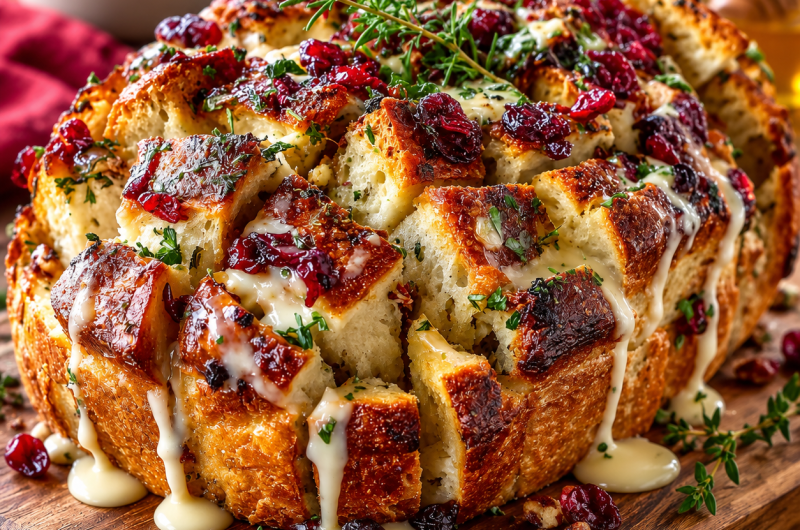
Cranberry Goat Cheese Sourdough Pull-Apart Bread is a delicious combination of crusty artisan bread, creamy goat cheese, sweet dried cranberries, crunchy pecans, and fragrant fresh thyme. Finished with melted butter and a drizzle of honey, this easy homemade appetizer brings together sweet, savory, tangy, and nutty flavors in every bite. The bread is cut into small connected sections, filled with flavorful ingredients, and baked until the cheese softens and the crust becomes beautifully golden. It is an excellent choice for holiday parties, family gatherings, Thanksgiving appetizers, Christmas celebrations, or relaxed weekend entertaining. Unlike traditional stuffed bread recipes that require making dough from scratch, this version begins with a ready-made sourdough loaf. That simple shortcut keeps preparation easy while still delivering an impressive result. With just 15 minutes of preparation and approximately 25 minutes of baking, this festive sourdough appetizer can be ready to enjoy in about 40 minutes.
Why This Cranberry and Goat Cheese Bread Is a Crowd-Pleasing Appetizer
The appeal of this cranberry goat cheese pull-apart bread comes from its combination of familiar ingredients and an attractive presentation. A round sourdough loaf becomes a shareable appetizer when it is sliced into a crosshatch pattern and filled with creamy cheese, fruit, and nuts. Guests can pull away individual pieces without needing the bread to be sliced into traditional portions. This makes it especially convenient for casual gatherings, appetizer tables, and holiday celebrations. Another advantage is the balance of flavors. Goat cheese adds a pleasantly tangy richness, dried cranberries contribute sweetness, and pecans introduce a gentle crunch. Fresh thyme gives the bread an aromatic finish, while honey adds sweetness that complements the cheese. The crisp sourdough crust holds everything together, creating a satisfying contrast with the warm, tender center. Because the recipe uses a prepared loaf, it is also approachable for beginner cooks who want to make something special without complicated baking techniques.
The Flavor Combination That Makes This Recipe Special
A successful sweet and savory appetizer depends on ingredients that complement one another without allowing any single flavor to dominate. In this cranberry goat cheese sourdough bread, each component contributes something different. The sourdough has a mild tang and a firm, chewy texture that provides a sturdy foundation. Soft goat cheese adds a creamy, slightly sharp flavor that contrasts with the sweetness of the dried cranberries. Pecans contribute richness and a toasted, nutty character, while thyme adds a fresh herbal aroma. Melted butter helps carry these flavors into the cuts of the loaf and encourages the bread to develop a golden finish. The final drizzle of honey brings the ingredients together by softening the tanginess of the cheese and highlighting the fruit. The result is a warm appetizer that tastes rich without being overwhelmingly heavy. Every pull-apart piece contains a slightly different combination of cheese, cranberries, nuts, and seasoned bread.
Choosing the Best Sourdough Loaf for Pull-Apart Bread
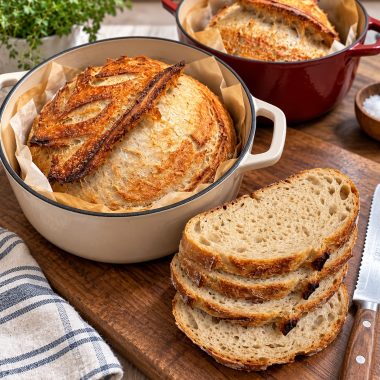
The foundation of this recipe is one round sourdough loaf weighing approximately 1 pound, or 450 grams. Choosing the right bread is important because the loaf needs to hold its shape after being cut and filled. A sturdy artisan sourdough with a firm crust and a reasonably open interior works especially well. The crust provides support, while the soft interior absorbs some of the melted butter and cheese. A loaf that is too soft may tear when the cuts are opened, making it more difficult to distribute the filling evenly. Round sourdough creates an attractive presentation, but a sturdy oval loaf can also be suitable when the cutting technique is adjusted to its shape. Avoid bread that is extremely dry or stale because it may crumble instead of pulling apart neatly. The ideal loaf should feel firm on the outside while remaining tender inside, allowing it to become crisp during baking without losing its pleasant chewy texture.
Understanding the Role of Creamy Goat Cheese
Goat cheese is one of the defining ingredients in this holiday sourdough appetizer. The recipe uses 4 ounces, or 113 grams, of soft goat cheese at room temperature. Its creamy consistency allows it to be tucked into the cuts of the bread, where it softens further during baking. Goat cheese has a distinctive tangy flavor that pairs particularly well with fruit, honey, and nuts. In this recipe, that tanginess prevents the cranberries and honey from making the finished bread taste overly sweet. Bringing the cheese to room temperature before assembly is helpful because it becomes easier to portion and distribute without damaging the bread. Small pieces can be placed throughout the crosshatch cuts so that each section contains some cheese. During baking, the cheese warms and becomes soft and spreadable, creating creamy pockets throughout the loaf. It may not stretch like mozzarella, but its smooth texture provides a rich and satisfying contrast to the crisp sourdough crust.
Why Dried Cranberries Work Beautifully in Savory Bread
Dried cranberries bring concentrated fruit flavor and a pleasant chewy texture to this cranberry sourdough appetizer. The recipe calls for ½ cup, or 65 grams, which is enough to distribute throughout the bread without overwhelming the cheese and nuts. Their sweet-tart character is especially useful when paired with tangy goat cheese because the two ingredients create a balanced flavor. Unlike fresh cranberries, dried cranberries contain much less moisture, making them easier to use in a stuffed bread recipe. They can be placed directly into the cuts without requiring a separate cooking step. As the bread warms, the cranberries soften slightly while retaining their distinct texture. Their deep red color also gives the finished loaf a festive appearance, making it particularly attractive for Thanksgiving, Christmas, and winter gatherings. Spreading the cranberries evenly throughout the bread helps ensure that guests receive a little sweetness in each pull-apart portion rather than finding all the fruit concentrated in one area.
How Chopped Pecans Add Crunch and Richness
Pecans provide an important textural contrast in this goat cheese and cranberry pull-apart bread. The recipe includes ⅓ cup, or 35 grams, of chopped pecans, which are distributed among the cuts along with the cheese and dried fruit. Their naturally rich, buttery flavor complements the sourdough and goat cheese without competing with the sweetness of the cranberries. As the bread bakes, pecans near the exposed surface may become lightly toasted, developing a deeper aroma and a more pronounced nutty taste. Pieces tucked farther inside remain slightly softer while still providing crunch. Chopping the pecans into manageable pieces makes them easier to fit between the bread sections and helps prevent large pieces from falling out during serving. The nuts also make the finished appetizer more interesting because every bite includes a mixture of creamy, chewy, and crisp textures. For anyone serving guests with food allergies, it is important to identify that this recipe contains tree nuts.
Fresh Thyme and Melted Butter Create a Savory Finish
The topping mixture gives this sourdough pull-apart bread its savory aroma and golden appearance. Three tablespoons, or 42 grams, of melted unsalted butter are spooned over the loaf and into the cuts, allowing the bread to absorb flavor as it bakes. Butter contributes richness and helps the exposed edges become crisp during the final uncovered baking stage. Fresh thyme leaves add a delicate herbal flavor that works well with cheese, fruit, and nuts. The recipe uses one tablespoon of fresh thyme, providing enough fragrance without overpowering the other ingredients. A quarter teaspoon of fine salt enhances the overall flavor, while freshly ground black pepper can be added for a subtle savory warmth. Because the butter is unsalted, the measured salt allows better control over seasoning. Together, these ingredients create a simple but effective topping that helps transform an ordinary sourdough loaf into a fragrant, flavorful appetizer suitable for both casual meals and special occasions.
The Importance of Honey in a Sweet and Savory Appetizer
Honey is the finishing ingredient that gives this cranberry goat cheese sourdough bread its distinctive sweet and savory balance. The recipe calls for two tablespoons, which are drizzled over the loaf after baking rather than mixed into the filling. Adding honey at the end allows its flavor to remain noticeable and gives the surface a light, glossy finish. Its sweetness complements the tartness of the goat cheese and the fruity flavor of the dried cranberries, while the fresh thyme and seasoned butter keep the overall taste from becoming too dessert-like. The honey also creates an appealing contrast with the salty, crisp sourdough crust. For the best presentation, drizzle it gradually across the top so that it reaches several sections of the bread rather than collecting in one spot. Because the honey is added after the loaf leaves the oven, it does not need to be exposed to prolonged baking heat. This helps preserve its flavor and prevents unnecessary caramelization.
Preparing the Bread with a Simple Crosshatch Cutting Method
The signature pull-apart shape is created by cutting the sourdough loaf in two directions to form a grid. Begin with a serrated bread knife, which can cut through the firm crust without crushing the soft interior. Make parallel cuts approximately one inch apart across the top of the loaf, stopping about half an inch before reaching the bottom. Rotate the loaf or change the cutting direction, then make another series of cuts to create a crosshatch pattern. The uncut base is essential because it keeps the loaf connected during filling, baking, and serving. Cutting completely through the bottom would turn the bread into separate pieces and make assembly more difficult. Work slowly and use gentle sawing motions rather than pressing heavily on the bread. The finished loaf should have small connected sections that can be opened slightly to hold the filling. This technique creates plenty of space for goat cheese, cranberries, pecans, and melted butter while preserving the bread’s overall shape.
Filling the Sourdough Loaf Evenly for Better Flavor
Once the sourdough has been cut, the next step is to distribute the goat cheese, dried cranberries, and chopped pecans throughout the loaf. Gently separate the bread sections with your fingers, taking care not to pull them away from the connected base. Place small portions of softened goat cheese into the openings, working from the center toward the outer edges. Follow with the cranberries and pecans, allowing the ingredients to settle between the pieces of bread. Even distribution is important because it prevents some sections from becoming overloaded while others remain plain. It also helps the finished loaf pull apart more neatly when served. The filling does not need to be pressed tightly into every opening, but it should be tucked far enough inside that most of it remains in place during baking. After the cheese, fruit, and nuts are arranged, spoon the seasoned melted butter over the surface and into the cuts to coat the bread.
Why Baking the Bread in Foil Keeps the Center Tender
The first baking stage uses aluminum foil to help warm the bread and soften the cheese without allowing the crust to become too dark. After the loaf is filled and seasoned, it is wrapped loosely in foil and placed in an oven preheated to 350°F, or 175°C. The covered baking period lasts approximately 15 minutes. During this time, the heat gradually reaches the center of the loaf, warming the goat cheese and allowing the butter to soak into the bread. The foil helps limit moisture loss, which is particularly important because the sourdough will undergo a second baking stage without its covering. Wrapping the bread loosely rather than tightly also protects the toppings from being crushed. The goal is not to steam the loaf until it becomes soggy, but to warm the interior thoroughly while keeping the filling in place. Once the cheese has softened and the center is warm, the foil can be opened for the final crisping stage.
Creating a Golden, Crisp Crust Without Drying the Bread
After the initial covered baking period, the foil is opened to expose the surface of the sourdough loaf. The bread then returns to the oven for another eight to ten minutes, allowing the outer crust to become golden and lightly crisp. This second stage is important because it restores the contrast between the firm exterior and the soft, creamy interior. Without it, the loaf may remain too soft on the outside, especially after absorbing the melted butter. Keep an eye on the exposed cranberries and pecans during this stage because small pieces near the top can brown more quickly than the bread itself. The finished loaf should feel warm throughout, with softened goat cheese and an inviting golden crust. There is no need to bake until the cheese becomes deeply browned because soft goat cheese does not behave exactly like a melting pizza cheese. Once the crust reaches the desired texture, remove the bread and finish with the measured honey.
Serving This Pull-Apart Bread at Holiday Gatherings
Cranberry goat cheese sourdough pull-apart bread is particularly well suited to entertaining because it can be served directly on a platter as a shared appetizer. Its crosshatch pattern creates individual sections that guests can pull away without requiring additional cutting at the table. The combination of red cranberries, fresh green thyme, golden crust, and creamy white cheese also makes it visually appealing for festive occasions. It works well as a Thanksgiving starter, Christmas party appetizer, New Year’s Eve snack, or addition to a winter brunch spread. Place the warm loaf on a sturdy serving board or heat-safe platter and provide small plates or napkins for guests. Because the cheese is softest immediately after baking, serving the bread warm gives the best texture. The honey should be added just before presentation so it lightly coats the top. For larger gatherings, the loaf can be placed alongside other appetizers rather than being treated as the only dish.
Pairing Cranberry Goat Cheese Bread with Other Foods
This savory-sweet sourdough bread pairs well with foods that provide freshness, acidity, or lighter textures. A simple green salad can balance the richness of the butter, cheese, and pecans, making the bread suitable as part of a light lunch. It also works alongside roasted vegetables, vegetable soup, or a seasonal salad featuring crisp greens. For a holiday appetizer table, the bread can be served with fresh fruit, vegetable platters, and other small savory dishes. Because the loaf already contains cheese, nuts, and fruit, it does not require an additional spread or dipping sauce. Its flavor is complete on its own, especially after the honey has been added. Warm tea, sparkling water, or a refreshing fruit-based beverage can complement the sweet and savory ingredients. When planning a menu, consider the richness of the goat cheese and butter and pair the bread with foods that offer contrasting textures rather than additional heavy, cheese-filled dishes.
Preparing Ingredients Ahead Without Losing Freshness
Although this cranberry goat cheese pull-apart bread is best baked shortly before serving, several preparation tasks can be completed in advance. The dried cranberries and chopped pecans can be measured and kept in separate covered containers. Fresh thyme leaves can be removed from their stems and refrigerated until needed. The sourdough loaf can also be selected ahead of time, provided it is stored properly so that the crust remains firm and the interior does not become stale. When ready to assemble, allow the goat cheese to soften at room temperature so it is easier to tuck into the bread. The butter should be melted shortly before use, allowing it to flow into the cuts without becoming too cool or solid. For the best crust texture, avoid fully stuffing and soaking the loaf many hours before baking. Moisture from the cheese and butter can gradually soften the bread. Preparing the individual components in advance makes the final assembly quicker while preserving the fresh-baked quality of the finished appetizer.
Notes on Choosing the Right Bread Texture
The texture of the sourdough loaf can make a noticeable difference in the finished pull-apart appetizer. A sturdy loaf with a crisp exterior is easier to cut into a crosshatch pattern and holds the filling more securely. Bread with an extremely soft crust may compress during cutting, while a very dry loaf may break apart when the sections are opened. Choose bread that feels fresh and substantial, with enough structure to support the goat cheese, fruit, and nuts. If the loaf has a particularly thick crust, use a sharp serrated knife and take extra care when making the cuts. The one-inch spacing provides manageable portions and allows the filling to reach throughout the bread. Maintaining the connected bottom is equally important because it gives the loaf stability during transfer and baking. A well-cut sourdough loaf should open enough for filling but remain intact when lifted from the baking tray to the serving platter.
Notes on Preventing Uneven Filling and Overbrowning
Several small details help this easy sourdough appetizer bake evenly and look attractive when served. First, distribute the goat cheese, cranberries, and pecans throughout the cuts rather than concentrating the filling near the top. Ingredients placed too close to the surface may fall out or become overly browned during the uncovered baking stage. Second, spoon the melted butter gradually over the loaf so it reaches the interior without pooling excessively on the baking tray. Third, use the foil during the first 15 minutes as directed, since this allows the cheese to soften before the crust becomes crisp. When opening the foil, fold it away carefully to avoid trapping moisture around the sides of the bread. Watch the loaf during the final eight to ten minutes because oven temperatures and bread crust thickness can vary. If the exposed nuts or fruit begin darkening too quickly, the loaf can be removed once the center is warm and the crust has reached a pleasant golden color.
Notes on Refrigerating and Reheating Leftover Pull-Apart Bread
This appetizer tastes best soon after baking, when the sourdough crust is crisp and the goat cheese is warm and soft. However, leftover portions can be saved for another meal. Because the bread contains goat cheese, any leftovers should be refrigerated promptly rather than left at room temperature for an extended period. Transfer cooled pieces to an airtight container and refrigerate for approximately three to four days. For reheating, place the bread on a baking tray and warm it in an oven at a moderate temperature until the center is heated through. This method helps restore some of the crust’s crispness, although the texture may not be exactly the same as freshly baked bread. A microwave can warm individual portions more quickly, but it tends to soften the crust. For longer storage, portions can be wrapped securely and frozen, then thawed in the refrigerator before reheating. Avoid repeatedly reheating the same portions, as this can dry the bread and affect the filling.
Notes on Flavor Balance and Ingredient Substitutions
The original ingredient combination has been designed around the contrast between tangy cheese, sweet fruit, crunchy nuts, and savory herbs. Keeping the stated quantities helps maintain that balance, particularly because the honey and dried cranberries both contribute sweetness. The goat cheese should remain the main creamy component, while the pecans add texture without overwhelming the loaf. Fresh thyme contributes a delicate herbal character that works well with the butter and cheese. If freshly ground black pepper is used, a light amount is enough to introduce a subtle savory finish. Although other cheeses, nuts, and fruits are sometimes used in similar pull-apart bread recipes, changing these ingredients would create a different version rather than the exact recipe provided here. For anyone following the original preparation, the best approach is to retain the specified ingredients and measurements. The only optional ingredient in the supplied recipe is freshly ground black pepper, which can be included or omitted according to taste.
Why This Easy Holiday Bread Is a Practical Entertaining Recipe
Recipes intended for entertaining should be flavorful, attractive, and manageable in a busy kitchen. This cranberry goat cheese sourdough pull-apart bread meets those needs by using a ready-made loaf and a short list of ingredients. There is no dough to knead, no yeast to activate, and no lengthy proofing period. The preparation involves cutting the bread, filling the openings, adding seasoned butter, and baking in two stages. The entire process takes approximately 40 minutes, making it realistic to prepare shortly before guests arrive. The finished loaf also provides its own serving structure because the crosshatch cuts create individual pull-apart pieces. That feature makes it convenient for appetizer tables and informal meals where guests prefer small portions. Its festive appearance comes naturally from the ingredients rather than requiring complicated decoration. With creamy goat cheese, colorful cranberries, crunchy pecans, and fragrant thyme, the bread offers a memorable combination of flavors without demanding advanced cooking skills.
A Simple Way to Turn Artisan Bread into a Special Appetizer
Cranberry Goat Cheese Sourdough Pull-Apart Bread demonstrates how a few carefully selected ingredients can transform an ordinary loaf into a satisfying dish for sharing. The sourdough provides a crisp, sturdy base, while the goat cheese softens into creamy pockets between the bread sections. Dried cranberries add bright sweetness, pecans bring a rich crunch, and fresh thyme introduces an aromatic savory note. Melted butter helps the crust become golden, and the final honey drizzle ties the flavors together. The method is straightforward enough for beginners but produces a presentation suitable for holiday gatherings and special occasions. Because the bread is served warm and pulled apart by hand, it creates a relaxed and inviting way to share food with family or guests. Whether prepared for Thanksgiving, Christmas, a weekend brunch, or a simple appetizer night, this easy sourdough recipe offers a dependable combination of convenience, flavor, and attractive presentation.
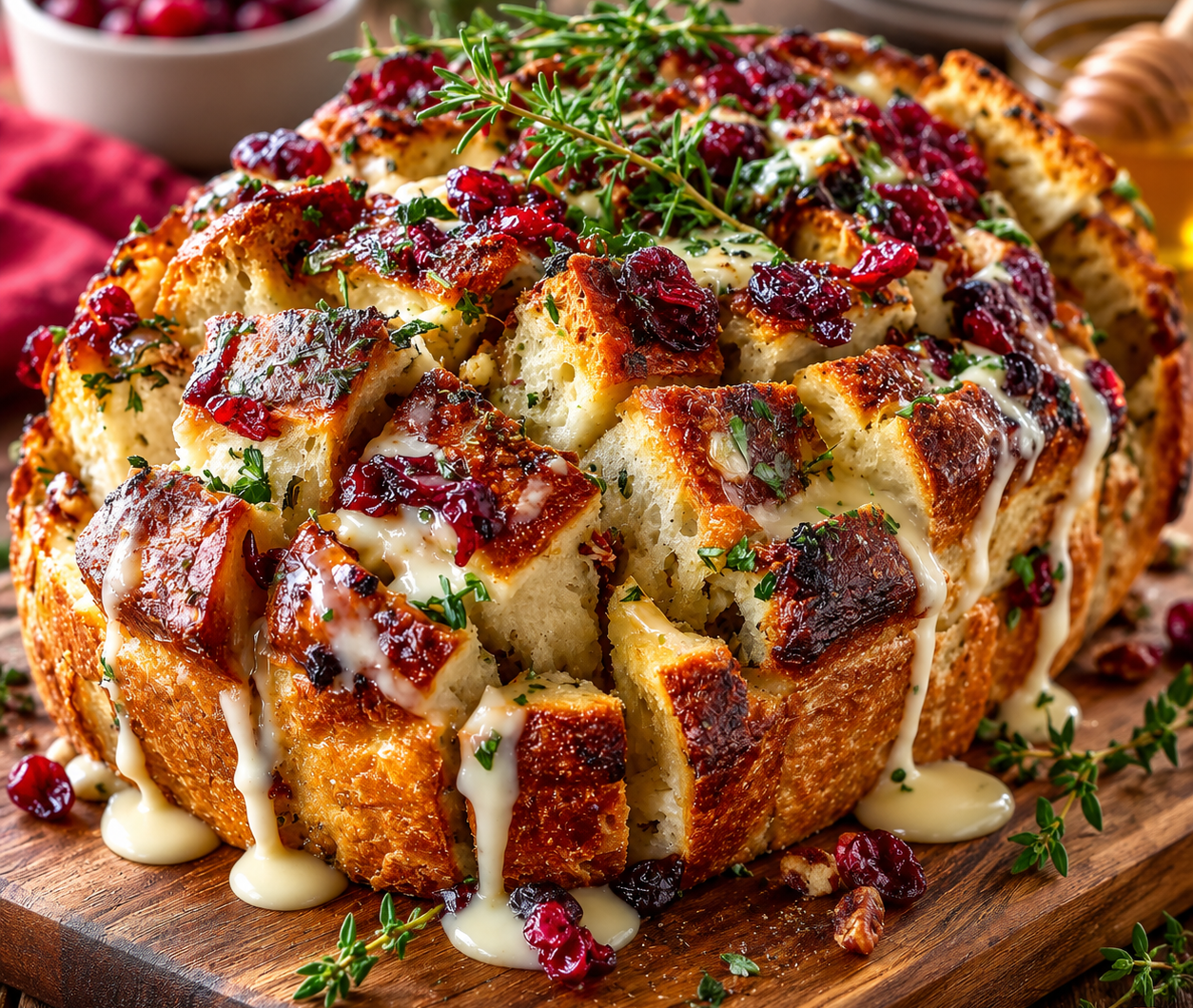
Cranberry Goat Cheese Sourdough Pull-Apart Bread
This easy cranberry goat cheese pull-apart bread features a crusty round sourdough loaf filled with soft goat cheese, sweet dried cranberries, and crunchy pecans. Melted butter, fresh thyme, and honey create a flavorful finish, making it a delicious appetizer for Thanksgiving, Christmas, holiday parties, and family gatherings.
6
servings15
minutes25
minutes440
kcal40
minutesIngredients
- For the Stuffed Sourdough Loaf
1 round sourdough loaf, approximately 1 lb (450 g)
4 oz (113 g) soft goat cheese, at room temperature
½ cup (65 g) dried cranberries
⅓ cup (35 g) chopped pecans
- For the Butter, Herb, and Honey Finish
3 tablespoons (42 g) unsalted butter, melted
1 tablespoon fresh thyme leaves
¼ teaspoon fine salt
2 tablespoons honey, for drizzling
Freshly ground black pepper (optional)
Directions
- Set the oven to 350°F (175°C). Place a large piece of aluminum foil on a baking tray and position the sourdough loaf in the center.
- Using a serrated knife, cut the loaf in a grid pattern with approximately 1-inch spacing. Stop about ½ inch above the bottom so the bread stays connected.
- Gently separate the bread sections and tuck small amounts of softened goat cheese, dried cranberries, and chopped pecans into the cuts. Distribute everything evenly.
- Spoon the melted butter over the loaf, allowing it to run into the openings. Sprinkle with fresh thyme, fine salt, and optional black pepper.
- Wrap the loaf loosely in foil and bake for 15 minutes, allowing the center to heat and the goat cheese to soften.
- Open the foil and bake for another 8–10 minutes until the crust becomes golden and crisp. Remove from the oven, drizzle with 2 tablespoons of honey, and serve warm.
Notes
- Notes for the Best Pull-Apart Bread
Choose a sturdy sourdough loaf that can hold the filling without breaking apart.
Use room-temperature goat cheese so it is easier to distribute.
Keep the bottom of the loaf connected when making the crosshatch cuts.
Spread the cranberries and pecans evenly for balanced flavor.
Bake covered first to warm the filling, then uncover to crisp the crust.
Add honey after baking for the best flavor and presentation.
Serve warm while the goat cheese is soft.
Refrigerate leftovers in an airtight container and reheat in the oven for a crisper texture.
Nutrition Facts
- Serving Size: 1 g
- Total number of serves: 6
- Calories: 440kcal
- Fat: 20g
- Carbohydrates: 54g
- Fiber: 3g
- Sugar: 20g
- Protein: 14g