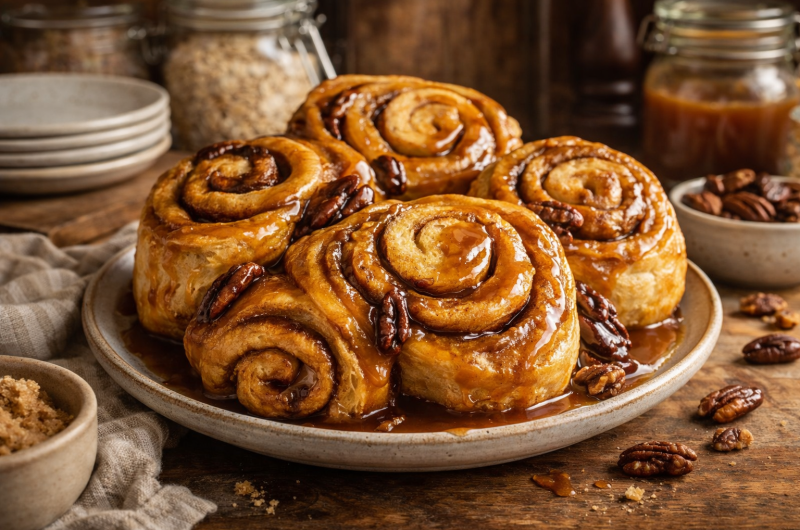
Sourdough caramel pecan cinnamon rolls represent the ultimate indulgence for anyone seeking a breakfast or brunch dish that combines sophistication with genuine comfort. These rolls appeal to people who appreciate layered flavors, beautiful presentation, and the satisfaction of creating bakery-quality treats at home. The combination of tender brioche dough enriched with sourdough starter creates a unique texture and flavor profile impossible to achieve with standard yeast alone. Each roll delivers a harmonious blend of buttery richness, warm cinnamon spice, deep caramel sweetness, and crunchy pecan texture. The overnight bulk fermentation allows the sourdough culture time to develop complex flavors while making morning preparation manageable. These rolls work perfectly for special weekend brunches, holiday celebrations, or anytime you want to impress family and friends with homemade excellence.
Why Sourdough Starter Elevates Standard Cinnamon Roll Recipes
Sourdough starter transforms ordinary cinnamon rolls into something genuinely special by introducing wild yeast and bacteria that develop complex flavors throughout fermentation. The natural fermentation process creates subtle tangy notes that complement rather than compete with sweet fillings and caramel. Using active sourdough starter eliminates the need for commercial yeast while creating superior flavor development through extended fermentation. The enzymes in sourdough break down flour proteins and starches, creating more tender crumb structure than standard commercial yeast breads achieve. The fermentation also improves digestibility while developing aromatic compounds that make the rolls smell irresistible. Many experienced bakers report that once they make sourdough cinnamon rolls, they never return to recipes using only commercial yeast. The depth of flavor from proper sourdough fermentation justifies the extra time investment required for overnight bulk fermentation.
Creating Rich Brioche Dough Foundation
The brioche dough base for these rolls combines butter, eggs, and milk to create an enriched dough that’s simultaneously tender and structurally sound. Brioche dough contains a higher fat and egg ratio than standard bread dough, resulting in the characteristic soft, buttery crumb that makes these rolls so appealing. Using a stand mixer properly develops the dough while incorporating the butter evenly throughout. The dough should gradually become smooth and elastic as mixing continues, eventually becoming silky rather than sticky or stiff. Softening butter to room temperature before adding ensures it incorporates evenly without creating hard spots throughout the dough. The brioche dough requires proper development time and temperature control to achieve the desired texture. Understanding brioche dough chemistry helps you appreciate why each element of the recipe matters for successful rolls.
Selecting Quality Ingredients for Optimal Results
The ingredients you choose directly impact these rolls’ final taste, texture, and overall quality. Using active sourdough starter that shows visible bubbles and has risen noticeably ensures proper fermentation and flavor development. All-purpose flour provides structure while whole wheat flour adds depth and nutrition. Fresh eggs contribute richness and help bind the dough properly. Real butter creates superior flavor compared to margarine or butter substitutes. Pure cinnamon provides warm spice that tastes noticeably better than pre-mixed cinnamon sugar blends. Heavy cream with higher fat content creates richer, smoother caramel sauce. Fresh pecans provide superior flavor and crunch compared to older nuts that may have turned rancid. Investing in quality ingredients, particularly butter and pecans, creates noticeably superior rolls.
Understanding the Caramel Making Process
Making homemade caramel doesn’t require special equipment or confusing techniques despite its reputation for difficulty. The basic process involves melting butter and brown sugar together until they combine into a rich, glossy sauce. The addition of heavy cream stops the cooking process and creates smooth, pourable caramel. Honey adds subtle depth while salt balances the sweetness and enhances all flavors. The caramel should simmer briefly to achieve the right consistency—thick enough to coat the pan but still pourable. Watching the caramel as it cooks ensures it reaches the perfect color and consistency without burning. Once poured into the prepared pan and sprinkled with pecans, the caramel should cool in the refrigerator before adding rolls. Homemade caramel tastes dramatically better than store-bought versions and costs significantly less.
Proper Bulk Fermentation Techniques and Timing
The overnight bulk fermentation represents the most important step for developing flavor and managing timing. Covering the dough properly prevents it from drying out while allowing adequate air circulation for gas production. The dough should double in size by morning, appearing noticeably puffy with visible bubbles throughout. Room temperature fermentation allows proper flavor development through wild yeast and bacteria activity. The slow fermentation also relaxes gluten, making the dough easier to shape without tearing. Morning preparation becomes simple when the heavy lifting happened overnight—just shape, allow a brief rise, and bake. Many people prefer overnight bulk fermentation specifically because it moves most work to the previous evening.
Rolling and Shaping Dough for Even Cinnamon Distribution
Rolling the dough into a large rectangle requires a light touch and proper technique to avoid tearing or trapping air pockets that create large holes in the finished rolls. The dough should be rolled to approximately one-quarter inch thickness for proper texture. Spreading the cinnamon sugar filling evenly ensures every roll contains the same amount of sweet spice without heavy concentration in some areas. Starting from one long edge and rolling tightly creates a log without loose dough that unravels during proofing. Using unflavored dental floss or a sharp serrated knife creates clean cuts without compressing the dough. Each roll should be roughly the same size to ensure uniform baking time across the entire batch. Proper rolling and cutting technique affects how attractive the finished rolls look when served.
Creating the Perfect Second Rise Before Baking
Allowing the cut rolls to rise in the prepared pan with caramel gives them time to puff and finish developing flavor before baking. The second rise typically takes three to four hours depending on kitchen temperature and dough vigor. The rolls should nearly double in size and appear noticeably puffed when ready for baking. Finger poke test—gently pressing a roll should create an indentation that springs back slowly—indicates proper proofing. Over-risen rolls may collapse during baking or create dense texture, while under-risen rolls won’t achieve optimal volume and fluffiness. Covering the rolls loosely during rising prevents surface drying. The second rise is shorter than bulk fermentation but still allows significant flavor development.
Baking at Proper Temperature for Golden Results
Preheating the oven to the correct temperature ensures proper browning and even baking throughout the batch. Baking at three hundred fifty degrees Fahrenheit creates beautiful golden color while allowing the rolls to bake through completely. The baking time typically ranges from twenty-five to thirty-five minutes depending on oven characteristics and roll size. Using an instant-read thermometer confirms the rolls have reached safe internal temperature of two hundred degrees Fahrenheit. The rolls should sound slightly hollow when tapped and feel set when gently pressed. Overbaking creates hard, dry rolls while underbaking leaves the center gummy and undercooked. Watching the rolls during the final minutes of baking prevents browning too much while ensuring thorough cooking.
Managing Caramel and Pecan Topping During Baking
The caramel and pecans create an irresistible topping as the rolls bake, with the caramel becoming glossy and the pecans toasting slightly. The combination of caramel with melted butter and sugar from the rolls creates a luxurious bottom layer. Some caramel may bubble up around the sides of rolls during baking, which is normal and contributes to the finished product’s appeal. Pulling the rolls straight from the oven while caramel is still hot and pliable ensures they release cleanly from the pan. Inverting the rolls onto a serving platter immediately after baking creates the beautiful caramel-pecan presentation. Waiting too long to invert risks the caramel setting too firmly and pulling apart the rolls.
Cooling and Serving for Optimal Enjoyment
Allowing the rolls to cool briefly on the serving platter prevents them from being dangerously hot while remaining warm enough for maximum enjoyment. The rolls continue cooking slightly from residual heat, so removing them from heat at the right moment prevents overbaking. Fully cooled rolls become firmer and easier to handle, though they lose the appealing warmth that makes fresh-baked rolls special. Many people prefer enjoying these rolls warm with a cup of coffee or tea. The combination of warm rolls with cool whipped cream or vanilla ice cream creates appealing temperature and texture contrast.
Storing Leftovers for Extended Enjoyment
Leftover rolls remain fresh at room temperature for two to three days when stored in an airtight container. Refrigerating extends shelf life to approximately one week while potentially making rolls slightly firmer. Freezing baked, cooled rolls allows storage for up to three months. Thawing frozen rolls at room temperature and reheating briefly in the oven restores warm, fresh-baked quality. Individual rolls can be frozen separately for grab-and-go convenience. Proper storage extends enjoyment while maintaining caramel and pecan appeal.
Why These Rolls Work for Various Occasions
The impressive presentation and delicious flavor make these rolls perfect for weekend brunches, holiday celebrations, special breakfasts, or gift-giving occasions. The overnight preparation allows you to manage timing for large gatherings. The rolls appeal across age groups and dietary variations. Making these rolls regularly builds confidence and baking skill. The investment in creating homemade rolls pays dividends through genuine compliments and requests for the recipe.
Troubleshooting Common Issues During Preparation
Understanding what causes common problems helps you fix issues quickly and learn for next time. Tough dough usually results from overworking or using flour with excessive protein—use softer flours and minimal mixing. Caramel that won’t pour results from cooking too long—reheat gently to restore pourable consistency. Rolls that don’t rise properly may indicate inactive sourdough starter—feed and activate properly before using. Uneven browning suggests oven hot spots—rotate the pan halfway through baking. Understanding causes prevents repeating mistakes and builds problem-solving confidence.
Creating Variations While Maintaining Core Appeal
The basic recipe serves as a foundation for variations using different nuts or spice adjustments. Replacing pecans with walnuts, cashews, or almonds creates different flavor profiles. Adding extra cinnamon creates more pronounced spice while reducing it creates subtler flavor. Replacing some brown sugar with maple syrup adds subtle depth. The core brioche dough and sourdough fermentation remain constant; only the toppings and fillings change. Understanding the foundation allows confident experimentation.
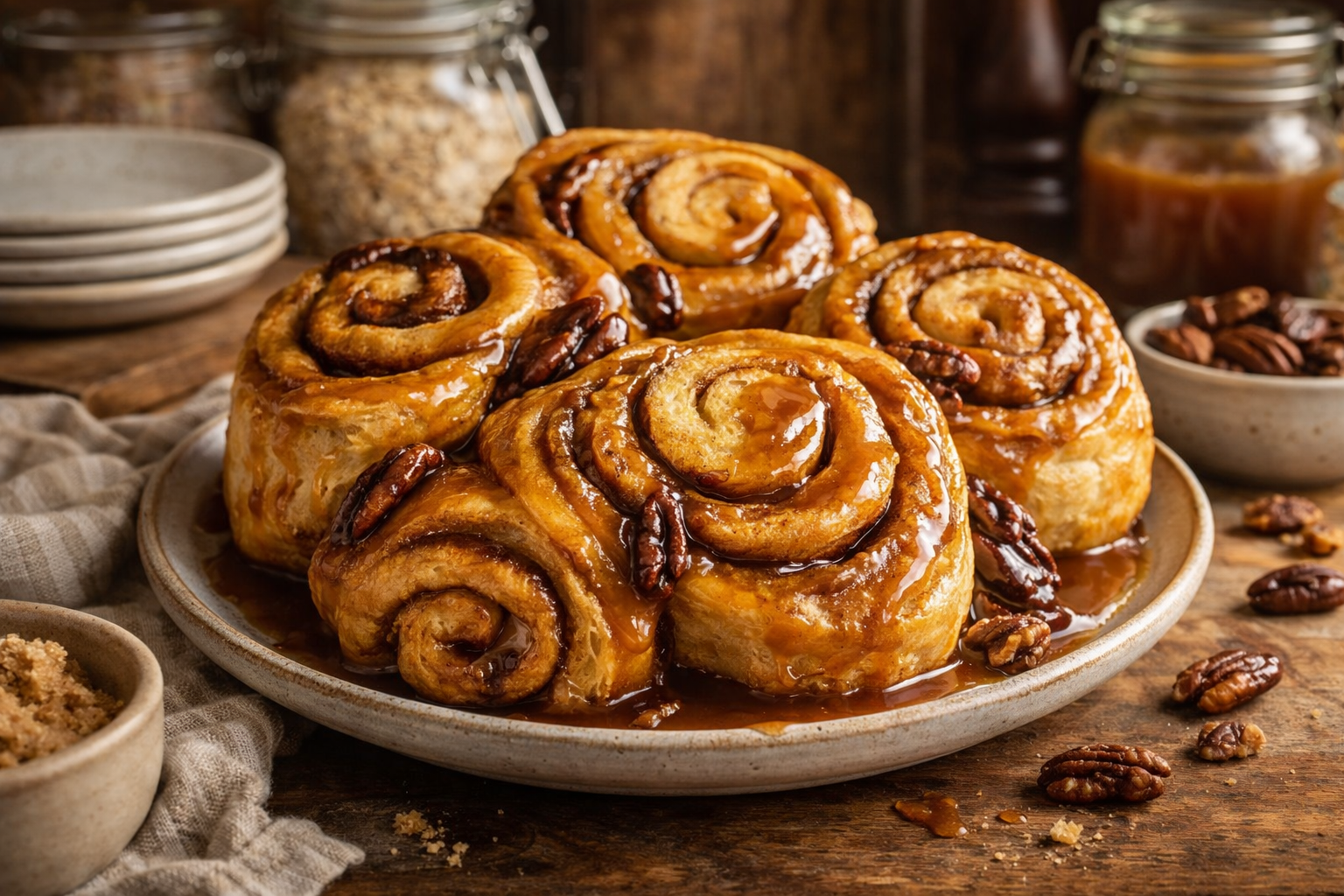
Sourdough Caramel Pecan Cinnamon Roll
Heavenly Sourdough Caramel Pecan Cinnamon Rolls Recipe
8
Buns40
minutes35
minutes16
hours15
minutes17
hours30
minutesIngredients
- Sticky Bun Dough:
25g whole wheat flour
315g all-purpose flour
1 large egg, room temperature
180g lukewarm whole milk
130g active sourdough starter
20g cane sugar
7g fine sea salt
70g softened unsalted butter, cut into chunks
- Filling:
2 tablespoons melted unsalted butter
60g brown sugar
2 teaspoons cinnamon
A pinch of fine sea salt
- Caramel
6 tablespoons unsalted butter
120g brown sugar
115g (1/2 cup) heavy cream
50g honey
1/4 teaspoon fine sea salt
3/4 cup raw pecans
Directions
- Combine Dry Ingredients: In the stand mixer bowl, combine all-purpose and whole wheat flours.
- Mix Wet Ingredients: In a separate bowl, whisk together the egg, milk, and sourdough starter.
- Form Dough: Attach the dough hook to the stand mixer and begin adding the wet ingredients to the dry mixture. Gradually combine until all dry bits are incorporated. The dough will initially look shaggy.
- Knead Dough: Allow the dough to rest for 15 minutes. Then, gradually add sugar, salt, and butter chunks one at a time, letting each incorporate fully before adding the next.
- Knead to Smoothness: Continue kneading the dough on medium speed for about 8 minutes, or until smooth and slightly sticky to the touch.
- Overnight Rise: Place the dough in a bowl, cover with plastic or a damp cloth, and allow it to rise overnight at room temperature.
- Prepare Caramel: In the morning, make the caramel by melting butter and mixing in the other caramel ingredients, except pecans. Simmer for 5 minutes until smooth and glossy. Pour into a 9×13 inch pan and add the pecans. Let it cool in the fridge.
- Roll Out Dough: Roll out the dough to a large rectangle (16″x12″) and brush with melted butter. Sprinkle the cinnamon, brown sugar, and salt evenly across the dough.
- Form Rolls: Roll the dough tightly from the long side to form a log, and then cut it into individual rolls. Place the rolls in the pan over the caramel and pecans.
- Proof: Cover the pan and let the rolls rise in a warm spot for about 3 hours, or until doubled in size.
- Bake: Preheat the oven to 375°F and bake for 35 minutes, or until golden brown and set in the middle.
- Invert and Serve: Allow the rolls to cool for 5 minutes, then invert the pan onto a large baking sheet. Remove the pan and enjoy your heavenly sourdough caramel pecan cinnamon rolls!
- Store any leftovers in an airtight container in the refrigerator for up to 3 days. Reheat for 15 seconds in the microwave for a warm treat. Enjoy!