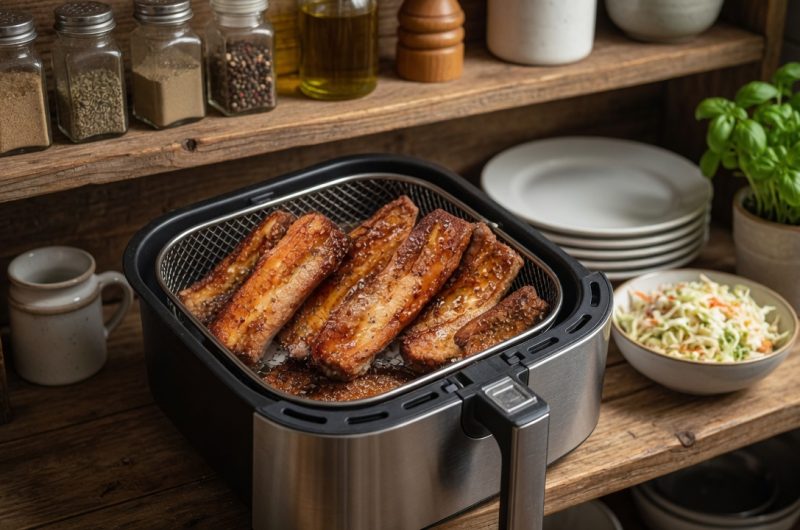
Cooking pork belly in an air fryer creates a crispy exterior while keeping the inside tender and juicy. The air fryer circulates hot air around the meat, which cooks it evenly on all sides. This method requires much less oil than traditional frying or roasting in the oven. The high heat renders the fat from the pork belly, creating a crispy skin without any extra grease. Using an air fryer also takes less time than oven roasting and does not heat up your entire kitchen. The result is perfectly cooked pork belly that rivals restaurant quality with minimal effort.
Understanding Pork Belly as a Cut
Pork belly comes from the underside of the pig between the loin and the spare ribs. This cut contains layers of meat and fat that create incredible flavor and texture when cooked properly. The fat renders during cooking and bastes the meat from the inside, keeping it moist. Pork belly is the same cut used to make bacon, but it is sold fresh without curing or smoking. You can find pork belly at wholesale stores like Costco or at the meat counter in larger grocery stores. If your regular store does not carry it, ask a local butcher who can usually order it for you.
Why Pork Belly Costs More Than Bacon
Fresh pork belly typically costs more per pound than packaged bacon even though they come from the same part of the pig. The price difference exists because bacon undergoes curing, smoking, and packaging processes that pork belly does not require. However, when you buy fresh pork belly, you get more meat for your money since bacon shrinks significantly during cooking. The investment in pork belly pays off with rich flavor and versatility in cooking methods. The taste and texture of fresh pork belly differ from bacon, offering a unique eating experience worth the extra cost.
Choosing Sugar-Free Maple Syrup
Sugar-free maple syrup adds sweetness without the carbohydrates found in regular maple syrup. This option works perfectly for people following low-carb or keto diets. The syrup creates a sweet and salty combination that enhances the natural pork flavor. You can use store-bought sugar-free syrup or make your own at home using sugar substitutes. The syrup is optional if you prefer savory pork belly without sweetness. Regular maple syrup or honey work just as well if you are not concerned about sugar content.
Seasoning Fresh Pork Belly
Unlike bacon that comes pre-seasoned, fresh pork belly needs salt and pepper before cooking. Use kosher salt or sea salt rather than table salt for better flavor and texture. The larger salt crystals distribute more evenly and do not make the meat taste overly salty. Freshly ground black pepper adds a subtle spice that complements the rich pork flavor. Season generously since pork belly is a thick cut of meat that can handle bold flavors. The seasoning helps create a flavorful crust on the outside of the meat.
Slicing Pork Belly for Air Frying
Cut the pork belly into pieces that fit comfortably in your air fryer basket without bending or folding. The exact size depends on your specific air fryer model and basket dimensions. Slices that are too large will not cook evenly or get crispy on all sides. Aim for pieces about one inch thick and four to six inches long. Cutting against the grain creates more tender pieces that are easier to eat. You can also cut pork belly into bite-sized cubes for appetizers or snacks.
Preventing Sticking in the Air Fryer
Spray your air fryer basket or rack with non-stick cooking spray before adding the pork belly. This simple step prevents the meat from sticking and makes cleanup much easier. You can use regular cooking spray or one designed specifically for high heat. Alternatively, line the basket with parchment paper made for air fryers that has holes for air circulation. Avoid using regular parchment paper without holes as it blocks the airflow. A light coating of oil also works if you do not have cooking spray available.
Arranging Pork Belly in the Basket
Place the pork belly pieces in a single layer with space between each piece. Overcrowding the basket prevents proper air circulation and results in uneven cooking. The hot air needs to flow around all sides of the meat to create that crispy texture. Cook in batches if necessary rather than stacking pieces on top of each other. Leave at least a quarter inch of space between pieces for best results. Proper spacing ensures every piece gets evenly browned and crispy.
Cooking Time and Temperature
Cook pork belly at a high temperature to render the fat and crisp the exterior. Most air fryers work well at temperatures between 375 and 400 degrees Fahrenheit. The cooking time can be up to thirty minutes depending on thickness and desired crispiness. The pork will be safe to eat before thirty minutes, but longer cooking creates more crispiness. Check the internal temperature with a meat thermometer, which should read at least 145 degrees Fahrenheit. Continue cooking beyond this temperature if you want the exterior extra crispy.
Checking for Doneness
The pork belly is safe to eat when it reaches an internal temperature of 145 degrees Fahrenheit. Insert a meat thermometer into the thickest part of the meat to check. However, most people prefer pork belly cooked to a higher internal temperature for better texture. Cooking to 165 or even 170 degrees creates more rendered fat and crispier skin. The meat should feel firm to the touch rather than soft and jiggly. Visual cues include golden brown color and crispy-looking edges on the fat.
Draining Excess Grease
Remove the cooked pork belly from the air fryer and place it on paper towels. The paper towels absorb any excess grease on the surface of the meat. Pork belly releases less grease than you might expect since much of the fat renders during cooking. Draining is a quick step that improves the final texture by removing surface oil. Let the pork belly rest on the paper towels for a minute or two before serving. This brief resting time also allows the juices to redistribute through the meat.
Adding Sweet and Salty Flavors
Drizzle the cooked pork belly with sugar-free maple syrup immediately after removing it from the air fryer. The heat from the meat warms the syrup and helps it coat evenly. You can also brush the syrup on with a pastry brush for more control. Alternatively, sprinkle additional salt and freshly ground black pepper over the hot pork belly. The combination of sweet syrup and salty pork creates an addictive flavor profile. Taste a small piece before adding too much syrup or seasoning to find your preferred balance.
Storing Leftover Pork Belly
Place any leftover pork belly in an airtight container once it has cooled to room temperature. Store the container in the refrigerator for up to four days. The pork belly will lose some crispiness in the refrigerator but still tastes delicious. Reheat leftovers in the air fryer at 350 degrees for a few minutes to restore crispiness. You can also reheat in a regular oven or toaster oven if you do not have an air fryer available. Avoid microwaving as it makes the pork belly soggy rather than crispy.
Trying Different Syrup Flavors
Experiment with different sugar-free syrup flavors beyond maple to create unique taste combinations. Butter pecan syrup adds a nutty sweetness that pairs well with pork. Caramel-flavored syrup creates a rich, deep sweetness. If you are not following a low-carb diet, regular honey makes an excellent natural sweetener. Each syrup flavor changes the character of the dish while keeping the preparation method the same. Start with a small amount and add more if you want a stronger sweet flavor.
Creating a Brown Sugar Glaze
Make a simple glaze by adding brown sugar or a brown sugar substitute during the last five minutes of cooking. Keep a small bowl of the sweetener next to your air fryer for easy access. Remove each piece of pork belly, coat it in the sweetener, and return it to the basket. The heat caramelizes the sugar and creates a sticky, sweet coating. Watch carefully during these last few minutes to prevent burning. This glaze adds texture and intense sweetness to the finished pork belly.
Making an Asian-Inspired Glaze
Combine brown sugar or a sugar substitute with soy sauce in a small saucepan. Heat the mixture over medium heat, stirring frequently until it reduces by half. The reduced sauce becomes thick and syrupy with concentrated flavor. Brush this glaze onto the pork belly during the last few minutes of air frying. The soy sauce adds salty umami flavor that complements the sweet brown sugar. This Asian-style glaze transforms the pork belly into a completely different dish with minimal extra effort.
Using Custom Seasoning Blends
Create your own dry rub by combining onion powder, garlic powder, smoked paprika, and chili powder. Mix these spices together in a small bowl before rubbing them all over the raw pork belly. Press the seasoning into the meat so it sticks during cooking. This spice blend adds complex flavors without any sweetness. Adjust the proportions based on your taste preferences and spice tolerance. The dry rub creates a flavorful crust on the outside of the pork belly as it cooks.
Adding Barbecue Sauce
Coat the pork belly with your favorite barbecue sauce during the last five minutes of cooking. The sauce caramelizes slightly and creates a sticky, tangy coating. Choose a thick barbecue sauce that will cling to the meat rather than drip through the basket. You can use store-bought sauce or make your own homemade version. The smoky, sweet, and tangy flavors of barbecue sauce complement the rich pork perfectly. This variation gives you barbecue-style pork belly without a grill or smoker.
Making Pork Belly Bites
Cut the raw pork belly into one-inch cubes instead of strips for bite-sized pieces. These smaller pieces cook faster and get crispy on all sides. Pork belly bites work perfectly as appetizers for parties or game day snacks. They are also easier to eat with your fingers than larger pieces. Season the cubes the same way as larger pieces and cook for a shorter time. Check for doneness after about fifteen to twenty minutes depending on the size of your cubes.
Understanding the Difference from Bacon
Pork belly and bacon come from the same part of the pig but are not the same product. Bacon undergoes curing with salt and usually smoking before packaging. This curing process gives bacon its characteristic salty, smoky flavor and pink color. Fresh pork belly is uncured and has a milder flavor that you season yourself. Bacon also contains nitrates or nitrites used in the curing process. Fresh pork belly contains only the natural meat and fat without any additives or preservatives.
Skipping the Boiling Step
Some traditional pork belly recipes call for boiling the meat before cooking it in the oven or on the stove. This step is completely unnecessary when using an air fryer. The air fryer cooks the pork belly perfectly from its raw state. Boiling would add extra time and another pot to clean without improving the final result. Simply season the raw pork belly and place it directly in the air fryer basket. The air fryer method is simpler and faster than traditional cooking techniques that require boiling.
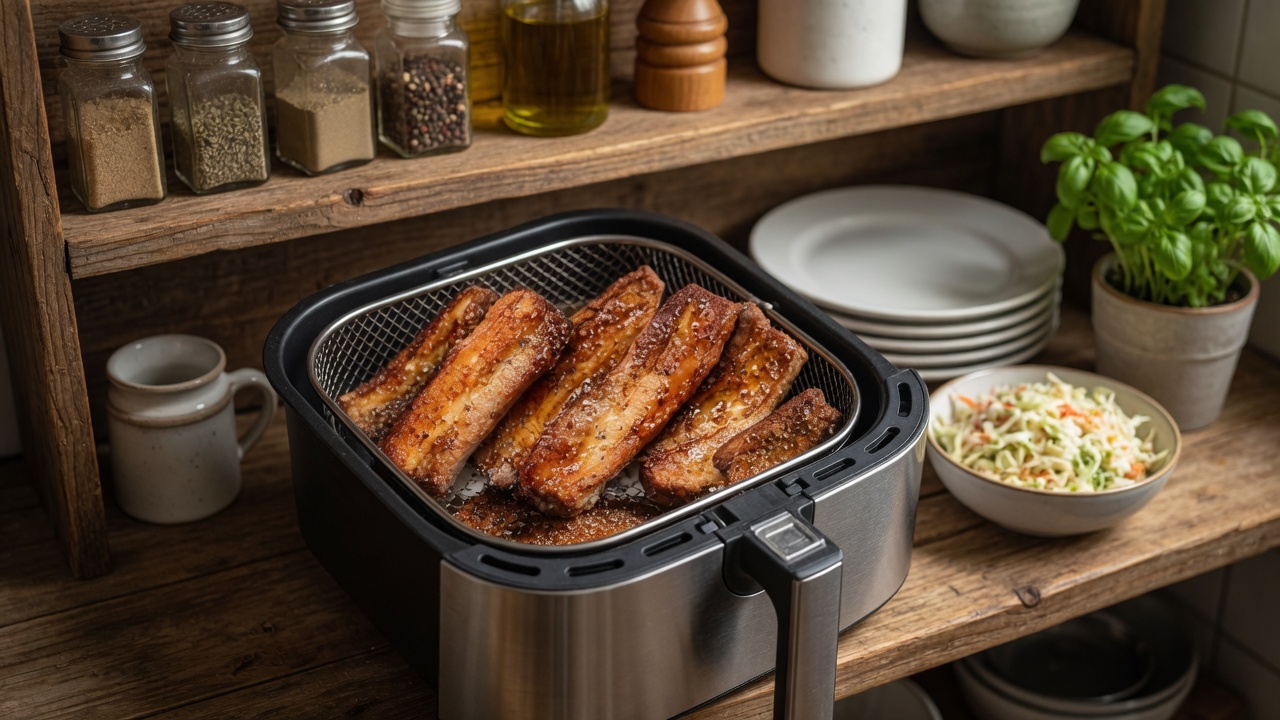
Air Fryer Pork Belly
This easy Air Fryer Pork Belly recipe offers a perfect combination of sweet and salty in every bite. Follow these straightforward steps for a delicious appetizer or snack.
8
servings5
minutes30
minutes440.7
kcal35
minutesIngredients
1.5 lb pork belly, cut into ½-inch slices (4-5 inches long)
2 tablespoons sugar-free maple syrup (optional)
½ teaspoon salt
¼ teaspoon pepper
Directions
- Prepare the Air Fryer: Spray the air fryer basket with non-stick spray. Place the pork belly slices in the basket, ensuring there is space between pieces for air circulation.
- Cook: Set the air fryer to 400°F and cook for 25-30 minutes, until the pork belly reaches your desired level of crispiness. Thicker pieces may take longer. Rotate and flip the pieces halfway through cooking for even crispiness.
- Season: Drizzle with sugar-free maple syrup and sprinkle with salt and pepper if desired.
Nutrition Facts
- Calories: 440.7kcal
- Fat: 45.1g
- Sodium: 172.6mg
- Carbohydrates: 0.1g
- Protein: 7.9g