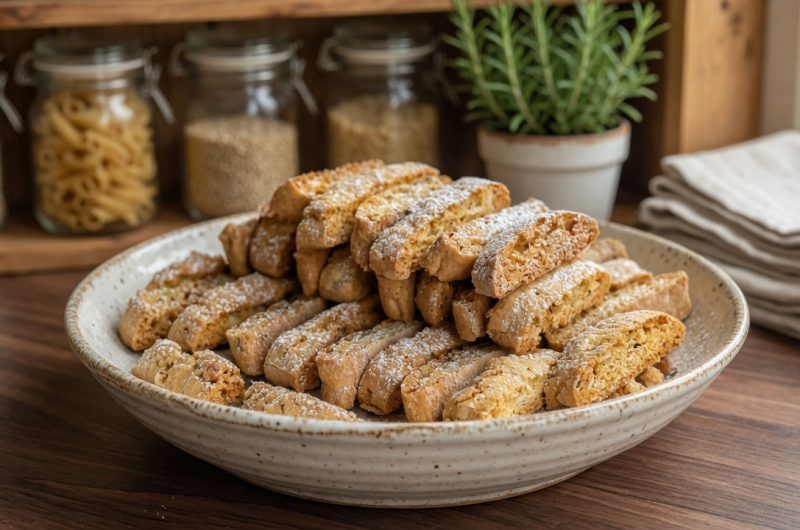
Biscotti are traditional Italian cookies known for their distinctive crunchy texture and long shelf life. The name comes from Italian words meaning twice cooked, which describes exactly how these cookies are made. First you bake the dough in a log shape, then slice it into individual pieces and bake them again. This double baking process removes moisture and creates the firm, crispy texture that makes biscotti perfect for dunking in coffee or tea. These cookies have been enjoyed for centuries and remain popular worldwide today.
Why Make Biscotti at Home
Homemade biscotti taste fresher and cost less than store-bought versions. When you bake them yourself, you control the ingredients and can avoid preservatives or artificial flavors. This recipe uses simple pantry staples that most people already have at home. The process is straightforward and does not require special equipment or advanced baking skills. Making a batch takes less than an hour of active work, and the results last for weeks when stored properly. Fresh baked biscotti also make thoughtful homemade gifts that friends and family appreciate.
Understanding the Main Ingredients
This biscotti recipe relies on basic baking ingredients that work together to create the right texture. Plain flour provides structure to the dough while baking powder helps it rise slightly during the first bake. Caster sugar adds sweetness and helps the cookies brown nicely. The egg binds everything together and adds richness. Vegetable oil keeps the dough moist enough to shape while maintaining that dry, crunchy final texture. Salt balances the sweetness and enhances other flavors. Each ingredient plays a specific role in creating authentic biscotti.
The Role of Almonds in Biscotti
Whole almonds are a classic addition to biscotti recipes and provide both flavor and texture. The nuts add a pleasant crunch that complements the crispy cookie base. As the biscotti bake twice, the almonds toast slightly, developing deeper, richer flavor. You can leave almonds whole for a traditional look and substantial bite, or chop them roughly for more even distribution throughout each cookie. The natural oils in almonds also contribute to the overall taste. Almonds have been paired with biscotti for generations in Italian baking traditions.
How Lemon Zest Brightens Flavor
Fresh lemon zest adds bright, citrusy notes that lift the flavor of these almond cookies. The zest contains essential oils that provide intense lemon flavor without adding liquid to the dough. This keeps the dough at the right consistency for shaping and baking. The combination of lemon and almond is classic in Italian baking and creates a sophisticated taste that works for any occasion. When zesting your lemon, use only the yellow outer layer and avoid the white pith underneath, which tastes bitter and can ruin the flavor balance.
The Twice Baking Method Explained
The unique twice baked process is what makes biscotti different from other cookies. During the first bake, you shape the dough into a log and bake it until set and lightly golden. This creates a firm enough structure to slice without crumbling. After cooling slightly, you cut the log into individual slices using a sharp knife. Then each slice goes back into the oven for the second bake. This final baking step dries out the cookies completely, creating that characteristic hard, crunchy texture that lets biscotti stay fresh for weeks.
Mixing the Dough Correctly
Start by whisking the egg with sugar until well combined and slightly frothy. Add the vegetable oil and lemon zest, mixing thoroughly. In a separate bowl, combine the flour, baking powder, and salt. Add the dry ingredients to the wet mixture gradually, stirring until a dough forms. Fold in the whole almonds last, distributing them evenly throughout the dough. The dough will be slightly sticky but should hold together when pressed. If it seems too wet to shape, add a tablespoon of flour at a time until workable.
Shaping the Biscotti Log
Turn the dough out onto a lightly floured surface or piece of parchment paper. Use your hands to shape it into a log about ten to twelve inches long and two to three inches wide. The log should be relatively flat rather than round, about one inch tall. This shape makes slicing easier later and ensures even baking. Place the shaped log on a baking sheet lined with parchment paper. You can smooth the surface and edges with damp hands if needed to create a neat shape that will slice cleanly after the first bake.
First Baking Stage Tips
Bake the shaped log in a preheated oven until it feels firm to the touch and turns light golden brown on the surface. The baking time usually ranges from twenty to thirty minutes depending on your oven. The log should feel set when you gently press the top, not soft or squishy. Remove it from the oven and let it cool on the baking sheet for about ten to fifteen minutes. This cooling period is important because it allows the structure to firm up enough for slicing without crumbling or falling apart.
Slicing Techniques for Best Results
Use a sharp serrated knife to slice the cooled log into individual pieces. Cut straight down in a smooth motion rather than sawing back and forth, which can cause crumbling. Aim for slices about half an inch to three quarters of an inch thick. Thinner slices become very crunchy, while thicker ones maintain a bit more bite. Wipe the knife clean between cuts if dough sticks to it. Lay each slice flat on the baking sheet, cut side down. This positioning allows both cut surfaces to dry out during the second bake.
Second Baking for Crunch
Return the sliced biscotti to the oven for the final baking stage. Bake them for about ten to fifteen minutes, then flip each piece over and bake for another ten to fifteen minutes. This ensures both sides dry out evenly and develop that golden color. Watch them carefully during this stage to prevent burning. The biscotti should feel dry and firm when done. They continue to harden as they cool, so do not worry if they seem slightly soft when first removed from the oven. Let them cool completely on a wire rack before storing.
Storage Methods for Freshness
These biscotti stay fresh for several weeks when stored properly in an airtight container at room temperature. The low moisture content prevents them from going stale quickly. Layer them carefully in the container or store them standing upright to save space. Do not refrigerate biscotti as the moisture in the refrigerator can make them soft. For longer storage, you can freeze them for up to three months in a freezer-safe container or bag. Thaw at room temperature before serving. The twice baking process naturally preserves these cookies without needing special storage conditions.
Adjusting Recipe Yield
This recipe makes approximately fifteen biscotti cookies, which is a good amount for one or two people to enjoy over time. If you need more for a party, gift giving, or a larger household, simply double or triple all the ingredients proportionally. The baking process remains the same regardless of batch size, though you may need multiple baking sheets. You can also halve the recipe if you want to try it first before committing to a full batch. Biscotti are so easy to make that preparing multiple batches is not difficult or time consuming.
Gluten Free Substitutions
People who avoid gluten can still enjoy these biscotti by using a good quality gluten free flour blend. Choose a blend designed for baking that contains xanthan gum or another binding agent. Use the same amount of gluten free flour as the recipe calls for regular flour. The texture may differ slightly from traditional biscotti but should still be crunchy and delicious. All other ingredients remain the same. Test a small batch first to see how your particular flour blend performs in this recipe before making a large quantity.
Serving Suggestions and Pairings
Biscotti are traditionally served with hot coffee or espresso for dunking. The hard texture softens slightly when dipped in hot liquid, making them easier to bite and releasing more flavor. They also pair beautifully with tea, particularly black or herbal varieties. For an evening treat, enjoy biscotti with dessert wine, Port, or liqueur. Some people like them with hot chocolate or even a glass of cold milk. These cookies work well at breakfast, as an afternoon snack, or after dinner. Their subtle sweetness and crunch make them suitable for any time of day.
Common Baking Mistakes to Avoid
Do not skip the cooling time between the first and second bake, or the log will crumble when you try to slice it. Make sure your oven temperature is accurate by using an oven thermometer if needed. If biscotti brown too quickly on the outside but remain soft inside, your oven may be running hot. Slicing the log too soon or with a dull knife leads to ragged edges and broken cookies. Not baking the slices long enough during the second bake results in soft biscotti that do not keep well. Following the timing and temperature guidelines carefully produces the best results.
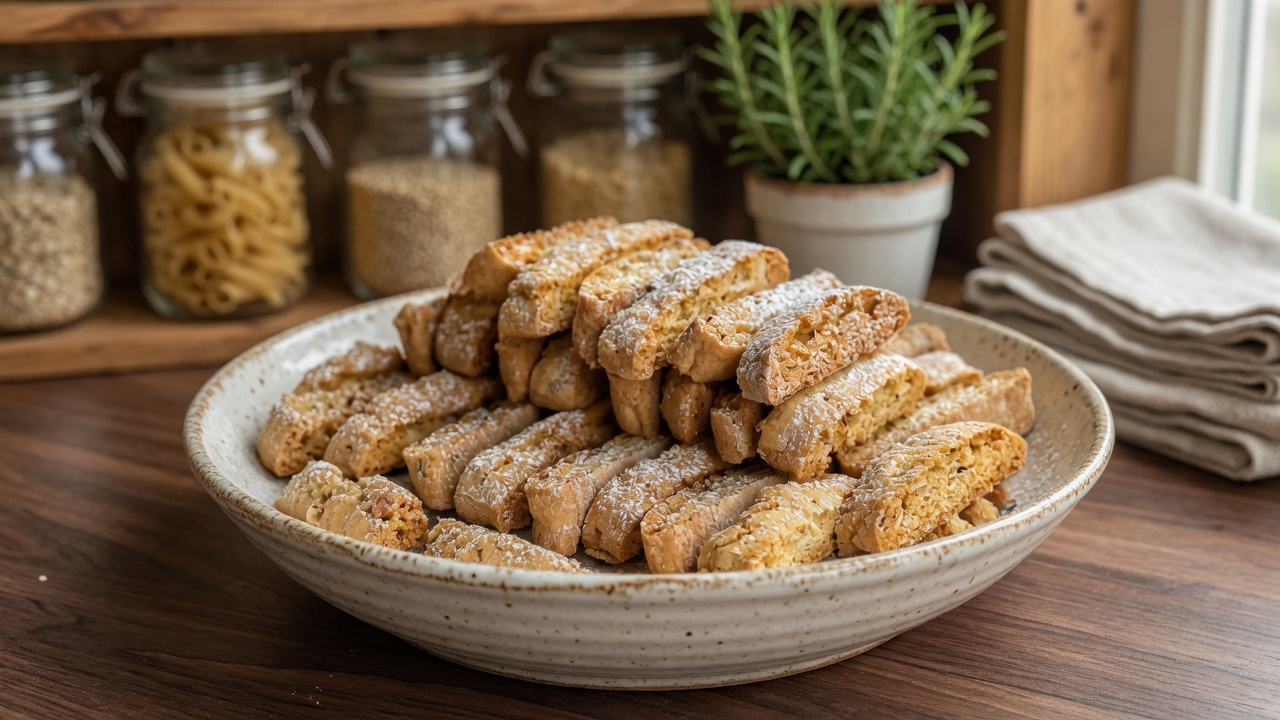
Almond Biscuits
Traditional Italian twice baked cookies with a satisfying crunch. These simple almond biscotti feature bright lemon zest and whole almonds for a classic flavor combination. Perfect for dunking in coffee or tea, these cookies store well for weeks.
15
servings20
minutes45
minutes85
kcal1
hour5
minutesIngredients
1 egg
50 g caster sugar
3 tbsp vegetable oil
140 g plain flour (all-purpose flour)
2 tsp baking powder
Pinch of salt
35 g whole almonds
Zest of 1 lemon
Directions
- Preheat your oven to 180°C (350°F). Line a baking sheet with parchment paper or a non-stick liner.
- In a large mixing bowl, beat together the egg, caster sugar, and vegetable oil until well combined.
- Sift the plain flour, baking powder, and salt into the egg mixture. Add the whole almonds and lemon zest, then mix until a stiff dough forms.
- Shape the dough into a loaf approximately 8cm (3 inches) wide and 2.5cm (1 inch) high. If the dough is sticky, wet your hands slightly to help shape it.
- Bake the loaf in the preheated oven for 20-25 minutes, or until lightly browned. Once baked, remove from the oven and allow to cool on wire racks.
- While the loaf is cooling, preheat your oven to 200°C (400°F) for the second baking stage.
- Once the loaf is almost cooled, use a bread knife to slice it into 1cm (½ inch) slices. Arrange the slices cut-side down on the lined baking sheet.
- Bake the sliced biscotti at 200°C (400°F) for 10-12 minutes, or until dry and lightly browned.
- Allow the biscotti to cool completely before storing them in an airtight container.
Nutrition Facts
- Serving Size: 1 g
- Calories: 89kcal
- Fat: 4g
- Cholesterol: 11mg
- Sodium: 64mg
- Carbohydrates: 11g
- Fiber: 1g
- Sugar: 3g
- Protein: 2g