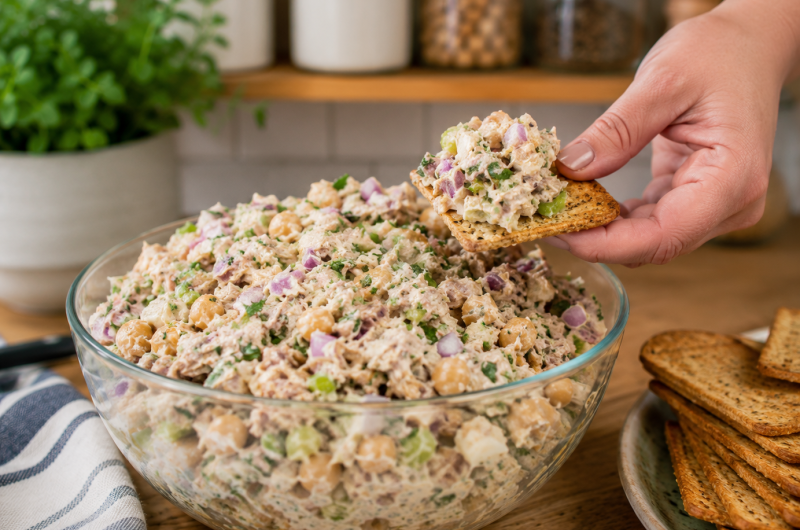
This creamy tuna salad is a quick and satisfying recipe that combines tender canned tuna with crunchy pickles, crisp red onion, sweet corn, green peas, and fresh green apple. A smooth mayonnaise-based dressing brings everything together with lemon juice, red wine vinegar, oregano, and a touch of wasabi paste for gentle heat. The final addition of crushed jalapeño potato chips adds a spicy, crispy texture that makes this easy tuna salad stand out from traditional versions. With only a short preparation time, it is an excellent choice for lunch, sandwiches, pita bread, lettuce cups, crackers, or a light meal.
Why This Tuna Salad Is Worth Making
Traditional tuna salad is usually built around tuna, mayonnaise, and a few simple vegetables, but this version takes the familiar combination in a more interesting direction. Sweet corn and green peas add color and mild sweetness, while green apple provides a crisp bite that contrasts with the creamy dressing. Pickles and red onion bring acidity and crunch, while lemon juice and red wine vinegar brighten the overall flavor. The wasabi paste gives the dressing a subtle spicy character, and jalapeño potato chips provide a final layer of heat and crunch.
The combination works because every ingredient contributes something different to the finished dish. The canned tuna provides a savory foundation, mayonnaise gives the salad its creamy texture, and the vegetables create variety in every bite. The apple prevents the salad from feeling too heavy, while the pickles add a tangy note that cuts through the richness. Adding the crushed potato chips at the very end keeps their texture crisp instead of allowing them to become soft inside the mixture.
Choosing the Right Canned Tuna
The quality and texture of canned tuna can make a noticeable difference in homemade tuna salad. Since tuna is the main ingredient, choose a variety that you enjoy eating and drain it thoroughly before adding it to the bowl. Excess liquid can make the finished salad watery and can dilute the creamy dressing. After draining, gently break the tuna apart with a fork, but avoid turning it into a completely smooth paste.
The recipe calls for 10 ounces, or 320 grams, of canned tuna. This amount provides enough tuna to balance the vegetables, mayonnaise, pickles, and other additions. If your canned tuna contains a considerable amount of liquid, allow it to drain thoroughly before measuring or mixing. Keeping the tuna relatively chunky gives the salad a more substantial texture and helps it work especially well as a sandwich or pita filling.
Preparing the Fresh Ingredients
The vegetables and fruit should be prepared before mixing the dressing. Dice the green apple into small, bite-sized pieces so that its fresh texture is distributed throughout the tuna salad. Finely chop the pickles and red onion so their flavors do not overwhelm individual bites. The corn should be drained thoroughly, while the frozen peas need to be completely thawed before they are incorporated.
The red onion can have a fairly strong flavor when eaten raw, especially when finely chopped. If you prefer a milder onion taste, soaking the chopped onion in cold water for approximately 10 minutes can soften its sharpness while allowing it to retain its crisp texture. Drain the onion well afterward. This small preparation step is useful when making tuna salad for people who enjoy onion flavor but do not want it to dominate the dish.
Creating the Creamy Tuna Salad Dressing
The dressing is what brings the individual ingredients together. Mayonnaise provides the creamy base, while lemon juice and red wine vinegar introduce acidity. Oregano or Italian herbs add a subtle savory herbal note, and wasabi paste contributes a distinctive heat. Salt and black pepper round out the seasoning. If you choose to use agave or honey, the small amount can add a touch of sweetness that balances the vinegar, lemon, and wasabi.
Start with one teaspoon of wasabi paste rather than immediately using the full amount. Wasabi can vary in strength, and personal preferences for spicy flavors are different. Mixing the dressing before adding the tuna and vegetables allows you to distribute the seasonings evenly. Once everything has been combined, the flavor can be tasted and adjusted with the remaining teaspoon of wasabi if a stronger kick is desired.
Balancing Sweet, Tangy and Spicy Flavors
One of the most appealing aspects of this easy tuna salad is its balance of contrasting flavors. The green apple, corn, peas, and optional agave or honey provide sweetness, while pickles, lemon juice, and red wine vinegar contribute tanginess. Wasabi and jalapeño potato chips introduce heat, and mayonnaise softens the stronger flavors by creating a rich and creamy base.
The goal is not for any single ingredient to overpower the rest. Pickles should provide a bright acidic bite, but not make the salad excessively sour. Wasabi should be noticeable but adjustable according to taste. The apple and corn should add sweetness without turning the dish into a sweet salad. Taking a moment to taste the mixture before adding the crunchy topping allows you to make small seasoning adjustments and create a more balanced final result.
Combining the Tuna and Vegetables
Once the dressing is smooth, add the drained tuna, chopped pickles, red onion, corn, thawed peas, and diced green apple. Gently fold the ingredients together so that the dressing coats everything evenly. Avoid stirring too aggressively because the tuna can break down into very small pieces and the vegetables can lose some of their texture.
A gentle folding motion is especially useful when making a chunky tuna salad. You want to see distinct pieces of tuna, apple, vegetables, and pickles rather than one uniform mixture. The varied texture makes the salad more interesting and gives it a hearty quality that works well in sandwiches and wraps. If the salad looks slightly dry, give the ingredients another gentle fold so the mayonnaise-based dressing can coat the mixture properly.
Adding the Jalapeño Potato Chips
The jalapeño potato chips are a distinctive finishing ingredient in this recipe. Rather than mixing them into the salad at the beginning, crush them shortly before serving. Fold approximately half of the crushed chips into the tuna mixture and reserve the rest for sprinkling over the top. This method gives you two different textures: some chips become part of the salad, while the topping remains noticeably crisp.
Timing matters because potato chips quickly absorb moisture from a creamy salad. If they are added too early, their crunch can disappear. Adding them at the final stage keeps the spicy potato flavor and crisp texture intact. For the best result, prepare the salad first, chill it, and then crush and add the chips immediately before serving.
Why the Green Apple Works So Well
Green apple might seem unusual in a tuna salad, but its crisp texture and slightly tart flavor make it a natural partner for rich ingredients. Mayonnaise and tuna can create a fairly rich combination, while fresh apple adds brightness and crunch. Because the apple is diced into small pieces, it becomes part of the overall texture rather than turning the dish into a fruit-heavy salad.
Choose a firm green apple that holds its shape after cutting. Softer apples can become mushy when mixed with the other ingredients. The apple should remain crisp enough to provide contrast against the creamy tuna mixture. Its tartness also complements the lemon juice, vinegar, pickles, and spicy wasabi, creating a more layered flavor profile.
The Importance of Proper Chilling
After the tuna salad has been mixed, refrigerating it for approximately 10 minutes gives the ingredients a chance to come together. This short chilling period also makes the salad more refreshing when served. Although it does not require a long resting time, allowing the mixture to sit briefly helps the dressing coat the tuna and vegetables more evenly.
Keep the salad refrigerated until you are ready to serve it. Tuna and mayonnaise-based dishes are best kept chilled rather than left at room temperature for extended periods. If you are preparing the recipe ahead of time, store it in a covered container in the refrigerator and wait until serving time to add the jalapeño potato chips.
Easy Ways to Serve This Tuna Salad
There are many ways to turn this creamy tuna mixture into a complete meal. Spoon it into pita bread for a convenient handheld lunch, or spread it between slices of bread to make a satisfying tuna salad sandwich. Lettuce cups provide a lighter serving option, while crackers and fresh vegetables make the salad suitable for a snack or casual appetizer.
The salad can also be served as part of a lunch platter with sliced vegetables, fruit, crackers, or other simple sides. Because the mixture already contains tuna, vegetables, fruit, and a creamy dressing, it does not require complicated accompaniments. The jalapeño potato chips provide an additional crunchy element, so a simple presentation is often enough.
Making a Tuna Salad Sandwich
For a classic tuna salad sandwich, spoon the prepared mixture onto your favorite bread and spread it into an even layer. The creamy filling pairs well with bread because the mixture is thick enough to stay in place while remaining soft. Adding a few fresh lettuce leaves can provide another crisp texture, although the tuna salad itself already contains several crunchy ingredients.
If you are preparing sandwiches for several people, keep the tuna salad chilled until you are ready to assemble them. Add the jalapeño potato chips close to serving time so their texture remains crisp. The chips can be folded into the filling or sprinkled on top for a more noticeable crunch.
Serving Tuna Salad in Pita Bread
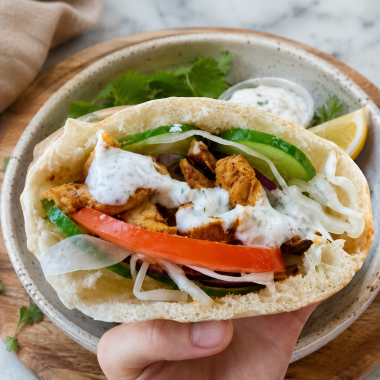
Pita bread is another convenient way to serve this recipe. The pocket creates enough space for the creamy tuna filling while making the salad easy to eat. Spoon the tuna mixture into the pita shortly before serving, and add the crunchy jalapeño potato chips at the end. The soft bread contrasts nicely with the crisp apple, vegetables, and chips.
This serving style is especially useful for packed lunches or quick meals because the tuna salad can be prepared in advance. If you are preparing pita sandwiches ahead of time, keep the filling refrigerated until assembly. This helps maintain both food quality and the texture of the ingredients.
A Lighter Lettuce Cup Option
For a lighter presentation, spoon the tuna salad into crisp lettuce leaves. Lettuce cups provide a fresh, crunchy exterior while allowing the creamy tuna mixture to remain the main focus. This option is also useful when you want to reduce the amount of bread served with the meal without changing the tuna salad itself.
Choose sturdy lettuce leaves that can hold the filling without tearing. Spoon a moderate amount of tuna salad into each leaf and finish with the crushed jalapeño potato chips. Since lettuce contains moisture, it is best to assemble the cups shortly before serving rather than leaving them assembled for a long period.
Notes for Better Results
Drain the tuna and corn thoroughly before mixing because excess liquid can make the salad watery. Keep the peas fully thawed and drain them if they release excess moisture. For a gentler onion flavor, soak the chopped red onion in cold water for about 10 minutes, then drain it very well. When seasoning the dressing, begin with one teaspoon of wasabi paste and add more only after tasting the completed mixture.
Keep the jalapeño potato chips separate until the last moment. Their crisp texture is one of the defining features of this tuna salad, and adding them too early allows moisture from the dressing to soften them. If storing leftovers, keep the tuna salad in an airtight container in the refrigerator and store extra chips separately. The salad can be kept refrigerated for approximately three to four days.
Common Questions About This Tuna Salad
Can the tuna salad be made ahead?
Yes, the creamy tuna mixture can be prepared ahead and refrigerated until serving. In fact, a short chilling period helps the flavors come together. If making it in advance, keep the jalapeño potato chips separate and add them immediately before serving. This prevents them from absorbing moisture from the mayonnaise-based dressing and losing their crisp texture.
How can I make the tuna salad less spicy?
The easiest way to reduce the heat is to start with only one teaspoon of wasabi paste and taste the salad before deciding whether to add the remaining amount. The jalapeño potato chips also contribute spice, so their quantity can be controlled at serving time. Keeping some of the chips on the side allows each person to add as much crunch and heat as desired.
Why is my tuna salad watery?
A watery tuna salad is usually caused by ingredients that have not been drained thoroughly. Canned tuna, corn, and thawed peas can all contribute additional moisture. Drain these ingredients well before adding them to the bowl. The dressing should also be mixed separately before the tuna and vegetables are incorporated, which makes it easier to control the final consistency.
Can I leave out the green apple?
The green apple is part of the original ingredient list and contributes both texture and flavor to the recipe. For this rewrite, the ingredients remain unchanged, so it should be included when preparing the recipe as provided. Its crisp, tart character is particularly useful because it balances the creamy mayonnaise and savory tuna.
How long does homemade tuna salad last?
The provided recipe recommends storing leftovers in an airtight container in the refrigerator for approximately three to four days. For the best texture, keep the jalapeño potato chips separate and add them only when serving. Always keep the prepared tuna salad refrigerated rather than leaving it out for extended periods.
Practical Preparation Notes
A few simple habits can make this recipe easier to prepare. Chop the apple, pickles, and onion before beginning the dressing so all of the ingredients are ready when needed. Drain the tuna and corn in advance, and make sure the peas are thawed. Mixing the dressing separately allows the lemon juice, vinegar, oregano, wasabi, salt, and pepper to become evenly distributed before they are combined with the larger ingredients.
When folding the tuna and vegetables into the dressing, use a gentle hand. The salad should remain textured rather than becoming completely mashed. Taste it before adding additional wasabi, salt, or pepper, remembering that pickles and jalapeño potato chips already contain seasoning. Once the flavor is balanced, refrigerate the mixture briefly and add the chips just before serving.
Why This Easy Tuna Salad Makes a Great Quick Meal
With a preparation time of only about 15 minutes and a short chilling period, this recipe is well suited to busy days when you want a flavorful meal without extensive cooking. Most of the ingredients can be prepared quickly, and the finished tuna salad can be used in several different ways. It works as a sandwich filling, pita stuffing, lettuce cup filling, cracker topping, or simple salad component.
The combination of protein-rich tuna, vegetables, fruit, and a creamy dressing gives the recipe more variety than a basic tuna and mayonnaise mixture. The different textures make it satisfying, while the lemon, vinegar, pickles, and herbs keep the flavor bright. The jalapeño potato chips then provide a final spicy crunch that makes each bite more interesting.