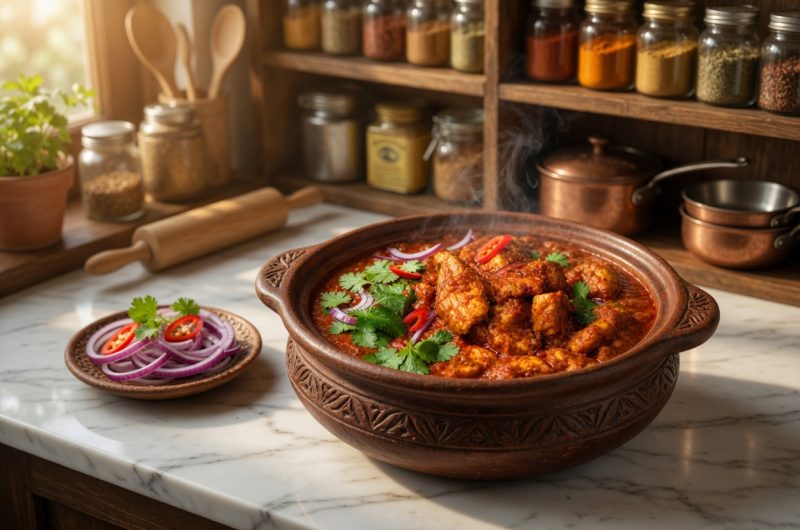
Chicken Madras is a bold and flavorful Indian curry recipe that deserves a permanent spot in your weekly meal rotation. This popular dish is known for its vibrant red color, warming spices, and carefully balanced heat that appeals to those who enjoy spicier curries. The tender chicken combines beautifully with a smooth tomato and coconut milk sauce that is rich without being heavy, spicy without being overwhelming, and aromatic enough to fill your entire kitchen with inviting fragrance. When you make Chicken Madras at home, you can control every element of the dish to suit your personal taste preferences while enjoying restaurant-quality results from your own kitchen. This homemade version tastes just as good as what you would order at your favorite Indian restaurant, and you can prepare it any night of the week for family dinner or when you want to impress your guests.
What Sets Chicken Madras Apart From Other Indian Curries
Chicken Madras stands out significantly from milder curries like korma or creamy butter chicken because of its distinct heat level and tangy undertones that develop beautifully throughout the cooking process. The tanginess comes from tamarind paste, which adds complexity and prevents the sauce from tasting one-dimensional or overly sweet. The deep red color is achieved through a combination of paprika and chili, which also contribute to the visual appeal of the finished dish. Unlike some curries that rely on cream to smooth out harsh spices, Chicken Madras uses the natural properties of coconut milk to balance the heat while maintaining the spice-forward flavor profile. This curry is defined by three primary characteristics that make it special: spice-forward flavor that hits your palate immediately, a smooth sauce texture that coats each piece of chicken evenly, and balanced acidity that keeps the dish interesting with every bite. When you understand what makes Chicken Madras unique, you can appreciate why this particular curry has become so popular among Indian food enthusiasts and casual home cooks alike.
Understanding the Spice Blend That Defines Madras Curry
The spice blend in Chicken Madras is what truly gives this curry its distinctive character and appeal. Madras curry powder is considerably more robust than standard curry powder and typically contains a carefully balanced mix of chili powder, coriander seeds, cumin seeds, turmeric, fenugreek, and various other warming spices that work together in harmony. Paprika contributes both the beautiful red color and subtle smokiness that makes the curry visually stunning and adds depth to the flavor profile without adding excessive heat. Ground fenugreek adds earthy complexity that distinguishes Madras from other curry styles, while ground cinnamon introduces gentle warmth that lingers on your palate. When these spices are toasted briefly in hot oil before adding other ingredients, their essential oils are released, intensifying their fragrance and ensuring maximum depth of flavor. The combination creates a layered and aromatic spice profile that develops even more beautifully as the curry simmers on the stovetop. Understanding how each spice contributes to the overall flavor helps you make adjustments to suit your personal preferences while maintaining the authentic character of the dish.
How Tamarind Paste Creates Balance in Your Curry
Tamarind paste is a key ingredient in authentic Madras curry that serves a specific purpose beyond just adding flavor. This ingredient adds subtle sourness that effectively balances the richness of coconut milk and the inherent sweetness of tomatoes in the sauce. Without tamarind, the curry can taste one-dimensional and heavy, lacking the brightness that makes people go back for another spoonful. The acidity from tamarind enhances all the spices and prevents the sauce from feeling too heavy or creamy despite the generous amount of coconut milk. It is important to measure tamarind carefully when you add it to your curry, as too much can make the dish overly sour and unpalatable. The right amount of tamarind should be barely noticeable as a flavor on its own, but its absence would be clearly felt in the overall balance of the finished dish. Tamarind also helps cut through the richness of the coconut milk, making the curry feel lighter and more refreshing despite being quite filling and satisfying to eat.
Choosing the Best Cut of Chicken for Maximum Tenderness
Both chicken breast and thigh meat work well in Chicken Madras recipes, but each option offers different advantages depending on your preferences and dietary needs. Boneless chicken thighs provide extra tenderness and more developed flavor thanks to their slightly higher fat content, which keeps the meat moist during the cooking process and ensures each piece remains tender even with extended simmering. Chicken breast offers a leaner option with a firmer texture that some people prefer, though it requires careful attention during cooking to prevent overcooking and drying out. When you prepare the chicken for your curry, cut it into evenly sized pieces to ensure consistent cooking throughout the dish, so that every piece finishes at the same time. Properly sealing the chicken in the pan after cutting helps retain valuable juices inside the meat and enhances overall flavor development. The size of your chicken pieces matters more than many home cooks realize, as smaller pieces cook faster but can become tough if simmered too long, while larger pieces take longer to cook through but maintain better texture.
Building Your Aromatic Base for Maximum Flavor Development
Every great curry begins with an aromatic base that serves as the foundation for all other flavors that follow. Blending onion, garlic, and ginger into a smooth paste ensures even texture throughout the sauce and allows you to avoid having chunky pieces of raw garlic or ginger disrupting the final consistency. This step of creating a smooth paste is important because it distributes the aromatic ingredients evenly rather than creating unpleasant surprises when someone bites into a large piece of raw garlic. Cooking this paste over high heat allows it to caramelize slightly, intensifying the natural sweetness of the onion and deepening the overall flavor profile of the curry base. Proper browning at this stage is essential for developing a well-rounded sauce with complex flavors that taste like they have been simmering for hours. The color should be light to medium brown around the edges, indicating that the paste has been cooked sufficiently to release its flavor compounds. Taking time to build this foundation properly ensures that your finished curry will have depth and richness that comes from properly developed flavors rather than just mixed spices.
Preparing Your Ingredients Before You Begin Cooking
Before you turn on the heat under your pan, prepare all your ingredients so the cooking process moves smoothly without interruption. Blend the onion, garlic, and ginger together until you have a completely smooth paste with no chunky pieces remaining, which forms the aromatic foundation of your curry. Measure out all your spices before you start cooking, so you can add them quickly when the time comes without scrambling to find containers. Have your chicken cut into evenly sized pieces and your coconut milk, passata, and tomato puree ready to pour immediately when needed. Gather your measuring spoons and cups, and make sure you have salt and pepper nearby for seasoning adjustments. Having everything prepared and ready is called mise en place by professional chefs, and it makes the cooking process faster and less stressful. When all your ingredients are prepared and measured before you start, you can focus on proper technique and timing rather than rushing around looking for things mid-cooking.
The Critical First Step of Sealing Your Chicken
Sealing the chicken is a technique borrowed from cooking methods around the world, and it is essential for creating a finished dish with properly textured meat. When you add chicken pieces to the hot ghee or oil after the aromatics have been cooked, the high temperature causes the exterior surface of the meat to brown quickly. This browning creates a flavorful crust through a chemical reaction called the Maillard reaction, which develops deep, savory flavors that enhance the finished dish. The purpose of sealing is to lock in the juices inside the chicken pieces so they remain moist during the simmering process that follows. Be careful not to overcook the chicken at this sealing stage, as the meat will continue cooking for several more minutes during simmering, and you want to avoid ending up with tough, overcooked chicken pieces. The chicken should be sealed but not fully cooked through at this point, still slightly pink in the very center. After sealing all the pieces, you can proceed to add your spices and other ingredients with confidence that the foundation for tender, flavorful chicken has been established.
Toasting Your Spices to Release Maximum Flavor
Once the chicken is sealed, reduce the heat and add your Madras curry powder, paprika, ground cinnamon, ground fenugreek, tamarind paste, salt, and pepper all at once. Immediately begin stirring continuously, making sure all the spice powder contacts the hot oil so the spices toast evenly. Toast the spices for about one minute, which is long enough to release their essential oils and enhance their aroma without burning them. You will notice the aroma becoming much stronger and more fragrant, which indicates the spices are releasing their flavor compounds. The kitchen will fill with an inviting fragrance that signals you are on the right track with your cooking technique. Be very careful not to burn the spices, as burned spices will taste bitter and ruin the delicate balance of flavors you are building. If you smell any burned or acrid scent, immediately add your passata and tomato puree to cool down the spices and prevent further damage.
Creating a Balanced Sauce With Tomato and Coconut
Once your spices are toasted and fragrant, pour in your passata and tomato puree to begin building the sauce portion of your curry. Bring the mixture to a gentle boil before you add the coconut milk, which allows the tomato flavors to develop and concentrate slightly. The tomatoes create body in the sauce and add brightness that prevents the curry from tasting too heavy or one-dimensional. When you add the coconut milk, stir gently to combine all ingredients evenly throughout the pot, distributing the spices and tomato throughout the cream. The coconut milk softens the heat from the spices and adds a subtle sweetness and creaminess that makes the curry more rounded and complete. The combination of tomatoes and coconut milk is classic in Indian cooking because they complement each other perfectly, with the acidity of tomatoes balancing the richness of coconut. Never skip the gentle stirring step, as this ensures every element is evenly distributed and prevents the spices from settling to the bottom of the pot.
Simmering Your Curry to Develop Deep, Complex Flavors
Allow your curry to simmer gently for about ten minutes once all the ingredients are combined and the mixture has returned to a gentle boil. This simmering time allows all the flavors to meld together and develop into something more complex than the sum of their individual parts. The sauce will thicken slightly during simmering while maintaining the smooth consistency that makes Chicken Madras so appealing. As the curry simmers, taste it occasionally and adjust the seasoning if needed, adding more salt if the flavors seem muted or more tamarind if you want additional tang. The gentle simmering is important because vigorous boiling can cause the coconut milk to separate and create an unpleasant texture. Keep the heat at a level where you see small bubbles breaking the surface gently rather than a rolling boil that produces lots of steam. During this final simmering stage, all the flavors come together into a cohesive dish that tastes infinitely better than when the ingredients were first combined.
Adjusting Heat Level to Match Your Spice Tolerance
Chicken Madras is traditionally quite spicy, but you have complete control over the heat level when you make it at home. If you prefer a milder curry, use less chili-based Madras curry powder or substitute some of the Madras powder with standard curry powder to reduce the overall heat. For those who enjoy extra heat beyond what traditional Madras offers, add fresh green or red chilies to the curry, or increase the amount of chili powder in your spice blend. Remember that the heat builds as the curry simmers, so if you are unsure about heat level, start conservatively and increase spices gradually. Balancing spice with coconut milk helps maintain a smooth flavor profile where the heat does not overpower the other delicate flavors. The creamy nature of coconut milk helps cool and balance the heat from the spices, creating a curry that is spicy but not overwhelming. When you understand how to adjust the heat to your preference, you can make Chicken Madras exactly the way you and your family enjoy it.
Serving Your Curry With Complementary Sides
Chicken Madras tastes best when served over fluffy boiled rice that can absorb the rich sauce and soak up all the flavorful broth. White jasmine rice, basmati rice, or even simple long-grain white rice all work beautifully with this curry. Pair your curry with steamed or sautéed greens like spinach or bok choy for added nutrition and a fresh contrast to the rich, spicy sauce. Warm naan bread also complements the dish beautifully, providing a soft vessel for scooping up sauce and pieces of chicken. For garnish, add fresh coriander leaves, thinly sliced fresh red chili, and paper-thin slices of red onion for added freshness and color that brighten up the finished plate. The fresh garnishes provide textural contrast and additional flavor that elevates the dish from simple to special. A squeeze of fresh lime juice over the finished dish adds brightness and helps cut through the richness of the coconut milk, making each bite feel lighter and more refreshing.
Storing and Reheating Your Leftover Curry
Chicken Madras can be prepared up to two days in advance and stored in the refrigerator, making it perfect for meal planning and busy weeknights. Store the curry in an airtight container in the refrigerator, keeping the rice separate so it does not become soggy. When you are ready to eat, gently reheat the curry on the stovetop over low to medium heat, stirring occasionally to ensure even heating. Add a splash of water or a bit more coconut milk if the sauce has thickened too much during storage, as curries naturally thicken as they cool. Avoid microwaving if possible, as the uneven heat can cause the coconut milk to separate and create an unpleasant texture. The curry actually tastes better on the second day after the flavors have had more time to develop and meld together. Your leftover curry also freezes exceptionally well in portioned containers for convenient future meals when you want something quick and satisfying.
Making Spice Adjustments and Flavor Refinements
As your curry simmers, taste it periodically and consider whether any adjustments would improve the overall balance. If the curry tastes too spicy, add a bit more coconut milk to dilute the heat and add creaminess. If the flavors seem muted or flat, add a pinch more salt, which often brightens flavors that are hiding underneath. If you want more tang, add a small amount of additional tamarind paste, though be cautious as it is easy to make the sauce too sour. If the sauce is too thick, add water or more coconut milk to reach your preferred consistency. These adjustments are normal and expected, as every stove and every batch of ingredients behaves slightly differently. Once you have made this curry a few times and understand how your specific ingredients and equipment behave, you will be able to make these adjustments by instinct rather than measuring.
Why Chicken Madras Continues to Gain Popularity Among Home Cooks
Searches for authentic Chicken Madras recipes, spicy Indian curries, and homemade Madras sauce continue to rise as more people discover the joy of making bold global flavors at home. This recipe meets that growing demand with accessible ingredients that you can find at any well-stocked grocery store and reliable techniques that work consistently. Home cooks appreciate that Chicken Madras delivers impressive restaurant-quality results without requiring specialized equipment or advanced cooking skills. The dish satisfies the desire for bold, spicy flavors while offering complexity beyond just heat, with layers of warm spices and tangy undertones. Social media has played a role in spreading awareness of this curry, as the vibrant red color and rich appearance photograph beautifully. Food bloggers and cooking enthusiasts continue to create variations and share their experiences with this dish, inspiring others to try making it at home.
Exploring Variations and Creative Adaptations
Once you master the basic Chicken Madras recipe, you can prepare variations that add new dimensions to the dish. Chicken Tikka Madras combines the traditional curry sauce with marinated chicken that has been prepared using a yogurt-based tikka paste before adding to the sauce. Lamb or beef can replace chicken for richer, more robust variations that develop deeper flavors during the longer cooking time these tougher cuts require. Slow cooker adaptations allow extended simmering for deeper flavor development, though you will miss out on the initial sealing step that builds so much flavor. Vegetarian versions can be made by replacing chicken with chickpeas, lentils, or hearty vegetables like sweet potato and cauliflower. Paneer cheese, a fresh Indian cheese, also works beautifully in Madras curry as a protein-rich vegetarian option. Experimenting with these variations helps you develop a deeper understanding of how different ingredients interact and allows you to make this dish in multiple ways depending on what ingredients you have on hand.
Tips for Success With Your First Batch
Use high-quality Madras curry powder that you trust, as the quality of this key ingredient makes a significant difference in the finished curry. Toast your spices carefully for about one minute to release their essential oils without burning them, which creates the aromatic base. Simmer the curry gently rather than at a rolling boil to prevent separation of the coconut milk and ensure a smooth sauce. Avoid adding too much tamarind at once, as it is easy to make the curry overly sour and it cannot be undone. Adjust heat by modifying the amount of chili-based curry powder or adding fresh chilies rather than increasing salt. Make sure your chicken pieces are cut into evenly sized chunks so they cook at the same rate. Prepare all your ingredients before you start cooking so the process moves smoothly without interruption or scrambling for missing items.
Understanding the Nutritional Profile of Your Meal
Per serving, Chicken Madras contains approximately four hundred sixty-six calories, forty grams of protein, eighteen grams of carbohydrates, and twenty-seven grams of fat. This balance of protein and healthy fats from the coconut milk makes the dish satisfying and nourishing when paired with appropriate sides like rice or vegetables. The spices in the curry provide additional health benefits including anti-inflammatory properties and digestive support. The protein from the chicken helps keep you feeling full for hours after eating, making this an excellent meal for lunch or dinner. When served with brown rice and steamed vegetables, the nutritional profile becomes even more balanced with added fiber and micronutrients. The combination of protein, fat, and carbohydrates from the rice creates a well-rounded meal that provides sustained energy without leaving you feeling sluggish or heavy after eating.
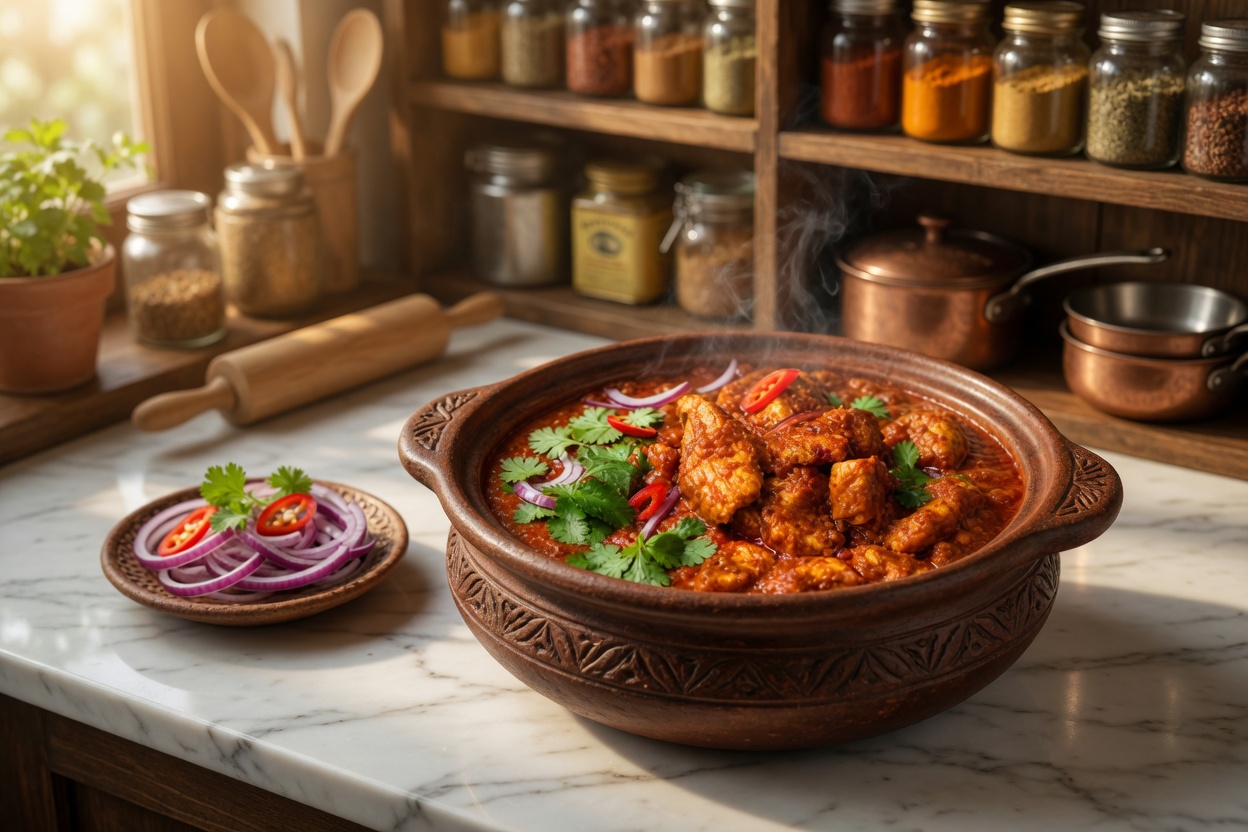
Chicken Madras Recipe
Chicken Madras is a flavorful, aromatic, and moderately spicy curry that’s easy to prepare in a single pan. Perfect for a cozy Friday night dinner!
4
servings10
minutes20
minutes466
kcal30
minutesIngredients
1 onion, peeled and roughly chopped
2 cloves garlic, peeled
2 tsp minced ginger
3 tbsp ghee or vegetable oil
3 chicken breasts, chopped into bite-sized pieces (approx. 525g or 18.5oz)
½ tsp ground cinnamon
3 tbsp Madras hot curry powder
1 ½ tsp paprika
¼ tsp ground fenugreek
½ tsp tamarind paste
¾ tsp salt
½ tsp black pepper
400 ml (14 oz) passata
2 tbsp tomato puree
200 ml (7 oz) coconut milk (full-fat)
- Garnish and Sides
Fresh coriander leaves
1 finely sliced red chili
¼ red onion, thinly sliced
Boiled rice
Directions
- Blend the onion, garlic, and ginger in a mini food processor to form a paste. Add a little oil if the mixture needs loosening.
- Heat the ghee or oil in a large pan over high heat. Add the onion paste and sauté for 3-4 minutes until it begins to brown.
- Add the chicken pieces and cook for 2-3 minutes, stirring frequently, until they are sealed on the outside.
- Reduce the heat to medium and stir in the cinnamon, curry powder, paprika, fenugreek, tamarind paste, salt, and pepper. Cook for 1 minute, stirring constantly.
- Pour in the passata and tomato paste, bringing the mixture to a boil. Add the coconut milk, stir well, and simmer for 10 minutes.
- Garnish with fresh coriander, chili slices, and red onion. Serve with boiled rice.
Notes
- Tips
Madras Curry Powder: If unavailable, substitute with regular curry powder and add 1-2 tsp of cayenne or chili powder for extra heat.
Fenugreek: This ingredient can be skipped if not readily available, as madras curry powder typically includes it.
Storage and Reheating
Make Ahead: Cook and cool the curry, then refrigerate for up to 2 days. Reheat in a pan over medium heat for about 10 minutes, adding a splash of water if needed.
Freezing: Freeze the cooled curry in an airtight container. Defrost in the fridge overnight and reheat as above.
Slow Cooker Option: After step 4, transfer the mixture to a slow cooker, add the coconut milk, and cook on low for 3-4 hours or high for 1-2 hours.
Nutrition Facts
- Serving Size: 4 g
- Total number of serves: 4
- Calories: 466kcal
- Fat: 17g
- Cholesterol: 137mg
- Sodium: 675mg
- Potassium: 1334mg
- Carbohydrates: 18g
- Fiber: 4g
- Sugar: 7g
- Protein: 40g