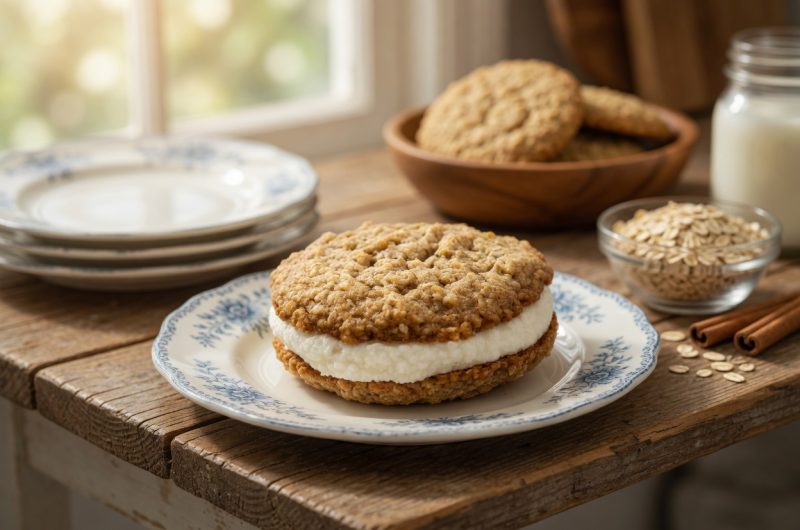
Nothing beats the genuine joy and satisfaction of biting into a chewy, sweet oatmeal cookie sandwiched with creamy, fluffy filling that melts in your mouth. These homemade oatmeal cream pies elevate the beloved childhood classic to an entirely new level of deliciousness and sophistication that surpasses store-bought versions. Crafted with soft, tender oatmeal cookies and a luscious marshmallow filling that is light yet deeply satisfying, they are a treat that is genuinely bound to win hearts wherever they are served. Making these cream pies from scratch allows you to control ingredient quality and customize flavors to suit your preferences perfectly. The combination of textures creates an eating experience that keeps people coming back for more, making these homemade treats far superior to commercial alternatives.
Understanding Why These Cream Pies Have Such Irresistible Appeal
The remarkable balance of textures and complementary flavors is what makes these cream pies truly stand out from ordinary cookies and desserts. The cookies themselves are soft yet robust enough to hold their shape and support the filling without falling apart. The smooth, creamy filling pairs absolutely perfectly with the subtle oatmeal flavor and texture of the cookies. Once you make these cream pies from scratch, they might just become your favorite dessert to share with family and friends, or perhaps to keep entirely for yourself. The contrast between the slightly chewy cookie exterior and the fluffy marshmallow filling creates textural interest that simple cookies cannot provide. Understanding what makes these pies special helps you appreciate the effort and skill involved in creating them successfully.
Recognizing the Critical Importance of Choosing the Right Oats
Choosing the right type of oats is absolutely crucial for achieving the perfect texture in your finished cookies and cream pies. Quick oats are the ideal choice and serve as the secret ingredient that makes these cookies special, blending seamlessly into the cookie dough to create a softer, more refined bite. While old-fashioned rolled oats can technically work, they require adjustment and modification before use, such as pulsing them in a blender to create smaller, more uniform pieces. Using whole rolled oats without any modification typically leads to a chunkier texture and cookies that spread too much during baking, producing flat cookies rather than nicely formed ones. The difference between quick oats and rolled oats significantly impacts the final texture, so selecting the right type matters considerably. Understanding these distinctions helps you make informed choices about ingredients.
Troubleshooting Common Cookie Spreading Issues
When baking oatmeal cookies, sometimes they can spread too thin during baking, resulting in flat, crispy cookies instead of the chewy, thick cookies you desire. If your oatmeal cookies are flatter than you would like them to be, several solutions can help fix this problem for future batches. Increasing the oven temperature and bumping it up to three hundred seventy-five degrees Fahrenheit helps cookies set more quickly on the outside before the dough spreads excessively. Using convection baking if your oven has this feature and baking at three hundred fifty degrees Fahrenheit also helps set cookies faster. Adding more flour to the dough—starting with an extra tablespoon or two—stiffens the dough and prevents excessive spreading during baking. Chilling the dough before baking also helps prevent spreading by keeping the butter cold longer. Experimenting with these adjustments helps you find the method that works best with your specific oven.
Understanding the Role of Brown Sugar in Cookie Texture
Brown sugar contributes both sweetness and moisture to cookie dough, which affects the final texture significantly. The molasses in brown sugar creates cookies that are chewier and softer than cookies made with white sugar alone. Using packed brown sugar ensures you are measuring properly and getting the correct amount of molasses in your recipe. The type of brown sugar—whether light or dark—affects the depth of molasses flavor but not the texture significantly. Understanding how brown sugar functions in baking helps you appreciate its importance in creating cookies with the specific texture you desire. Proper measurement of brown sugar is important for consistent results across batches.
Appreciating How Butter Quality Affects Your Cookies
Using salted butter in this recipe provides both fat and salt flavor that enhances the overall taste. Salted butter simplifies your recipe because you do not need to add additional salt separately, as the butter already contains it. The fat in butter creates richness and contributes to the tender crumb structure. Softening butter to room temperature before mixing ensures it creams properly with the sugar, incorporating air that creates light, fluffy cookies. The temperature of your butter significantly affects mixing results, so taking time to soften it properly matters. Understanding butter’s role in cookie structure helps you appreciate why this ingredient is essential.
Discovering the Magic of the Marshmallow Filling
The creamy filling is truly where these cream pies shine and become something special that differentiates them from plain cookies. Using marshmallow fluff gives the filling a unique lightness and subtle sweet flavor that pairs beautifully with the oatmeal cookies without overwhelming them. The marshmallow filling creates a texture that is fluffy and spreadable, making assembly easier and creating a pleasant eating experience. Whipping the filling ingredients together incorporates air that contributes to its light, fluffy texture. The combination of marshmallow fluff with butter and powdered sugar creates a filling that is both stable and delicious.
Exploring Filling Alternatives and Substitutions
If you find yourself without marshmallow fluff, a homemade vanilla buttercream frosting can serve as an excellent substitute that works beautifully. While the flavor profile changes slightly when substituting buttercream for marshmallow fluff, the result remains delightfully indulgent and satisfying. Buttercream creates a richer, more butter-forward flavor compared to the lighter marshmallow option. Some people actually prefer the buttercream version because it provides a different flavor experience while maintaining the sandwich cookie concept. Having multiple options for filling allows you to make these cream pies with different ingredients depending on what you have available. Understanding substitution options gives you flexibility in your baking.
Preparing Cookie Dough for Optimal Mixing Results
Beating the butter, brown sugar, egg, vanilla, baking soda, cinnamon, and salt together with a mixer until the mixture becomes light and fluffy—approximately two to three minutes—is the critical first step in cookie preparation. This mixing step incorporates air into the butter and sugar, creating the foundation for light, tender cookies. Scraping the sides of the bowl as needed ensures all ingredients are properly incorporated and mixed evenly. The mixture should appear noticeably lighter in color and fluffier in texture when properly beaten. This initial beating step sets the stage for everything that follows in the recipe.
Gradually Incorporating Dry Ingredients Without Overmixing
Gradually adding the flour and oats to the creamed butter mixture and stirring until fully combined prevents overmixing while ensuring even distribution of all ingredients. Adding dry ingredients slowly allows you to control mixing and prevent overdeveloping gluten, which would create tough cookies. The oats should be evenly distributed throughout the dough so each cookie contains an appropriate amount. Mixing should stop as soon as all ingredients are combined and no visible streaks of flour remain. The final dough should be cohesive and ready for scooping without being overmixed.
Portioning Dough for Uniform Cookie Sizes
Scooping the dough into two-tablespoon portions using a cookie scoop or spoon ensures uniformity in cookie size, which matters for both appearance and baking consistency. Rolling the scooped dough into balls creates a more uniform shape that bakes more evenly than irregular shapes. Spacing the balls a few inches apart on the prepared baking sheets allows proper air circulation and prevents cookies from touching and baking together. Uniform cookie sizes ensure all cookies finish baking at approximately the same time, preventing some from being underdone while others overbake. Using a cookie scoop makes portioning easier and faster while maintaining consistency.
Achieving Perfect Cookie Texture Through Proper Baking
Baking for eight to ten minutes until the edges are set but the centers remain soft is the key to achieving the chewy texture these cream pies require. The edges will firm up during cooling while the centers set to a tender, slightly chewy texture. Avoiding overbaking is essential because overbaked cookies become crispy rather than chewy, which is undesirable for cream pies. Watching the cookies carefully during baking helps you catch them at the perfect moment of doneness. The cookies will continue to cook slightly on the hot baking sheet after removal from the oven.
Cooling Cookies Properly for Assembly Readiness
Letting the cookies cool on the baking sheet for a few minutes before transferring them to a wire rack allows them to firm up enough to handle without breaking or tearing. This brief cooling period prevents damage to warm, delicate cookies while they are still quite soft. Transferring to a wire rack allows air circulation that helps them cool completely and prevents them from becoming soggy from trapped steam. Complete cooling ensures cookies are firm enough to support the filling without compressing excessively. Proper cooling is essential for successful assembly of cream pies.
Creating the Perfect Marshmallow Filling Consistency
Whipping the butter, powdered sugar, marshmallow fluff, and vanilla extract together with a mixer until thick and creamy—approximately two to three minutes—creates the ideal filling texture. The whipping action incorporates air into the filling, creating the light, fluffy texture that distinguishes it from simple frosting. Adding heavy cream one tablespoon at a time allows you to control the consistency and achieve spreadability without making the filling too thin. The filling should be thick enough to hold its shape when spread but soft enough to spread smoothly. Testing the consistency by spreading a small amount on a test surface helps you determine if additional cream is needed.
Assembling Cream Pies With Proper Technique
Spreading about two tablespoons of filling on the bottom of one cookie provides sufficient filling for a satisfying cream pie without the filling squishing out excessively. Topping with another cookie and pressing lightly creates a sandwich that holds together firmly without compressing the cookies. Taking care not to press too hard prevents damaging the cookies or forcing filling out from between the layers. Proper assembly ensures the cream pies hold together when eaten while maintaining appealing appearance. Repeating the process with remaining cookies and filling creates a batch of uniform, professional-looking cream pies.
Understanding Proper Storage Techniques
Storing the assembled cream pies in an airtight container in the refrigerator preserves them for up to five days while maintaining the best texture and flavor. The cool temperature prevents the filling from softening excessively while keeping the cookies soft and chewy. Keeping unfilled cookies in a sealed container in the freezer preserves them for up to three months, allowing you to assemble cream pies as needed. Freezing unfilled cookies provides flexibility for making fresh cream pies whenever you want them. Understanding storage options helps you plan ahead and ensure you always have treats available.
Chilling Dough for Consistent Cookie Shapes
For those preferring consistent, uniform cookie shapes, chilling the dough for fifteen to thirty minutes before baking helps prevent excessive spreading. Cold dough spreads less during baking, creating thicker cookies with more defined edges. This chilling step is optional but helpful if you are particular about cookie appearance and uniformity. The chilled dough may be slightly harder to scoop, so allowing it to soften for a few minutes at room temperature before scooping helps. Chilling is a useful technique when you want professional-looking cookies.
Using a Cookie Scoop for Reliable Uniformity
Using a cookie scoop ensures even sizing throughout your batch, which makes sandwiching easier and creates a more professional appearance. Cookie scoops come in various sizes, with two-tablespoon being standard for cookies of appropriate size for these cream pies. Uniform-sized cookies bake more evenly and finish at approximately the same time, preventing some from being underdone while others overbake. The scoop also speeds up the portioning process compared to using a regular spoon. Investing in a quality cookie scoop is worthwhile if you bake cookies regularly.
Customizing Flavors With Additional Ingredients
Adding a pinch of nutmeg to the cookie dough provides warm spice notes that complement oatmeal beautifully without overpowering other flavors. A handful of raisins adds sweetness and chewiness that appeals to those enjoying fruit in their cookies. Other potential additions include chopped pecans, walnuts, or chocolate chips for texture variation. Adding cinnamon as suggested in the original recipe provides warmth and depth that enhances the overall flavor profile. Experimenting with customizations allows you to create variations that suit your personal taste preferences.
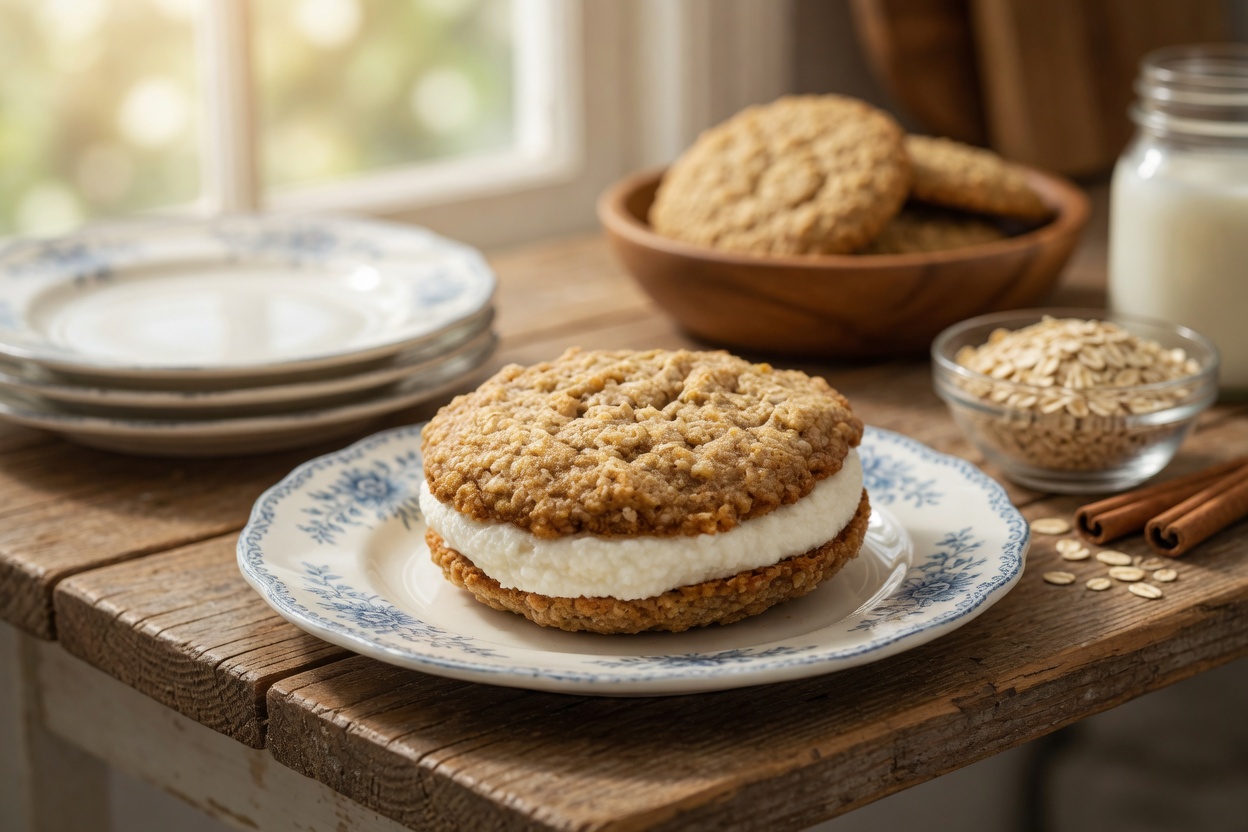
Homemade Oatmeal Cream Pies
Enjoy these nostalgic treats with a glass of milk or a cup of tea!
1
servings40
minutes10
minutes353
kcal50
minutesIngredients
- For the Cookies:
1 cup (227 g) salted butter, softened
1 ½ cups (318 g) packed light or dark brown sugar
1 large egg
1 teaspoon vanilla extract
1 teaspoon baking soda
½ teaspoon ground cinnamon (optional)
½ teaspoon salt
1 ¼ cups (178 g) all-purpose flour
3 cups (300 g) quick oats
- For the Filling:
¾ cup (170 g) salted butter, softened
1 ½ cups (171 g) powdered sugar
1 (7-ounce) jar marshmallow fluff
1 teaspoon vanilla extract
1–2 tablespoons heavy cream
Directions
- Step 1: Prepare the Cookies
- Preheat your oven to 350°F (175°C). Line baking sheets with parchment paper.
- In a large mixing bowl, beat the butter, brown sugar, egg, vanilla, baking soda, cinnamon (if using), and salt with a mixer until light and fluffy (about 2–3 minutes). Scrape the sides of the bowl as needed.
- Gradually add the flour and oats to the mixture, stirring until fully combined.
- Scoop the dough into 2-tablespoon portions using a cookie scoop or spoon. Roll into balls for uniformity and place on the prepared baking sheets, spacing them a few inches apart.
- Bake for 8–10 minutes, until the edges are set but the centers remain soft. Avoid overbaking for the best texture.
- Let the cookies cool on the baking sheet for a few minutes before transferring them to a wire rack to cool completely.
- Step 2: Make the Filling
- In another mixing bowl, whip the butter, powdered sugar, marshmallow fluff, and vanilla extract with a mixer until thick and creamy (about 2–3 minutes).
- Add heavy cream, 1 tablespoon at a time, until the filling reaches a fluffy, spreadable consistency.
- Step 3: Assemble the Cream Pies
- Spread about 2 tablespoons of filling on the bottom of one cookie.
- Top with another cookie, pressing lightly to sandwich them together.
- Repeat with the remaining cookies and filling.
- Storage
- Store the assembled cream pies in an airtight container in the refrigerator for up to 5 days.
- Unfilled cookies can be frozen in a sealed container for up to 3 months.
Nutrition Facts
- Serving Size: 1 g
- Total number of serves: 1
- Calories: 353kcal
- Fat: 17g
- Saturated Fat: 11g
- Cholesterol: 52mg
- Sodium: 263mg
- Carbohydrates: 48g
- Fiber: 1g
- Sugar: 32g
- Protein: 3g