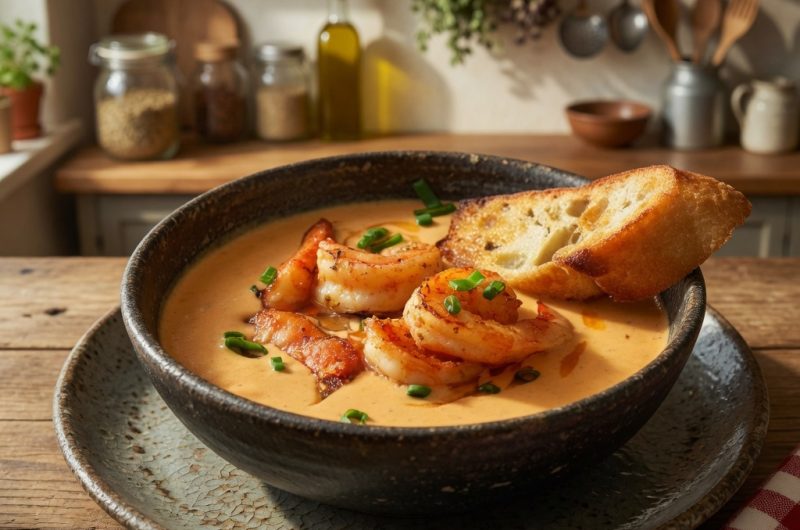
Crab and shrimp bisque represents a luxurious soup that brings restaurant-quality seafood dining into your own kitchen with straightforward techniques and quality ingredients. This creamy bisque combines tender shrimp and sweet lump crabmeat in a velvety sauce that tastes elegant enough for formal dinner parties yet simple enough for weeknight meals. The soup delivers layers of seafood flavor enhanced by aromatic vegetables, warm spices, and a wine-infused stock that creates depth and sophistication. Unlike many seafood soups that take hours of preparation, this bisque comes together in just thirty-five to forty-five minutes from start to finish. The combination of heavy cream and whole milk creates a luxurious mouthfeel without being overwhelmingly rich, allowing the delicate seafood flavors to shine through. Whether you serve it as an appetizer at a formal dinner or as a main course alongside crusty bread, this crab and shrimp bisque impresses guests and satisfies serious food lovers. The recipe demonstrates that homemade seafood bisque need not require specialized culinary training or obscure ingredients to achieve restaurant-quality results.
Understanding the Foundation of Flavor with Butter and Aromatics
The foundation of any excellent bisque begins with properly cooked aromatics built into a butter base that creates the flavor foundation for everything that follows. Melting four tablespoons of butter over medium heat provides a neutral cooking medium that distributes heat evenly and prevents the vegetables from sticking. One small onion, finely chopped, releases its natural sugars as it softens, creating a sweet undertone that balances the briny seafood flavors. The five-minute sautéing time allows the onion to become translucent and tender while developing subtle caramelized notes. Two minced garlic cloves add pungent aromatic quality that complements seafood beautifully and creates a more complex flavor base than onion alone. Garlic cooked for only one to two minutes maintains a fresh, bright quality rather than becoming bitter or harsh. These aromatic vegetables create the flavor platform that supports the entire bisque, making this initial step worth performing correctly and carefully.
Building Depth Through the Roux and Wine Addition
Creating a roux by stirring flour into the melted butter and cooked vegetables thickens the bisque while adding a subtle nutty undertone. Two tablespoons of all-purpose flour mixed thoroughly with the butter and vegetables forms the roux that will thicken the liquid added later. Cooking the roux for about two minutes while stirring constantly removes the raw flour taste that would otherwise linger in the finished bisque. Avoiding excessive browning prevents creating bitter flavors that would compromise the delicate seafood tastes. The roux should remain pale to light golden brown, indicating proper cooking without burning. Half a cup of dry white wine added slowly while stirring thickens the mixture initially and provides acidity that brightens all the flavors. The wine reduces slightly during cooking, concentrating its flavors and contributing complexity that elevates the bisque beyond simple cream soup.
Creating the Seafood Stock Base for Rich Flavor
Two cups of seafood stock forms the primary liquid component that delivers the essential seafood character to this bisque. Seafood stock brings minerality and briny notes that water alone could never provide, making it worth seeking out at grocery stores or fish counters. If seafood stock is unavailable, chicken stock creates an acceptable alternative, though the final bisque will taste less seafood-forward. Good quality stock contributes collagen that thickens the bisque naturally without requiring additional flour. Adding the stock gradually while stirring prevents lumps from forming in the roux mixture and ensures smooth incorporation. Bringing the mixture to a simmer rather than a rolling boil prevents the cream from breaking later and maintains a silky texture throughout the bisque.
Integrating Tomato Paste and Spice Seasonings
Tomato paste, measured at one quarter cup, adds umami depth and bright acidity that prevents the bisque from tasting one-dimensional or overly rich. The tomato paste should be stirred in thoroughly so it distributes evenly rather than creating concentrated pockets of strong flavor. Old Bay seasoning, a traditional choice for seafood dishes, brings familiar flavor that seafood lovers expect in bisque and other shellfish preparations. One teaspoon provides noticeable seasoning without overwhelming the delicate seafood flavors. Paprika, measured at one teaspoon, adds color and a subtle smoky flavor that enhances the overall taste profile. Optional cayenne pepper at one quarter teaspoon provides gentle heat for those who enjoy a spicy bisque. The ten-minute simmering period allows these seasonings to fully incorporate and develop their flavors within the broth.
Adding Cream and Milk for Luxurious Texture
One cup of heavy cream combined with one cup of whole milk creates the characteristic richness and creamy mouthfeel that defines bisque. Heavy cream alone would create an overly rich result that coats the palate heavily, while milk alone would create a thinner, less luxurious texture. The combination of both provides balance, delivering richness without being overwhelming. Adding these dairy products slowly while reducing the heat to low prevents them from breaking or curdling. The five-minute gentle simmer allows the dairy to heat through without reaching temperatures that would damage the emulsion. Careful temperature control during this stage is crucial, as temperatures above one hundred eighty degrees Fahrenheit can cause the cream to separate.
Understanding Shrimp and Crabmeat Cooking
Half a pound of shrimp, peeled, deveined, and chopped, cooks quickly once added to the simmering bisque. Chopping the shrimp into bite-sized pieces ensures even cooking and creates a more pleasant eating experience than larger chunks. Shrimp transforms from translucent gray to opaque pink as it cooks, providing a clear visual indicator of doneness. Half a pound of lump crabmeat, whether fresh, canned, or thawed frozen, requires gentle handling to preserve the tender, delicate texture. Crabmeat does not need cooking; it simply needs heating through in the bisque for about five minutes. Overcooking either shrimp or crabmeat makes them tough and rubbery, so watching the timing carefully prevents disappointing results.
Seasoning the Finished Bisque to Taste
Salt and pepper added to taste at the end allows you to adjust the seasoning according to your specific preferences and the particular seafood stock you used. Different stocks vary in saltiness, so tasting before adding additional salt prevents over-salting the finished soup. Freshly ground black pepper adds more complex flavor and visible texture compared to pre-ground pepper. Starting with small amounts and adding more gradually prevents overseasoning, which cannot be easily corrected.
Optional Blending for Texture Preferences
Some people prefer their bisque completely smooth with no visible chunks, while others enjoy a chunkier texture with visible seafood pieces. Using an immersion blender allows you to achieve partial blending, creating a bisque with some smooth creaminess and some texture from remaining chunks. Complete blending creates a completely uniform, smooth bisque that has an elegant appearance. Leaving the bisque entirely un-blended preserves the maximum amount of seafood texture and creates a more rustic presentation. Your preference determines which approach to take.
Garnishing and Serving Your Bisque
Fresh parsley or chives sprinkled over each bowl of bisque adds bright color and fresh flavor notes that complement the rich, creamy soup. The herbs should be added just before serving to maintain their delicate texture and bright green color. Crusty bread or oyster crackers served alongside the bisque provide textural contrast and allow diners to dip or crumble the crackers into their soup according to their preference. The bread also helps absorb some of the rich cream sauce while providing satisfying bulk to make the meal more filling.
Choosing Quality Seafood for Best Results
The quality of your shrimp and crabmeat directly affects how delicious the final bisque tastes. Fresh seafood, if available at a quality fish counter, delivers superior flavor compared to frozen alternatives. If you cannot find fresh seafood, properly frozen products that are thawed gently produce acceptable results. Avoid precooked shrimp, which becomes tough when heated again. Lump crabmeat should be checked for shell fragments and drained well before adding to the bisque. Spending a little extra on quality seafood makes a noticeable difference in the finished soup.
Understanding Wine Selection for Cooking
Dry white wine chosen for this recipe should be a wine you would actually drink, not cooking wine from the grocery store that contains added salt. Sauvignon Blanc, Pinot Grigio, or Chablis work well for seafood bisque because their crisp acidity complements shellfish naturally. The wine reduces during cooking, concentrating its flavors and adding complexity that cannot be created any other way. Avoid very oaky or heavily buttered white wines, which can overpower the delicate seafood flavors.
Making This Bisque Ahead for Entertaining
You can prepare this bisque several hours in advance if you are planning a dinner party or meal for guests. Complete all steps through adding the seasonings and the dairy products, then cool and refrigerate. Just before serving, gently reheat the bisque on the stovetop over medium-low heat, then add the shrimp and crabmeat for the final cooking stage. This make-ahead approach reduces stress on the day you are serving and allows flavors to develop further during storage. Store the cooled bisque in an airtight container in the refrigerator for up to two days before serving.
Adapting the Recipe for Different Dietary Needs
If you need to reduce fat content, you can substitute half the heavy cream with additional milk or use a combination of milk and evaporated skim milk. The bisque will be less rich but still satisfying and delicious. For those avoiding alcohol, you can substitute the white wine with additional seafood stock, though the bisque will lack the brightness that wine provides. Gluten-free individuals can use cornstarch mixed with cold water as a thickener instead of the roux, though the flavor will be slightly different.
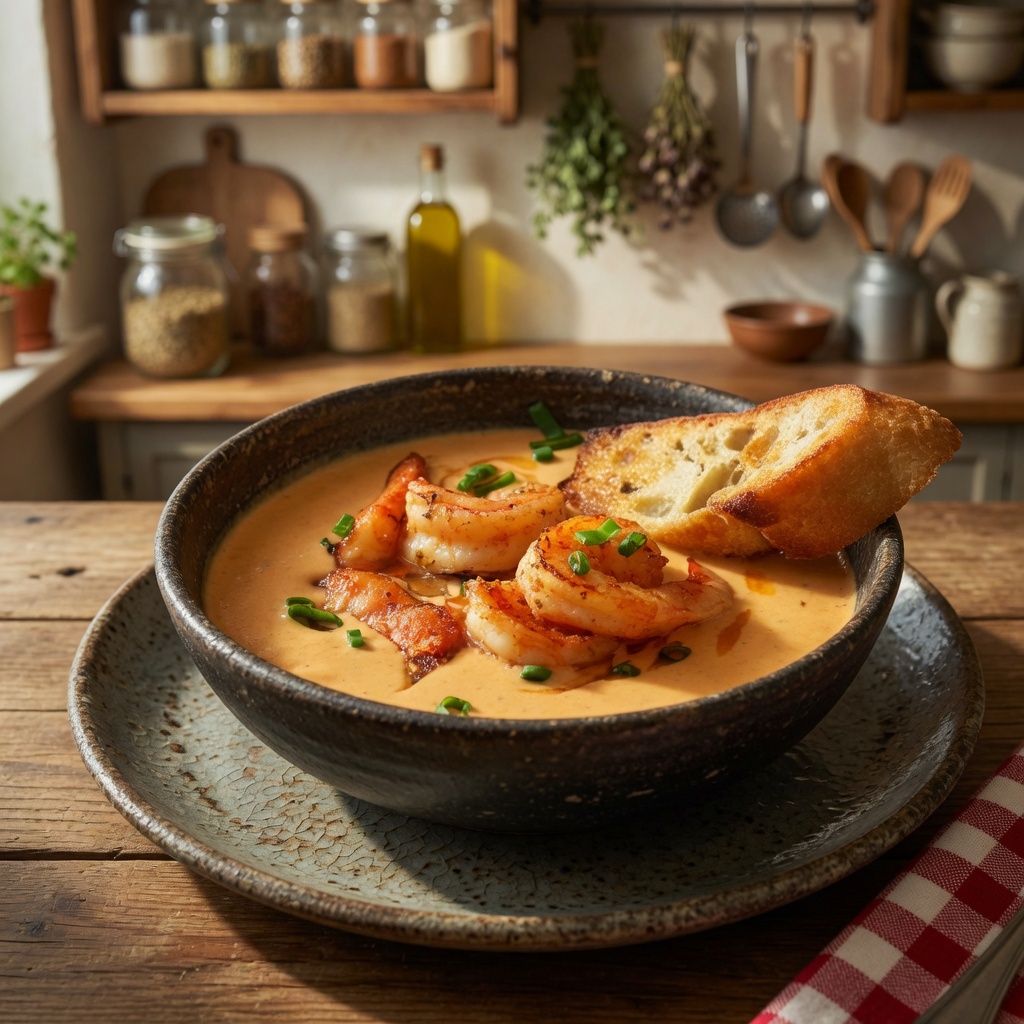
Crab and Shrimp Seafood Bisque
Perfect as an elegant appetizer for special dinners or as a satisfying main course served with crusty bread. This recipe comes together quickly in just thirty-five to forty-five minutes, making it ideal for weeknight meals and impressive dinner parties alike.
4
servings10
minutes25
minutes320
kcal35
minutesIngredients
- For the Bisque Base:
4 tablespoons unsalted butter
1 small onion, finely chopped
2 garlic cloves, minced
2 tablespoons all-purpose flour
1/2 cup dry white wine
2 cups seafood stock (or chicken stock as alternative)
1/4 cup tomato paste
1 teaspoon Old Bay seasoning (optional)
1 teaspoon paprika
1/4 teaspoon cayenne pepper (optional for added heat)
- For the Cream and Seafood:
1 cup heavy cream
1 cup whole milk
1/2 pound shrimp (peeled, deveined, and chopped)
1/2 pound lump crabmeat (fresh, canned, or thawed frozen)
Salt and pepper to taste
- For Serving:
Fresh parsley or fresh chives for garnish
Crusty bread or oyster crackers for serving
Directions
- Melt four tablespoons of butter in a large pot over medium heat. Add the finely chopped onion and cook for approximately five minutes, stirring occasionally, until the onion becomes soft and translucent. Stir in the minced garlic cloves and cook for one to two minutes until the kitchen smells fragrant and the garlic softens slightly.
- Add two tablespoons of all-purpose flour to the pot and stir constantly for about two minutes. The flour should combine with the butter to form a smooth paste. Cook long enough to remove the raw flour taste but not so long that it browns and becomes bitter. Slowly pour in the half cup of dry white wine while stirring constantly. Continue stirring until the mixture thickens slightly and the wine smell becomes less sharp.
- Gradually add two cups of seafood stock while stirring continuously to prevent lumps from forming. Once all the stock is added, bring the mixture to a gentle simmer. Stir in the one-quarter cup of tomato paste, one teaspoon of Old Bay seasoning, one teaspoon of paprika, and one-quarter teaspoon of cayenne pepper if you want added heat. Mix thoroughly so the tomato paste distributes evenly throughout the soup. Allow the mixture to simmer gently for about ten minutes so the flavors have time to blend and develop.
- Reduce the heat to low. Slowly pour in one cup of heavy cream and one cup of whole milk while stirring gently. Do not allow the bisque to boil at this point, as high heat can cause the cream to separate. Simmer gently for another five minutes so the dairy heats through completely. Add the half pound of chopped shrimp and the half pound of lump crabmeat to the pot. Stir gently to distribute the seafood evenly throughout the bisque. Allow everything to simmer together for about five minutes until the shrimp turns pink and cooks through completely.
- Add salt and pepper according to how you like your soup seasoned. Start with small amounts and taste before adding more, as different seafood stocks vary in saltiness. If you prefer a smoother bisque, use an immersion blender to blend part or all of the soup to your desired consistency. For a chunkier bisque with visible seafood pieces, skip this step entirely.
- Carefully ladle the hot bisque into individual bowls, making sure each serving receives a good amount of shrimp and crabmeat. Top each bowl with fresh parsley or fresh chives for color and fresh flavor. Serve immediately alongside crusty bread or oyster crackers for dipping and soaking up the creamy sauce.
Notes
- Quality Seafood Matters: Fresh shrimp and crabmeat from a quality fish counter produce superior flavor compared to lower-quality alternatives. If fresh seafood is not available, properly frozen products that are thawed gently work acceptably.
- Never Use Precooked Shrimp: Precooked shrimp becomes tough and rubbery when heated again in the bisque. Always use raw shrimp that you cook during the final stage of making the bisque.
- Making it Vegetarian: This recipe cannot be easily made vegetarian since seafood is the main ingredient. However, you could create a similar bisque using mushrooms and additional vegetables as the primary ingredients.
- Batch Cooking: This recipe doubles easily if you are cooking for a large group. Simply double all ingredient amounts and extend the cooking time slightly. The water bath method will keep the bisque warm if you are serving people throughout the meal.
- Garnish Freshness: Add the parsley or chives garnish just before serving so it maintains bright color and fresh flavor. Wilted or cooked herbs lack the appeal of fresh ones.
Nutrition Facts
- Fat: 25g
- Sodium: 800mg
- Carbohydrates: 10g
- Fiber: 1g
- Sugar: 3g
- Protein: 18g