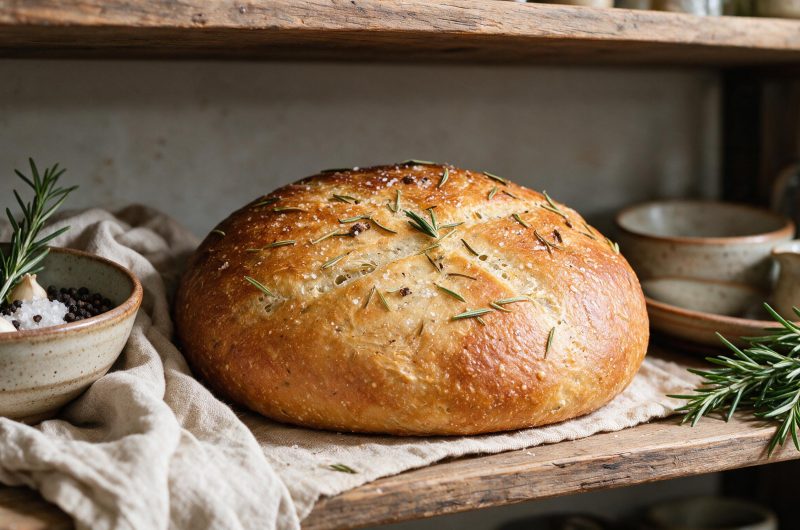
If you’ve ever dreamed of pulling a warm, golden, crackly loaf of bread out of your own oven — the kind that If you have ever wanted to bake a crusty artisan loaf at home that looks and tastes like it came straight from a European bakery, this Rustic No-Knead Rosemary Garlic Bread is the perfect recipe to try. It requires no stand mixer, no kneading, and no complicated shaping techniques. Instead, it relies on simple pantry ingredients, a Dutch oven, and time to develop deep flavor and beautiful texture.
This homemade rosemary garlic bread produces a crisp, golden crust with a chewy, airy interior filled with fragrant notes of fresh rosemary and sweet roasted garlic. It is ideal for serving alongside pasta, soups, stews, or simply enjoyed warm with olive oil and balsamic vinegar. Once you try this no-knead method, it may become your favorite way to bake bread at home.
Why No-Knead Bread Is So Popular
No-knead bread became widely popular because it eliminates the physical effort typically associated with bread making. Traditional bread recipes require kneading for 8 to 10 minutes to develop gluten. In contrast, the no-knead technique uses long fermentation to naturally strengthen the dough.
When left to rest for 12 to 18 hours, the yeast slowly develops flavor and structure. This extended fermentation creates a complex taste and airy crumb without manual kneading. The result is bakery-quality bread with minimal hands-on time.
The Magic of Dutch Oven Baking
Baking bread in a preheated Dutch oven is a key step for achieving that crisp artisan crust. The heavy pot traps steam released from the dough, creating a moist environment during the first stage of baking. This steam allows the bread to expand fully before forming a crust.
After removing the lid, the dry heat browns the exterior to a deep golden color. This method replicates professional steam-injected ovens found in bakeries, making it possible to achieve similar results at home.
Ingredient Breakdown – Simple and Powerful
This recipe uses straightforward ingredients that work together beautifully. Flour forms the base of the dough. All-purpose flour provides structure and softness, while bread flour can increase chewiness.
Salt enhances flavor and controls yeast activity. Instant yeast ensures gradual fermentation without requiring activation in water. Warm water hydrates the flour and activates the yeast.
Fresh rosemary introduces an earthy, aromatic note, while roasted garlic adds sweetness and depth. A drizzle of olive oil enhances richness and contributes to a golden crust.
Understanding Gluten Development Without Kneading
In traditional bread making, kneading stretches gluten strands to create elasticity. In this no-knead recipe, time replaces physical effort. The long fermentation allows gluten to develop slowly as the dough rests.
The dough begins sticky and loose, but as fermentation progresses, it becomes bubbly and structured. Handling the dough gently preserves air pockets, resulting in an open crumb.
Step 1 – Mixing the Dough
Begin by combining flour, salt, and instant yeast in a large bowl. Add warm water and stir until no dry flour remains. The dough will appear shaggy and sticky.
Fold in chopped rosemary, mashed roasted garlic, and olive oil if using. Stir until evenly distributed. There is no need to knead; simply ensure everything is incorporated.
Step 2 – Overnight Fermentation
Cover the bowl with plastic wrap or a kitchen towel. Allow it to rest at room temperature for 12 to 18 hours. During this time, the yeast slowly ferments, producing bubbles and developing flavor.
When ready, the dough should appear doubled in size with visible bubbles on the surface.
Step 3 – Shaping the Dough
Lightly flour a surface and gently turn out the dough. Avoid pressing out air bubbles. Fold the dough onto itself a few times to create surface tension, forming a loose round shape.
Place the dough on parchment paper and cover with a towel while the oven preheats.
Step 4 – Preheating the Dutch Oven
Place your Dutch oven, with lid, inside the oven and preheat to 450°F (230°C). Allow it to heat thoroughly. A fully preheated pot ensures maximum oven spring.
Proper preheating is critical for achieving a crisp crust and airy interior.
Step 5 – Baking the Bread
Carefully transfer the parchment with the dough into the hot Dutch oven. Cover with the lid and bake for 30 minutes.
Remove the lid and continue baking for 10 to 15 minutes until the crust becomes deep golden brown. The bread should sound hollow when tapped.
Step 6 – Cooling for Perfect Texture
Transfer the baked loaf to a wire rack. Allow it to cool completely before slicing. Cutting too early releases steam and can create a gummy interior.
Cooling ensures that the crumb sets properly and maintains structure.
Notes for Best Results
Use fresh rosemary for maximum aroma. Roast garlic in advance for deeper sweetness. Do not rush fermentation time. Keep the dough sticky; resist adding excess flour. Preheat the Dutch oven fully before baking.
Following these guidelines ensures consistent artisan-style bread.
How to Roast Garlic
To roast garlic, preheat your oven to 375°F (190°C). Cut the top off a garlic bulb to expose cloves. Drizzle with olive oil, wrap in foil, and roast for 30 to 40 minutes until soft.
Once cooled, squeeze the cloves out and mash before adding to the dough.
Flavor Variations
Although the base recipe remains unchanged, you can customize by adding grated Parmesan, olives, dried cranberries, or seeds. Each addition enhances flavor while maintaining the no-knead method.
Herb variations such as thyme or oregano complement rosemary well.
Serving Suggestions
This rosemary garlic bread pairs beautifully with tomato soup, minestrone, pasta dishes, or grilled vegetables. It can be sliced and toasted for sandwiches or brushed with garlic butter for additional richness.
Its versatility makes it suitable for both casual dinners and special gatherings.
Storage and Freezing
Store bread at room temperature in a paper bag for up to two days. For longer storage, wrap tightly and freeze for up to two months.
Reheat in the oven at 350°F (175°C) for 10 minutes to restore crispness. Avoid refrigerating, as it accelerates staling.
Why This Recipe Works
This no-knead rosemary garlic bread combines simplicity with artisan technique. The long fermentation builds flavor, while Dutch oven baking creates texture.
With minimal effort and maximum reward, it is a reliable recipe for home bakers seeking professional-quality results.
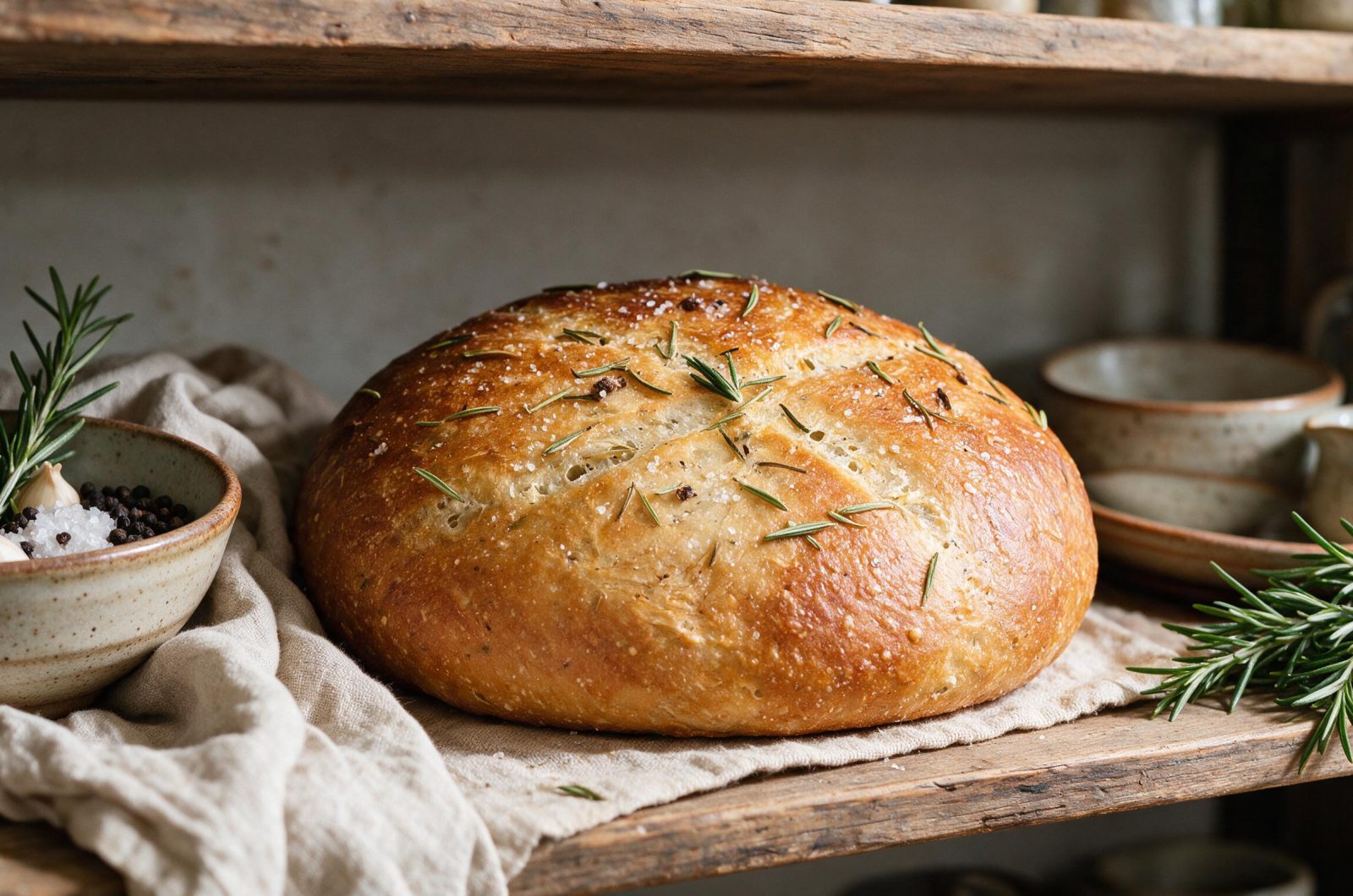
Homemade Rosemary Garlic Bread
This rustic no-knead bread is infused with fresh rosemary and roasted garlic, creating a fragrant, artisan-style loaf with a golden crust and soft, chewy interior. Perfect with soups, pasta, or simply dipped in olive oil, it’s a simple recipe that requires minimal effort and no kneading.
2
hours25
minutes2
hours25
minutesIngredients
3 cups all-purpose flour (or bread flour)
2 tsp salt
½ tsp instant yeast
1½ cups warm water
2 tbsp fresh rosemary, chopped
4 cloves roasted garlic, mashed
1 tbsp olive oil (optional)
Directions
- Mix the Dough: In a bowl, combine flour, salt, and yeast. Stir in warm water, rosemary, roasted garlic, and olive oil until a sticky dough forms.
- First Rise: Cover and let rest at room temperature for 12–18 hours, until doubled and bubbly.
- Shape: Lightly flour a surface, shape dough into a ball. Place on parchment, cover, and rest for 30–40 minutes.
- Preheat Oven: Place Dutch oven (with lid) inside and preheat to 450°F (230°C).
- Bake: Carefully transfer dough (on parchment) into the pot. Cover and bake for 30 minutes, then uncover and bake 10–15 minutes more until golden.
- Cool: Transfer to a wire rack and cool before slicing.
Notes
- Roast garlic ahead of time at 375°F (190°C) for 30–40 minutes wrapped in foil with olive oil.
Serve warm with soup, pasta, or olive oil dip.