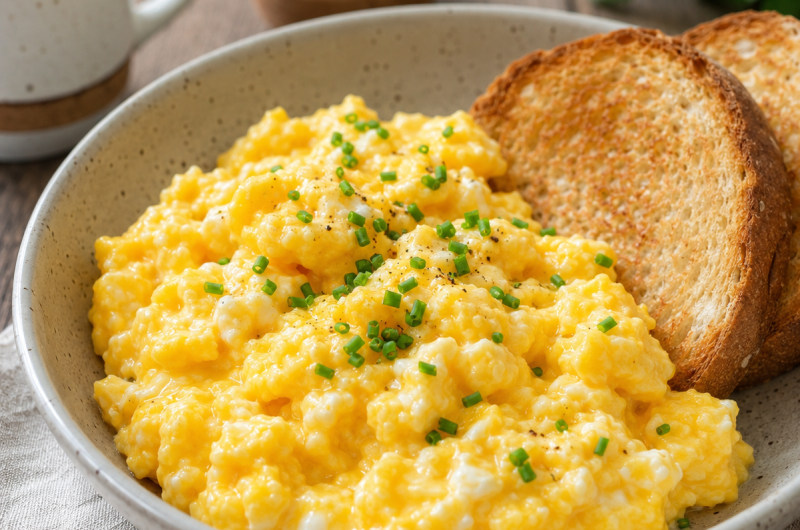
Creamy scrambled eggs are one of the easiest breakfast recipes to prepare, but getting that smooth, tender texture requires a little more attention than simply cooking eggs quickly over high heat. This soft scrambled eggs recipe uses a gentle cooking method, a small amount of butter, and water instead of milk or cream. The result is delicate egg curds that stay moist, creamy, and lightly glossy rather than becoming dry or rubbery.
This easy scrambled eggs recipe is ideal for busy mornings because the entire dish takes about 10 minutes from start to finish. The ingredient list is short, yet every ingredient has a purpose. Eggs provide the main structure and protein, butter contributes richness, water helps keep the curds light, and fresh chives add a mild onion-like freshness. A little flaky sea salt and optional black pepper complete the dish without overpowering the natural flavor of the eggs.
The Secret to Soft and Creamy Scrambled Eggs
The most important part of making creamy scrambled eggs is temperature control. Eggs cook quickly, and high heat can cause their proteins to tighten rapidly. That often produces firm, dry curds instead of the soft texture many people want. Cooking the eggs slowly over low heat gives you much better control and allows small, tender curds to develop gradually.
Another important detail is knowing when to stop cooking. Soft scrambled eggs should look mostly set but still have a slightly glossy appearance when they leave the pan. They will continue cooking from the residual heat of the skillet, so waiting until they look completely dry can lead to overcooked eggs by the time they reach the plate. Removing them just before they are fully set helps preserve their creamy texture.
How Water Makes Scrambled Eggs Tender
Milk and cream are often added to scrambled eggs, but this recipe uses water instead. A tablespoon of water is whisked into the eggs before cooking, helping create a lighter and more tender texture without changing the ingredient list to include dairy beyond the butter. Water turns into steam as the eggs heat, which can contribute to softer curds when the eggs are cooked gently.
The water also keeps the recipe simple and practical. There is no need to measure milk or cream, and the natural flavor of the eggs remains prominent. Because there is only a small amount of water, it does not make the mixture watery when used correctly. The key is to whisk it thoroughly into the eggs before they reach the skillet so the mixture is evenly blended.
Choosing the Right Eggs
Fresh large eggs are the foundation of this breakfast recipe. The original ingredient list calls for three large eggs, which provides two servings. Eggs should be cracked into a bowl rather than directly into the skillet because whisking them separately allows the yolks and whites to blend evenly before cooking.
For the smoothest scrambled eggs, whisk until no obvious streaks of separate egg white and yolk remain. The mixture should look uniform and slightly frothy. You do not need to whip the eggs excessively, but thorough whisking helps create a consistent texture throughout the finished dish. Adding the pinch of salt before cooking also ensures that the seasoning is distributed rather than sitting only on the surface.
Preparing the Egg Mixture
Start by cracking the three large eggs into a medium mixing bowl. Add one tablespoon of water and a pinch of salt. Whisk everything together until the yolks and whites are completely incorporated and the mixture looks smooth. A few small bubbles or a slightly frothy surface are perfectly fine.
This preparation takes only a minute or two, but it makes a noticeable difference in the final result. Avoid leaving large streaks of egg white in the mixture because they can cook differently from the yolks. Once the egg mixture is evenly combined, it is ready to meet the gently heated butter in the skillet.
Why Low Heat Matters
Place a nonstick skillet over low heat before adding the butter. The goal is to melt the butter slowly without browning it. Butter should coat the cooking surface and remain pale rather than becoming nutty or golden. This gentle start keeps the cooking temperature controlled and gives the eggs a better chance of forming soft curds.
Low heat is particularly important when making soft scrambled eggs because the dish does not need intense heat to cook. The eggs should gradually thicken as they warm. If the pan is too hot, the outside of the egg mixture can set quickly while the inside continues to catch up. Gentle heat produces a much more even result.
Building Delicate Egg Curds
Once the butter has melted, pour the whisked eggs into the skillet. Let the mixture sit for a few seconds before beginning to move it. This brief pause allows the bottom layer to start setting, after which you can use a silicone spatula to gently move the eggs around the pan.
Instead of stirring aggressively, use slow movements to push and fold the eggs. As soft curds begin to appear, carefully fold them over themselves. The aim is to create small, delicate folds rather than breaking the eggs into tiny dry pieces. A silicone spatula works especially well because it is gentle on a nonstick cooking surface and gives you precise control.
When to Take the Eggs Off the Heat
The eggs should be removed from the skillet when they are mostly set but still slightly glossy. They should look moist rather than watery, with soft curds that hold their shape while retaining some creaminess. This is one of the most important visual cues in the entire recipe.
Do not wait until every part of the eggs looks completely firm. The residual heat from the skillet will continue cooking them after the pan is removed from the burner. By taking them off the heat at the right moment, you allow that carryover cooking to finish the eggs gently without pushing them into a dry texture.
Serving the Scrambled Eggs
These creamy scrambled eggs are served with toasted wheat or sourdough bread, creating a simple breakfast with contrasting textures. The warm, tender eggs pair naturally with crisp-edged toast, while the bread provides a sturdy base for spooning the eggs onto the plate.
Fresh chives are added after cooking, giving the dish a fresh green finish and mild savory flavor. A small amount of flaky sea salt adds texture and seasoning, while freshly ground black pepper can be included if desired. Because the eggs themselves are gently seasoned, the toppings can remain simple and allow the main ingredient to shine.
Why Fresh Chives Work So Well
Fresh chives are an excellent finishing ingredient for scrambled eggs because they add a subtle onion flavor without dominating the dish. Their fresh, green character balances the richness of butter and eggs and gives the finished breakfast a brighter appearance.
For the best presentation, chop the chives finely and sprinkle them over the eggs immediately before serving. There is no need to cook them with the eggs. Keeping them fresh preserves their delicate flavor and gives the dish a pleasant contrast to the warm, creamy curds.
Flaky Sea Salt for the Finish
Flaky sea salt is different from the salt added to the egg mixture. The initial pinch seasons the eggs from within, while the flaky sea salt added at the end provides small bursts of seasoning on the surface. Because flaky salt can vary in size and intensity, a light sprinkle is usually enough.
The recipe also includes freshly ground black pepper as an optional ingredient. If you enjoy pepper with eggs, grind a small amount over the finished dish. If you prefer a cleaner egg flavor, simply leave it out. The original ingredient list identifies black pepper as optional, so either approach works.
A Simple Breakfast for Busy Mornings
One of the biggest advantages of this recipe is its short preparation time. With only a few ingredients and approximately five minutes of cooking, it is easy to prepare even on a busy morning. The eggs can be whisked while the skillet heats, and the bread can be toasted at the same time.
Because the recipe serves two, it works well for a small family breakfast or a relaxed meal for two people. If serving the eggs as part of a larger breakfast, they can be paired with additional foods according to preference. The original recipe keeps the presentation simple with toasted wheat or sourdough bread.
How to Avoid Dry Scrambled Eggs
Dry scrambled eggs usually come from excessive heat, excessive cooking time, or leaving the eggs in the skillet after they have already reached the desired texture. This recipe addresses those problems by using low heat and removing the skillet while the eggs are still slightly glossy.
Another common mistake is stirring constantly and aggressively. Fast stirring can break the curds into very small pieces, increasing the chance that they will lose moisture quickly. Instead, use slow, controlled movements with a silicone spatula. Allow the eggs to form soft curds and then gently fold them.
How to Avoid Watery Scrambled Eggs
Although water is included in this recipe, the finished eggs should not be watery. The tablespoon of water is mixed thoroughly with the eggs before cooking, and the mixture is then cooked gently until the eggs are mostly set. Problems usually occur when the eggs are removed too early or the pan temperature is poorly controlled.
The eggs should have a moist, creamy appearance without liquid pooling on the plate. Watch the texture as you cook rather than relying solely on the clock. Once the curds are formed and the mixture looks mostly set with a slight gloss, remove the pan from the heat and serve immediately.
The Best Pan for Soft Scrambled Eggs
A nonstick skillet is especially convenient for this recipe because eggs can stick easily to uncoated cookware. The smooth surface allows the silicone spatula to move the curds gently without tearing them apart or leaving large amounts of egg behind.
The pan does not need to be large because the recipe contains only three eggs. A medium-sized skillet gives the egg mixture enough room to spread while still allowing you to control the curds. Avoid using a pan that is extremely hot before the butter is added because the butter should melt gently rather than brown immediately.
Why Immediate Serving Is Important
Soft scrambled eggs are at their best immediately after cooking. Their texture changes quickly as they continue to absorb heat from the skillet and surrounding environment. Serving them straight away helps preserve the moist, creamy consistency that defines this style of scrambled eggs.
Have the toasted bread and toppings ready before the eggs finish cooking. This allows you to transfer the eggs directly from the skillet to the plate without unnecessary waiting. Add the chopped chives, flaky sea salt, and optional black pepper immediately before eating for the freshest flavor and best texture.
Making the Recipe Part of a Balanced Breakfast
Eggs provide protein and several important nutrients, while toasted wheat or sourdough bread adds carbohydrates and makes the meal more substantial. The recipe itself remains simple and does not rely on heavy cream or a large quantity of cheese to create richness. Butter supplies the fat needed for cooking and contributes to the finished flavor.
The word “healthy” can mean different things depending on individual dietary needs, so this recipe is best viewed as a simple, nutrient-containing breakfast rather than a meal that fits every eating pattern. Its short ingredient list and quick cooking method make it convenient for people who want a straightforward homemade breakfast without a complicated preparation process.
Notes for Consistently Creamy Eggs
Keep the heat low
Low heat gives you time to control the texture of the eggs. If the curds appear to be setting very quickly, the pan may be too hot. Gentle cooking is the foundation of soft scrambled eggs, so resist the temptation to increase the temperature simply to finish faster.
Whisk before cooking
Thorough whisking combines the yolks, whites, water, and salt into one smooth mixture. This helps the eggs cook more evenly and produces a consistent texture. There is no need for a blender or electric mixer; a regular whisk or fork is sufficient.
Do not overcook
Remove the eggs while they are mostly set but still slightly glossy. The residual heat will continue cooking them for a short time. Waiting for them to look completely dry in the pan can result in firmer eggs on the plate.
Add toppings at the end
Fresh chives, flaky sea salt, and optional black pepper are best added after cooking. This keeps the chives fresh and allows the flaky salt to provide a pleasant finishing texture.
Frequently Asked Questions
Can I make scrambled eggs without milk?
Yes. This particular recipe does not use milk or cream in the egg mixture. Instead, it uses one tablespoon of water with the three eggs. The water helps keep the eggs light while allowing the natural egg flavor to remain prominent.
How do I make scrambled eggs creamy?
Cook them gently over low heat and remove them from the skillet while they are still slightly glossy. Slow cooking encourages tender curds, while stopping before the eggs become completely dry helps preserve their creamy consistency.
Should I cook scrambled eggs on high heat?
High heat is not recommended for this soft scrambled eggs recipe. The instructions specifically call for a skillet over low heat. Gentle cooking gives you more control and reduces the likelihood of producing tough or dry egg curds.
Why are my scrambled eggs rubbery?
Rubbery scrambled eggs are commonly caused by overcooking or excessive heat. Try lowering the burner temperature and removing the eggs from the skillet earlier, while they still have a slightly glossy appearance. Remember that residual heat will continue cooking them after the skillet leaves the burner.
What bread goes best with creamy scrambled eggs?
The original recipe recommends toasted wheat or sourdough bread. Both provide a crisp, sturdy base that contrasts nicely with the soft egg curds. Toast the bread while preparing the eggs so everything is ready to serve together.
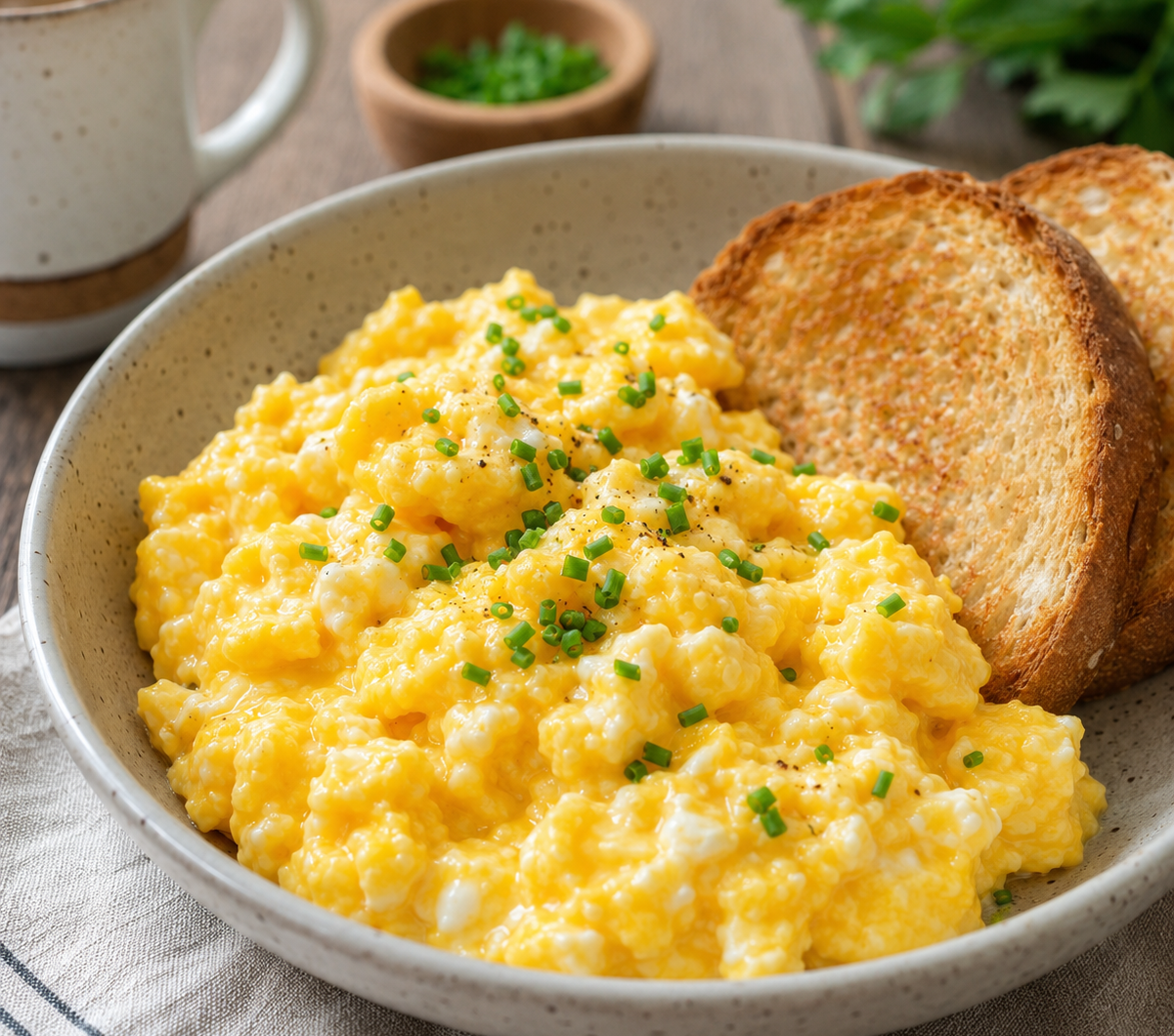
Creamy Healthy Soft Scrambled Eggs
These easy soft scrambled eggs are gently cooked over low heat with butter and a little water for a tender, creamy texture. Finished with fresh chives, flaky sea salt, and optional black pepper, they make a quick breakfast served over toasted wheat or sourdough bread.
2
servings5
minutes5
minutes182
kcal10
minutesIngredients
- Egg Mixture
3 large eggs
Pinch of salt
1 tablespoon water
- For Cooking
1 tablespoon butter
- Finishing Ingredients
Freshly ground black pepper, optional
Chopped fresh chives
Flaky sea salt
Directions
- Prepare the Eggs
- Crack the 3 large eggs into a medium mixing bowl.
- Add 1 tablespoon water and a pinch of salt.
- Whisk thoroughly until the yolks and whites are completely combined and the mixture looks smooth and slightly frothy.
- Cook the Eggs Slowly
- Place a nonstick skillet over low heat.
- Add the 1 tablespoon butter.
- Let the butter melt gently without allowing it to brown.
- Pour the prepared egg mixture into the skillet.
- Allow the eggs to sit for a few seconds before moving them.
- Using a silicone spatula, gently stir and move the eggs around the skillet.
- As soft curds develop, carefully fold them rather than stirring aggressively.
- Continue cooking until the eggs are mostly set but remain slightly glossy and creamy.
- Finish and Serve
- Remove the skillet from the heat while the eggs still have a soft, moist appearance.
- Allow the residual heat to finish cooking the eggs gently.
- Spoon the scrambled eggs onto toasted wheat or sourdough bread.
- Sprinkle with chopped fresh chives and a small amount of flaky sea salt.
- Add freshly ground black pepper if desired.
- Serve immediately.
Notes
- Notes
Keep the skillet over low heat for tender, creamy scrambled eggs.
Whisk the eggs thoroughly before adding them to the skillet.
The water helps create light, tender eggs without using milk or cream.
Melt the butter gently and do not allow it to brown.
Use a silicone spatula for controlled, delicate folding.
Remove the eggs from the heat while they are still slightly glossy because they will continue cooking from residual heat.
Avoid vigorous stirring, which can break the eggs into small, dry curds.
Prepare the toast before the eggs finish cooking so the breakfast can be served immediately.
Fresh chives are best added after cooking.
Scrambled eggs are best eaten immediately for the softest texture.
Nutrition Facts
- Serving Size: 1 g
- Total number of serves: 2
- Calories: 182kcal
- Fat: 14g
- Saturated Fat: 6g
- Polyunsaturated Fat: 145g
- Carbohydrates: 1g
- Sugar: 1g
- Protein: 12g
- Calcium: 68mg
- Iron: 2mg