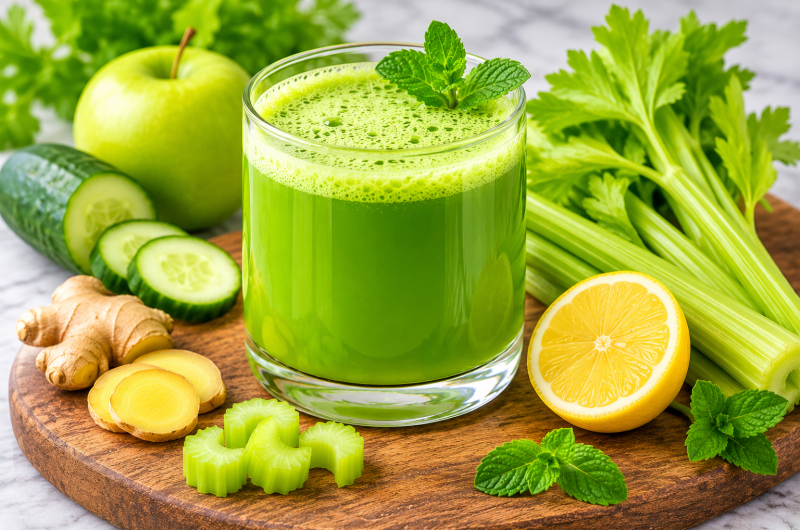
Fresh Celery Detox Juice is a light, crisp, and refreshing homemade green juice made with celery, cucumber, green apple, lemon, fresh ginger, and cold water. This easy celery juice recipe combines vegetables and fruit to create a drink with a pleasant balance of earthy, tart, sweet, and slightly spicy flavors. Celery provides the main vegetable taste, cucumber adds freshness, green apple contributes natural sweetness, lemon brings a bright citrus flavor, and ginger creates a gentle warming finish. The recipe can be prepared with either a juicer or a blender, making it convenient for different kitchens. Although the name includes the word detox, this drink is best understood as a refreshing way to enjoy fruits and vegetables rather than a treatment for removing toxins. The body already has natural processes that manage waste removal. Enjoying homemade celery juice alongside balanced meals can be a practical way to add variety to your daily food and drink choices.
Why This Easy Celery Juice Recipe Is Worth Trying
One of the main advantages of this homemade celery cucumber juice is its simple ingredient list. You do not need expensive powders, special supplements, or complicated preparation methods to make it. The recipe uses five to six large celery stalks, half a cucumber, one small green apple, half a lemon, a small piece of fresh ginger, and half a cup of cold water. Fresh mint leaves and ice cubes are optional additions that can make the drink even more refreshing. Each ingredient contributes a different flavor, creating a balanced green juice that is easier to enjoy than plain celery juice for people who prefer a milder vegetable taste. Another benefit is flexibility in preparation. A juicer produces a thinner beverage with less pulp, while a blender allows you to retain more of the natural fiber if you choose not to strain the mixture. Both methods are straightforward and require little cooking experience, making this a convenient homemade drink.
Understanding What Celery Detox Juice Really Means
The phrase celery detox juice is commonly used to describe fresh vegetable drinks that are associated with wellness routines. However, it is important to understand that drinking celery juice does not directly cleanse the liver, flush toxins from the kidneys, or replace the body’s natural waste-removal processes. The liver, kidneys, digestive system, and other organs already perform these functions continuously. Drinking fresh vegetable juice may contribute fluids and certain nutrients to a balanced diet, but it should not be treated as a medical detox program. This recipe is better appreciated for its refreshing flavor and the opportunity it provides to include celery, cucumber, apple, lemon, and ginger in a convenient beverage. Some people enjoy green juice in the morning, while others prefer it during the afternoon or alongside a meal. There is no scientific requirement to drink it at a particular time. Consistent, balanced eating habits matter more than relying on any single drink.
What Makes Celery, Cucumber, and Apple a Good Flavor Combination?
Celery, cucumber, and green apple work particularly well together because their flavors complement one another. Celery has a distinctive vegetable taste that can seem slightly salty, grassy, or mildly bitter depending on its freshness. Cucumber is lighter and more neutral, helping soften the stronger celery flavor while contributing additional liquid. Green apple provides a pleasant tartness and natural sweetness that makes the drink more approachable. Without the apple, the combination may taste more strongly of vegetables, especially when the celery is particularly flavorful. Lemon adds another layer of acidity, creating a brighter finish, while ginger introduces a small amount of spice. These ingredients produce a refreshing drink without requiring added sugar. The balance is especially useful for people who are new to homemade green juice and want something flavorful rather than overly bitter. Following the original ingredient quantities provides a reliable starting point for achieving this fresh, balanced taste.
Choosing Fresh Celery for the Best Homemade Juice
Celery is the main ingredient in this recipe, so its freshness has a noticeable effect on the finished drink. Choose stalks that feel firm, crisp, and relatively heavy for their size. Fresh celery usually has a clean vegetable aroma and leaves that appear bright rather than yellowed or wilted. Avoid stalks with large soft spots, visible decay, or an unpleasant smell. The original recipe calls for five to six large celery stalks, providing the main flavor and much of the liquid in the juice. Before preparing them, rinse the stalks thoroughly under running water, paying attention to the grooves where soil can collect. Remove any damaged sections and cut the celery into pieces that fit comfortably into your juicer or blender. There is no need to peel celery, although particularly tough strings may be removed if desired. Using fresh, well-cleaned celery helps produce a crisp drink with a cleaner flavor and a more appealing appearance.
Why Cucumber Makes Celery Juice More Refreshing
Cucumber is a useful ingredient in homemade green juice because it has a high water content and a mild flavor. This recipe uses half a cucumber, which helps balance the stronger taste of celery while making the finished drink feel lighter and more refreshing. Cucumber also contributes a gentle freshness that pairs naturally with lemon and mint. When choosing a cucumber, look for one that feels firm and has an intact skin without significant soft areas. Wash it thoroughly under running water before cutting it into smaller pieces. The peel can remain on if it is clean and suitable for eating, although peeling is an option for people who prefer a milder taste or smoother texture. Cucumber is especially helpful when making juice in a blender because its moisture allows the ingredients to move more easily through the blades. Combined with the specified half cup of cold water, it helps create a drink that can be blended without excessive dilution.
The Role of Green Apple in a Naturally Sweet Green Juice
Green apple provides natural sweetness and a pleasant tart flavor that balances the vegetables in this fresh celery juice recipe. The original ingredients specify one small green apple, making it an important part of the drink’s overall taste. Green apples often have a sharper flavor than sweeter apple varieties, which works particularly well with cucumber, lemon, and ginger. Their acidity helps prevent the juice from tasting flat, while their natural sugars soften the stronger celery notes. Before preparing the apple, wash it thoroughly and remove the stem. Cut it into pieces suitable for your equipment, removing the core and seeds before blending or juicing. The skin can generally remain on when the apple is properly washed. Apples also contain dietary fiber, although much of that fiber is removed when juice is strained. Keeping the blended pulp produces a thicker beverage and retains more of the fruit’s original fiber. The small apple provides enough sweetness without requiring additional sugar.
How Fresh Lemon Brightens the Flavor of Celery Juice
Fresh lemon is an important part of this celery cucumber apple juice because it brings acidity and a clean citrus aroma. The recipe uses half a lemon, which is enough to brighten the vegetables without overpowering their natural flavor. Lemon juice complements celery’s slightly savory taste and enhances the freshness of cucumber. It also balances the sweetness of the green apple, giving the drink a lively, refreshing finish. To prepare the lemon, wash it, cut it in half, and squeeze the juice into a small bowl. Remove any seeds before adding the juice to the other ingredients. Using freshly squeezed lemon generally produces a fresher flavor than bottled alternatives, although the exact taste depends on the ripeness and variety of the fruit. The lemon can be stirred into the finished juice when using a juicer or blended directly with the remaining ingredients when using a blender. Its bright flavor makes the drink especially appealing when served cold.
Why a Small Amount of Fresh Ginger Makes a Difference
Fresh ginger adds a warm, slightly spicy flavor that contrasts with the cool, crisp character of celery and cucumber. This recipe requires a half-inch piece of fresh ginger, which provides noticeable flavor without making the juice excessively sharp. Ginger has a strong aroma and can taste peppery, particularly when freshly cut. Its flavor works well with lemon and green apple, creating a drink that feels lively and balanced. Choose ginger that feels firm and has a fresh, recognizable aroma. Wash the root, peel the portion being used if necessary, and slice it into smaller pieces before adding it to the juicer or blender. Because the specified amount is small, it should blend easily with the other ingredients. Ginger is often associated with digestive wellness, but this drink should not be presented as a treatment for digestive conditions. Its primary role here is to contribute flavor and variety to a refreshing homemade green juice.
Why Cold Water Helps When Making Celery Juice in a Blender
The original recipe includes half a cup of cold water, which is particularly useful when preparing the drink in a blender. Unlike a juicer, which separates liquid from pulp mechanically, a blender needs enough moisture to move the ingredients through its blades. The cold water helps the celery, cucumber, apple, ginger, and lemon combine into a smoother mixture. It also makes the finished drink easier to pour and strain if a thinner juice is preferred. Using cold water helps maintain a refreshing serving temperature without requiring large amounts of ice. The exact consistency will depend on the produce, since celery and cucumber naturally contain substantial amounts of water. When using a juicer, the cold water can be stirred into the extracted juice if a lighter flavor is desired. Keeping the specified quantity ensures the recipe remains faithful to the original ingredient list. The water should be clean and suitable for drinking, especially because the beverage is consumed without cooking.
Optional Mint Leaves for a Fresh and Cooling Finish
Fresh mint leaves are an optional ingredient that can give this homemade celery juice an additional layer of freshness. Mint has a distinctive cooling aroma that works particularly well with cucumber and lemon. A few leaves can be blended with the other ingredients, passed through a juicer when the equipment allows, or added to the finished glass as a garnish. When used as a garnish, the leaves provide aroma without changing the texture of the drink. If blended, they contribute a more noticeable herbal flavor throughout the mixture. Choose mint leaves that appear fresh and green, and wash them carefully before use. Avoid using leaves that are wilted, slimy, or discolored. Because mint can be strongly flavored, the small optional amount listed in the original recipe is a sensible starting point. It is not necessary for the drink to taste refreshing, but it can make the presentation more attractive and complement the crisp vegetable ingredients.
Preparing All the Ingredients Before Juicing
Good preparation makes homemade vegetable juice easier and helps ensure that the finished drink tastes fresh. Begin by washing the celery, cucumber, green apple, lemon, ginger, and optional mint leaves under running water. Even when produce will be peeled, washing first helps prevent dirt from being transferred during cutting. Trim damaged areas from the celery and cut the stalks into manageable pieces. Slice the cucumber into chunks that fit the juicer or blender. Remove the apple stem and core, then cut the fruit into smaller sections. Squeeze the lemon and remove the seeds. Prepare the half-inch piece of ginger by slicing it thinly. Measure the half cup of cold water and have the optional ice cubes ready if you plan to serve the juice chilled. Organizing everything before starting makes the process quicker and reduces the need to stop while the machine is running. It also allows you to check that all original ingredients have been included.
How to Make Fresh Celery Juice with a Juicer
A juicer is the most direct way to prepare a thin, refreshing celery drink with relatively little pulp. Start by assembling the machine according to its instructions and placing a clean container beneath the juice outlet. Feed the prepared celery stalks through the machine, followed by the cucumber, green apple, and fresh ginger. Work at a steady pace and avoid forcing large pieces into the feed tube. Once the produce has been processed, pour the extracted juice into a glass or jug. Stir in the freshly squeezed lemon juice to distribute the citrus flavor evenly. The half cup of cold water can be added if you prefer a lighter consistency or a less concentrated vegetable taste. If using fresh mint, add it as a garnish or incorporate it according to the machine’s instructions. Serve immediately, with optional ice cubes if desired. Freshly prepared juice generally has the brightest flavor and most appealing aroma.
How to Prepare Celery Detox Juice Without a Juicer
A blender provides a convenient alternative for people who do not own a juicing machine. To make this celery juice recipe with a blender, place the chopped celery, cucumber, green apple, sliced ginger, and freshly squeezed lemon juice into the blender jar. Add the specified half cup of cold water, then secure the lid. Blend on high speed until the ingredients are broken down into a smooth, evenly mixed liquid. The blending time will depend on the power of the machine and the size of the produce pieces. A high-speed blender may produce a relatively smooth mixture, while a standard blender may leave more noticeable vegetable fibers. The drink can be consumed at this stage as a thicker blended beverage, or it can be strained for a thinner juice. This method retains all the original ingredients and allows you to choose the texture that best suits your preference. It is an accessible way to make fresh green juice at home.
Straining Blended Celery Juice for a Smoother Texture
When celery juice is made in a blender, the finished mixture contains the natural pulp from the vegetables and fruit. Some people enjoy this thicker texture, while others prefer a smoother drink that resembles juice produced by a dedicated juicer. To remove the pulp, place a fine-mesh strainer over a large bowl or jug and pour the blended mixture through it. Use the back of a spoon to press gently against the solids and extract additional liquid. A clean cheesecloth can also be used, although it may require more handling. The strained juice will be thinner and easier to drink, but some of the natural dietary fiber will remain in the discarded pulp. If increasing fiber intake is a priority, keeping the blended mixture unstrained is generally the better choice. The leftover pulp may be used in suitable cooked dishes, such as vegetable patties or soups, rather than being thrown away. Straining is optional and depends entirely on texture preference.
Understanding the Difference Between Green Juice and a Green Smoothie
Although green juice and green smoothies may contain similar ingredients, their preparation methods produce different textures and nutritional characteristics. A juicer separates much of the liquid from the fibrous parts of vegetables and fruit, creating a thinner beverage. A blender processes the entire ingredients together, leaving the fiber in the drink unless the mixture is strained afterward. This recipe can be prepared either way, making it useful for people who enjoy different consistencies. The strained version has a lighter texture and is easy to sip over ice, while the unstrained version is thicker and retains more of the original plant material. Both methods provide flavor from celery, cucumber, apple, lemon, and ginger. However, blending and juicing are not nutritionally identical because fiber content changes when pulp is removed. Neither method is inherently a detox treatment, and both are best considered ways to enjoy fruits and vegetables alongside regular meals rather than replacements for whole produce.
What Does Fresh Celery Juice Taste Like?
Fresh celery juice has a distinctive vegetable flavor that can vary depending on the ingredients and the quality of the produce. Plain celery juice is often described as grassy, slightly salty, and mildly bitter. This recipe creates a more balanced drink by combining celery with cucumber, green apple, lemon, and ginger. Cucumber softens the vegetable taste and adds freshness, while green apple provides natural sweetness. Lemon introduces a tart citrus note that makes the juice taste brighter, and ginger adds a small amount of warmth. When all the ingredients are combined, the result is a crisp, refreshing green drink with a lightly sweet finish. The optional mint leaves can add a cooling aroma, while ice cubes make the beverage especially pleasant in warm weather. The final taste may vary depending on the sweetness of the apple, the maturity of the celery, and the strength of the ginger. Using fresh ingredients helps create the most appealing flavor.
When Is the Best Time to Drink Celery Juice?
There is no medically established time of day when celery juice must be consumed to provide its ordinary nutritional value. Some people enjoy fresh green juice first thing in the morning because it feels light and refreshing. Others prefer drinking it with breakfast, after lunch, or during the afternoon. This recipe works well at any of these times, depending on personal preference and daily routine. Drinking celery juice on an empty stomach is not necessary for the body to process its nutrients, and there is no reliable evidence that doing so creates a special detoxifying effect. People who experience stomach discomfort from acidic drinks or ginger may find it more comfortable to enjoy the juice alongside food. Because the recipe contains green apple, it also contributes natural sugars, which may matter for people monitoring carbohydrate intake. The best approach is to enjoy the drink when it is convenient and comfortable, while continuing to eat balanced meals throughout the day.
Can Celery Juice Be Part of a Healthy Breakfast?
This homemade celery cucumber apple juice can be a refreshing addition to breakfast, but it should not be considered a complete meal on its own. The drink contains vegetables and fruit, providing water and some vitamins and minerals, yet it is unlikely to supply the full range of protein, fat, fiber, and energy that many people need from a satisfying breakfast. Pairing it with foods such as eggs, yogurt, whole-grain toast, or oatmeal can create a more balanced meal. The exact combination depends on individual dietary preferences and nutritional needs. If the juice is strained, much of the natural fiber from the produce is removed, making it particularly important not to rely on it as a replacement for whole vegetables and fruit. Enjoying it alongside a regular breakfast allows you to appreciate its fresh flavor without treating it as a meal substitute. It can also be served as a beverage with lunch or a light snack.
Hydration and the Refreshing Qualities of Celery Cucumber Juice
Celery and cucumber naturally contain substantial amounts of water, making them useful ingredients in a refreshing homemade beverage. Combined with the half cup of cold water specified in this recipe, they create a drink that can contribute to daily fluid intake. The green apple and lemon add flavor, making the beverage more interesting than plain water for people who enjoy fruit and vegetable drinks. However, celery juice should not be described as providing superior hydration compared with water or as having special cleansing properties. Ordinary drinking water remains an effective way to maintain hydration, and a varied diet contributes fluids as well. The natural sodium and potassium content of celery and other produce can vary, so the drink should not be treated as a substitute for a medically recommended electrolyte solution. Served cold, this celery cucumber juice is especially appealing during warm weather or after ordinary daily activities. Its main advantage is providing a flavorful way to enjoy fresh produce.
The Nutritional Value of Celery, Cucumber, and Green Apple
The ingredients in this fresh celery juice recipe provide a variety of naturally occurring nutrients. Celery contains vitamin K and smaller amounts of other vitamins and minerals, while cucumber contributes water and some micronutrients. Green apple provides carbohydrates, natural sugars, and plant compounds, along with fiber when the pulp is retained. Lemon contributes vitamin C and acidity, and ginger contains naturally occurring aromatic compounds responsible for its distinctive flavor. The exact nutrient content of the finished drink depends on the size of the produce, whether it is strained, and how much liquid is extracted. Straining removes much of the insoluble fiber and can affect the overall nutritional composition. This is one reason homemade green juice should complement rather than replace whole fruits and vegetables. Although the ingredients are nutritious foods, consuming them together does not create a guaranteed treatment for inflammation, digestive problems, or other medical conditions. Their value comes from being part of a varied eating pattern.
Why Celery Juice Is Not a Guaranteed Weight-Loss Drink
Celery juice is sometimes promoted online as a quick way to lose weight, reduce belly fat, or cleanse the digestive system. These claims can be misleading because no single beverage reliably produces lasting weight loss. Body weight is influenced by many factors, including overall dietary intake, physical activity, sleep, health conditions, and individual circumstances. This homemade green juice may fit into a balanced eating plan because it contains vegetables and fruit, but drinking it does not automatically cause fat loss. The green apple contributes natural sugars and calories, while the amount of fiber depends on whether the drink is strained. Replacing complete meals with juice can also make it difficult to obtain enough protein, essential fats, and other nutrients. A more practical approach is to enjoy celery juice as a refreshing beverage alongside regular meals. Its crisp flavor and simple ingredients are good reasons to prepare it, without attaching unrealistic expectations to its effect on body weight.
Can Celery Juice Support Digestive Wellness?
Celery, cucumber, apple, lemon, and ginger are foods that can be included in a balanced diet, but their effects on digestion depend on individual tolerance and the way they are prepared. When the ingredients are blended without straining, the beverage retains more of the natural fiber found in the vegetables and fruit. Dietary fiber supports normal bowel function and contributes to digestive health. Straining the mixture removes much of this fiber, producing a thinner drink that may not provide the same benefits as whole produce. Ginger is commonly used in foods and beverages for its distinctive flavor and has been studied for certain digestive symptoms, but the small amount in this recipe should not be considered a medical treatment. Lemon’s acidity and ginger’s sharpness may also be uncomfortable for some people with sensitive stomachs. Anyone who notices discomfort can enjoy the juice with food or choose beverages that better suit their needs. The recipe is intended for refreshment rather than digestive therapy.
Notes on Making the Juice Taste Less Bitter
Celery can sometimes produce a strong or slightly bitter flavor, particularly when the stalks are older or the leaves are included. This recipe balances that taste with cucumber, green apple, lemon, and ginger, but ingredient freshness still matters. Select crisp celery and remove any damaged or wilted sections before juicing. The cucumber helps soften the vegetable flavor, while the green apple provides natural sweetness and a pleasant tartness. Lemon brightens the mixture and can make the finished drink taste fresher. The original recipe uses five to six large celery stalks, which creates a noticeable celery flavor. For the most faithful version, begin with the specified amount and follow the listed ingredient measurements. If the finished juice tastes particularly strong, the half cup of cold water can help dilute the flavor, especially when added after juicing. Serving the drink chilled can also make the vegetable notes seem milder. Fresh mint provides another optional way to create a cooling finish.
Notes on Making Celery Juice Without Added Sugar
This homemade celery detox juice contains no added sugar because its sweetness comes naturally from the small green apple. The apple helps balance the celery and cucumber without requiring honey, syrups, or other sweeteners. Lemon provides tartness, while ginger adds a sharp note that prevents the drink from tasting overly sweet. Using the original ingredients creates a fresh beverage with a flavor profile that is more complex than plain vegetable juice. However, no added sugar does not mean the drink contains zero sugar. Apples and other fruits naturally contain carbohydrates, including sugars, which remain present in the extracted liquid. The amount in each serving depends on the size of the apple and the final juice yield. People monitoring blood sugar or carbohydrate intake should consider the whole recipe rather than assuming that green juice is automatically sugar-free. Keeping the blended fiber may also be preferable to straining for those who want more of the fruit’s original structure in the finished beverage.
Notes on Preparing Fresh Juice Safely
Food safety is important when preparing homemade juice because the ingredients are consumed raw. Wash all produce thoroughly under running water before cutting or juicing, even if some parts will be peeled. Clean the cutting board, knife, blender, juicer, and serving containers before use. Remove any spoiled or damaged sections from the vegetables and fruit, and avoid using produce with visible mold. Do not wash fruits and vegetables with soap or household cleaning products. If using a juicer, follow the manufacturer’s cleaning instructions carefully, particularly around the strainer and pulp collection areas where residue can collect. Freshly prepared juice should be consumed promptly or refrigerated in a clean, covered container. Because homemade juice is not pasteurized, it may carry a greater food safety risk than commercially pasteurized products. Pregnant people, young children, older adults, and people with weakened immune systems may need to avoid unpasteurized juice or seek advice about safer alternatives. Clean preparation and proper refrigeration help reduce avoidable risks.
Notes on Storing Homemade Celery Juice
Fresh celery juice tastes best when consumed soon after preparation because its aroma, color, and texture can change during storage. If it needs to be prepared ahead of time, transfer it into a clean airtight bottle or container and refrigerate it promptly. Filling the container close to the top can reduce exposure to air, although it does not prevent bacterial growth. Natural separation is normal, particularly when the juice contains finely blended vegetable particles. Stir or shake the container before drinking to redistribute the liquid and solids. For the best quality, prepare only the amount needed and consume refrigerated homemade juice as soon as practical, preferably within 24 hours. Do not leave it sitting at room temperature for long periods, especially in warm weather. If the drink develops an unusual odor, visible mold, or other signs of spoilage, discard it. Proper storage protects quality, but it does not make raw homemade juice equivalent to pasteurized juice.
Notes on Customizing the Flavor Without Changing the Base Recipe
The original recipe provides a balanced combination of celery, cucumber, green apple, lemon, ginger, and water, with mint and ice as optional additions. This mixture is a useful starting point for experimenting with different flavor preferences. For a stronger citrus taste, a small amount of lime juice could be added in a separate variation. Pineapple can make a green juice sweeter, while spinach or parsley can contribute additional vegetable flavor. Increasing the cucumber creates a milder drink, whereas using more ginger produces a sharper finish. However, these are separate variations and are not part of the exact ingredient list preserved in the recipe card. Anyone following the original version should use the specified measurements without substitutions. The easiest way to personalize the drink while keeping the ingredients unchanged is to choose whether to strain it, serve it over ice, or include the optional mint leaves. These small serving choices can noticeably change the drinking experience.
Notes on Common Mistakes When Making Green Juice
Several simple mistakes can affect the quality of homemade celery juice. Using old or wilted celery may create a dull flavor, while failing to wash produce properly can introduce unwanted dirt. Adding large pieces of fruit or vegetables to a blender may make blending more difficult, particularly when using a lower-powered machine. Skipping the cold water can also cause the mixture to become too thick for efficient blending. When using a juicer, forcing ingredients into the feed tube can strain the equipment and reduce performance. Another common issue is leaving the juice exposed to air for too long before serving, which can affect freshness and appearance. Straining too aggressively may push fine pulp through the mesh, producing a cloudier drink than expected. None of these problems requires complicated solutions. Fresh produce, clean equipment, manageable ingredient pieces, and prompt serving are the main factors that help produce a pleasant green juice.
Why This Homemade Celery Juice Recipe Is a Practical Everyday Drink
Fresh Celery Detox Juice is a simple recipe that offers a refreshing combination of vegetables, fruit, citrus, and ginger without requiring added sugar or complicated preparation. The celery provides a crisp vegetable base, cucumber adds moisture, green apple contributes natural sweetness, lemon brightens the flavor, and ginger supplies a gentle spicy finish. Optional mint leaves and ice cubes make the drink especially appealing when served cold. The recipe works with either a juicer or a blender, allowing home cooks to choose between a thinner juice and a thicker drink that retains more fiber. It can be enjoyed with breakfast, alongside lunch, or as an afternoon refreshment. Although it is commonly called a detox juice, its value comes from being a flavorful way to include fresh produce in a balanced diet, not from any special cleansing effect. With simple ingredients and a straightforward method, this easy homemade green juice is a convenient addition to an everyday beverage routine.