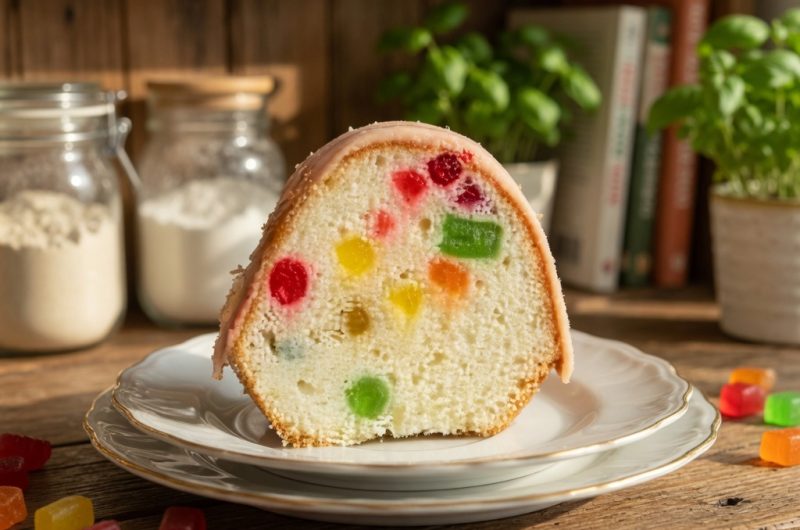
Gumdrop Cake is far more than just a simple dessert—it is a cherished family tradition and beloved celebration staple in many households, especially throughout Newfoundland and Maritime Canada, where it holds a special place as a holiday favorite. This delightful cake combines soft, fluffy batter with bursts of chewy, fruity gumdrops that appeal equally to curious children and nostalgic adults looking for familiar comfort food. Though it is most often associated with Christmas celebrations and festive gatherings, Gumdrop Cake’s charming appeal and versatile nature make it a year-round favorite for special occasions, casual family gatherings, and celebrations of all kinds. The combination of moist cake texture with colorful candy pieces creates something truly special that stands apart from ordinary desserts. Making Gumdrop Cake at home allows you to create memories and traditions that families will treasure for generations to come.
Understanding Why Gumdrop Cake Has Enduring Appeal
Combining the sweetness and fruity flavor of candy with the comfort and satisfaction of cake creates a nostalgic treat that is genuinely hard to resist for people of all ages. The visual appeal of colorful gumdrops visible throughout each slice makes this cake immediately recognizable and exciting to look at. There is something about biting into cake and discovering bursts of chewy candy that triggers childhood memories and joy. The texture contrast between soft cake and chewy candy creates an interesting eating experience that keeps people coming back for more. This nostalgic quality is what makes Gumdrop Cake such a beloved tradition—it represents more than just food, but rather memories, family gatherings, and celebration.
Exploring Family Variations and Personal Touches
Gumdrop Cake recipes vary considerably from one household to another, with each family adding their unique twist to the classic formula while maintaining the essential appeal. Some recipes incorporate cream cheese for a denser, richer texture that some prefer, while others stick to a lighter and more rustic approach that emphasizes the cake itself. While one family’s recipe produces a moist, light-colored cake with a tender, delicate crumb, another family’s version might be darker and sturdier due to longer baking time and slight adjustments to ingredient ratios. These variations reflect personal preferences and available ingredients, making each family’s Gumdrop Cake unique and special. No matter what variation a family follows, the core appeal remains unchanged—a delicious cake absolutely packed with chewy, fruity gumdrops.
Appreciating the Magic of Gumdrops in Baking
Gumdrops are undeniably the star ingredient of this cake, and understanding their unique properties helps you work with them effectively. These colorful, pectin-based candies are distinctively shaped like small domes and come in a wonderful variety of fruity flavors including cherry, lemon, orange, and lime. Unlike similar candies like jujubes or wine gums, gumdrops have a unique texture and composition that holds up beautifully during the baking process without dissolving or completely falling apart. When baked inside cake batter, gumdrops transform from firm, chewy candies into soft, gooey pockets of concentrated sweetness that surprise and delight with every bite. They retain their general shape while becoming slightly softer, adding both visual interest through their vibrant colors and bursts of fruity flavor throughout every slice.
Recognizing the Versatility of Gumdrops Beyond This Recipe
Gumdrops are incredibly versatile candies with many applications in baking and decorating throughout the year. You will often find gumdrops used in decorating gingerbread houses during the holiday season, adorning cupcakes for festive occasions, and creating colorful patterns on cookies and other baked goods. Their bright colors, small size, and sturdy construction make them ideal for both structural decoration and baked-in flavoring. In this Gumdrop Cake recipe specifically, we toss the gumdrops in flour before adding them to the batter—a technique that prevents them from sinking to the bottom of the cake and ensures they distribute evenly throughout. This coating method works because the flour creates friction between the gumdrops and the batter, helping them stay suspended during baking rather than settling due to gravity.
Selecting Quality Gumdrops for Your Cake
The quality and type of gumdrops you choose directly affects the final result of your cake, so selecting good quality gumdrops is worth the small extra effort. Look for gumdrops that are relatively fresh and have not been sitting in a store for months, as older gumdrops can become hard and lose flavor. Avoid gumdrops that appear discolored or have a crystallized sugar coating that looks excessive or uneven. Clear, vibrant colors indicate freshness and quality. Some specialty candy shops offer premium gumdrops with more intense fruit flavors than mass-market varieties. Consider trying different brands and types to find which ones you prefer in your cake. Fresh, quality gumdrops will dissolve slightly and become gooey during baking, creating the most pleasant eating experience.
Preparing Gumdrops for Even Distribution
Tossing gumdrops in flour before adding them to the batter is a simple but critical technique that ensures they distribute evenly throughout the cake rather than sinking to the bottom. Use about two tablespoons of flour from your measured flour amount and toss the gumdrops until they are lightly coated with flour on all sides. This flour coating creates just enough friction between the candies and the surrounding batter to keep them suspended during mixing and baking. Without this coating, gumdrops would sink due to gravity because they are heavier than the surrounding cake batter. If you skip this step, you may end up with all the gumdrops concentrated at the bottom of the cake rather than distributed throughout.
Understanding Ingredient Interactions in Gumdrop Cake
Successful Gumdrop Cake requires understanding how different ingredients interact and work together to create the desired texture and flavor. The combination of sugar, eggs, and butter creates a rich, flavorful batter base that supports the candies beautifully. The leavening agents—baking powder and baking soda—work together to create the light, fluffy texture that contrasts nicely with the chewy gumdrops. The milk provides moisture and helps create a tender crumb. The vanilla extract enhances overall flavor without overpowering the candy. Each ingredient serves a specific purpose, and proper measurement and mixing technique ensure all ingredients work together harmoniously.
The Science Behind Achieving Perfect Cake Texture
Creating the perfect Gumdrop Cake texture requires understanding basic cake chemistry and baking science. The fat in the butter coats flour particles, which prevents excessive gluten development and creates a tender crumb. The sugar dissolves and helps retain moisture in the finished cake, keeping it moist for several days. Eggs provide both moisture and protein that sets the structure during baking. The baking powder creates carbon dioxide bubbles that make the cake rise and become light and fluffy. Proper creaming of butter and sugar incorporates air into the batter, which is essential for getting a light cake texture. Following the recipe steps in order and using proper technique ensures all these chemical processes work correctly.
Creaming Butter and Sugar for Best Results
Creaming butter and sugar together is one of the most important steps in making Gumdrop Cake, yet many home bakers rush through it or do not understand its importance. Beating softened butter with sugar for several minutes incorporates air into the butter, which is essential for creating the light, fluffy texture that defines good cake. The friction of the mixer beating the butter and sugar together also helps the sugar dissolve, and the combination becomes lighter in color and fluffier in texture as air is incorporated. Properly creamed butter and sugar should appear pale and fluffy, almost like thick frosting, indicating that sufficient air has been incorporated. This step should take about three to four minutes with an electric mixer on medium speed.
Incorporating Eggs for Proper Structure and Binding
Adding eggs one at a time to your creamed butter and sugar mixture, rather than all at once, ensures proper incorporation and helps maintain the fluffy texture you have worked to create. Each egg should be beaten in thoroughly before adding the next one, which takes about one minute per egg. This gradual addition allows the eggs to incorporate smoothly without breaking the emulsion or causing lumping. The eggs provide protein that helps set the cake’s structure during baking, while also adding moisture and richness. Eggs also provide the binding action that holds all the other ingredients together into a cohesive cake structure.
Selecting the Best Time to Enjoy Gumdrop Cake
To fully appreciate the charm and delight of Gumdrop Cake, pair it with a warm beverage like tea or coffee. A generous slice of this moist, candy-filled cake is absolutely perfect with a cup of orange pekoe tea, lightly sweetened and topped with a splash of milk or cream. The warm tea complements the sweetness of the cake and helps balance the eating experience. For an extra indulgent treat, try spreading a thin layer of butter on your slice, which adds richness and creates a delicious contrast with the fruity gumdrops. Some people even enjoy pairing a slice of Gumdrop Cake with a slice of sharp cheddar cheese for a creative sweet-and-savory combination that is surprisingly delicious.
Storing Gumdrop Cake for Maximum Freshness
Properly storing your finished Gumdrop Cake helps maintain its moist texture and wonderful flavor for several days after baking. Store the cooled cake in an airtight container at room temperature, where it will keep well for two to three days. For longer storage, you can refrigerate the cake in an airtight container for up to one week, though refrigeration sometimes makes cake slightly drier than room-temperature storage. The frosting or glaze, if using one, also helps protect the cake and keep it moist during storage. Individual slices can be wrapped in plastic wrap for convenient portioning and storage. Gumdrop Cake can also be frozen for up to three months if wrapped properly in plastic wrap and stored in an airtight freezer container.
Frosting and Decorating Your Gumdrop Cake
While some people prefer to serve Gumdrop Cake plain so the gumdrops shine through as the primary decoration, others choose to frost it with a simple glaze or frosting. A light vanilla frosting, cream cheese frosting, or simple powdered sugar glaze all complement the fruity gumdrops nicely. If frosting your cake, apply a light coating that does not overpower the cake’s flavor. Some bakers like to decorate the frosted cake with additional gumdrops on top for extra visual appeal and flavor. You can also dust the finished cake with powdered sugar for an elegant, classic appearance that lets the gumdrops stand out.
Understanding Why Gumdrop Cake Appeals to All Ages
The appeal of Gumdrop Cake transcends age groups because it engages multiple senses and triggers positive memories and emotions. Children love the bright colors and discovery of gumdrops in each bite, while adults appreciate the nostalgia and comfort food quality. The combination of cake and candy satisfies both those who crave baked goods and those who prefer sweets. The visual appeal of colorful gumdrops visible in each slice makes the cake exciting and appealing to look at. The relatively simple flavor profile means almost everyone enjoys it, making it perfect for gatherings with mixed groups of people.
Making Gumdrop Cake for Special Celebrations
A Perfect Addition to Holiday Celebrations and Gatherings: Whether served as a festive dessert during Christmas and other holidays or as a fun centerpiece for birthday parties and other special celebrations, Gumdrop Cake is virtually guaranteed to be a crowd-pleaser. The vibrant colors of the gumdrops add festive cheer to any dessert table, while the delicious flavor ensures people actually want to eat it. Making Gumdrop Cake for celebrations shows thoughtfulness and care, as it requires more effort than buying a store-bought cake. The homemade nature of the cake makes it more special and memorable than commercial alternatives.
Creating Memories With Homemade Gumdrop Cake
Making Gumdrop Cake at home offers the opportunity to create special memories with family members, especially children who find the process of mixing cake batter and seeing gumdrops appear throughout delightful. Involving younger family members in the baking process teaches them valuable cooking skills while creating positive associations with homemade baking. The finished cake becomes something more meaningful than just food—it represents time spent together and traditions being passed down. These types of shared experiences are what people remember and treasure most about family gatherings.
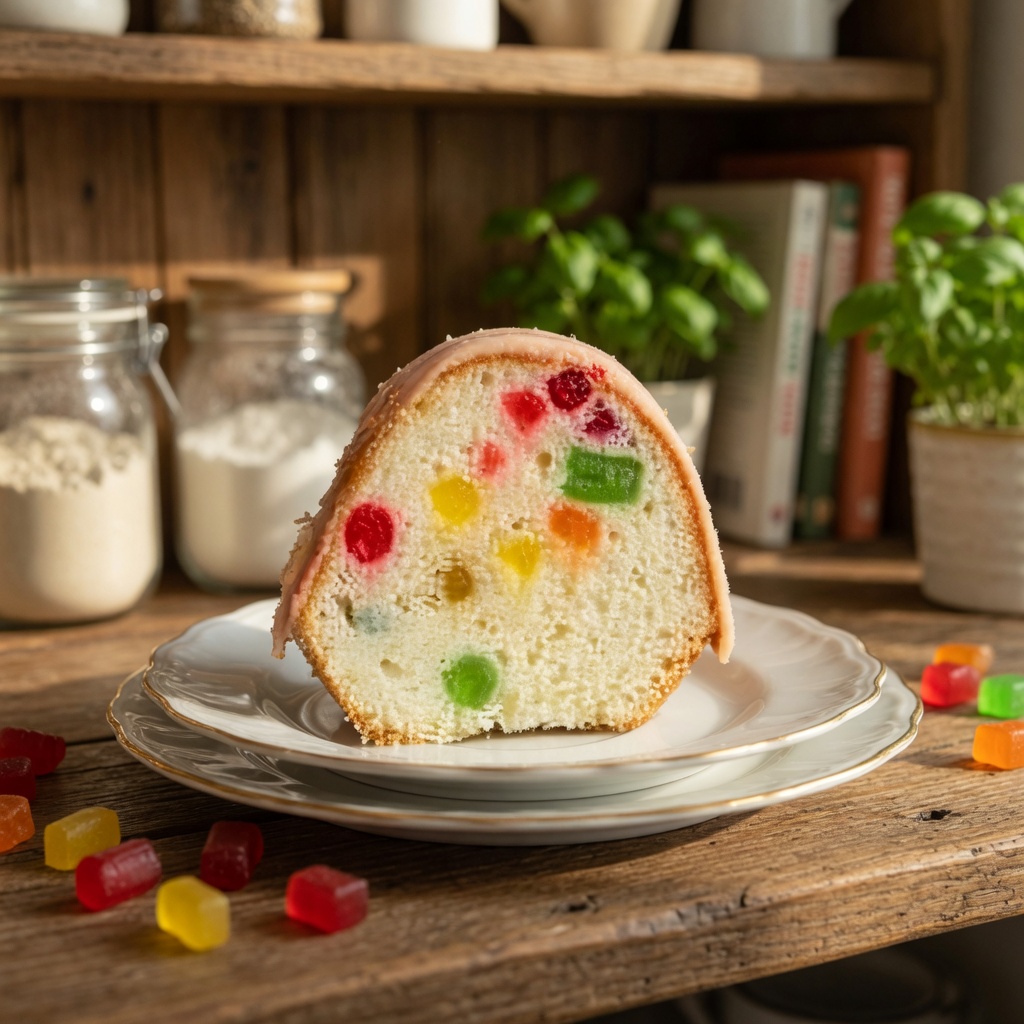
Gumdrop Cake
This moist and flavorful Gumdrop Bundt Cake is packed with chewy candies, making it a hit for kids and adults alike.
4
servings20
minutes1
hour234
kcal1
hour20
minutesIngredients
1 ½ cups salted butter, softened
2 cups white sugar
3 large eggs
2 teaspoons vanilla extract
3 ¼ cups all-purpose flour, divided
1 ½ teaspoons baking powder
¾ cup canned evaporated milk
2 ½ cups gumdrops (preferably baking gumdrops, not jujubes)
1 tablespoon confectioner’s sugar for garnish (optional)
Directions
- Set your oven to 300°F (150°C). Prepare a Bundt pan by greasing it lightly with non-stick cooking spray and dusting it with flour. Set aside.
- In a large mixing bowl, cream the softened butter and sugar with a hand mixer until the mixture is light and fluffy.
- Add the eggs one at a time, mixing thoroughly after each addition. Stir in the vanilla extract.
- Add 1 ½ cups of flour and 1 teaspoon of baking powder to the mixture. Mix well.
- Pour in ½ cup of evaporated milk and combine.
- Add another 1 ½ cups of flour and ½ teaspoon of baking powder. Mix again, followed by the remaining ¼ cup of evaporated milk.
- Toss the gumdrops in the remaining ¼ cup of flour to coat them. This prevents them from sinking to the bottom of the cake. Gently fold the floured gumdrops into the batter using a spatula.
- Pour the batter evenly into the prepared Bundt pan. Bake for 60 minutes. Start checking for doneness at the 50-minute mark by inserting a toothpick into the center of the cake. If it comes out clean, the cake is ready.
- Allow the cake to cool in the pan for 20 minutes. Then, transfer it to a wire rack to cool completely. Dust with confectioner’s sugar if desired, slice, and enjoy!
Nutrition Facts
- Total number of serves: 32
- Calories: 234kcal
- Fat: 9g
- Saturated Fat: 5g
- Cholesterol: 40mg
- Sodium: 89mg
- Potassium: 41mg
- Carbohydrates: 36g
- Sugar: 20g
- Protein: 1g
- Calcium: 16mg