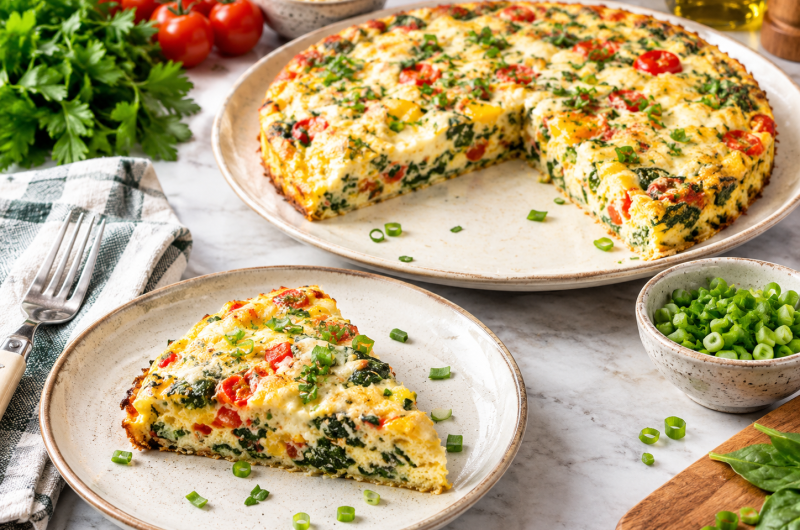
This easy egg white frittata is a simple breakfast made with egg whites, spinach, red bell pepper, green onions, Italian seasoning, and a little cheese. It cooks quickly in one oven-safe skillet and finishes under the broiler. The result is a light, savory frittata with tender vegetables and a soft, flavorful center.
A High Protein Breakfast
Egg white frittata is a useful choice when you want a protein-rich breakfast without making a complicated meal. Egg whites provide most of the protein in this recipe, while spinach and bell pepper add vegetables. A small amount of cheese brings extra flavor and helps create a pleasant finish on top.
Why This Frittata Is Easy
The recipe uses a short list of everyday ingredients and does not require a separate baking dish. The vegetables are cooked first, followed by the egg whites and cheese. Once the edges are set, the skillet goes under the broiler for a few minutes. This makes the recipe suitable for a quick breakfast or lunch.
What Makes It Flavorful
Although egg whites have a mild flavor, the vegetables and seasonings give this frittata plenty of taste. Italian seasoning adds herbs, green onions provide a fresh savory flavor, and cheese creates a richer finish. The optional hot sauce can add heat, while fresh avocado provides a creamy contrast when serving.
Choosing the Skillet
An 8-inch nonstick, oven-safe skillet is essential for this recipe. The nonstick surface allows the egg whites to cook without sticking badly to the pan and makes the finished frittata easier to remove. Make sure the skillet can safely go under a broiler before starting, because the final cooking stage uses high direct heat.
Preparing the Oven
Place the oven rack in the upper third of the oven before cooking. Set the oven to broil and allow it to heat while you prepare the vegetables and eggs. Broiling works quickly, so having the oven ready before the skillet is transferred helps prevent overcooking the frittata while you wait for the broiler to heat.
Preparing the Bell Pepper
Begin by dicing one red bell pepper. The original recipe also allows one cup of chopped vegetables of your choice, but the red bell pepper gives the frittata a sweet vegetable flavor and attractive color. Cook the pepper in the melted butter or coconut oil until it softens, which usually takes about six to eight minutes.
Cooking the Vegetables
Once the bell pepper has softened, add the finely chopped green onions, Italian seasoning, and kosher salt. Stir everything together and allow it to cook for about thirty seconds. This brief step helps the seasonings spread through the vegetables before the spinach and egg whites are added to the skillet.
Adding Fresh Spinach
Fresh spinach should be added gradually because a large amount of raw spinach can fill the skillet at first. Add it in small portions and stir as each portion wilts. Within one to two minutes, the spinach should become soft and considerably smaller in volume, leaving room for the egg whites.
Preparing the Egg Whites
While the vegetables cook, place the egg whites in a bowl and whisk them until lightly frothy. The goal is not to create stiff peaks or a large amount of foam. A brief whisking helps distribute the whites evenly and can contribute to a lighter texture when they cook in the skillet.
Adding the Egg Whites
Slowly pour the whisked egg whites over the cooked vegetables. Let them cook without stirring for a short time. As the heat reaches the eggs, the edges will begin to set and turn a more solid white. Keeping the pan undisturbed at this stage helps the frittata develop a cohesive shape.
Cooking the Center
Once the edges start to firm up, use a rubber spatula to gently lift them. Tilt the skillet slightly so the uncooked egg whites can flow underneath the cooked portion and reach the hot surface of the pan. Work around the edges carefully, lifting and tilting until most of the loose egg has had contact with the skillet.
Finishing the Stovetop Cooking
After moving the uncooked egg whites underneath the set portions, let the mixture cook for another minute. The eggs should look mostly set around the edges while the top may still appear slightly soft. Do not wait for the entire surface to become completely firm because the broiler will finish cooking the center.
Choosing the Cheese
The recipe uses two tablespoons of shredded cheddar, feta, or Parmesan cheese. Each option gives the frittata a slightly different taste. Cheddar creates a familiar creamy flavor, feta adds a salty tang, and Parmesan gives a stronger savory finish. Use the listed amount without changing the base ingredients.
Broiling the Frittata
Sprinkle the cheese evenly over the top before transferring the skillet to the oven. Broil for two to three minutes while watching closely. The direct heat can cook the egg whites quickly, so do not walk away during this stage. The frittata is ready when it has puffed slightly and the egg whites are cooked through.
Why Broiling Works
Broiling gives the frittata its final set while quickly melting and lightly browning the cheese. Because the heat comes from above, the top cooks faster than it would in a conventional oven. This is why the eggs should already be mostly cooked on the stovetop before the skillet reaches the broiler.
Serving the Frittata
Once the egg whites are completely cooked, carefully remove the skillet from the oven. Slide the frittata onto a plate or cutting board and cut it into wedges. Serve it hot with hot sauce or sliced fresh avocado if desired. The creamy avocado and spicy sauce are optional additions rather than required ingredients.
A Light Breakfast
This egg white frittata can fit well into a lighter breakfast because it combines vegetables with egg whites and a controlled amount of cheese. The original nutrition information lists 176 calories per serving. Actual values can vary depending on the specific cheese, butter, coconut oil, and vegetables used.
Protein in the Recipe
Each serving contains approximately 17 grams of protein according to the provided nutritional information. The egg whites are the primary source of protein, while cheese contributes a smaller amount. This makes the frittata a practical option for people looking for a breakfast with a substantial protein contribution.
Vegetables for Flavor
Red bell pepper and spinach provide most of the vegetables in this frittata. The pepper becomes tender and slightly sweet as it cooks, while spinach softens quickly and blends into the egg whites. Green onions add another layer of flavor without requiring a long cooking time.
Using Other Vegetables
The original recipe allows the red bell pepper to be replaced with one cup of chopped vegetables of choice. This provides some flexibility while keeping the recipe structure intact. Vegetables should be cut into small pieces so they cook properly before the egg whites are added. Avoid adding large amounts of watery vegetables that could affect the texture.
Butter or Coconut Oil
The recipe calls for one tablespoon of unsalted butter or coconut oil. Butter gives the vegetables a familiar savory richness, while coconut oil provides a different flavor and cooking option. Either listed ingredient can be used. Melt the chosen fat in the nonstick skillet before adding the diced red bell pepper.
Keeping Egg Whites Tender
Egg whites can become rubbery if they are cooked too aggressively for too long. This recipe avoids that by cooking the vegetables first, allowing the egg whites to set gradually, and using the broiler only briefly. Watch the final two to three minutes closely so the frittata remains tender rather than dry.
Avoiding Sticking
A good nonstick skillet is important because egg whites can cling to the pan as they cook. Make sure the skillet is properly coated with the butter or coconut oil before adding the pepper. Using an oven-safe nonstick pan also makes it easier to slide the completed frittata onto a plate.
Handling the Broiler Safely
The broiler produces very intense heat, so the skillet needs to remain in your view during the final cooking stage. The original directions specifically advise not walking away while the frittata broils. Two to three minutes can be enough to finish the eggs, so check the surface frequently and remove the skillet once the eggs are puffed and cooked.
Meal Preparation
The frittata can be prepared ahead of time and stored for later meals. Once cooled, place it in an airtight storage container and refrigerate it for up to three days. This makes it useful for preparing breakfast in advance. Store it properly and reheat only the portion you plan to eat.
Reheating Leftovers
For reheating, the original recipe recommends using a baking dish in a 350-degree Fahrenheit oven or gently reheating the frittata in a microwave. Gentle reheating helps prevent the egg whites from becoming excessively firm. If using a microwave, heat gradually and check the portion between intervals.
Freezing the Frittata
The cooked frittata can also be frozen in an airtight freezer-safe storage container for up to three months. When you are ready to eat it, allow the frozen frittata to thaw overnight in the refrigerator. Reheat it after thawing rather than leaving it at room temperature for an extended period.
Making Individual Portions
The recipe makes two servings, so the finished frittata can be cut into two wedges. This makes portioning simple for breakfast or lunch. If serving two people, divide the frittata evenly after it has been removed from the skillet. The listed nutrition information is based on one of the two servings.
Frittata for Breakfast
Egg white frittata works especially well for breakfast because it cooks quickly and can be served hot. Pairing it with the optional avocado can add creaminess, while hot sauce provides extra flavor. Because the recipe already contains vegetables, you can serve it on its own without needing a complicated side dish.
Frittata for Lunch
This recipe can also work as a light lunch. The combination of egg whites, vegetables, and cheese creates a savory meal that can be prepared without lengthy cooking. If you have leftovers from breakfast, they can be refrigerated and reheated later according to the storage and reheating instructions.
Understanding the Texture
A properly cooked egg white frittata should be firm enough to cut into wedges while remaining tender inside. The vegetables should be soft, the spinach wilted, and the cheese melted over the top. The final broiling stage should puff the egg whites slightly without leaving wet egg in the center.
Keeping the Recipe Simple
There is no need for complicated preparation or special cooking techniques. The main points are using an oven-safe nonstick skillet, softening the vegetables, whisking the egg whites, allowing the edges to set, and finishing the dish under the broiler. Following those steps gives you a reliable frittata with minimal cleanup.
Italian Seasoning
Italian seasoning is the main dried herb mixture used in this recipe. Only half a teaspoon is needed, so it adds flavor without overwhelming the vegetables or eggs. Add it with the green onions and salt after the bell pepper has softened. Stir briefly so the seasoning is distributed before adding the spinach.
Kosher Salt
The recipe uses one-quarter teaspoon of kosher salt. Because cheese can also contain salt, the listed quantity keeps the seasoning controlled. Feta and Parmesan may taste saltier than some cheddar varieties, so using the specified amount of kosher salt helps maintain the intended balance.
Hot Sauce Serving Idea
Hot sauce is optional and is added after cooking rather than mixed into the egg whites. This allows each person to control the amount of heat. A few drops can add brightness and spice to the finished frittata. If you prefer a mild breakfast, simply leave the hot sauce off.
Fresh Avocado Serving Idea
Sliced fresh avocado is another optional serving addition. Its creamy texture pairs well with the tender egg whites and cooked vegetables. Add the avocado after the frittata has been cut into wedges. Since it is optional, it is not included among the core cooking ingredients or the base preparation.
Frequently Asked Questions
One common question is whether whole eggs can replace the egg whites. The original recipe specifically calls for one cup of egg whites or the whites of eight large eggs, so those are the quantities used here. Changing the egg mixture would change the nutritional values and the overall character of the recipe.
Can Frozen Spinach Be Used?
The provided recipe specifically calls for roughly chopped or torn fresh spinach. Fresh spinach wilts quickly and releases less preparation time than many frozen options. To keep the recipe consistent, use the listed fresh spinach. If you change the ingredient, the moisture level and final texture may also change.
Can the Cheese Be Omitted?
The recipe lists two tablespoons of shredded cheddar, feta, or Parmesan cheese, so the cheese is part of the original ingredient list. It adds flavor to the top of the frittata as it broils. If you alter or remove it, the finished flavor and nutritional information will no longer match the provided recipe.
Can You Use a Larger Pan?
The recipe specifically calls for a small 8-inch nonstick oven-safe skillet. A larger pan would spread the egg mixture more thinly and could change the cooking time and final thickness. For the closest result to the original preparation, use the specified skillet size.
How Do You Know It Is Done?
The frittata is ready when the egg whites have cooked through and the top has puffed slightly under the broiler. There should not be visibly runny egg in the center. Because broilers vary in strength, the two-to-three-minute cooking period should be treated as a guide while watching the frittata closely.
Storage Instructions
After cooking, allow the frittata to cool enough for safe storage, then place it in an airtight container. Refrigerated leftovers can be kept for up to three days. For longer storage, use an airtight freezer-safe container and freeze for up to three months. Thaw frozen portions overnight in the refrigerator before reheating.
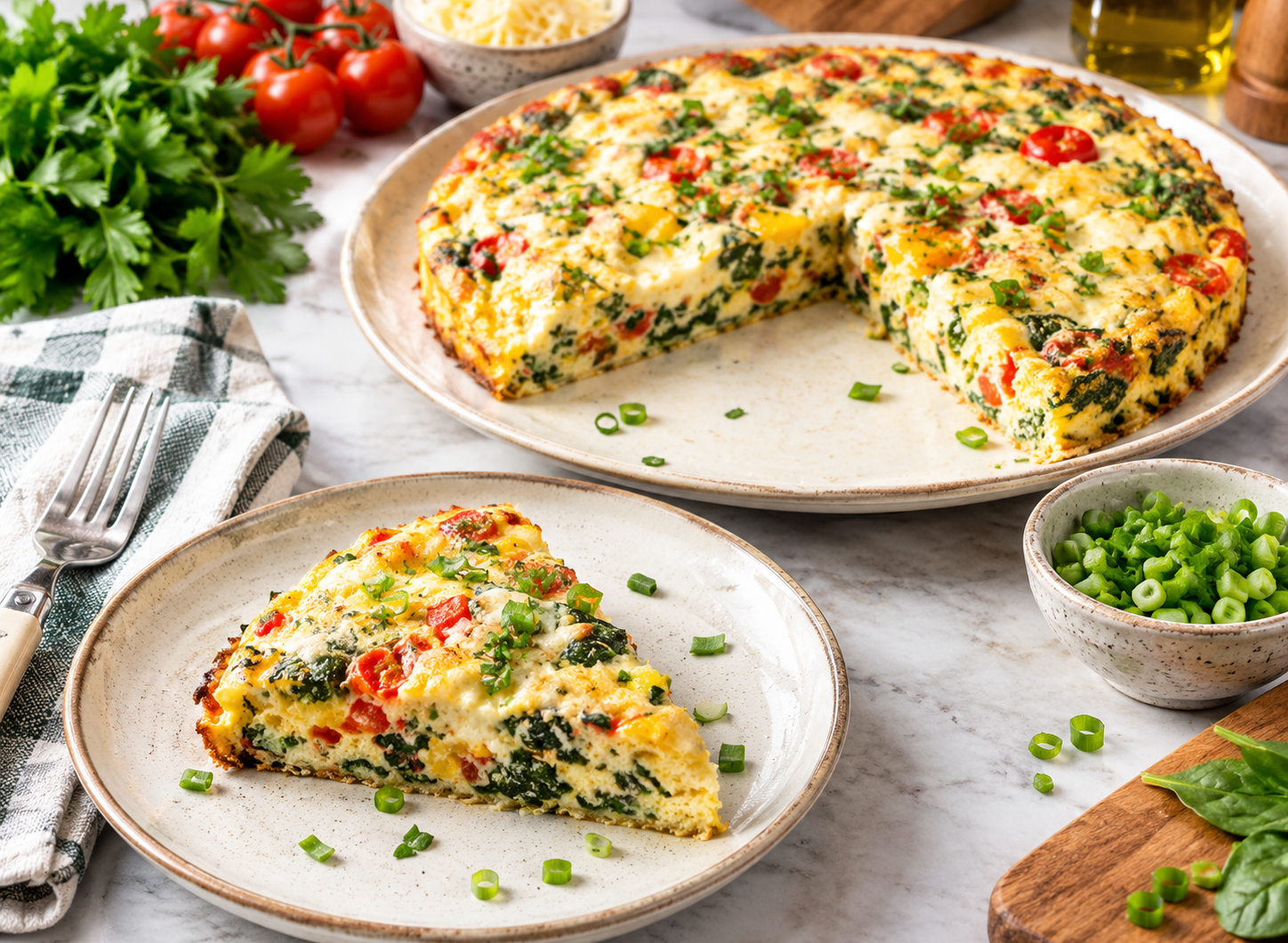
Healthy Egg White Frittata
This easy egg white frittata combines fluffy egg whites with red bell pepper, spinach, green onions, Italian seasoning, and cheese. It is cooked in one oven-safe skillet and finished under the broiler for a tender center and lightly melted cheese. Serve it hot with optional hot sauce and avocado.
10
minutes15
minutes176
kcal25
minutesIngredients
1 tablespoon unsalted butter or coconut oil
1 red bell pepper, diced, or 1 cup chopped vegetables of choice
1 cup (about 8 large egg whites) egg whites
2 green onions, finely chopped
½ teaspoon Italian seasoning
¼ teaspoon kosher salt
1½ cups roughly chopped or torn fresh spinach
2 tablespoons shredded cheddar, feta, or Parmesan cheese
Hot sauce, optional, for serving
Sliced fresh avocado, optional, for serving
Directions
- Position a rack in the upper third of the oven and preheat the broiler. Heat an 8-inch nonstick, oven-safe skillet over medium heat, then melt the butter or coconut oil. Add the diced red bell pepper and sauté until softened, about 6 to 8 minutes.
- While the pepper cooks, whisk the egg whites in a bowl until lightly frothy. Add the green onions, Italian seasoning, and kosher salt to the skillet with the softened pepper. Stir and cook for about 30 seconds.v
- Add the fresh spinach gradually, stirring as it wilts. Continue cooking for 1 to 2 minutes until the spinach has softened and reduced in volume. Slowly pour the whisked egg whites into the skillet.
- Let the egg whites cook undisturbed until the edges begin to set. Use a rubber spatula to gently lift the edges while tilting the skillet so uncooked egg flows underneath the cooked portions. Continue around the skillet, then cook for another minute.
- Sprinkle the cheese evenly over the top. Carefully transfer the skillet to the oven and broil for 2 to 3 minutes, watching closely, until the egg whites are puffed and completely cooked.
- Remove the skillet carefully, slide the frittata onto a plate or cutting board, cut it into wedges, and serve hot with optional hot sauce and sliced avocado.
Nutrition Facts
- Total number of serves: 1
- Calories: 176kcal
- Fat: 9g
- Saturated Fat: 5g
- Cholesterol: 24mg
- Potassium: 482mg
- Carbohydrates: 7g
- Fiber: 2g
- Sugar: 4g
- Protein: 17g
- Calcium: 109mg
- Iron: 1mg