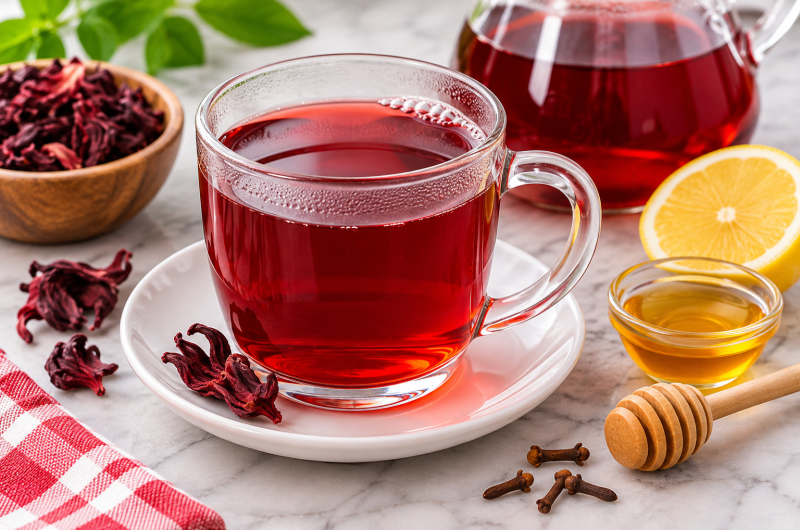
This homemade hibiscus and clove drink is a colorful, aromatic herbal beverage made with a few simple ingredients. Dried hibiscus petals give the drink its beautiful ruby-red color and naturally tart flavor, while whole cloves add a warm, slightly sweet, spicy aroma. The combination creates a refreshing infusion that can be enjoyed hot during cooler weather or served chilled on warm days. Unlike traditional black tea or coffee, this hibiscus herbal tea is naturally caffeine-free, making it a convenient choice for people who prefer drinks without caffeine. The recipe requires only dried hibiscus petals, whole cloves, and water, with optional honey and fresh lemon juice for additional sweetness and brightness. Preparation takes approximately twenty minutes, including simmering and steeping. Whether you are searching for an easy hibiscus tea recipe, a homemade clove tea, or a refreshing herbal drink without added sugar, this simple infusion offers a flavorful alternative to many packaged beverages.
What Makes Hibiscus and Clove Tea a Popular Homemade Beverage?
Hibiscus and clove tea combines two ingredients with distinctive flavors that complement one another. Hibiscus petals produce a bright, tangy infusion that can taste similar to tart berries, while cloves contribute a warm fragrance commonly associated with spiced teas and traditional herbal preparations. Together, they create a beverage that is flavorful without requiring a long list of ingredients. Another appealing feature is its versatility. The same recipe can be served as a soothing warm herbal drink or transformed into a refreshing iced hibiscus tea after cooling. Because the infusion is prepared at home, it is easy to control the sweetness and decide whether to include the optional honey or lemon juice. The natural red color also makes the drink attractive when served in clear glasses or cups. Although hibiscus beverages are sometimes promoted online as cleansing or detox drinks, this recipe is best appreciated as a pleasant herbal infusion rather than a medical treatment. Its main advantages are simple preparation, an appealing flavor, and flexibility.
Understanding the Flavor of Dried Hibiscus Petals
Dried hibiscus petals are the main ingredient responsible for the color and refreshing taste of this herbal beverage. When added to hot water, food-grade hibiscus releases natural pigments that turn the liquid a deep red or reddish-purple shade. Its flavor is noticeably tart, which is why hibiscus tea is sometimes compared with cranberry juice or other tangy fruit drinks. The strength of the flavor depends on the quantity of petals, the amount of water, and how long the mixture is heated and steeped. In this recipe, two tablespoons of dried hibiscus petals are combined with three cups of water, creating a balanced infusion that is flavorful without being unnecessarily concentrated. Hibiscus also contains naturally occurring plant compounds, including anthocyanins, which contribute to its characteristic color. However, the amount of these compounds in a finished drink varies according to the ingredients and preparation method. For the best flavor, choose dried hibiscus intended for food or beverage use rather than decorative flowers or products not labeled for consumption.
Why Whole Cloves Pair So Well with Hibiscus
Whole cloves bring a distinctive warmth to this homemade hibiscus tea recipe. Their aroma is strong, slightly sweet, and pleasantly spicy, which creates an interesting contrast with the tartness of the hibiscus petals. Cloves contain naturally occurring aromatic compounds, including eugenol, that contribute to their recognizable fragrance. Because their flavor is concentrated, only four to five whole cloves are needed for three cups of water. This small quantity allows the clove flavor to remain noticeable without dominating the drink. Whole cloves are especially useful in herbal infusions because they can be removed easily after simmering and steeping. Ground cloves are not part of the original recipe and would produce a different texture, potentially leaving fine particles in the finished beverage. Using the specified whole cloves helps keep the tea clear and smooth after straining. The combination of tangy hibiscus and warm clove creates a drink that feels refreshing and comforting at the same time, making it suitable for different seasons.
The Benefits of Making Herbal Tea at Home
Preparing hibiscus and clove tea at home gives you control over the ingredients, sweetness, and serving temperature. Many ready-to-drink beverages contain added sugar, flavorings, or other ingredients that may not be necessary for a simple herbal infusion. This recipe begins with water, dried hibiscus petals, and whole cloves, allowing their natural flavors to develop through gentle heating. Honey is optional, so the beverage can be prepared without added sweetener. Fresh lemon juice is also optional and can be used when a brighter citrus flavor is desired. Another advantage is that the recipe does not require special kitchen equipment. A saucepan, measuring spoons, and a fine-mesh strainer are enough to prepare the drink. The process is easy to repeat, making it suitable for occasional home preparation. Although homemade herbal drinks can be part of a varied diet, they should not be viewed as replacements for balanced meals, sufficient hydration, or appropriate medical care. Their value lies in offering an enjoyable beverage made from recognizable ingredients.
Choosing High-Quality Hibiscus for the Best Tea
The quality of dried hibiscus can affect both the flavor and appearance of the finished drink. Look for food-grade hibiscus petals or calyces that are specifically sold for tea or culinary use. The dried pieces should have a deep red color and a recognizable tart, floral aroma. Products that smell musty, show signs of moisture damage, or contain visible mold should not be used. Hibiscus is commonly available in loose herbal tea form, which makes it convenient to measure the two tablespoons required for this recipe. Store unused dried hibiscus in a clean, airtight container away from direct sunlight, heat, and moisture. Proper storage helps preserve its aroma and color between uses. If purchasing loose hibiscus from a market, choose a supplier that handles dried herbs hygienically and provides clear information about food suitability. Avoid using flowers from ornamental arrangements, gardens treated with pesticides, or unidentified plants. Selecting the correct ingredient is important because the recipe depends on edible hibiscus rather than simply any flower sold under a similar name.
Selecting Whole Cloves for a Balanced Herbal Infusion
Whole cloves are a small but important ingredient in this hibiscus and clove drink. For the most pleasant flavor, choose cloves that have a noticeable warm aroma and appear dry and intact. Freshly purchased whole cloves generally provide a stronger fragrance than spices that have been stored for a long time in an open container. However, stronger is not always better when preparing herbal tea. The recipe uses four to five whole cloves, which is enough to introduce a gentle spicy note without overwhelming the hibiscus. Adding excessive cloves may make the drink taste harsh or overly medicinal. Whole cloves should be stored in a sealed spice container away from heat and moisture to maintain their quality. Before using them, check that they are clean and free from signs of spoilage. Because the cloves will be strained out after brewing, they do not need to be crushed or ground. Keeping them whole also makes it easier to control the strength of the infusion and remove them completely before serving.
Why Water Quality Matters When Brewing Hibiscus Tea
Water makes up most of this herbal beverage, so its quality can influence the final taste. The recipe requires three cups of clean water, which is heated before the hibiscus petals and cloves are added. If your tap water has a strong chlorine taste or noticeable mineral flavor, using filtered drinking water may produce a cleaner-tasting infusion. There is no need for expensive bottled water or specialized brewing equipment. The important point is to begin with water that is safe to drink. Heating the water to a boil helps start the extraction process, allowing the dried hibiscus and whole cloves to release their flavors. After the ingredients are added, the heat is reduced to maintain a gentle simmer rather than vigorous boiling. This provides a more controlled preparation method and helps prevent unnecessary evaporation. Measuring the water before heating is also useful because it keeps the ingredient proportions consistent. The three-cup quantity is designed to produce approximately three cups of prepared tea, although some liquid will be lost during simmering and straining.
How to Prepare the Ingredients Before Brewing
Preparing the ingredients in advance makes this easy hibiscus tea recipe even more convenient. Measure two tablespoons of dried hibiscus petals and place them in a small bowl. Count four to five whole cloves and set them nearby. Measure three cups of clean water into a saucepan that is large enough to allow the liquid to simmer without spilling. If you plan to use the optional honey, measure one teaspoon so it can be added after the tea has been strained. Fresh lemon juice can also be prepared ahead of time, although the recipe does not specify an exact amount because it is intended to be added according to taste. A fine-mesh strainer and heat-resistant jug should be ready before the simmering stage finishes. This simple preparation prevents the infusion from steeping longer than intended while you search for equipment. The entire recipe requires only a few minutes of hands-on work, making it suitable for busy mornings, afternoon refreshments, or preparing a chilled beverage in advance.
Bringing the Water to the Correct Temperature
The first cooking step is to bring the measured water to a full boil. Pour three cups of clean water into a medium saucepan and place it over medium heat. Allow the water to heat until steady bubbles rise through the liquid. Once boiling, add the dried hibiscus petals and whole cloves. The water will begin changing color as the hibiscus releases its natural pigments. At this stage, reduce the heat so the mixture simmers gently. A controlled simmer is preferable to aggressive boiling because it allows the flavors to develop without causing excessive evaporation or splashing. The original recipe specifies ten minutes of simmering, followed by an additional five minutes of steeping after the heat is turned off. Following these times helps produce a consistent flavor each time the drink is prepared. There is no need to mash the petals or crush the cloves. Simply stir gently after adding them, then allow the warm water to extract their color and aroma naturally.
Why Simmering Hibiscus and Cloves for Ten Minutes Works
The ten-minute simmering period gives the hibiscus petals and whole cloves enough time to release their characteristic flavors into the water. Hibiscus begins coloring the water relatively quickly, but allowing the mixture to simmer helps develop a fuller tart flavor. Whole cloves also need time in hot water to release their warm, spicy aroma. During simmering, the liquid becomes progressively darker and more fragrant. The finished strength can vary depending on the size and quality of the hibiscus pieces, but the original measurements provide a useful starting point. Keep the heat low enough to maintain gentle bubbling rather than a rolling boil. Excessive boiling can reduce the liquid volume and make the infusion stronger than intended. Stirring occasionally is sufficient; constant stirring is not necessary. After ten minutes, turn off the heat rather than continuing to cook. This keeps the preparation method simple and allows the final five-minute steeping period to complete the extraction without prolonged heating.
The Importance of the Five-Minute Steeping Period
Steeping is the final flavor-development stage before straining the herbal drink. Once the hibiscus and cloves have simmered for ten minutes, remove the saucepan from the heat and allow the mixture to stand for another five minutes. During this period, the hot water continues extracting flavor from the ingredients, even though the mixture is no longer actively cooking. The result is a deeper red infusion with a more developed balance of tartness and spice. This short resting period also allows the strong clove aroma to blend more evenly with the hibiscus. There is no need to extend the steeping time substantially, especially if you prefer a refreshing drink rather than a very concentrated herbal tea. Following the original five-minute period provides a consistent result. After steeping, the petals and cloves should be removed promptly. Leaving them in the liquid for a long time can make the flavor stronger and potentially less balanced. A simple kitchen timer can help ensure that the drink is prepared according to the intended schedule.
Straining the Herbal Drink for a Smooth Finish
After simmering and steeping, the hibiscus petals and cloves should be removed before the beverage is served. Place a fine-mesh strainer over a heat-resistant jug, bowl, or container. Carefully pour the hot infusion through the strainer, allowing the liquid to pass through while the dried plant material remains behind. A fine strainer is useful because some hibiscus pieces can break into smaller fragments during cooking. Removing these pieces produces a smoother drink that is more pleasant to sip. Be careful when handling the saucepan because the liquid will still be very hot. Avoid pressing the plant material excessively, as this may release stronger flavors that are not necessary for the finished tea. Once strained, the beverage should have a clear, deep-red appearance, although slight natural cloudiness is possible. The strained tea is now ready for optional sweetening and lemon juice. If you plan to serve it chilled, transfer it to a suitable container and allow it to cool safely before refrigeration.
How Optional Honey Changes the Flavor
Honey is included as an optional sweetener in this hibiscus and clove drink recipe. The original quantity is one teaspoon, which provides a small amount of sweetness without completely covering the natural tartness of the hibiscus. Some people enjoy hibiscus tea without any sweetener, while others prefer a gentler flavor. Adding honey allows you to adjust the taste without changing the basic preparation method. For easier mixing, stir the honey into the tea while it is still warm, after the hibiscus petals and cloves have been removed. Warm liquid helps the honey dissolve more evenly. If you prefer the drink unsweetened, simply omit this optional ingredient. The resulting beverage will have a sharper, more noticeable hibiscus flavor. Honey does contribute sugar and calories, so it should be included when calculating nutritional values. It is also important to remember that honey should not be given to children younger than twelve months. For adults and older children, the optional teaspoon can provide a pleasant contrast to the herbal ingredients.
Adding Fresh Lemon Juice for Extra Brightness
Fresh lemon juice is another optional ingredient that can enhance the flavor of homemade hibiscus and clove tea. Hibiscus is naturally tart, so lemon is not necessary to make the drink refreshing. However, a small amount can add a brighter citrus aroma and create a more pronounced tangy finish. The original recipe does not specify a fixed quantity of lemon juice, allowing it to be added according to personal preference. Begin with a small squeeze, stir, and taste before deciding whether more is needed. Adding too much lemon may make the drink excessively sour, particularly if the hibiscus petals already have a strong flavor. Lemon juice is best added after straining so its fresh aroma remains noticeable. It can be used in both warm and chilled versions of the beverage. If the drink will be served over ice, a little lemon can help maintain a refreshing flavor as the ice gradually melts. The optional citrus addition is simple but effective.
How to Serve Hibiscus and Clove Tea Warm
Warm hibiscus and clove tea is an appealing option when you want a flavorful beverage without caffeine. After the infusion has been simmered, steeped, and strained, pour it into heat-resistant cups or mugs. Add the optional honey while the tea is warm, then stir in fresh lemon juice if desired. The finished beverage has a fragrant aroma from the cloves and a pleasant tartness from the hibiscus. Because its flavor is naturally strong, it can be enjoyed slowly in the same way as other herbal teas. It pairs well with a light breakfast or an afternoon snack, but it does not need to be served with food. If the tea is too hot to drink comfortably, allow it to cool for a few minutes before serving. Avoid using fragile glassware that is not designed for hot liquids. This warm version is especially convenient because it can be served immediately after preparation, without requiring additional chilling time or special presentation.
Making Refreshing Iced Hibiscus and Clove Tea
The same infusion can be served cold for a refreshing homemade herbal drink. After the hibiscus and cloves have finished simmering and steeping, strain the tea into a clean, heat-resistant container. Allow it to cool briefly, then refrigerate it promptly in a suitable covered container. Once chilled, pour the tea into serving glasses and enjoy its naturally tangy flavor. If desired, the optional honey can be stirred into the warm infusion before chilling because it is more difficult to dissolve in cold liquid. Fresh lemon juice can be added before refrigeration or just before serving. Ice is not included in the original ingredient list, so it is not necessary for the basic recipe, although chilled tea can be served over ice as a presentation choice. The deep-red color makes this drink particularly attractive in clear glasses. Unlike sugary bottled fruit drinks, the unsweetened version contains little energy, making it a useful option for people seeking flavorful alternatives to sweetened beverages.
Hibiscus Tea and Naturally Occurring Antioxidants
Hibiscus is known for containing naturally occurring plant compounds, including anthocyanins and other polyphenols. These compounds contribute to the red color of the infusion and have attracted scientific interest because of their antioxidant properties. Antioxidants are substances that can help limit certain forms of oxidative damage in laboratory conditions, although the effects of drinking hibiscus tea depend on many factors. The concentration of plant compounds in a cup of tea varies with the type of hibiscus, the amount used, and the brewing method. This recipe uses two tablespoons of dried petals in three cups of water, but it is not possible to determine the exact antioxidant content without laboratory testing. Hibiscus tea can be enjoyed as part of a balanced eating pattern that includes fruits, vegetables, whole grains, and other varied foods. It should not be described as a guaranteed way to prevent disease or remove toxins. Its established appeal is its distinctive taste, attractive color, and naturally caffeine-free character.
Understanding the Role of Cloves in Herbal Beverages
Cloves have been used in cooking and traditional beverages for generations because of their intense fragrance and warm flavor. They contain aromatic compounds such as eugenol, which contribute to the familiar clove scent. In this hibiscus and clove tea, their main purpose is to provide a gentle spicy contrast to the sourness of the hibiscus petals. Although cloves are sometimes associated with traditional wellness practices, a culinary infusion should not be treated as a concentrated medicinal preparation. The original recipe uses only four to five whole cloves, and this amount is intended for flavoring three cups of water. There is no need to increase the quantity to make the drink more effective or nutritious. Excessively concentrated clove preparations, particularly clove essential oil, are different from ordinary food use and may carry health risks. Keeping the recipe within its original measurements creates a balanced beverage and avoids unnecessary strength. The finished tea should taste pleasantly aromatic rather than harsh, bitter, or overpoweringly spicy.
Is Hibiscus and Clove Tea Naturally Caffeine-Free?
This hibiscus and clove drink is naturally caffeine-free because its main ingredients are dried hibiscus petals, whole cloves, and water. Neither hibiscus nor cloves are the leaves of the traditional tea plant, which is used to produce black, green, white, and oolong teas. As a result, the beverage does not contain caffeine unless another caffeinated ingredient is added, which is not part of this recipe. This makes it an option for people who prefer to limit caffeine intake, particularly later in the day. However, being caffeine-free does not automatically mean that a beverage is appropriate for everyone. Hibiscus may affect blood pressure, and herbal ingredients can interact with certain medications or health conditions. People who are pregnant, breastfeeding, managing low blood pressure, or taking prescription medications should seek individualized medical guidance before consuming hibiscus regularly. For most people who can safely enjoy the ingredients, the beverage offers a pleasant way to add variety to their usual drink choices without relying on coffee or caffeinated tea.
Can Hibiscus and Clove Tea Support Everyday Hydration?
Hibiscus and clove tea is primarily made from water, so it can contribute to daily fluid intake. Its tart, aromatic flavor may appeal to people who find plain water repetitive and want a homemade beverage with more character. The unsweetened version contains very little energy, making it a possible alternative to sugary drinks. However, it is important not to confuse hydration with detoxification. The human body already has systems, including the kidneys and liver, that help regulate fluids and process waste products. Drinking hibiscus tea does not replace those functions or provide a guaranteed cleansing effect. The beverage should also not be used as a substitute for drinking adequate plain water, particularly when a person has specific fluid requirements. If you enjoy the flavor, it can be included as one part of a varied beverage routine. The original recipe makes approximately three cups, which can be divided into three servings. Individual fluid needs vary according to health, activity, climate, and other personal factors.
The Best Time to Enjoy Hibiscus and Clove Tea
There is no single time of day when hibiscus and clove tea must be consumed. Because the recipe is naturally caffeine-free, it can be served in the morning, afternoon, or evening according to personal preference. Some people enjoy a warm cup with breakfast, while others prefer a chilled glass during the afternoon. The drink can also be prepared ahead of time for gatherings, provided it is stored safely in the refrigerator. If you find that tart beverages cause stomach discomfort, serving the tea with food rather than on an empty stomach may be more comfortable. People who are sensitive to acidic drinks should also consider the optional lemon juice carefully, since it increases the tartness. There is no evidence-based need to drink this beverage at a particular hour to obtain special cleansing or weight-loss effects. The most practical approach is to enjoy it when it fits your routine and when the ingredients are appropriate for your individual health needs.
Easy Flavor Ideas Without Changing the Original Recipe
The basic hibiscus and clove drink requires only the ingredients listed in the recipe card, but its flavor can inspire other herbal beverage combinations. The original notes mention ginger, cinnamon, mint, and orange juice as possible additions. These are separate ideas rather than required ingredients, so the main recipe remains unchanged. Fresh ginger can introduce a sharper spicy note, while cinnamon provides a softer warmth that complements cloves. Mint creates a cooling aroma that can work particularly well in a chilled version. Orange juice offers a sweeter citrus character than lemon and may soften the tartness of the hibiscus. When experimenting, it is best to prepare the original version first so you understand its natural flavor. Additional ingredients should be introduced in small amounts because hibiscus and cloves already have strong characteristics. The optional honey and lemon juice included in the original formula are sufficient for most adjustments. Keeping the main ingredient quantities consistent makes it easier to reproduce the same refreshing taste every time.
How to Store Homemade Hibiscus and Clove Tea Safely
Freshly prepared hibiscus and clove tea is best enjoyed soon after brewing, when its aroma and flavor are most noticeable. If you have leftovers, strain the beverage thoroughly and transfer it to a clean, airtight container. Refrigerate it promptly rather than leaving it at room temperature for an extended period. The original recipe recommends using refrigerated leftovers within two days. This is a practical guideline for maintaining freshness and reducing the risk of spoilage. Natural separation or a slight change in appearance may occur during storage, so the drink can be stirred before serving. If honey or lemon juice has been added, keep the beverage refrigerated in the same way. Avoid repeatedly warming and cooling the entire batch, as this can affect both quality and safe handling. Instead, pour out only the portion you intend to drink. If the tea develops an unusual odor, visible mold, or other signs of spoilage, discard it. Clean containers and proper refrigeration help preserve the finished drink.
Notes on Avoiding an Overly Strong or Bitter Flavor
A balanced hibiscus and clove drink should taste pleasantly tart with a gentle warm spice aroma. If the beverage becomes too intense, the most common reasons are using too many cloves, allowing the mixture to boil too vigorously, or leaving the ingredients in the liquid for longer than intended. The original recipe uses two tablespoons of dried hibiscus petals and four to five whole cloves for three cups of water. Following these measurements is the easiest way to maintain consistency. Simmer the mixture gently for ten minutes, then allow it to steep for five minutes before straining. Do not leave the cloves in the finished drink during storage, as their flavor may continue becoming stronger. If the hibiscus tastes particularly tart, the optional teaspoon of honey can provide a mild sweetness. Fresh lemon juice should be added cautiously because it increases acidity rather than reducing it. These small considerations help create a refreshing beverage with a clean flavor and an enjoyable balance of ingredients.
Notes on Nutrition and Optional Sweeteners
The unsweetened hibiscus and clove infusion contains very few calories because it is prepared mainly from water and small amounts of dried plant ingredients that are strained out before serving. The original nutritional estimate provides approximately zero to five calories per serving when the recipe is divided into three equal portions and prepared without optional honey or lemon juice. Carbohydrates and sugars are also estimated to be below one gram per serving, although exact amounts depend on how much material is extracted during brewing. Adding the optional teaspoon of honey increases the total sugar and calorie content of the recipe. Because that teaspoon is divided across approximately three servings, the increase per cup is relatively small, but it should still be included in nutritional calculations. Fresh lemon juice may contribute a small amount of additional nutrients and energy, depending on the quantity used. These values should be understood as estimates rather than laboratory-tested results. Ingredient quality, brewing time, and serving size can all influence the finished beverage.
Important Safety Notes for Regular Hibiscus Consumption
Although hibiscus and clove tea is made from familiar culinary ingredients, regular consumption may not be suitable for everyone. Some research suggests that hibiscus preparations can influence blood pressure, which is especially relevant for people who already have low blood pressure or take medications to manage it. Herbal ingredients may also interact with certain medicines, and information about their safety during pregnancy and breastfeeding is limited. For these reasons, pregnant or breastfeeding individuals, people taking prescription medications, and anyone managing a significant medical condition should consult a qualified healthcare professional before drinking hibiscus regularly. The recipe is intended as an ordinary beverage rather than a concentrated supplement or treatment. It should not replace prescribed medications, professional medical advice, or a balanced diet. Using the specified culinary quantities is preferable to preparing unusually strong infusions. It is also important to purchase food-grade hibiscus from a reliable source and avoid using concentrated clove oil in place of the whole cloves listed in the recipe.
Why This Easy Herbal Drink Deserves a Place in Your Recipe Collection
Homemade hibiscus and clove tea is a practical recipe for anyone who enjoys simple drinks with distinctive flavors. It requires only three main ingredients, uses ordinary kitchen equipment, and takes approximately twenty minutes to prepare. The hibiscus petals create a vibrant red color and refreshing tartness, while whole cloves contribute a gentle warmth that makes the beverage enjoyable both hot and cold. Optional honey can soften the tartness, and fresh lemon juice can add extra brightness without changing the basic recipe. The drink is naturally caffeine-free and can be prepared without added sugar, making it a flexible choice for different preferences. Its short ingredient list also makes it easy to repeat without complicated preparation. Whether served warm in a mug or chilled in a glass, this hibiscus and clove infusion offers a pleasant alternative to ordinary tea and sweetened bottled beverages. With proper storage and sensible use, it can become a convenient addition to a collection of homemade herbal drink recipes.