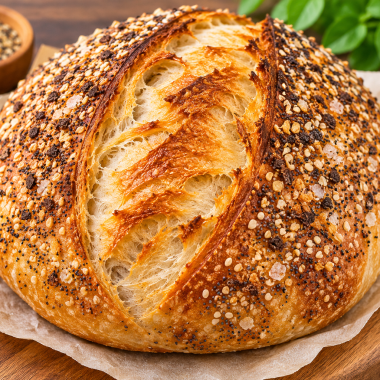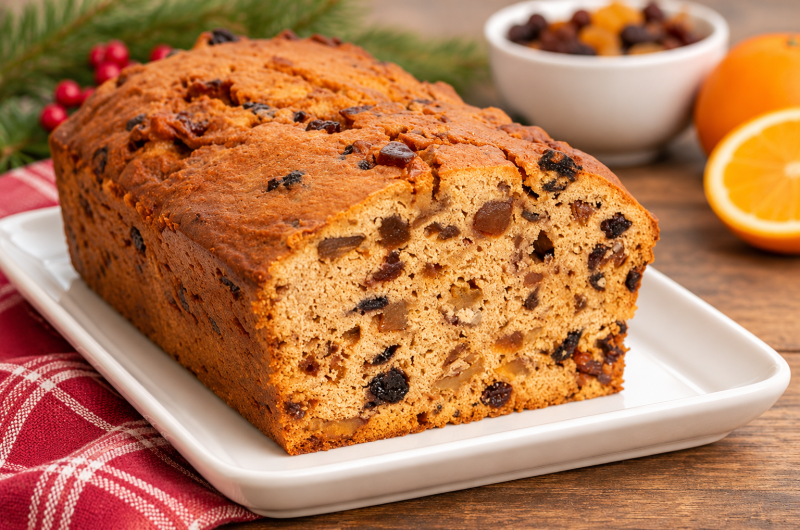
Homemade sourdough fruitcake is a rich, traditional holiday dessert filled with dried fruit, fragrant spices, citrus, and crunchy toasted nuts. This old-fashioned sourdough fruitcake recipe combines the familiar flavors of classic Christmas fruitcake with the depth of flavor that comes from a naturally fermented sourdough sponge. Golden raisins, dried cranberries, dried blueberries, crystallized ginger, and dried apricots create a colorful mixture with plenty of natural sweetness. Orange marmalade and fresh citrus add brightness, while cinnamon, ginger, allspice, and cloves provide the warm aroma associated with holiday baking. The fruit is soaked in peach brandy, apple cider, or apple juice before being incorporated into the cake, allowing it to soften and absorb additional flavor. The finished fruitcake has a dense, moist texture that makes it suitable for slicing, gifting, and serving throughout the holiday season. Although this recipe requires preparation over several days, most of that time is spent soaking fruit or allowing the sourdough sponge to ferment. The actual mixing process is straightforward, making this homemade Christmas fruitcake an achievable project for bakers who enjoy traditional recipes.
What Makes This Sourdough Christmas Fruitcake Special?
This sourdough Christmas fruitcake differs from many traditional fruitcake recipes because it includes a fermented sponge made with sourdough starter, bread flour, and reserved fruit-soaking liquid. The sponge introduces the characteristic fermented aroma of sourdough while contributing additional depth to the finished cake. Unlike sourdough bread, however, this fruitcake does not rely entirely on natural fermentation for its structure. Eggs, butter, flour, and baking soda are also included, creating a rich cake batter that can support a generous quantity of dried fruit and nuts. Another distinctive feature is the use of fruit-infused soaking liquid in the sponge. Rather than mixing the starter with plain water, the recipe uses liquid that has absorbed flavor from the dried fruit and crystallized ginger. This connects the sourdough component directly to the fruit mixture. The cake is then baked slowly at a relatively low temperature, helping the thick batter cook evenly. For anyone searching for a moist sourdough fruitcake recipe, this combination of soaked fruit, fermented sponge, and gentle baking creates a particularly flavorful holiday loaf.
Why This Old-Fashioned Fruitcake Uses a Three-Day Method
A traditional fruitcake benefits from preparation that allows its ingredients to develop flavor before baking. This recipe follows a three-day process, beginning with soaking the dried fruit, continuing with fermenting the sourdough sponge, and finishing with mixing and baking the cakes. On the first day, the fruit and crystallized ginger are combined with peach brandy, apple cider, or apple juice and left to soak overnight. On the second day, some of that flavored liquid is reserved and mixed with bread flour and sourdough starter to prepare the sponge. The sponge then ferments overnight before the cake is assembled on the third day. This method requires planning, but it does not involve continuous work. Each resting period allows the ingredients to change naturally without much attention. The dried fruit becomes softer and more flavorful, while the sourdough sponge develops a bubbly texture and fermented aroma. The result is a holiday fruitcake that has more layers of flavor than a cake assembled immediately after mixing its ingredients.
Choosing the Best Dried Fruit for a Moist Fruitcake
The dried fruit mixture is one of the most important parts of this homemade sourdough fruitcake. The original recipe uses half a cup of golden raisins, half a cup of dried cranberries, half a cup of dried blueberries, one cup of crystallized ginger, and half a cup of dried apricots. Each ingredient contributes something different to the overall flavor. Golden raisins provide gentle sweetness and a soft texture after soaking. Dried cranberries add a pleasantly tart contrast, while dried blueberries introduce a deeper berry flavor. Crystallized ginger offers concentrated sweetness with a warm, spicy finish that works especially well with citrus and cinnamon. Dried apricots contribute a slightly tangy fruit flavor and become tender during soaking. Together, these ingredients produce a colorful mixture that is distributed throughout the cake. The recipe is designed around these exact quantities, so keeping the original measurements helps maintain the intended balance of fruit, batter, and moisture. If the apricots or ginger pieces are particularly large, they can be chopped into smaller pieces for more even distribution.
How Overnight Fruit Soaking Improves the Cake
Soaking dried fruit before baking is an important step in creating a moist, tender fruitcake. Dried fruits contain relatively little water, so adding them directly to a cake batter can affect how moisture is distributed during baking. In this recipe, the fruit is combined with one and a half cups of peach brandy, apple cider, or apple juice and left covered at room temperature for eight to twelve hours. During this period, the fruit gradually absorbs some of the liquid, becoming softer and plumper. The soaking liquid also takes on flavor from the cranberries, blueberries, raisins, apricots, and crystallized ginger. This creates a concentrated mixture that contributes sweetness and aroma to the finished dessert. It is important to add the entire measured quantity of soaking liquid at the beginning rather than setting aside the portion intended for the sponge. The reserved liquid is collected only after the soaking period, when it has developed its fruit-infused flavor. This simple preparation stage helps create the rich texture associated with a well-made old-fashioned Christmas fruitcake.
Using Peach Brandy, Apple Cider, or Apple Juice
One useful feature of this traditional sourdough fruitcake recipe is the choice of soaking liquid. The original ingredients allow peach brandy, apple cider, or apple juice, making it possible to prepare the cake with or without alcohol. Peach brandy gives the fruit mixture a distinctive aroma that complements the dried apricots, orange marmalade, and warm spices. Apple cider provides a fruity flavor that works naturally with cinnamon, ginger, and cloves. Apple juice offers a straightforward alcohol-free alternative with a milder taste. Whichever option is selected, the same liquid should be used consistently throughout the recipe, including the fruit soak and any additional brushing or aging steps. The original formula uses one and a half cups for soaking, with half a cup reserved afterward for the sourdough sponge. The finishing instructions also call for additional liquid to brush the baked loaves. Choosing the liquid before beginning makes the preparation process easier and keeps the flavor consistent from the first soaking stage through the final serving.
Why Citrus Makes Traditional Fruitcake Taste Brighter
Fresh citrus is essential for balancing the rich sweetness of this sourdough fruitcake. The recipe includes the zest and juice of one lemon, one lime, and one orange. These three fruits contribute different aromas that work together rather than competing with the dried fruit and spices. Lemon adds a sharp, refreshing note, lime introduces a slightly different citrus fragrance, and orange provides a sweeter aroma that complements the marmalade already included in the batter. The zest contains aromatic oils that give the cake a more noticeable citrus flavor, while the juice adds acidity and moisture. For the best result, wash the citrus fruits thoroughly before removing the zest. Grate only the colored outer layer of the peel, avoiding the bitter white pith underneath. The juice can then be squeezed and added during batter preparation. This combination helps prevent the fruitcake from tasting overly heavy, even though it contains butter, sugar, soaked fruit, and nuts. The citrus remains part of the background flavor while making each slice taste more balanced.
Understanding the Sourdough Sponge in Fruitcake Baking
The sourdough sponge is what gives this recipe its distinctive character. It is prepared using one cup of bread flour, one cup of sourdough starter or discard, and half a cup of reserved fruit-soaking liquid. These ingredients are mixed until no dry flour remains, then covered and allowed to ferment overnight. During fermentation, the microorganisms present in the sourdough starter can continue developing flavor, although the amount of activity depends on the condition of the starter and the composition of the soaking liquid. A healthy, active starter generally produces more visible fermentation than older, less active discard. The sponge may become bubbly, slightly expanded, and pleasantly aromatic. Unlike a standard bread dough, the sponge is not shaped or baked separately. Instead, it is mixed with the soaked fruit and incorporated into the rich cake batter. This approach adds fermented flavor without changing the basic character of the dessert. The finished product remains a traditional fruitcake rather than becoming a sweet sourdough bread.
Why the Reserved Fruit Liquid Is Used in the Sponge
Using the liquid from the overnight fruit soak gives the sourdough sponge an additional layer of flavor. As the dried fruit rests in peach brandy, apple cider, or apple juice, some of its natural sugars and aromatic compounds move into the surrounding liquid. The crystallized ginger also contributes a warm, spicy character. After the fruit has soaked for eight to twelve hours, half a cup of this liquid is measured and mixed with the sourdough starter and bread flour. This means the sponge contains flavors that are already present in the fruit mixture, helping the different components work together in the finished cake. If the fruit has absorbed so much liquid that less than half a cup remains, the original instructions allow topping it up with the same type of brandy, cider, or juice. The important detail is to measure the reserved liquid after soaking rather than before. This preserves the intended preparation method and ensures that the sponge receives the fruit-infused liquid described in the original recipe.
How to Prepare the Sourdough Sponge Successfully
Preparing the sourdough sponge is straightforward, but the overnight resting period is important. Begin by placing the measured sourdough starter or discard in a medium mixing bowl. Add the reserved fruit-soaking liquid and bread flour, then stir until the mixture is evenly combined and no dry patches remain. The sponge may feel thicker than a typical sourdough starter because it contains additional flour. Cover the bowl and leave it at room temperature for approximately eight to twelve hours. During this time, the sponge should develop a pleasant fermented aroma and may show visible bubbles. Fermentation can vary depending on room temperature, starter strength, and whether the soaking liquid contains alcohol. A very cool kitchen or an older starter may produce less obvious activity. The sponge should smell pleasantly fermented rather than spoiled. If it develops mold, unusual discoloration, or an unpleasant rotten odor, it should not be used. Once the sponge is ready, it can be combined with the soaked fruit and added to the cake batter.
The Importance of All-Purpose Flour in This Rich Cake
All-purpose flour provides the main structure for the fruitcake batter. The original recipe calls for five cups, or approximately 625 grams, of unbleached all-purpose flour in addition to the bread flour used in the sourdough sponge. This relatively large quantity is necessary because the batter contains substantial amounts of soaked fruit, nuts, butter, eggs, marmalade, and citrus juice. The flour helps bind these ingredients into a cake that can be sliced after cooling. Unbleached all-purpose flour works well because it provides enough structure without producing the stronger chew associated with bread flour. It is important to measure the flour accurately, preferably with a kitchen scale, because adding too much can make the cake dry and heavy. The dry ingredients should be whisked together before being incorporated into the wet batter. This helps distribute the baking soda, salt, and spices evenly. Once the flour mixture is added, gentle folding is preferable to prolonged beating because excessive mixing can make the finished cake tougher than intended.
How Warm Spices Create Classic Christmas Fruitcake Flavor
The spice mixture gives this sourdough fruitcake its familiar holiday aroma. The recipe includes two teaspoons of Ceylon cinnamon, one teaspoon of ground ginger, half a teaspoon of ground allspice, and a quarter teaspoon of ground cloves. Ceylon cinnamon has a delicate, warm flavor that complements the dried fruit without overpowering it. Ground ginger reinforces the flavor of the crystallized ginger, creating a pleasant connection between the spice mixture and the fruit. Allspice adds a rounded warmth, while cloves contribute a concentrated, aromatic note. Because ground cloves have a strong flavor, the smaller quantity is important for maintaining balance. These spices are combined with the flour, baking soda, and salt before being added to the batter. Mixing them into the dry ingredients helps prevent concentrated pockets of spice. As the cakes bake slowly, the aroma becomes more noticeable and blends with the citrus and soaked fruit. The resulting flavor is rich, warm, and especially suitable for Christmas desserts and winter gatherings.
Why Butter and Sugar Need to Be Creamed Properly
Creaming butter and sugar is a familiar technique in cake baking, and it plays an important role in this recipe. The batter begins with one cup of softened butter and one cup of granulated sugar. These ingredients are beaten together for approximately three to four minutes until the mixture becomes lighter in color and somewhat fluffy. This process helps distribute the sugar throughout the butter and incorporates small amounts of air. Although fruitcake is naturally dense because of its generous fruit content, proper creaming contributes to a more even texture. The butter should be softened enough to mix easily but not melted. Butter that is too cold may remain in lumps, while overly warm butter may not hold the same amount of air during mixing. An electric mixer makes this step easier, but the mixture should still be checked visually rather than relying only on the timer. The goal is a smooth, creamy base that can accept the eggs and other ingredients without becoming uneven.
Adding Eggs for a Smooth and Stable Fruitcake Batter
Eggs help bind the rich fruitcake batter and contribute moisture, protein, and structure. This recipe uses four large eggs, preferably at room temperature. After the butter and sugar have been creamed, the eggs are added individually, with mixing after each addition. This gradual approach helps the eggs combine more evenly with the butter mixture. Adding all four eggs at once may make the batter more difficult to emulsify, especially if the ingredients are at different temperatures. Room-temperature eggs generally blend more readily with softened butter, creating a smoother mixture. If the batter appears slightly curdled after adding the eggs, it may still come together when the remaining ingredients are incorporated. The eggs are followed by the citrus zest, citrus juice, and orange marmalade, which introduce additional liquid and flavor. Because the finished cake contains so much dried fruit and flour, the eggs are important for holding everything together during the long baking period. Following the original quantity helps maintain the intended balance.
Orange Marmalade Adds Sweetness and Citrus Depth
Orange marmalade contributes more than sweetness to this homemade sourdough fruitcake. The recipe includes half a cup, approximately 160 grams, which is mixed into the butter, sugar, and egg batter along with the fresh citrus zest and juice. Marmalade usually contains orange peel as well as fruit and sugar, so it adds a concentrated citrus flavor that complements the fresh orange, lemon, and lime. Its thick consistency also helps distribute orange flavor throughout the batter without requiring a large amount of additional liquid. The slight bitterness sometimes present in orange peel can provide a pleasant contrast to the sweet raisins, cranberries, blueberries, and crystallized ginger. Because marmalade varies by brand, the intensity of the citrus flavor may differ slightly between batches. A smooth or finely cut marmalade will distribute easily, while one containing larger peel pieces may create occasional bursts of orange flavor in the finished slices. The original quantity should remain unchanged to preserve the cake’s intended sweetness and texture.
Why Toasted Pecans and Walnuts Work Well in Fruitcake
Nuts provide a welcome contrast to the soft dried fruit and dense cake crumb. This sourdough fruitcake includes one cup of chopped toasted pecans and half a cup of chopped toasted walnuts. Pecans have a naturally rich, buttery flavor that pairs especially well with brown spices, orange, and dried fruit. Walnuts contribute a slightly earthier taste and a firmer texture. Toasting the nuts before adding them to the batter helps develop their aroma and gives them a more pronounced flavor. The nuts should be cooled before they are folded into the mixture so they do not unnecessarily warm the batter. Chopping them into manageable pieces also makes the fruitcake easier to slice after baking. The nuts are added near the end of mixing, after the dry ingredients have been incorporated. This helps prevent excessive stirring and keeps the pieces from being broken down too much. Together, pecans and walnuts make the cake more interesting without overwhelming the fruit and citrus flavors.
Preparing the Loaf Pans for Even Baking
Proper pan preparation is particularly important for a dense fruitcake because the batter needs a long baking time. The recipe makes two loaves using nine-inch loaf pans. Before mixing the final batter, preheat the oven to 275°F, or 135°C, and prepare both pans. Grease the inside of each pan, line them with parchment paper, and grease the parchment as directed. This provides an additional layer of protection against sticking and makes it easier to remove the cakes after they have cooled. Parchment paper is especially useful because dried fruit and sugar can become sticky during baking. A well-lined pan also reduces the chance of damaging the sides of the loaf during removal. When dividing the batter, aim to distribute it evenly between the two pans so they bake at a similar rate. Smooth the tops gently with a spatula before placing them in the oven. Avoid packing the batter down aggressively, as this can compress the mixture unnecessarily.
Combining the Fruit, Sponge, and Cake Batter
The final mixing stage brings together the three main components of this sourdough fruitcake: the soaked fruit, the fermented sponge, and the butter-based cake batter. First, the soaked fruit is mixed into the developed sourdough sponge until the pieces are distributed throughout. Separately, the softened butter and sugar are creamed, followed by the eggs, citrus zest, citrus juice, and orange marmalade. The fruit and sponge mixture is then stirred into this rich batter. Once combined, the flour and spice mixture is folded in gently, followed by the toasted pecans and walnuts. This order helps distribute the ingredients while limiting unnecessary mixing after the flour has been added. The finished batter will be much thicker and heavier than an ordinary sponge cake batter because it contains a large amount of fruit and nuts. This is expected. Use a sturdy wooden spoon or spatula to reach the bottom of the bowl and check that no dry flour remains. The goal is an evenly mixed batter with fruit and nuts spread throughout.
Why Low-Temperature Baking Is Best for Dense Fruitcake
This old-fashioned sourdough fruitcake is baked at 275°F, or 135°C, for approximately two to two and a half hours. The relatively low oven temperature is important because the batter is dense and contains a large amount of dried fruit, nuts, sugar, and moisture. If the oven were too hot, the outside of the loaves could brown excessively before the centers had enough time to cook. Gentle baking allows heat to move through the thick batter more gradually. The cakes should be placed on the center oven rack, where the temperature is generally more even. Begin checking for doneness after approximately two hours, but avoid opening the oven repeatedly during the earlier stages. Insert a toothpick or thin skewer into the center of a loaf. It should come out without wet, uncooked batter, although it may pick up moisture from a piece of fruit. Because ovens and loaf pans vary, the actual baking time may differ slightly. The cakes should be fully baked before they are removed.
How to Tell When Sourdough Fruitcake Is Fully Baked
Determining when a dense fruitcake is finished requires more care than checking a light sponge cake. The original recipe recommends beginning the doneness test at the two-hour mark, with baking continuing for up to two hours and thirty minutes if needed. Insert a toothpick or skewer into the center of the loaf, choosing a spot that is not obviously filled with a large piece of fruit. If the tester comes out coated in wet cake batter, the loaf needs more time. If it comes out clean or with a few moist crumbs, the cake is generally ready. The surface should look set, and the center should no longer appear wet or unstable. Because the batter contains marmalade, soaked fruit, and citrus juice, the finished cake will remain moist even when fully baked. This is part of its intended texture. Avoid increasing the oven temperature to finish the cakes faster, as doing so can lead to an overly dark exterior and an undercooked middle. Patient baking produces a more even result.
Brushing the Warm Loaves for Additional Flavor
Once the sourdough fruitcakes are removed from the oven, the original instructions call for brushing their warm tops with peach brandy or apple cider. The finishing amount is two tablespoons per loaf. This step adds a little moisture to the surface and reinforces the fruity flavor developed during soaking. A pastry brush makes it easier to apply the liquid evenly without pouring too much into one area. The cakes should be brushed while still warm, then allowed to cool in their pans for at least two hours. Because the finishing liquid is separate from the original fruit-soaking quantity, it should be prepared in advance if you plan to use it. For an alcohol-free version, apple cider can be used instead of brandy. The original recipe also allows apple juice as an alcohol-free option during soaking, although the specific finishing instructions mention cider. Brushing is part of the supplied preparation method and contributes to the traditional character of the cake. Allowing the loaves to cool afterward helps the crumb become more stable before handling.
Why Cooling Is Essential Before Slicing Fruitcake
Fruitcake needs adequate cooling time because its dense interior contains a large amount of moisture, fruit, and nuts. The original recipe instructs leaving the baked loaves in their pans for at least two hours before turning them out onto a wire rack. This resting period allows the cakes to become firmer and reduces the risk of breaking them while they are still warm. Once removed from the pans, they should continue cooling until completely cool before slicing or wrapping. Cutting a fruitcake too early may produce uneven slices because the warm crumb has not fully settled. A sharp serrated knife can help cut through the fruit and nuts without pressing down too heavily. Thin slices are often preferable because the cake is rich and full of flavor. Cooling is also important if the cakes will be stored or aged. Wrapping a warm loaf can trap condensation, creating excess surface moisture. For the best texture and storage quality, wait until the cakes have cooled thoroughly.
How Aging Develops the Flavor of Traditional Fruitcake
Aging is a traditional method used to allow fruitcake flavors to blend and deepen after baking. This recipe includes an optional aging period of up to four weeks. Once the loaves are completely cool, they are wrapped tightly in parchment paper and then foil. The original instructions recommend storing them in a cool, dark place and brushing them once a week with additional peach brandy or apple cider. Over time, the dried fruit, spices, citrus, and cake crumb can develop a more integrated flavor. However, storage safety depends on the ingredients, moisture level, temperature, and whether alcohol is used. An alcohol-free fruitcake brushed with cider or juice should not be left at room temperature for several weeks because it lacks the same preservation characteristics as some traditional alcohol-aged fruitcakes. Refrigeration is the safer choice for extended storage, especially for alcohol-free versions. For a longer aging period, use clean utensils, keep the cakes tightly wrapped, and inspect them before serving. Discard any cake that develops mold or signs of spoilage.
Making an Alcohol-Free Sourdough Fruitcake
An alcohol-free version of this sourdough fruitcake is easy to prepare because the original recipe already provides alternatives to peach brandy. Apple cider or apple juice can be used to soak the dried fruit, and the reserved liquid can then be used in the sourdough sponge. The same approach preserves the three-day preparation method without introducing alcohol. Apple cider gives the cake a pleasant fruit flavor that pairs well with cinnamon, ginger, orange marmalade, and dried apricots. Apple juice provides a milder option that allows the citrus and spices to remain prominent. The fruit should still soak for eight to twelve hours, and the sponge should still be given its overnight fermentation period. The baking temperature and other ingredient quantities remain unchanged. For finishing, the original instructions specify brushing with apple cider as an alternative to brandy. If the fruitcake will be stored after baking, keep the alcohol-free version refrigerated rather than following a prolonged room-temperature aging routine. This makes it a practical choice for family celebrations and holiday gatherings.
Serving Ideas for Homemade Christmas Fruitcake
Sourdough fruitcake can be served in several ways, depending on the occasion and personal preference. For a traditional Christmas dessert, cut the cooled loaf into thin slices and arrange them on a serving plate with tea or coffee. The rich fruit and spice flavors make it suitable for afternoon refreshments as well as holiday dessert tables. It can also be served alongside a selection of other homemade baked goods during seasonal gatherings. Because the cake contains citrus, crystallized ginger, dried berries, and toasted nuts, it already has a complex flavor and does not require elaborate decoration. A small slice is often satisfying on its own. If the cake has been aged, allow it to reach a pleasant serving temperature before slicing so the flavors are easier to appreciate. The two-loaf yield is especially convenient for entertaining because one loaf can be served immediately while the other is stored for another occasion. Homemade fruitcake also makes a thoughtful seasonal gift when properly wrapped and stored.
Storing Sourdough Fruitcake for Freshness
Proper storage helps preserve the moist texture and flavor of homemade sourdough fruitcake. After baking, allow both loaves to cool completely before wrapping them. For short-term storage, place the cake in an airtight container or wrap it securely to reduce drying. Refrigeration is a sensible option, especially when the cake is made with apple cider or apple juice instead of alcohol. For longer storage, the fruitcake can be frozen after cooling. Wrap each loaf or individual slices tightly, then place them in a freezer-safe container or bag. This makes it easier to remove only the amount needed for serving. Thaw frozen cake in the refrigerator while it remains wrapped to reduce condensation on the surface. The original recipe also describes an aging process involving weekly brushing with brandy or cider. That method should be approached with attention to food safety, particularly for alcohol-free cakes. Regardless of storage method, always discard fruitcake that develops mold, unusual discoloration, or an unpleasant smell.
Notes on Avoiding Dry or Crumbly Fruitcake
A dry fruitcake can result from inaccurate flour measurements, excessive baking, insufficient fruit soaking, or improper storage. This recipe uses a generous quantity of flour, so measuring by weight is particularly helpful. The all-purpose flour should be measured at 625 grams, and the bread flour for the sponge should be measured at 120 grams. Adding more flour than intended can make the batter overly stiff and reduce the finished cake’s tenderness. The dried fruit should also be soaked for the full recommended period so it becomes properly hydrated before baking. During the final mixing stage, avoid excessive stirring once the flour has been incorporated. The cakes should be baked at the specified low temperature and checked for doneness beginning at two hours. Leaving them in the oven longer than necessary may gradually remove too much moisture. Finally, allow the cakes to cool fully before wrapping them securely. These steps help maintain the dense but moist texture expected from a traditional holiday fruitcake.
Notes on Preventing Uneven Fruit Distribution
A well-made fruitcake should contain fruit and nuts throughout each slice rather than having most of the additions concentrated at the bottom. This recipe contains a substantial amount of dried fruit, so thorough but gentle mixing is important. After the overnight soaking stage, the fruit is combined with the developed sourdough sponge before being incorporated into the butter-based batter. This helps distribute the fruit through one component before the final mixing stage. Once the sponge and fruit mixture is added to the batter, stir until it is evenly incorporated. The dry ingredients are then folded in, followed by the toasted nuts. Use a sturdy spoon or spatula to reach the bottom and sides of the bowl, where heavier ingredients may collect. The finished batter should be thick enough to support the fruit, but the ingredients still need to be distributed carefully. When filling the loaf pans, alternate spoonfuls from different areas of the mixing bowl if necessary. This helps both cakes contain a similar balance of fruit, nuts, and batter.
Notes on Sourdough Starter and Fermentation
The original recipe allows either sourdough starter or sourdough discard, making it useful for bakers who maintain a sourdough culture at home. An active starter that has recently been fed may produce a more noticeably bubbly sponge, while refrigerated discard may ferment more slowly. The fruit-infused soaking liquid can also influence fermentation because it contains sugars, acids, and possibly alcohol. If peach brandy is used, the alcohol may slow microbial activity compared with apple juice or cider. For this reason, the sponge may not always rise as dramatically as a conventional sourdough bread starter. Look for a pleasant fermented aroma and signs of activity, but do not expect the same behavior in every kitchen. The recipe also contains baking soda, eggs, and creamed butter, so the sponge is primarily contributing flavor and texture rather than acting as the only source of leavening. Using a healthy starter and allowing the recommended overnight rest helps produce a more consistent result.
Notes on Baking Two Fruitcake Loaves Evenly
Because this recipe makes two nine-inch loaves, it is important to prepare and bake them as evenly as possible. Use loaf pans of similar dimensions and material so the cakes heat at approximately the same rate. Line both pans with parchment paper and grease them thoroughly before adding the batter. Divide the mixture as evenly as possible, preferably using a kitchen scale if one is available. Place the pans on the center oven rack with enough space around them for air to circulate. If the oven has uneven heating, the loaves may brown or cook at slightly different rates. Begin checking both cakes after two hours rather than assuming they will finish at exactly the same moment. If one loaf is ready before the other, it can be removed while the second continues baking. The low oven temperature helps reduce the risk of excessive browning, but the cakes still need to be monitored near the end of baking. Careful pan preparation and even filling improve the finished appearance.
Why This Homemade Sourdough Fruitcake Is Ideal for Holiday Baking
Homemade sourdough fruitcake is especially suitable for holiday baking because it combines traditional ingredients with a preparation method that can be spread across several days. The dried fruit mixture provides color and sweetness, the citrus adds freshness, and the warm spices create a familiar seasonal aroma. Toasted pecans and walnuts contribute texture, while the sourdough sponge adds an additional layer of flavor that distinguishes the cake from ordinary fruitcake recipes. The recipe makes two generous loaves, allowing one to be served for a family gathering while the other is reserved for gifting or later enjoyment. Although the preparation requires advance planning, the individual stages are manageable and do not involve complicated decorating or shaping. The cakes can be enjoyed after cooling, or their flavors can be allowed to develop further under appropriate storage conditions. For bakers looking for a traditional Christmas fruitcake recipe with sourdough starter, this method offers a satisfying way to combine familiar holiday baking with the distinctive character of naturally fermented ingredients.