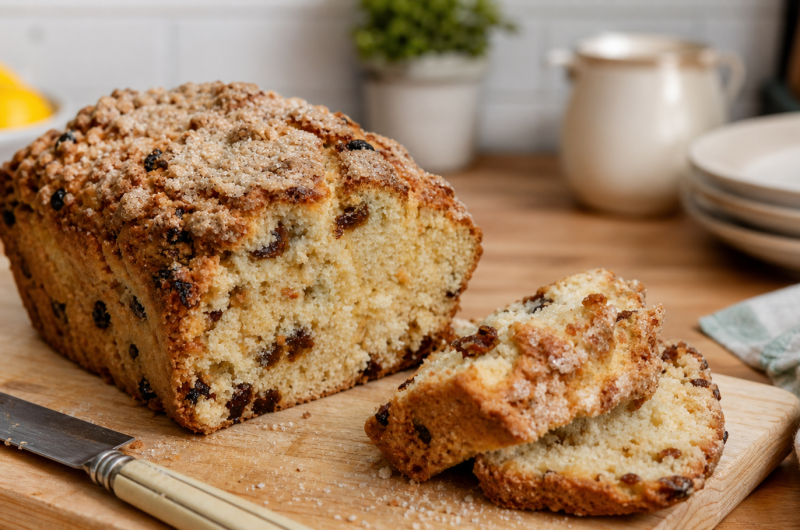
If you are searching for authentic Irish currant bread, often known as barmbrack, this traditional recipe brings the warmth and heritage of Irish baking into your kitchen. This sweet loaf is filled with tender currants, lightly spiced, and finished with a soft, moist crumb that pairs beautifully with butter and tea. Whether served as an afternoon snack or part of a holiday celebration, Irish currant bread remains a beloved classic in homes across Ireland and beyond.
Unlike overly sweet desserts, this Irish tea bread strikes a balanced sweetness. The natural tang of buttermilk and the gentle spice blend enhance the flavor of dried currants without overpowering them. Its simplicity makes it ideal for both beginner bakers and those seeking a comforting, homemade loaf.
What Is Irish Currant Bread?
Irish currant bread, traditionally called barmbrack, is a sweet quick bread enriched with dried fruit. Historically, it has been associated with seasonal traditions, especially around Halloween, when charms were baked inside to predict the future. While the folklore adds charm, the bread itself stands on its own as a flavorful and versatile treat.
The bread is characterized by its tender crumb, evenly distributed currants, and mild spice profile. It is less dense than fruitcake but richer than everyday soda bread. The result is a loaf that feels special without requiring complex techniques.
Key Ingredients and Their Role
Understanding each ingredient helps ensure the perfect loaf.
All-purpose flour provides the structure and base. Substituting a small portion with cake flour can create a slightly lighter texture.
Granulated sugar sweetens the bread and complements the currants.
Baking soda and baking powder act as leavening agents, allowing the bread to rise without yeast.
Salt enhances flavor balance.
Optional spices such as cinnamon and nutmeg add warmth and depth.
Currants bring natural sweetness and moisture.
Egg binds ingredients and contributes richness.
Buttermilk activates baking soda and tenderizes the crumb.
Melted butter adds flavor and moisture.
The Importance of Currants
Currants are the defining ingredient in Irish currant bread. These small dried fruits provide bursts of sweetness in every slice. They are softer and slightly more tart than raisins, creating a balanced flavor.
If currants are unavailable, raisins or sultanas can be substituted. However, currants maintain the most authentic texture and flavor.
Step 1 – Preparing the Dry Ingredients
In a large bowl, combine flour, sugar, baking soda, baking powder, salt, and optional spices. Whisk thoroughly to ensure even distribution. Proper mixing prevents uneven rising and spice concentration.
If using spices, measure carefully to maintain subtle warmth without overpowering the bread.
Step 2 – Mixing the Wet Ingredients
In a separate bowl, whisk together egg, buttermilk, and melted butter. Ensure the butter has cooled slightly before mixing to prevent cooking the egg.
Combining wet ingredients evenly ensures a smooth batter and uniform texture.
Step 3 – Incorporating the Currants
Add currants to the dry mixture and toss lightly to coat them with flour. This helps prevent sinking during baking.
Gradually combine wet ingredients with dry mixture. Stir gently until just combined. Overmixing can lead to a dense loaf.
Step 4 – Baking the Bread
Preheat oven to 350°F (175°C). Grease a 9-inch loaf pan and pour batter evenly.
Bake until a toothpick inserted into the center comes out clean. Baking time typically ranges from 45 to 55 minutes, depending on oven performance.
Allow the loaf to cool in the pan briefly before transferring to a wire rack.
Notes for Perfect Irish Currant Bread
Soak currants in warm water or tea for 10–15 minutes to enhance moisture. Drain thoroughly before adding.
Avoid overmixing batter. Use room-temperature ingredients for best texture.
Test doneness carefully to avoid underbaking.
Traditional Variations
You can experiment while preserving authenticity. Add orange or lemon zest for citrus brightness. Incorporate chopped nuts for texture. Brush the top with a simple glaze made from powdered sugar and milk for extra sweetness.
Each variation builds upon the traditional base while maintaining Irish character.
Serving Suggestions
Irish currant bread pairs beautifully with salted butter or fruit preserves. Serve alongside strong Irish tea, coffee, or a latte for a comforting experience.
It can also be lightly toasted and served warm for enhanced flavor.
Storage and Shelf Life
Store in an airtight container at room temperature for up to three days. For extended storage, wrap tightly and freeze for up to two months.
Allow frozen bread to thaw at room temperature before serving.
Cultural Significance of Barmbrack
Barmbrack holds historical importance in Irish culture, especially during Halloween festivities. Charms were traditionally baked into the loaf, symbolizing fortunes.
Today, it remains a cherished tea-time staple enjoyed year-round.
Why This Recipe Is Trending
Search interest in “Irish currant bread recipe,” “traditional barmbrack,” and “Irish tea bread” continues to grow. Home bakers are increasingly exploring heritage recipes that provide authenticity and simplicity.
This recipe aligns with those interests by offering classic flavor and easy preparation.
Achieving a Moist and Tender Texture
The key to perfect Irish currant bread lies in balance. Buttermilk provides moisture and tenderness, while melted butter enhances richness. Proper measurement and gentle mixing preserve the crumb.
Following the steps carefully ensures a loaf that is moist without being heavy.
Making Mini Loaves or Round Cakes
While a 9-inch loaf pan is traditional, you can also bake in mini loaf pans or a round cake tin. Adjust baking time accordingly.
Smaller loaves bake faster and are ideal for gifting.
Nutrition Overview
Irish currant bread provides moderate calories and carbohydrates. Currants contribute natural sugars, while flour forms the base.
Enjoy in balanced portions as part of a varied diet.
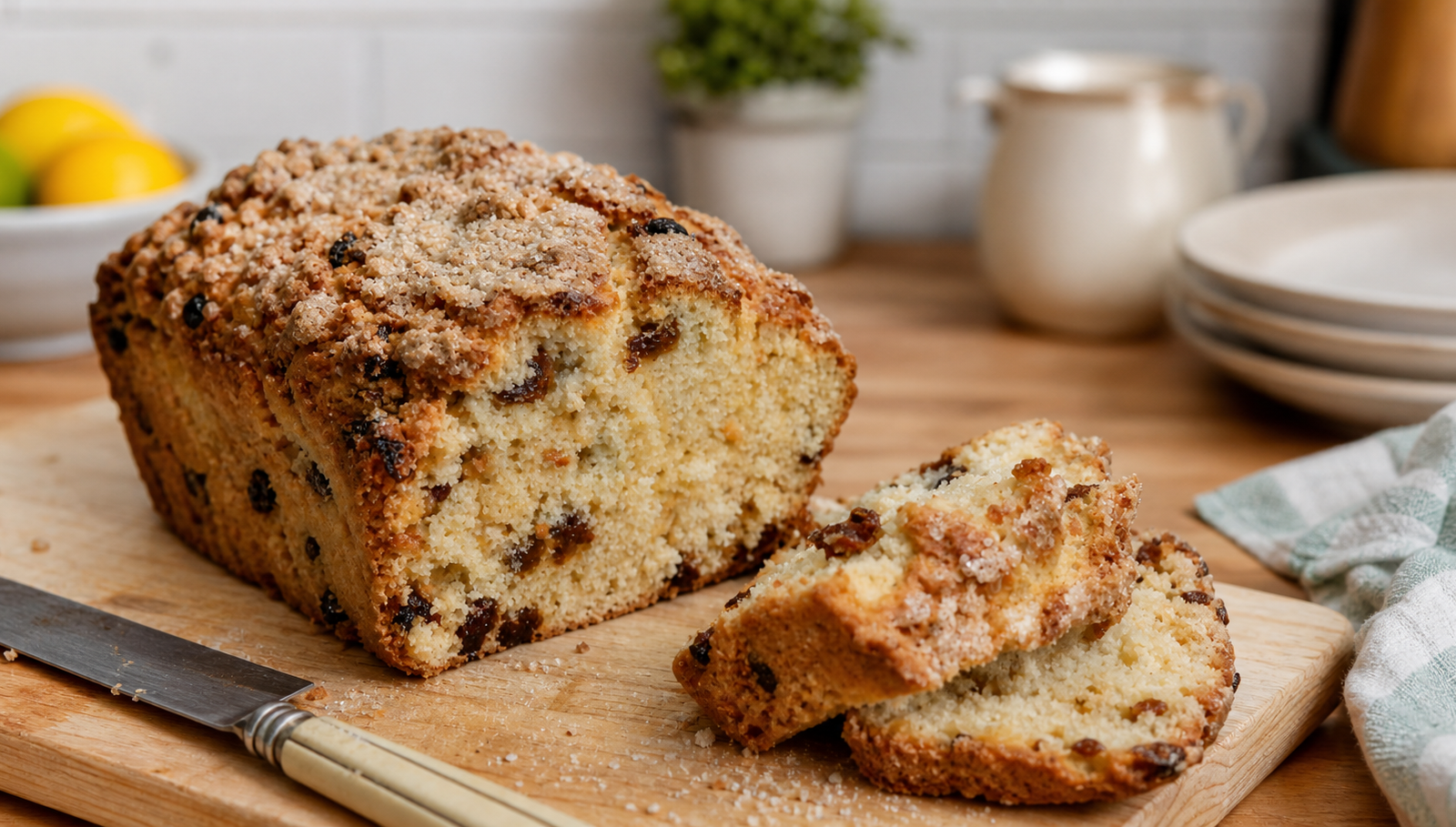
Irish Currant Bread
Traditional Irish Currant Bread recipe, also known as “tea bread” or “barmbrack,” made with simple ingredients:
Ingredients
3 cups all-purpose flour
1/2 cup granulated sugar
1/2 teaspoon salt
1 teaspoon baking soda
1 teaspoon baking powder
1/2 teaspoon ground cinnamon (optional)
1/4 teaspoon ground nutmeg (optional)
1 cup currants (or raisins)
1 large egg
1 1/4 cups buttermilk
1/4 cup unsalted butter, melted and slightly cooled
Directions
- Set the oven to 375°F (190°C).
- Grease and lightly flour a 9-inch loaf pan or mini loaf pans.
- In a large bowl, combine the flour, sugar, salt, baking soda, baking powder, cinnamon, and nutmeg (if using).
- Toss the currants into the dry mixture, ensuring they’re evenly distributed.
- In a separate bowl, whisk together the egg, buttermilk, and melted butter.
- Gradually fold the wet mixture into the dry ingredients. Stir gently until just combined. Avoid overmixing.
- Pour the batter into the prepared pan, smoothing the top with a spatula.
- Place the pan in the oven and bake for 40-50 minutes. Check for doneness with a toothpick.
- Allow the bread to cool in the pan for 10 minutes before transferring it to a wire rack to cool completely. Slice and enjoy!