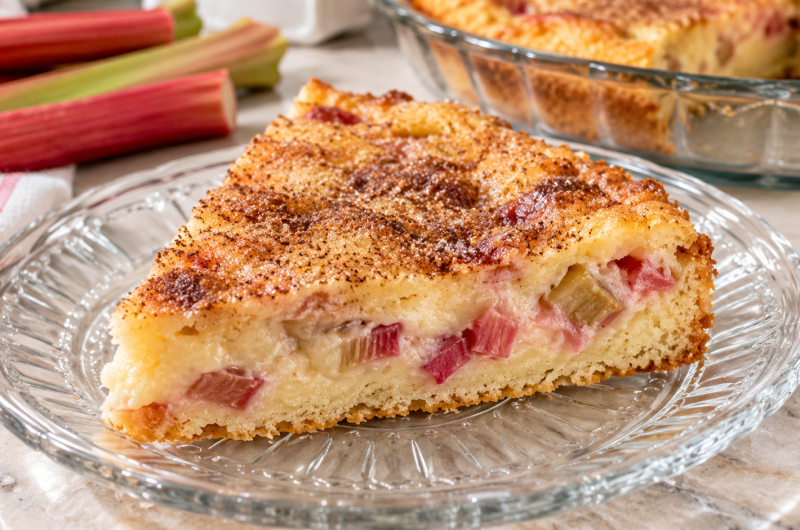
Homemade Rhubarb Custard Kuchen is a traditional German-inspired dessert featuring a soft yeast dough crust, tender rhubarb pieces, and a rich, creamy vanilla custard filling. Finished with a light cinnamon sugar topping, this old-fashioned rhubarb dessert offers a delicious combination of sweet and tart flavors.
It is an excellent choice for spring baking, family gatherings, holiday celebrations, or anyone who enjoys comforting homemade desserts.
Unlike a traditional fruit pie, this rhubarb kuchen recipe uses a homemade yeast dough that creates a soft, bread-like base beneath the creamy filling. The rhubarb becomes tender during baking, while the custard thickens into a smooth layer that holds the fruit together.
Each slice offers a pleasant contrast between the lightly sweetened crust, tangy rhubarb, and delicate cinnamon flavor.
What Is Rhubarb Custard Kuchen?
Rhubarb Custard Kuchen is a traditional fruit-filled dessert inspired by German baking. The word kuchen means cake in German, although many varieties resemble a combination of cake, tart, and pie. This particular version features a yeast-based crust topped with fresh rhubarb and homemade custard. The dessert is baked until the crust turns golden and the creamy filling becomes firm enough to slice.
Kuchen became especially popular in German-American communities, where families adapted traditional recipes using locally available fruits. Rhubarb is a particularly suitable choice because its naturally tart flavor balances the sweetness of the custard. Today, homemade rhubarb kuchen remains a familiar dessert in many Midwestern kitchens, especially during the spring and early summer growing seasons.
This Homemade Rhubarb Kuchen
One of the best features of this homemade rhubarb custard kuchen is its combination of textures. The yeast dough creates a tender foundation, while the cooked custard provides a creamy layer that surrounds the fruit. The cinnamon sugar topping adds gentle warmth without overpowering the rhubarb. Together, these elements create a dessert that feels rich but still allows the fresh fruit flavor to stand out.
Another advantage is that the dough recipe produces enough for several kuchens, making it useful for preparing desserts ahead of time. You can bake a couple of kuchens with the prepared fruit and custard while freezing the remaining dough for future baking. This makes the recipe especially practical for family gatherings, seasonal celebrations, and occasions when homemade desserts are needed.
The Traditional German-Style Yeast Dough Crust
The crust is an important part of this old-fashioned rhubarb kuchen recipe. Unlike a shortcrust pastry made with cold butter, this version uses yeast, water, sugar, vegetable oil, flour, salt, and eggs. The yeast helps the dough rise, creating a soft and slightly chewy texture that supports the custard filling without becoming excessively dense.
Preparing the dough requires patience because it needs two rising periods before shaping. During the first rise, the yeast produces gas that expands the dough and develops its texture. After kneading, the second rise helps create a lighter finished crust. Although this process takes longer than preparing a simple cake batter, it contributes to the traditional character of the dessert.
How to Get a Soft and Tender Crust
For the best results, allow the yeast mixture to rest as directed before adding the remaining dough ingredients. Once everything is combined, knead the dough until it becomes smooth and manageable. Place it in a greased bowl, cover it, and leave it somewhere comfortably warm until doubled in size. Avoid placing it near excessive heat, which can interfere with yeast activity.
Why Rhubarb Works Beautifully in Custard Desserts
Rhubarb has a distinctive tart flavor that makes it especially useful in sweet baked desserts. Although its stalks resemble celery, rhubarb is commonly prepared like fruit in pies, cakes, jams, and crumbles. When heated, the firm stalks soften and release moisture, creating a tender filling that contrasts beautifully with the creamy texture of homemade vanilla custard.
In this rhubarb custard kuchen, the fruit is cut into small, even pieces before being distributed across the dough. This helps the rhubarb cook consistently and makes the finished dessert easier to slice. The sugar in the custard softens the sharpness of the rhubarb without completely hiding its refreshing tartness.
Choosing Fresh Rhubarb for Baking
Look for firm rhubarb stalks with a fresh appearance and minimal signs of drying. Both red and green stalks can be used, since color does not always indicate sweetness. Wash the stalks thoroughly, remove any leaves, and trim the ends before cutting them into half-inch pieces. Rhubarb leaves are toxic and must never be included in cooking.
The Secret to a Creamy Homemade Custard Filling
The custard filling gives this traditional rhubarb kuchen its smooth texture and rich flavor. Made with heavy cream, eggs, sugar, flour, salt, and vanilla, the mixture is gently cooked in a saucepan before being poured over the fruit. Cooking the custard first helps it begin thickening, allowing it to settle around the rhubarb during baking.
Heavy cream contributes richness, while eggs help the custard set. Flour provides additional thickening, and vanilla adds a familiar dessert aroma. The ingredients work together to create a filling that is creamy without being overly sweet. When baked correctly, the custard should hold its shape while remaining soft and pleasant to eat.
How to Prevent Lumpy Custard
When preparing the custard, combine the ingredients thoroughly and cook over moderate heat while stirring continuously. Pay particular attention to the bottom and corners of the saucepan, where the mixture can thicken quickly. Remove it from the heat once it begins to thicken, then stir in the vanilla. Avoid boiling it aggressively, as excessive heat can affect the texture.
How Cinnamon Sugar Enhances the Flavor
A simple cinnamon sugar topping adds warmth and sweetness to this homemade rhubarb dessert. The combination of sugar and ground cinnamon is sprinkled over the filled kuchen before baking, creating a lightly spiced finish. Cinnamon works particularly well with the tart rhubarb and creamy vanilla custard because it adds flavor without requiring a complicated topping.
The topping also helps create a familiar bakery-style aroma as the kuchen bakes. Since the custard already contains sugar, only a modest amount of cinnamon sugar is needed. The finished dessert should retain a balanced flavor, allowing the rhubarb to remain noticeable rather than covering it with excessive sweetness or spice.
How to Make Rhubarb Custard Kuchen
Making traditional rhubarb custard kuchen involves preparing the yeast dough, allowing it to rise, cooking the custard, and assembling the dessert before baking. Although there are several stages, each one uses straightforward techniques. The most important considerations are giving the dough enough time to rise, keeping the custard smooth, and distributing the rhubarb evenly.
Prepare and Rise the Yeast Dough
Begin by combining the water, sugar, and yeast, allowing the mixture to stand for thirty minutes. Add the salt, vegetable oil, flour, and two eggs, mixing until a dough forms. Transfer it to a greased bowl, cover, and leave it in a warm location until doubled. Knead the dough again and allow a second rise before shaping.
Cook the Vanilla Custard
Combine the heavy cream, remaining eggs, sugar, flour, and salt in a saucepan. Cook while stirring until the mixture begins to thicken. Remove it from the heat and stir in the vanilla. The custard should be smooth and thick enough to coat a spoon, but still spreadable over the prepared rhubarb.
Assemble and Bake the Kuchen
Roll portions of the risen dough to fit greased nine-inch baking pans. Divide the prepared rhubarb between two dough-lined pans, using approximately one and a half cups per kuchen. Spoon half the custard over each portion of fruit, then sprinkle each with cinnamon sugar. Bake at 375°F for approximately 25–30 minutes, until the crust is golden and the custard is set.
Important Baking Tips for Perfect Results
The best homemade rhubarb kuchen begins with properly prepared dough and a carefully cooked filling. Make sure the yeast dough has risen sufficiently before rolling it into the pans. If the dough feels tight and difficult to stretch, allow it to rest briefly before continuing. This makes shaping easier and helps prevent the crust from shrinking.
Custard consistency is equally important. Stir the mixture regularly while cooking to prevent scorching or uneven thickening. When assembling the kuchen, spread the rhubarb evenly so every slice contains fruit and custard. After baking, allow the dessert to cool before cutting, giving the filling time to become firmer and easier to serve.
Common Mistakes to Avoid
One common mistake is rushing the dough-rising process. Yeast needs adequate time to develop the structure that gives the crust its soft texture. Another issue is overheating the custard, which can cause lumps or an unpleasant consistency. Gentle cooking and steady stirring help produce a smoother filling that bakes more evenly.
Using excessively wet rhubarb can also introduce unnecessary moisture. After washing, drain and dry the stalks before cutting them. Finally, avoid slicing the kuchen immediately after removing it from the oven. The custard continues to firm as it cools, and allowing sufficient resting time produces cleaner slices.
Best Ways to Serve Rhubarb Custard Kuchen
Rhubarb custard kuchen tastes delicious slightly warm, at room temperature, or chilled. For a softer texture, allow it to cool until the filling has set before serving. Refrigerated slices have a firmer consistency, making them particularly convenient for preparing ahead of a gathering. The combination of tangy fruit and creamy custard makes the dessert satisfying without requiring elaborate decorations.
This traditional German-style dessert pairs nicely with coffee, black tea, or a mild herbal tea. It can also be served with a small spoonful of whipped cream for an extra creamy finish. For brunch, cut the kuchen into smaller portions and arrange them on a serving platter alongside other homemade baked treats.
How to Store and Freeze Rhubarb Kuchen
Because this dessert contains eggs and heavy cream, leftover rhubarb custard kuchen should be refrigerated promptly. Allow it to cool, then cover the baking dish or transfer slices into an airtight container. Store in the refrigerator for approximately three to four days. Keeping the dessert covered helps prevent the custard from drying out or absorbing other refrigerator odors.
The extra yeast dough can also be frozen for future baking, which is particularly useful because the dough recipe produces enough for seven kuchens while the prepared fruit and custard fill only two. Divide the unused dough into portions, wrap securely, and freeze. Thaw overnight in the refrigerator before allowing it to come to a workable temperature.
Why This Old-Fashioned Rhubarb Dessert Is Worth Making
Traditional rhubarb custard kuchen offers something different from ordinary cakes and fruit pies. Its yeast dough base, creamy homemade custard, and tangy rhubarb filling create a distinctive combination that reflects generations of practical home baking. The recipe uses familiar ingredients and simple techniques, making it approachable for anyone willing to allow enough time for the dough to rise.
Whether prepared for a spring celebration, family brunch, or weekend dessert, this homemade rhubarb kuchen delivers comforting flavor in every slice. Its soft crust, smooth vanilla custard, and cinnamon-topped fruit filling make it a memorable way to enjoy seasonal rhubarb. It is also a useful make-ahead recipe, especially when the extra dough is saved for another baking day.
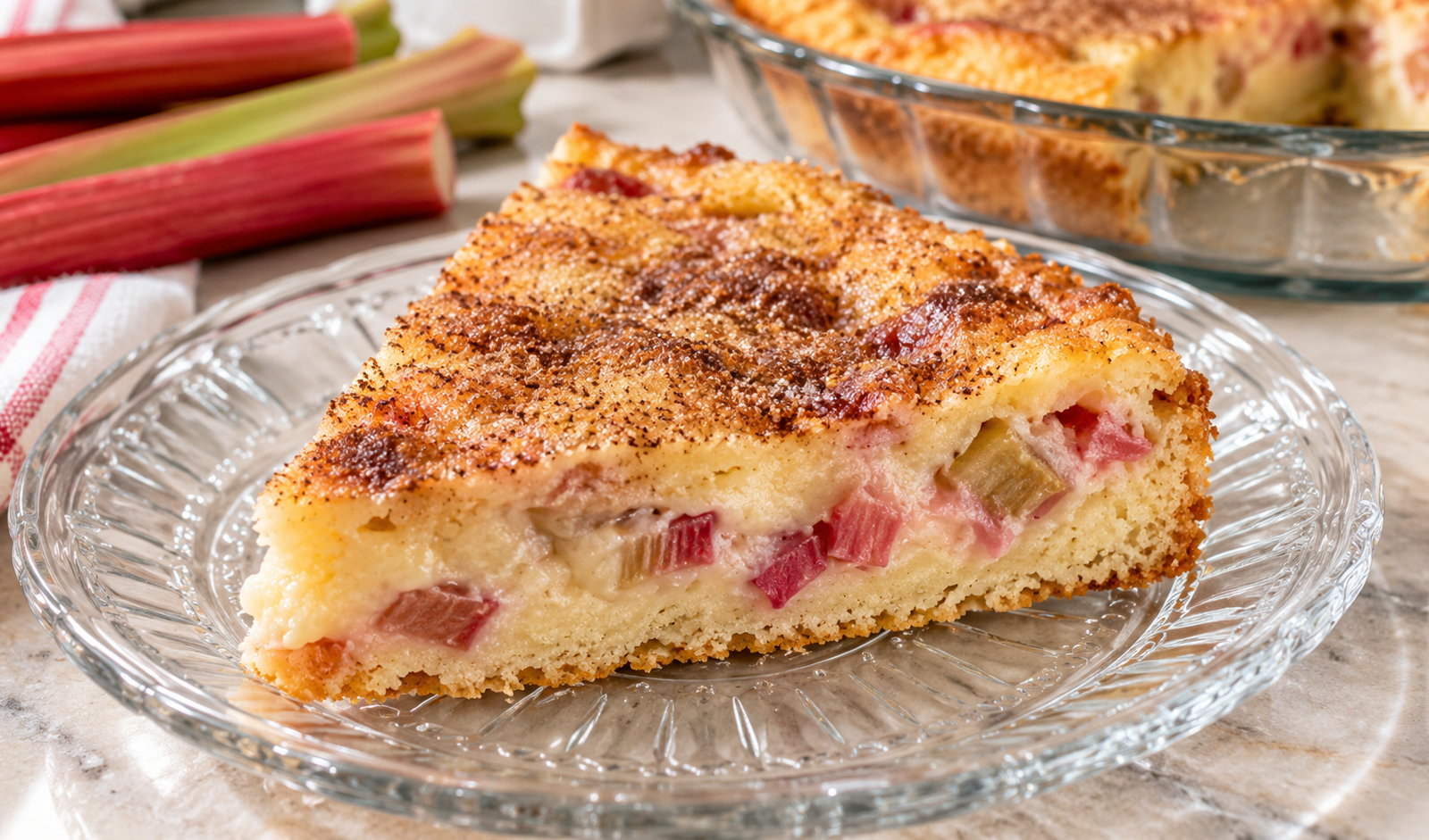
Old-Fashioned Rhubarb Custard Kuchen Dessert
A traditional German-inspired rhubarb kuchen made with soft homemade yeast dough, tangy rhubarb, rich vanilla custard, and a delicate cinnamon sugar topping.
12
servings40
minutes30
minutes511
kcal1
hour10
minutesIngredients
- Yeast Dough
1 1/2 cups water
1/2 cup sugar
1 package yeast
1 1/2 teaspoons salt
1/2 cup vegetable oil
4 1/2 cups all-purpose flour
2 large Eggland’s Best eggs
- Custard Filling
2 cups heavy cream
2 large Eggland’s Best eggs
1/2 cup sugar
1/2 cup flour
1/4 teaspoon salt
1 tablespoon vanilla
3 cups rhubarb, cut into 1/2-inch pieces
- Cinnamon Sugar Topping
2 tablespoons sugar
1 teaspoon cinnamon
Directions
- Prepare the Yeast Mixture
Combine water, sugar, and yeast in a bowl. Mix gently and allow to stand for 30 minutes. - Make the Dough
Add salt, vegetable oil, flour, and two eggs to the yeast mixture. Mix until a smooth dough forms. - Allow the Dough to Rise
Transfer the dough into a greased bowl, cover, and leave in a warm location until doubled in size. - Knead and Rise Again
Knead the dough, return it to the greased bowl, cover, and allow it to double in size again. - Prepare the Baking Pans
Preheat the oven to 375°F (190°C). Roll out portions of dough to fit greased nine-inch baking pans. The complete dough recipe makes enough for seven kuchens. - Cook the Custard
Combine heavy cream, the remaining two eggs, sugar, flour, and salt in a saucepan. Cook over moderate heat, stirring continuously, until the custard begins to thicken. Remove from the heat and stir in the vanilla. - Add the Rhubarb and Custard
Divide the rhubarb between two dough-lined pans, using approximately 1 1/2 cups per pan. Pour half the custard mixture over each. - Sprinkle the Cinnamon Sugar
Combine the sugar and cinnamon. Sprinkle half the mixture evenly over each prepared kuchen. - Bake Until Set
Bake at 375°F for approximately 25–30 minutes, until the crust is golden and the custard filling has set. - Cool and Serve
Allow the kuchen to cool sufficiently before slicing. Serve slightly warm or chilled.
Nutrition Facts
- Calories: 511kcal
- Fat: 26g
- Carbohydrates: 62g
- Protein: 9g


