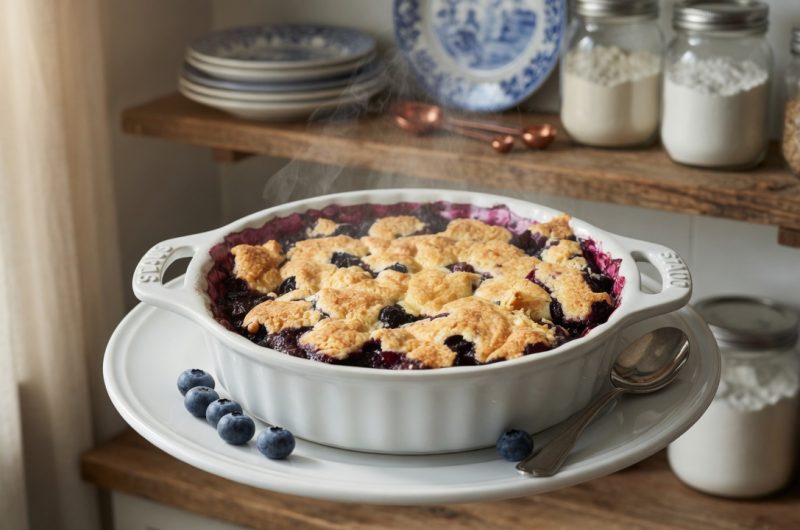
Blueberry cobbler is one of those desserts that feels both comforting and impressive at the same time. This particular version takes the classic recipe a step further by using a sourdough biscuit topping, which adds a slight tang that balances the sweetness of the blueberry filling beautifully. The result is a dessert that is rich, satisfying, and layered with flavor in a way that a standard cobbler simply cannot match. Whether you are baking for a family dinner, a summer gathering, or just because you have a craving, this recipe delivers every single time.
The Beauty of Using Fresh or Frozen Blueberries
One of the best things about this cobbler recipe is that it works with both fresh and frozen blueberries, which means you can make it any time of year. Fresh blueberries are ideal during peak summer season when they are sweet and plump, but frozen blueberries are a perfectly acceptable substitute during off-season months. Frozen blueberries may release a bit more liquid as they cook, which is completely normal and actually helps create a saucier, jammier filling. You can also switch things up by using cherries or fresh blackberries if blueberries are not available or if you simply want to try something different. The cobbler structure works well with any of these fruits, so feel free to experiment based on what you have on hand.
Choosing the Right Butter for the Filling
The butter in the blueberry filling plays a bigger role than you might expect. It adds richness and helps bring the filling together into a smooth, glossy consistency as it melts with the blueberries and honey. Using a good quality butter makes a noticeable difference here. Grass-fed butter sourced locally tends to have a deeper, creamier flavor compared to standard supermarket options, and that difference comes through in the final dish. If grass-fed butter is not accessible to you, any good quality unsalted butter will do the job well. The goal is simply to avoid anything that feels watery or lacks flavor, since the butter is one of the primary building blocks of the filling.
Sweetening With Honey or Maple Syrup
This recipe uses honey or maple syrup as the sweetener rather than refined white sugar, which is a choice that affects both the flavor and the nutritional profile of the dish. Honey adds a floral, slightly complex sweetness that pairs particularly well with blueberries. Maple syrup brings a deeper, more caramel-like sweetness that works beautifully with the warm spices in the biscuit topping. Both options are less processed than white sugar and contribute their own distinct flavor to the dessert. Locally sourced honey is especially worth seeking out if you can find it, as it tends to have a more robust flavor than mass-produced varieties. That said, either sweetener will produce a delicious result, so use whichever one you prefer or have available.
Understanding the Flour Options for This Recipe
Flour is used in both the blueberry filling and the cobbler topping, and the type you choose can slightly change the texture and flavor of the final dish. All-purpose flour is the most straightforward option and produces reliable, consistent results. Einkorn flour is an ancient grain variety with a nuttier, slightly sweet flavor and a different gluten structure than modern wheat. If you use einkorn, be aware that it absorbs liquid differently and you may need to adjust the quantity slightly to get the right dough consistency. Whole wheat flour is another option for the biscuit topping and adds a heartier texture. The flour in the blueberry filling acts as a thickener, helping the juices from the fruit bind into a cohesive filling rather than remaining watery at the bottom of the dish.
What Sourdough Starter Does for the Biscuit Topping
The sourdough starter is what makes this cobbler different from a standard biscuit-topped dessert. When you mix flour with an active sourdough starter and allow it to ferment overnight, the starter begins to break down the starches and phytic acid in the flour. This process improves the digestibility of the dough and adds a mild tangy flavor that you simply cannot replicate with commercial yeast or baking powder alone. You can use either an active fed starter or sourdough discard for this recipe. Both will contribute that characteristic tang, though an active starter may give the biscuits a slightly lighter rise. If you are new to working with sourdough, this cobbler is actually a great starting point because the biscuit topping is far more forgiving than a sourdough loaf.
The Overnight Fermentation Process and Why It Matters
The night-before soaking step might seem unnecessary, but it genuinely improves the final product. When you combine flour, sourdough starter, coconut oil, and honey and let the mixture sit at room temperature for eight to twenty-four hours, the fermentation process does several things. It partially breaks down the gluten in the flour, making the biscuits more tender. It also neutralizes phytic acid, which is naturally present in grains and can interfere with your body’s ability to absorb minerals like iron, zinc, and magnesium. The fermented dough also develops more complex flavor during this resting period, which is why the biscuits in this cobbler taste noticeably better than ones made from a quick, unfermented dough. Plan ahead and start this step the evening before you intend to bake.
Choosing the Right Fat for the Cobbler Topping
Coconut oil is the primary fat used in the cobbler topping, and it contributes a subtle tropical note along with a flaky, tender crumb. If coconut oil is not something you keep stocked or you prefer a more neutral flavor, avocado oil is a great substitute with a very mild taste that will not overpower the other ingredients. Melted butter is another excellent option and will give the biscuits a slightly richer flavor overall. The fat you choose will affect the texture of the biscuits slightly, with butter tending to produce the flakiest results and coconut oil creating a slightly denser, more crumbly texture. All three options work well in this recipe, so choose based on what you have available or what flavor profile you prefer.
Leavening Agents and the Role They Play
Even though this recipe uses sourdough starter, it also calls for both baking soda and baking powder in the cobbler topping. This combination ensures that the biscuits get enough lift to turn out light and fluffy rather than dense and flat. The sourdough starter provides flavor and some natural leavening, but it alone is not enough to guarantee a consistent rise in a biscuit-style topping. Baking powder provides an immediate lift when it comes into contact with liquid, while baking soda reacts with the natural acidity of the sourdough starter to create additional bubbles. Together, they give the biscuits a proper texture that holds up well against the heavy, moist blueberry filling beneath them.
How Cinnamon and Salt Elevate the Flavor
Cinnamon is one of those spices that adds warmth and depth without calling too much attention to itself. In the cobbler topping, it blends into the biscuit dough and gives each bite a slightly spiced undertone that complements the blueberries and honey very well. Salt performs an equally important function by balancing the sweetness of the brown sugar and honey. Without a proper pinch of salt, baked goods can taste one-dimensional and overly sweet. The salt also enhances the other flavors in the dough, making the cinnamon and sourdough tang more pronounced. These two ingredients are easy to overlook, but they are doing a lot of quiet work to make the cobbler taste as good as it does.
The Role of Heavy Cream and Brown Sugar
Heavy cream is mixed into the fermented dough just before baking to bring the biscuit mixture together and add richness. It contributes to a tender, moist crumb that does not dry out during baking. Organic brown sugar adds sweetness to the biscuit topping along with a hint of molasses flavor that pairs well with the sourdough tang. Brown sugar also helps the biscuit tops achieve a slightly caramelized finish as they bake, which contributes to that appealing golden color you want from a cobbler topping. Using organic brown sugar is a small upgrade that adds a bit more depth to the overall flavor of the dessert.
Baking Equipment That Makes This Easier
A cast iron skillet is one of the best tools for this recipe because it transitions easily from the stovetop to the oven. You can cook the blueberry filling directly in the skillet over medium heat, then arrange the biscuits on top and transfer the entire pan to the oven without dirtying an extra baking dish. Cast iron also distributes heat evenly, which helps the filling bubble consistently and the biscuits bake through without burning on the outside before the center is done. If you do not have a cast iron skillet, a standard oven-safe baking dish works perfectly fine. A grain mill is optional but useful if you prefer to freshly mill your own flour, and a stand mixer can make mixing the dough easier though it is not required.
Storing and Serving This Cobbler
This cobbler is best served warm, straight from the oven, with a spoonful of whipped cream or a scoop of vanilla ice cream on top. The contrast between the warm fruit filling and the cold ice cream is genuinely one of the better combinations in dessert. If you have leftovers, allow the cobbler to cool completely before storing it in an airtight container in the refrigerator. It will keep well for up to four days. You can reheat individual portions in the microwave for about thirty to forty-five seconds or warm the whole dish in the oven at a low temperature. The biscuits will soften slightly after being stored, but the flavor remains excellent.
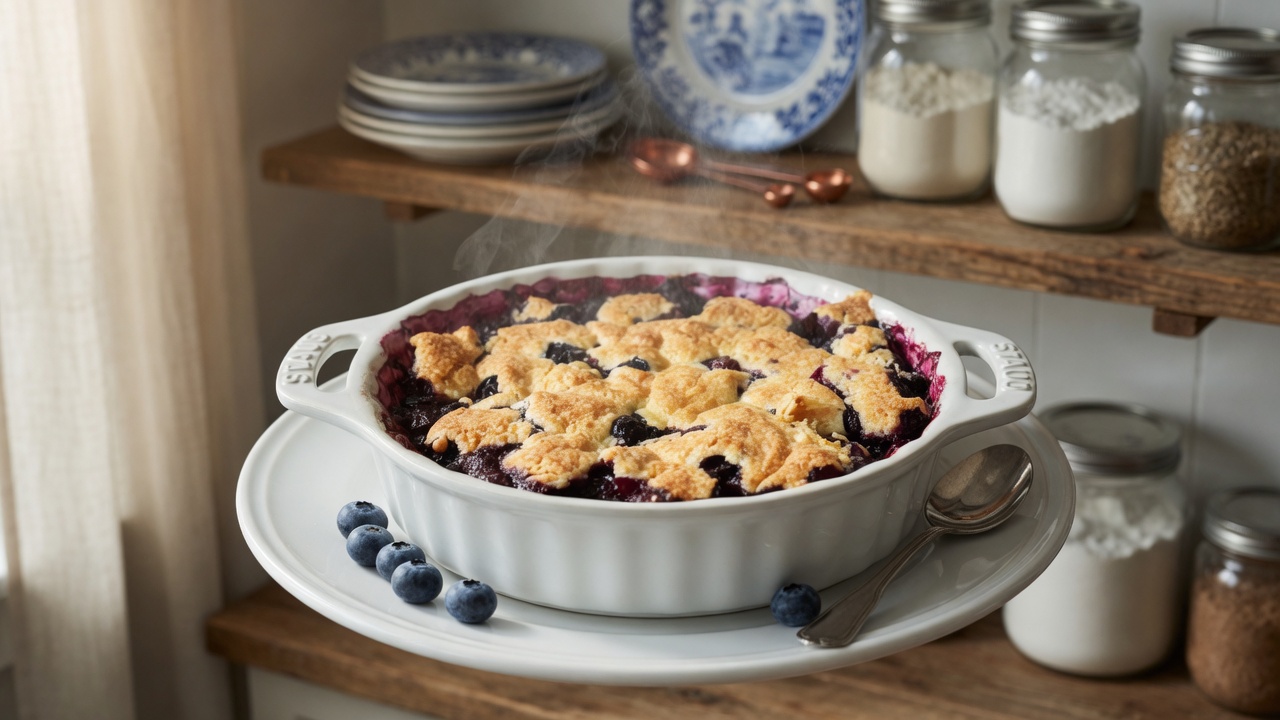
Sourdough Blueberry Cobbler
Indulge in the ultimate dessert delight that’s bound to become a family favorite.
8
servings8
hours20
minutes425
kcal8
hours20
minutesIngredients
- Blueberry Filling:
4 cups blueberries, fresh or frozen
1/3 cup honey
1/4 cup all-purpose flour (34 grams)
3 tablespoons butter (42 grams)
- Cobbler Topping:
2 cups all-purpose flour (280 grams)
1/2 cup sourdough starter, bubbly and active (113 grams)
1/3 cup melted coconut oil (72 grams)
1/4 cup honey (85 grams)
1 teaspoon baking soda (6 grams)
1 teaspoon baking powder (5 grams)
1/4 teaspoon cinnamon
1/2 teaspoon salt (3 grams)
1/4 cup cream (60 grams)
1/4 cup brown sugar (55 grams)
Directions
- The night before, combine 2 cups of all-purpose flour with bubbly and active sourdough starter. Mix in coconut oil and honey until well combined. Cover and let ferment for 8 to 24 hours.
- Preheat your oven to 350°F. In a cast iron skillet, combine blueberries, butter, honey, and flour over low to medium heat until melted and incorporated.
- While the blueberries are heating, retrieve the fermented dough. Add cream, baking soda, baking powder, brown sugar, cinnamon, and salt. Shape the dough on a floured surface and cut into biscuits.
- Arrange the biscuits atop the blueberry filling and bake for approximately 20 minutes until golden brown.
- Allow to cool slightly before serving. Serve with whipped cream or ice cream for an extra touch of indulgence.
Notes
- Experiment with different fruits like cherries or blackberries for a unique twist.
- Adjust flour quantities, especially when using specialty flours like einkorn.
- For optimal digestibility, consider soaking grains overnight.
- Simplify cleanup by using a skillet for both cooking and baking phases.
Nutrition Facts
- Calories: 425kcal
- Fat: 17g
- Sodium: 375mg
- Carbohydrates: 68g
- Protein: 5g