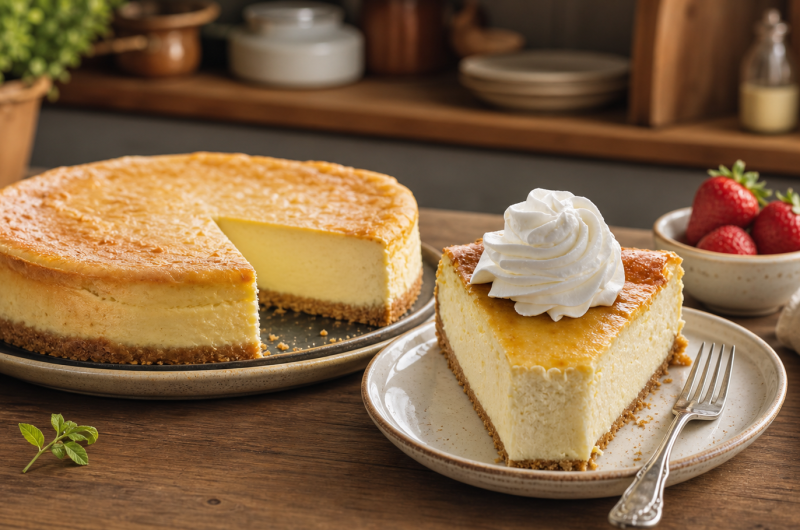
German cheesecake, known traditionally as Käsekuchen, is one of the most beloved classic desserts in Germany and across Central Europe. Unlike dense New York-style cheesecake, this authentic German version is light, delicately tangy, and beautifully balanced in sweetness. It features a buttery shortcrust pastry base and a creamy quark filling that sets softly with a gentle wobble in the center before chilling to perfection.
If you are searching for an authentic Käsekuchen recipe, a traditional German cheesecake with quark, or a European-style baked cheesecake that is lighter and less sweet than American versions, this guide will walk you through everything you need to know. From understanding the history of this timeless dessert to mastering the perfect airy texture, this recipe delivers a true bakery-quality result in your own kitchen.
What Makes German Cheesecake Different from American Cheesecake
When comparing German cheesecake vs New York cheesecake, the differences are both structural and flavor-based. American cheesecakes often rely heavily on cream cheese, sugar, and dense baking techniques. They tend to be rich, thick, and intensely sweet.
German Käsekuchen, on the other hand, uses quark or farmer cheese instead of cream cheese. Quark is lighter, slightly tangy, and less fatty than cream cheese, resulting in a fluffier and less heavy filling. The sweetness is moderate rather than overpowering, and the texture is softer, almost custard-like once chilled.
Another distinctive feature is the shortcrust pastry base (Mürbeteig) instead of a graham cracker crust. This adds structure and a delicate buttery bite that complements the airy filling.
The History of Käsekuchen
Käsekuchen has been a staple in German baking traditions for centuries. Historically, European cheese-based cakes were made using curd cheese or farmer cheese before cream cheese became widely available. Quark eventually became the preferred cheese due to its smooth texture and mild tang.
Throughout Germany, regional variations exist. Some versions include raisins, others use vanilla pudding powder instead of cornstarch, and some feature fruit toppings such as cherries or apricots. However, the classic Bavarian and central German version focuses on a simple vanilla-lemon quark filling baked gently in a shortcrust shell.
Today, Käsekuchen remains a popular dessert served at family gatherings, coffee afternoons (Kaffee und Kuchen), holidays, and celebrations.
Understanding Quark and Its Role
Quark is the essential ingredient that defines authentic German cheesecake. It is a fresh dairy product similar in texture to thick Greek yogurt but slightly drier and more structured. It has a mild tang that enhances flavor without overwhelming sweetness.
If quark is not available, farmer cheese, whole-milk ricotta, or well-drained cottage cheese can be substituted. However, for the most authentic flavor and texture, true quark produces the best results.
The quark filling provides creaminess without the heaviness associated with cream cheese. When combined with whipped egg whites, it creates a light, airy structure that sets gently during baking.
The Importance of the Shortcrust Pastry Base
Unlike crumb crust cheesecakes, German cheesecake features a buttery shortcrust pastry (pasta frolla style). This base adds structure and balances the creamy filling with a slightly crisp texture.
The dough is made from flour, sugar, butter, egg, baking powder, salt, and lemon zest. Chilling the dough is critical because it allows the butter to firm up and prevents shrinking during baking.
When baked, the crust turns golden brown and slightly crisp around the edges, creating a beautiful contrast to the soft interior filling.
Key Ingredients and Their Roles
The ingredients in this recipe are simple but precise. Each one contributes to texture and flavor.
All-purpose flour forms the crust base and provides structure. Granulated sugar sweetens both crust and filling without making it overly sugary. Butter adds richness and tenderness to the pastry.
Egg yolks enrich the filling, while whipped egg whites create lightness and volume. Cornstarch thickens the filling gently, ensuring it slices cleanly. Vanilla extract adds warmth, and lemon zest brightens the flavor.
Heavy cream increases silkiness and smooth texture, while quark remains the defining ingredient of this European cheesecake.
Step 1 – Preparing the Shortcrust Dough
Begin by preheating the oven to 350°F (180°C) and positioning the rack in the lower third. Grease a 9-inch springform pan and line the bottom with parchment paper.
In a large mixing bowl, whisk together flour, sugar, and salt. Add softened butter and beaten egg. Mix until the dough comes together. Shape into a ball, wrap in plastic wrap, and chill for 30 minutes.
Chilling prevents the dough from becoming sticky and ensures clean shaping later.
Step 2 – Creaming the Filling Base
In a separate bowl, beat butter and sugar until fluffy and pale. This step incorporates air and improves overall texture.
Add egg yolks one at a time, mixing well after each addition. Stir in cornstarch, vanilla extract, and lemon zest.
Gradually blend in quark and heavy cream until smooth. The mixture should be creamy and lump-free.
Step 3 – Whipping Egg Whites for Airiness
In a clean bowl, whip egg whites until stiff peaks form. This is a crucial step for achieving a light and airy cheesecake.
Gently fold the whipped egg whites into the quark mixture. Avoid stirring aggressively, as this can deflate the air and create a denser texture.
Step 4 – Assembling the Cheesecake
Remove chilled dough and press evenly into the bottom and slightly up the sides of the prepared pan.
Pour the filling into the crust and smooth the top with a spatula. Ensure the surface is even to promote uniform baking.
Step 5 – Baking to Perfection
Bake for approximately 60 minutes. The edges should appear golden, while the center remains slightly jiggly. This is normal and allows the cheesecake to finish setting as it cools.
Turn off the oven and leave the door slightly open for 10–15 minutes to prevent sudden temperature shock, which can cause cracking.
Cooling and Setting
Transfer the cheesecake to a cooling rack and allow it to cool completely at room temperature. Refrigerate overnight for best texture and flavor.
Chilling allows the custard-like filling to firm properly while preserving its airy structure.
Notes for Best Results
Use room-temperature ingredients for smoother mixing. Do not overbake; slight jiggle in the center is ideal. Cool gradually to avoid cracks. Chill overnight for clean slices.
Serving Suggestions
Dust the top lightly with powdered sugar before serving. Pair with fresh berries and whipped cream for added freshness.
Käsekuchen pairs beautifully with espresso or dessert wine such as Vin Santo.
Storage and Freezing
Store in an airtight container in the refrigerator for up to five days. Freeze individual slices wrapped tightly for up to one month.
Thaw slowly in the refrigerator before serving.
Why This Recipe Is Trending
Searches for “authentic German cheesecake recipe,” “Käsekuchen with quark,” and “European baked cheesecake” continue to grow. Many home bakers seek lighter alternatives to heavy American-style cheesecakes.
This recipe meets that demand while honoring traditional techniques.
German Käsekuchen represents classic European baking at its finest. It is elegant yet simple, creamy yet light, and sweet without excess.
With proper technique and patience, you can create an authentic German cheesecake that rivals any bakery in Germany.
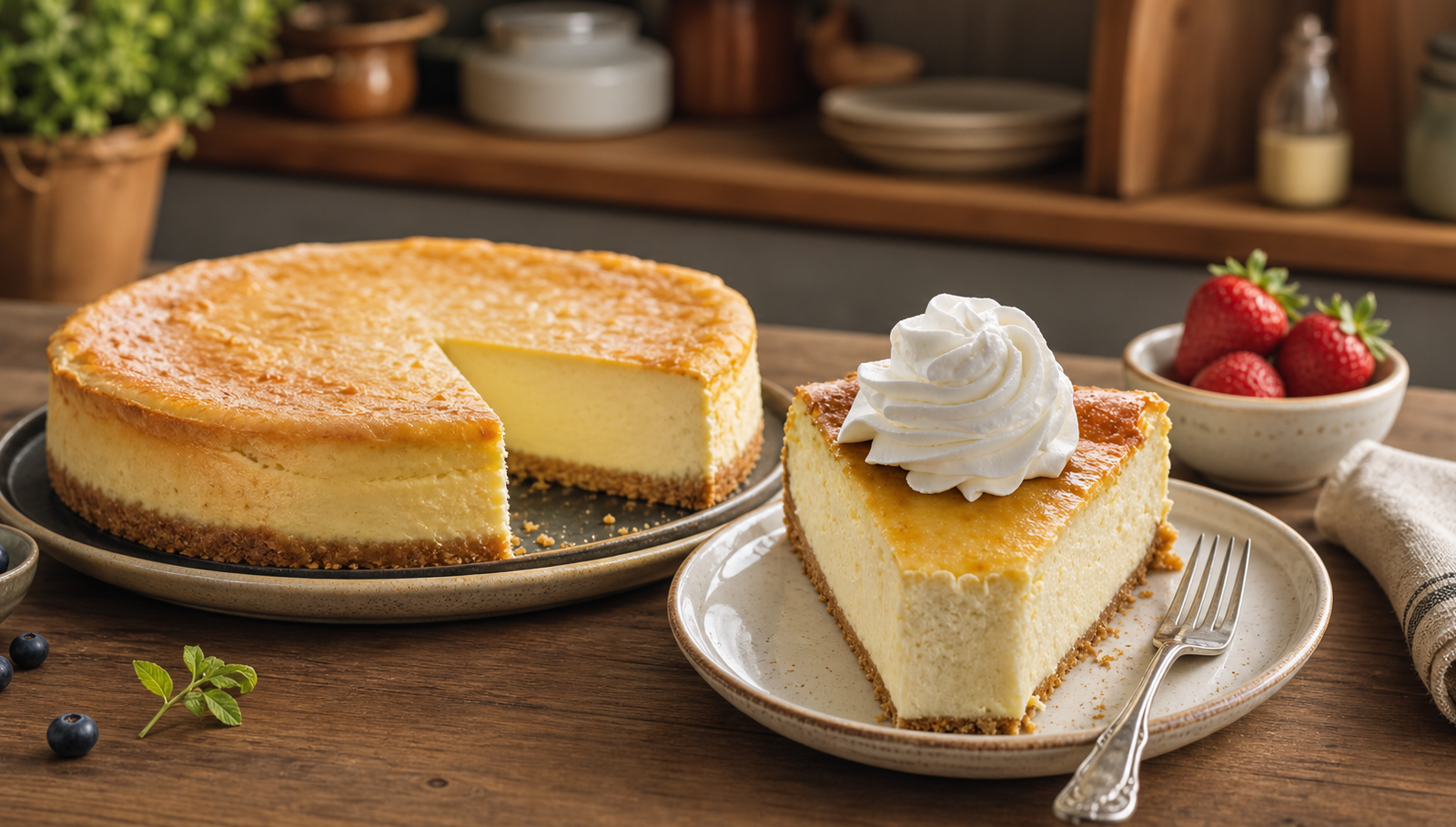
German Cheesecake Recipe (Käsekuchen)
Indulge in the rich and creamy delight of traditional German cheesecake, known as Käsekuchen. Unlike its American counterpart, this cheesecake features a light and airy quark-based filling, balanced with hints of vanilla and lemon, all sitting on a buttery shortbread crust. This rustic yet elegant dessert is a favorite in German bakeries and is perfect for any occasion.
44
minutes1
hour1
hour44
minutesIngredients
- For the Crust:
190 grams (1 ½ cups) all-purpose flour
50 grams (¼ cup) granulated sugar
A pinch of kosher salt
85 grams (6 tablespoons / 3 ounces) unsalted butter, softened
1 large egg, beaten
- For the Filling:
55 grams (4 tablespoons / 2 ounces) unsalted butter, softened
150 grams (¾ cup) granulated sugar
3 large eggs, separated
45 grams (⅓ cup) cornstarch
2 teaspoons vanilla extract
1 teaspoon grated lemon zest (from about ½ a large lemon, optional)
450 grams (2 cups) quark or farmer’s cheese
¾ cup heavy cream
Directions
- Preparing the Crust:
- Preheat your oven to 350°F (180°C) and position the rack in the lower third.
- Grease a 9-inch springform pan, line the bottom with parchment paper, and grease the paper as well.
- In a mixing bowl, combine the flour, sugar, and salt. Add in the softened butter and beaten egg.
- Mix until the dough comes together into a smooth ball. Wrap in plastic wrap and refrigerate for 30 minutes.
- Making the Filling:
- Using an electric mixer, beat the butter and sugar together until creamy and fluffy (about 1-2 minutes).
- Mix in the egg yolks, cornstarch, vanilla extract, and lemon zest until well combined.
- Add the quark and heavy cream, then continue mixing until smooth.
- In a separate bowl, whisk the egg whites until they form stiff peaks (around 2-3 minutes with an electric mixer on medium-high speed).
- Gently fold the whipped egg whites into the cheesecake batter to maintain its light texture.
- Assembling and Baking:
- Remove the dough from the refrigerator and press it evenly into the bottom and sides of the prepared springform pan.
- Pour the cheesecake filling into the crust, spreading it evenly.
- Place the pan on the lower oven rack and bake for 60 minutes.
- After baking, turn off the oven, crack the oven door, and let the cheesecake rest inside for another 10-15 minutes.
- The edges should be golden brown, while the center will still have a slight jiggle—it will set further as it cools.
- Remove from the oven and carefully detach the springform pan’s edges.
- Allow the cheesecake to cool completely at room temperature before transferring it to a serving plate.
- Dust with powdered sugar and serve with lightly sweetened whipped cream (Schlagsahne) and fresh berries for a traditional touch.
Notes
- Notes:
Best Results: Prepare the cheesecake a day in advance and refrigerate overnight for optimal texture and flavor.
Storage: Keep leftover Käsekuchen in an airtight container in the fridge for up to 5 days. You can also wrap individual slices in plastic wrap, place them in a freezer bag, and freeze for up to a month. Thaw in the refrigerator before serving.
Crust Thickness: When pressing the dough into the pan, the crust may only reach about 1 ½ inches up the sides, which is perfectly fine. To even out the thickness, use a dry measuring cup to press along the bottom and sides. - What is Quark?
Quark is a fresh dairy product similar to farmer’s cheese or curd cheese. It has a mild, creamy texture and is popular in European desserts. Depending on the country, it may be labeled differently:
Austria: Topfen
France: Fromage blanc or fromage frais
Poland: Twaróg
Czech & Slovak: Tvaroh
Russia: Tvorog (творог)
USA: Often found as farmer’s cheese
If you can’t find quark, you can substitute with pureed cottage cheese, whole-milk ricotta, or Greek yogurt, though the texture may slightly vary.
Where to Buy Quark?
In the past, finding quark in the U.S. was a challenge, but now brands like Wünder Quark offer authentic European-style quark in various flavors, including plain (perfect for baking). Check your local grocery store or specialty markets for availability.

)