If you love the deep, nutty taste of a classic pecan pie but want something easier to pull off, this pecan pie filling recipe is worth bookmarking. You get all the good stuff, the sweetness, the crunch, the sticky richness, without having to worry about making a perfect pie crust. This filling works great on its own, spooned over ice cream, layered into desserts, or used as a spread for pancakes and waffles.
What Makes This Pecan Pie Filling So Good
The magic of a great pecan pie filling comes down to balance. You need the right amount of sweetness, a good binding ingredient to hold everything together, and enough fat to give it that smooth, creamy texture. This recipe hits all of those marks. It is a no-fuss approach that delivers a result that tastes like it came from a bakery. Even if you have never made anything like this before, the steps are simple and the outcome is reliable.
Understanding the Role of Each Ingredient
Before you start mixing anything together, it helps to know what each ingredient is doing in the recipe. Sugar is the base sweetener, and it gives the filling its characteristic richness. Light corn syrup is what creates that thick, gooey consistency people associate with pecan pie. It keeps the sugar from crystallizing and gives the filling a smooth, sticky body that holds together well.
Why Eggs Are Important in This Filling
Eggs are not just filler in this recipe. They work as a thickening agent, helping the filling set properly as it bakes. Without eggs, the mixture would stay too loose and runny. When exposed to heat, the proteins in the eggs firm up just enough to give the filling structure while keeping it soft enough to scoop or spread. This is what gives pecan pie filling that satisfying texture that is firm when cool but soft when warm.
The Purpose of Butter and Vanilla in the Mix
Melted butter adds a layer of richness that makes the filling taste more complete. It is not just about flavor though. Butter also contributes to the smooth, creamy texture of the finished product. Without it, the filling can taste one-dimensional. Vanilla extract rounds out the sweetness and adds a warm background flavor. Some people prefer butter pecan extract for a deeper, more pronounced pecan taste, and that swap works well here too.
Choosing and Preparing Your Pecans
Pecans are the main ingredient in this recipe, and how you prepare them matters. Roughly chopping the pecans rather than leaving them whole or grinding them fine gives the filling the best texture. Whole pecans can be hard to distribute evenly, and finely ground pecans make the filling feel more like a paste than a chunky, satisfying spread. A rough chop means you get good pecan flavor and a pleasant crunch in every bite. You can use raw or lightly toasted pecans depending on your preference.
How to Get the Oven Ready
Start by preheating your oven to 350 degrees Fahrenheit, which is about 175 degrees Celsius. While the oven is warming up, prepare your baking dish. An 8×8 inch glass dish or a standard 9 inch pie dish both work well for this recipe. Spray the inside of the dish with non-stick cooking spray so the filling does not stick to the bottom or sides. This small step makes a big difference when it comes time to scoop or serve the filling later.
Mixing the Filling the Right Way
Combine the sugar, light corn syrup, eggs, melted butter, vanilla extract, and chopped pecans in a large mixing bowl. Stir everything together until the mixture is fully combined. You want the sugar to dissolve into the liquid ingredients and the pecans to be spread evenly throughout. Do not rush this step. A well-mixed filling bakes more evenly and has a better texture than one that was stirred together quickly. Once the mixture looks uniform and smooth, it is ready to go into the dish.
Baking and Stirring for Even Results
Pour the filling into your prepared baking dish and place it in the center of the oven. Bake for 45 minutes total, but make sure to stir the filling every 15 minutes during the baking process. This step is important because it prevents a tough, overcooked layer from forming on top while the inside stays underdone. Stirring at regular intervals keeps the heat distributed evenly and ensures the filling cooks through without drying out or hardening on the surface.
How to Know When the Filling Is Done
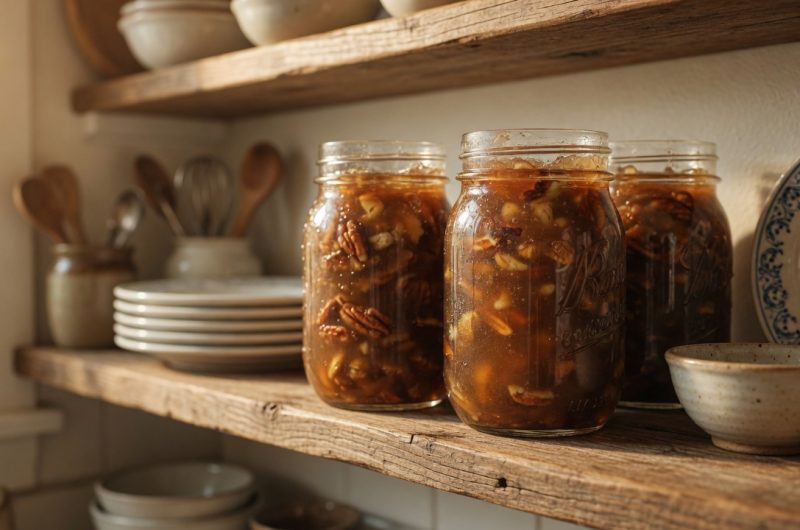
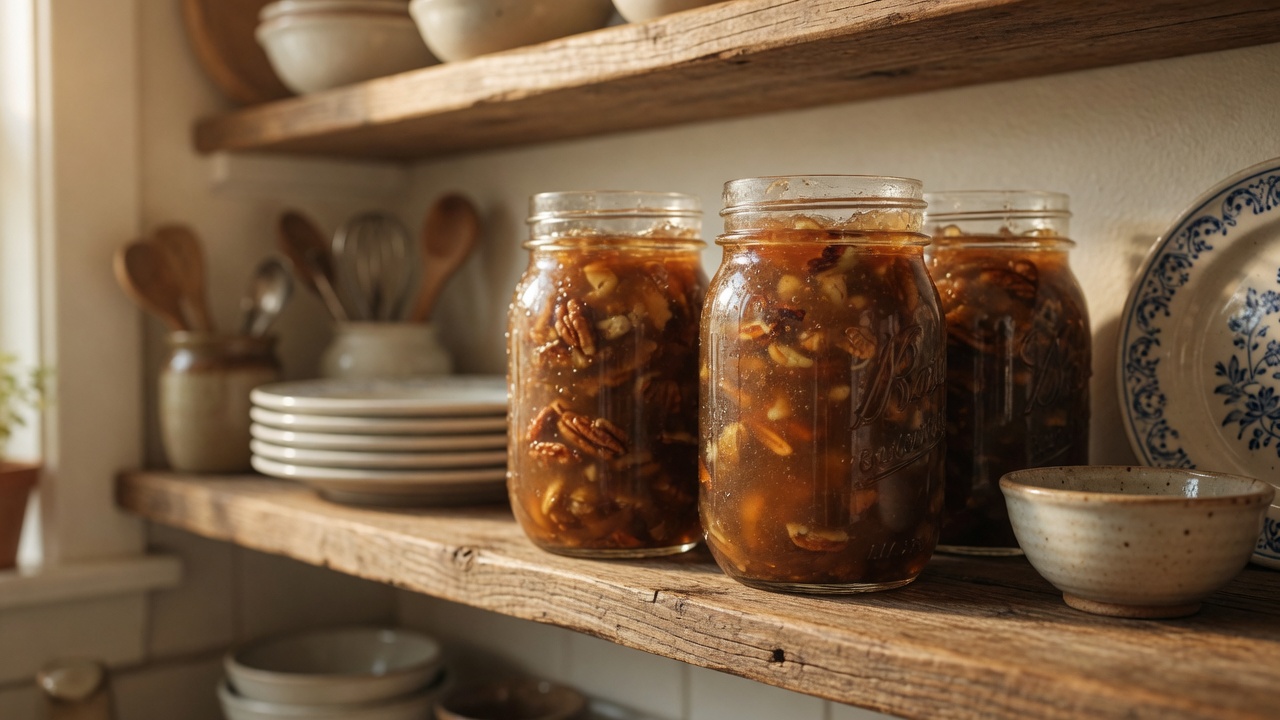
After 45 minutes of baking, the filling should look set and slightly darker in color. Remove it from the oven and let it cool in the dish for about 20 minutes before using or storing. As it cools, it will thicken to a consistency similar to a thick jam. It should hold its shape on a spoon but still be soft enough to spread easily. If it seems too loose right out of the oven, do not worry. Cooling time is what brings it to the right texture.
What to Do If the Filling Turns Out Too Hard
If your filling comes out harder than expected, it is most likely due to baking it too long or at a temperature that was too high. Sugar behaves a lot like candy when it is heated, and if it goes past a certain point, it sets into a very firm texture. Always check your oven temperature with a thermometer if you are unsure, and stick to the 45 minute baking time. Pulling the filling out on time and letting it cool properly will prevent this issue in most cases.
Ways to Use Pecan Pie Filling Beyond Pie
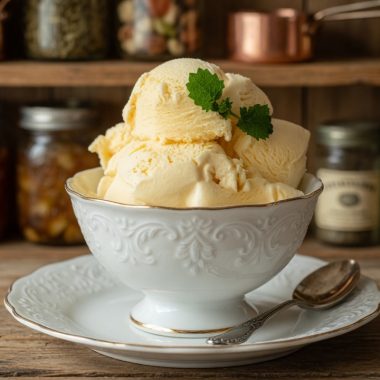
One of the best things about making this filling on its own is how many ways you can use it. Spoon it over vanilla ice cream for a simple but impressive dessert. Use it as a topping for cheesecake or brownies. Spread it between cake layers for a nutty, sweet filling. It also works as a topping for French toast or waffles on a weekend morning. Store any leftovers in an airtight container in the refrigerator for up to one week, and warm it gently before using.
Storing and Reheating the Filling
Once the filling has cooled completely, transfer it to a sealed container and keep it in the refrigerator. It stays fresh for up to seven days. When you are ready to use it again, warm it in the microwave in short intervals, stirring between each one, until it reaches the right consistency. You can also reheat it on the stovetop over low heat with a splash of water if it has thickened too much in the fridge. Avoid overheating it, as that can change the texture.
Pecan Pie Filling
A rich, gooey, and easy-to-make pecan pie filling with a thick, jamlike consistency. Perfect for topping desserts, spreading over breakfast items, or using as a layer inside cakes and bars. No crust needed.
10
minutes45
minutes215
kcal20
minutes1
hour15
minutesIngredients
1 cup granulated sugar
1 1/2 cups light corn syrup
4 large eggs
1/4 cup melted butter
1 1/2 teaspoons vanilla extract
2 cups chopped pecans
Directions
- Preheat your oven to 350°F (175°C). Lightly spray an 8″x8″ glass baking dish or a 9-inch pie dish with non-stick spray.
- In a mixing bowl, combine sugar, corn syrup, eggs, melted butter, vanilla extract, and chopped pecans. Stir until well mixed.
- Pour the mixture into the prepared dish. Bake for 45 minutes, stirring every 15 minutes to ensure even cooking.
- Remove from the oven and let cool for 20 minutes before using. The filling should have a thick, spreadable consistency.
- Use the filling immediately or allow it to cool completely before storing. Enjoy the rich, nutty goodness in your favorite desserts!
Nutrition Facts
- Calories: 215kcal
- Fat: 13g
- Cholesterol: 48mg
- Sodium: 45mg
- Carbohydrates: 24g
- Protein: 3g