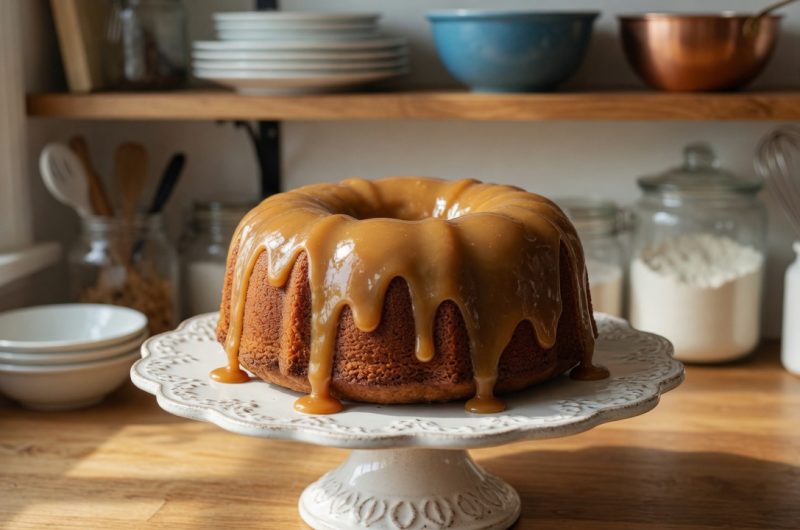
Caramel frosted pound cake combines the classic density of traditional pound cake with a sweet, buttery caramel topping. This cake has a tight crumb that slices cleanly and holds its shape on a plate. The caramel frosting adds a layer of sweetness and creates a glossy finish that looks professional. Unlike lighter cakes, pound cake has enough structure to support the weight of the thick frosting without becoming soggy. The combination of vanilla and almond extracts gives this cake a flavor that stands out from basic pound cakes you might find in stores.
Understanding Pound Cake Ingredients
The ingredients in this recipe work together to create the signature texture of pound cake. Butter provides richness and helps create the tender crumb that makes this cake different from dry, crumbly cakes. Eggs add structure and help bind everything together while contributing to the golden color. Heavy whipping cream keeps the cake moist and adds fat content that creates a velvety texture. All-purpose flour gives the cake its structure without making it too heavy. The granulated sugar sweetens the cake and helps create a fine crumb texture when creamed with butter.
Why Oven Temperature Matters
Baking this pound cake at three hundred twenty-five degrees Fahrenheit is lower than many cake recipes. This lower temperature allows the thick batter to bake through completely without the outside burning before the inside cooks. Higher temperatures would create a dark crust while leaving the center underbaked and gummy. The gentle heat lets the cake rise slowly and evenly, preventing cracks on top and ensuring the texture stays consistent throughout. Setting your oven to the correct temperature before you start mixing ensures it reaches the right heat by the time your batter is ready.
Preparing Your Tube Pan Correctly
A tube pan has a center tube that helps heat reach the middle of thick batters like pound cake. Greasing this pan properly prevents frustration when you try to remove the finished cake. Use solid shortening rather than butter because shortening creates a better barrier between the cake and the metal. Apply the shortening with a paper towel or pastry brush, making sure to coat the center tube, the bottom, and all the ridges on the sides. After greasing, dust the pan with flour and tap out the excess to create a non-stick surface.
Creaming Butter and Sugar Properly
The first step of mixing butter and sugar together is more important than it might seem. This process, called creaming, incorporates air into the batter which helps the cake rise. Beat the butter and sugar for a full five minutes until the mixture looks lighter in color and fluffy in texture. The sugar crystals cut into the butter, creating tiny air pockets that expand during baking. Rushing this step by beating for only a minute or two results in a denser cake. Room temperature butter creams better than cold butter, so let your butter sit out for about an hour before starting.
Adding Eggs Without Curdling
Adding six eggs to the creamed butter and sugar needs to happen gradually to prevent the mixture from separating. Add one egg at a time and beat until it disappears into the batter before adding the next. This slow process helps create a stable emulsion where the fat and liquid ingredients blend smoothly. If you add all the eggs at once, the mixture might look curdled or separated. Room temperature eggs incorporate more easily than cold eggs from the refrigerator. If you forgot to bring your eggs to room temperature, place them in a bowl of warm water for five minutes.
Choosing Your Flavor Extracts
Vanilla extract is standard in most cakes, but the addition of almond extract makes this pound cake taste different from ordinary vanilla cakes. Almond extract has a strong flavor, so one teaspoon is enough to come through without overwhelming the vanilla. These extracts add depth to the flavor that plain cake would lack. Pure extracts work better than imitation versions because they contain real vanilla beans or almond oil. The extracts should be added after the eggs so they distribute evenly throughout the batter before you add the flour.
Alternating Flour and Cream
The method of adding flour and cream in stages rather than all at once prevents overmixing and creates a better texture. Start by adding about one-third of the flour and mixing just until you can barely see it. Then add half the cream and mix briefly. Continue this pattern, ending with the final addition of flour. This technique keeps the gluten development under control so the cake stays tender instead of becoming tough. Mix only until the flour disappears into the batter. Small lumps are fine and will smooth out during baking.
Knowing When the Cake is Done
After one hour and fifteen minutes of baking, check your cake to see if it needs more time. The top should be golden brown and spring back when you touch it lightly. Insert a wooden pick or toothpick into the thickest part of the cake. The pick should come out clean or with just a few dry crumbs attached. If you see wet batter on the pick, bake for another five minutes and check again. The cake will continue cooking slightly from residual heat after you remove it from the oven.
Cooling the Cake Properly
Let the baked cake cool in the pan for ten to fifteen minutes before trying to remove it. This cooling period allows the cake to firm up enough to hold together when you turn it out. Cooling too long can cause the cake to stick to the pan, while removing it too soon might cause it to break apart. Run a thin knife around the edges and center tube if the cake seems stuck. Turn the pan upside down onto a wire cooling rack and lift the pan off. Let the cake cool completely before frosting, which takes about two hours.
Making Caramelized Sugar Safely
The caramel frosting starts by melting sugar in a dry skillet without any liquid. This process, called dry caramelization, requires attention because sugar can burn quickly. Use a light-colored skillet so you can see the sugar changing color from white to amber. Shake the pan gently to move the sugar around rather than stirring it with a spoon. The sugar will clump and look strange before it melts completely. Keep cooking until all the sugar melts and turns the color of honey. Remove it from heat immediately when it reaches the right color.
Combining the Caramel Components
The next step involves adding the caramelized sugar to a mixture of more sugar, butter, and milk that is already boiling. This combination will bubble up dramatically when the hot caramel hits the liquid, so use a pan large enough to handle the expansion. Whisk constantly as you pour the caramel into the boiling mixture to prevent lumps from forming. The mixture needs to reach two hundred thirty-two degrees on a candy thermometer, which is called the soft ball stage. At this temperature, the frosting will set to the right consistency when it cools.
Using a Candy Thermometer
A candy thermometer clips to the side of your pan and stays in the mixture while it cooks. Make sure the tip of the thermometer does not touch the bottom of the pan, as this gives a false reading. The temperature of the frosting determines whether it will be too runny or too firm when it sets. Two hundred thirty-two degrees creates frosting that spreads smoothly but hardens to a sliceable texture. If you do not have a thermometer, cook the mixture for about five minutes after adding the caramel, though this is less precise.
Cooling the Frosting to the Right Consistency
After removing the frosting from heat, let it cool for twenty minutes while stirring occasionally. The frosting starts very thin and liquid, gradually thickening as it cools. Stir every few minutes to release heat and check the consistency. The frosting is ready when it coats the back of a spoon and starts to lose its shine. If the frosting gets too thick before you finish spreading it, you can warm it gently over low heat to make it workable again. Working with frosting at the right temperature makes spreading much easier.
Applying the Frosting Quickly
Once the caramel frosting reaches spreading consistency, you need to work fast because it continues to thicken and harden. Pour the frosting over the top of the cooled cake and use an offset spatula to spread it evenly. Let some frosting drip down the sides naturally for an attractive look. The frosting will set within a few minutes, so smooth it out quickly rather than going back over areas multiple times. Any imperfections add to the homemade charm of the cake. The hardened frosting develops a slight sheen that makes the cake look polished.
Avoiding Common Mistakes
Several common problems can affect this cake, but they are all preventable. A dense, heavy cake usually means you overmixed the batter after adding the flour. A dry cake happens when you use too much flour or bake it too long. If the cake sticks in the pan, you did not grease it thoroughly enough. Grainy frosting means the sugar did not dissolve completely or you did not cook it to the right temperature. Frosting that never hardens was not cooked long enough or cooled enough before spreading.
Storing at Room Temperature
This pound cake keeps well at room temperature for up to three days when stored properly. Cover the cake loosely with plastic wrap or place it under a cake dome to protect it from drying out. Room temperature storage keeps the cake at its best texture because refrigeration dries out pound cake. The caramel frosting acts as a protective layer that helps seal in moisture. Keep the cake away from direct sunlight and heat sources. The frosting will soften slightly in very warm rooms but will not melt off the cake.
Refrigerating or Freezing for Later
For storage longer than three days, wrap the cake tightly in plastic wrap and refrigerate it for up to one week. The cake will firm up in the refrigerator, so let it sit at room temperature for an hour before serving. For even longer storage, wrap the cake in plastic wrap and then aluminum foil before freezing for up to three months. Frozen cake thaws at room temperature in about three hours. You can also slice the cake before freezing and remove individual pieces as needed.
Serving Suggestions
This rich cake needs nothing more than a cup of coffee or glass of milk alongside it. The sweet caramel frosting makes the cake satisfying on its own without ice cream or additional toppings. Serve thin slices because the dense texture and sweet frosting make a little go a long way. The cake works well for special occasions like birthdays or holidays but is simple enough for everyday desserts. Pack individual slices in containers for lunch boxes or picnics. The firm texture means slices hold together without falling apart when transported.
Adjusting Flavors to Your Taste
While the recipe as written creates a delicious cake, you can make small adjustments to suit your preferences. Use only vanilla extract if you do not like almond flavoring, increasing the vanilla to one tablespoon. Add a pinch of salt to the batter if you like the contrast of sweet and salty. For a different frosting flavor, substitute brown sugar for half the granulated sugar in the caramel. You can also add a teaspoon of instant coffee to the frosting for a mocha variation. Keep any changes small to maintain the proper texture.
Understanding Tube Pan Alternatives
A tube pan, also called an angel food cake pan, has a removable bottom and center tube. If you do not have a tube pan, you can use a standard bundt pan instead. Grease a bundt pan the same way and bake for the same amount of time. The shape will be different, but the cake will taste the same. Two standard loaf pans also work, though you will need to reduce the baking time to about fifty minutes. Check for doneness earlier when using smaller pans to prevent overbaking.
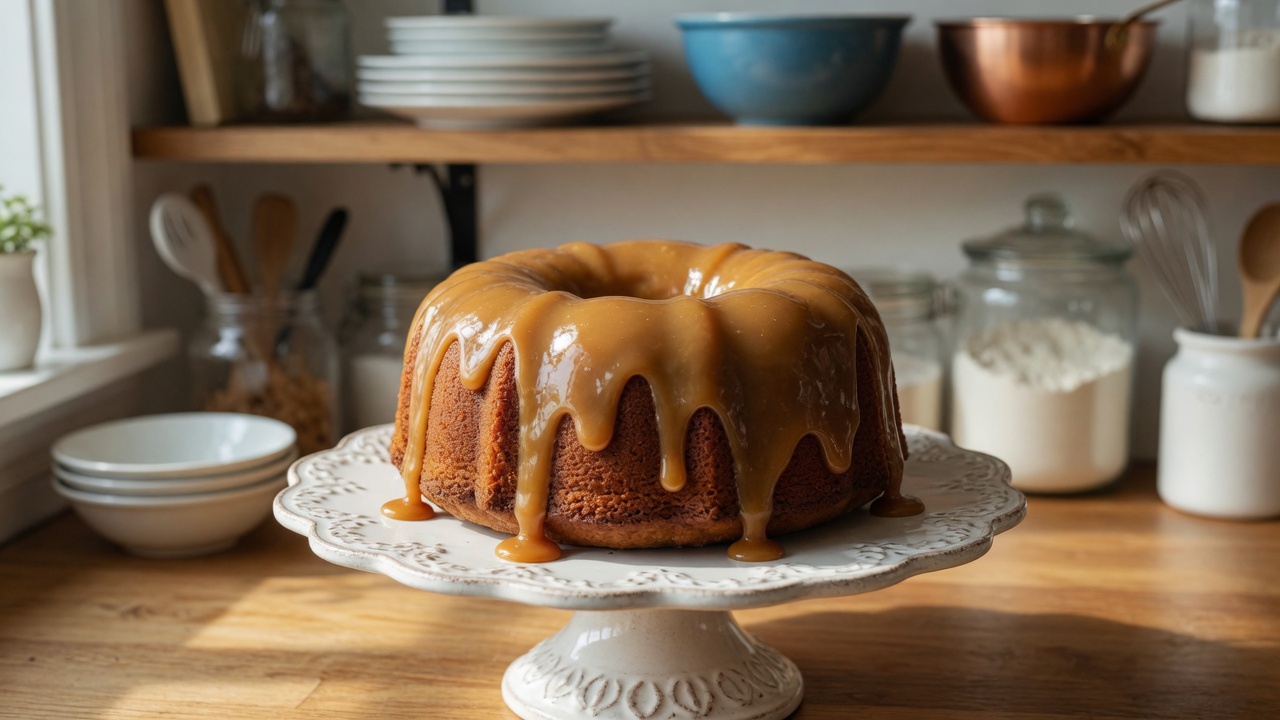
Caramel Pound Cake
This caramel-frosted pound cake is the perfect blend of rich flavors and moist texture. Follow these steps carefully, and you’ll have a delightful dessert that is sure to impress your family and friends. Enjoy every bite of this decadent treat!
20
minutes2
hours1
hour15
minutes30
minutes4
hours5
minutesIngredients
- For the Pound Cake:
Shortening (for greasing the pan)
3 cups granulated sugar
1 cup unsalted butter, softened
6 large eggs
2 teaspoons vanilla extract
1 teaspoon almond extract
1 cup heavy whipping cream
3 cups white lilly all-purpose flour
- For the Caramel Frosting:
1 1/2 cups granulated sugar (divided)
1/2 cup unsalted butter
1/2 cup milk
Directions
- Prepare the Oven and Pan
Preheat the oven to 325°F (165°C).
Grease and flour a 10-inch tube pan with shortening.
Make the Batter
Beat 3 cups of sugar and 1 cup of butter with an electric mixer on medium speed until light and fluffy (about 5 minutes).
Add 6 large eggs one at a time, beating well after each addition.
Mix in 2 teaspoons of vanilla extract and 1 teaspoon of almond extract.
Add 3 cups of flour alternately with 1 cup of heavy whipping cream, beginning and ending with flour. Beat well after each addition. - Bake the Cake
Pour the batter into the prepared pan.
Bake for 1 hour and 15 minutes or until a long wooden pick inserted in the center comes out clean.
Cool the cake in the pan on a wire rack for 10 to 15 minutes, then remove from the pan and cool completely. - Make the Caramel Frosting
Heat 1/4 cup of sugar in a skillet over medium heat until amber colored (about 6 minutes), shaking the pan occasionally (do not stir).
In a 3-quart saucepan, bring the remaining 1 1/4 cups of sugar, 1/2 cup of butter, and 1/2 cup of milk to a boil over medium-high heat.
Gradually whisk in the caramelized sugar.
Cook until a candy thermometer registers 232°F (111°C). Remove from heat and let cool for about 20 minutes, stirring occasionally, until smooth and spreadable. - Frost the Cake
Using an offset spatula, quickly spread the caramel frosting over the cake. The frosting will harden as it cools.