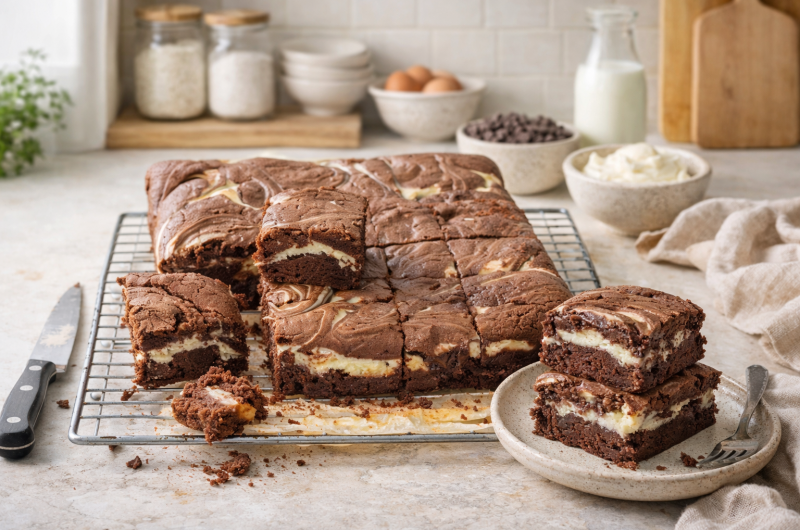
Sourdough brownies with cheesecake swirl represent a sophisticated fusion of tangy fermented dough with rich chocolate and creamy cheesecake. These decadent brownies appeal to people seeking indulgent desserts that showcase sourdough’s versatility beyond bread baking. The combination of sourdough discard with dark chocolate creates complex flavors impossible to achieve with standard brownie recipes using only commercial leavening. The cheesecake swirl adds creamy richness that contrasts beautifully with the fudgy chocolate layer. These brownies work perfectly for special occasions, celebrations, or simply satisfying chocolate cravings. Understanding how sourdough fermentation affects brownie texture and flavor helps you appreciate why these brownies taste noticeably better than versions made without sourdough.
Why Sourdough Discard Enhances Brownie Quality
Sourdough discard contains active yeast and bacteria that contribute fermentation benefits to brownies while reducing food waste. The fermentation process creates lactic acid that develops subtle tangy notes complementing chocolate beautifully without overpowering sweetness. Using discard transforms what would otherwise be wasted ingredients into something genuinely delicious. The moisture content in sourdough discard creates fudgy, tender texture that stands apart from standard brownies. The enzymes in sourdough break down flour components, improving digestibility while creating superior crumb structure. The subtle tang from sourdough fermentation adds depth that elevates brownies beyond one-dimensional chocolate flavor. The investment in maintaining a sourdough starter pays dividends through superior flavor in all your baked creations.
Selecting Quality Chocolate for Rich Flavor
The chocolate you use significantly impacts the brownies’ flavor profile and overall quality. Using quality cocoa powder rather than budget alternatives provides superior chocolate flavor and aroma. Dutch-processed cocoa powder creates darker color and smoother flavor compared to natural cocoa powder. Chocolate chips should be quality brands with real cocoa butter rather than waxy substitutes. The chocolate-to-cocoa powder ratio affects how intense the chocolate flavor becomes. Some people prefer semi-sweet chocolate chips while others choose dark chocolate for more pronounced flavor. The quality of chocolate makes a noticeable difference in the finished brownies’ taste and texture.
Understanding Cream Cheese’s Role in Swirl Layer
Cream cheese at room temperature creams properly with sugar, creating the smooth cheesecake mixture essential for quality swirls. Using full-fat cream cheese rather than reduced-fat varieties provides better flavor and texture. Room temperature cream cheese incorporates evenly without creating lumps or uneven texture. The cheesecake layer provides creamy richness that contrasts beautifully with fudgy chocolate. The amount of cream cheese affects how pronounced the cheesecake flavor becomes. Proper blending ensures the cheesecake mixture spreads evenly without breaking apart. Quality cream cheese makes a noticeable difference in the finished swirl layer.
Preparing Ingredients for Proper Mixing
Having all ingredients at room temperature ensures proper incorporation and even texture throughout. Room-temperature eggs mix smoothly into butter without creating temperature shock. Melted butter combines evenly with other wet ingredients without creating separated mixture. Room-temperature cream cheese blends smoothly without lumps or uneven distribution. Proper ingredient preparation prevents texture issues and ensures consistent results. Taking time to prepare ingredients ahead prevents delays and ensures smooth workflow.
Creating the Chocolate Brownie Base
Combining melted butter, sugar, vanilla extract, eggs, and sourdough discard creates the wet base for brownies. Proper whisking ensures even distribution of ingredients throughout the mixture. The sourdough discard should be mixed thoroughly without creating pockets of concentrated discard. The wet mixture should be uniform in color and consistency before combining with dry ingredients. Proper mixing creates the foundation for fudgy texture and rich chocolate flavor.
Whisking Dry Ingredients for Even Distribution
Combining flour, cocoa powder, and salt in a separate bowl ensures even distribution throughout the brownie batter. Whisking creates uniform mixture without visible cocoa powder streaks or flour pockets. The salt enhances chocolate flavor while preventing the brownies from tasting one-dimensional. Properly whisked dry ingredients combine smoothly with wet ingredients without creating lumps. The texture of dry ingredient whisking affects the final brownie crumb structure.
Blending Cream Cheese Mixture for Smoothness
Using a hand or stand mixer ensures the cream cheese, sugar, egg white, salt, and vanilla extract blend evenly. Proper blending creates smooth, creamy mixture without lumps or unmixed components. The mixture should be uniform in color and consistency before dolloping over brownie batter. Overblending develops texture changes, so stop mixing once the mixture becomes smooth. Room-temperature ingredients create better results than cold ingredients that don’t blend as smoothly.
Layering Technique for Proper Marbling
Spreading half the chocolate batter creates the foundation layer before adding cheesecake mixture. Sprinkling chocolate chips between layers adds fudgy pockets throughout the brownies. Dolloping cheesecake mixture and remaining brownie batter creates distinct layers ready for swirling. The layering should be relatively even to create attractive marbling. Proper layering ensures every brownie contains chocolate, cheesecake, and brownie layers.
Creating Marbled Effect with Proper Technique
Using a toothpick or knife to gently swirl creates the distinctive marbled pattern visible when sliced. The swirling should be gentle to create attractive marbling without overmixing layers. Creating a figure-eight or spiral pattern distributes both fillings throughout. The marbling creates visual appeal while distributing flavors evenly. Careful swirling prevents one flavor from completely overwhelming another.
Baking Temperature and Time for Perfect Results
Baking at three hundred fifty degrees Fahrenheit ensures the brownies bake through while remaining fudgy in the center. The thirty-six to forty-minute baking time is approximate and depends on oven characteristics. The brownies are done when a toothpick inserted into the center emerges clean or with just moist crumbs. Overbaking creates hard, dry brownies that lose the appealing fudgy quality. Using an oven thermometer occasionally verifies your oven’s actual temperature. Checking brownies a few minutes before the recommended time prevents overbaking.
Cooling Properly Before Cutting
Allowing brownies to cool completely before cutting ensures clean edges and proper texture. Warm brownies are too soft to cut cleanly and will crumble apart. Complete cooling allows the structure to set adequately for neat presentation. Some people prefer chilling brownies after cooling for even cleaner cuts. Room-temperature brownies provide the best flavor experience compared to cold brownies. Proper cooling ensures the final texture meets expectations.
Storage Methods for Extended Enjoyment
Properly stored brownies remain fresh at room temperature for three days in airtight containers. Refrigerating extends shelf life to approximately one week while maintaining good texture. Freezing works well for longer storage—frozen brownies keep for up to three months. Thawing at room temperature restores brownies to room-temperature texture remarkably well. Individual brownies can be frozen separately for convenient grab-and-go snacking. Proper storage extends enjoyment while maintaining optimal flavor and texture.
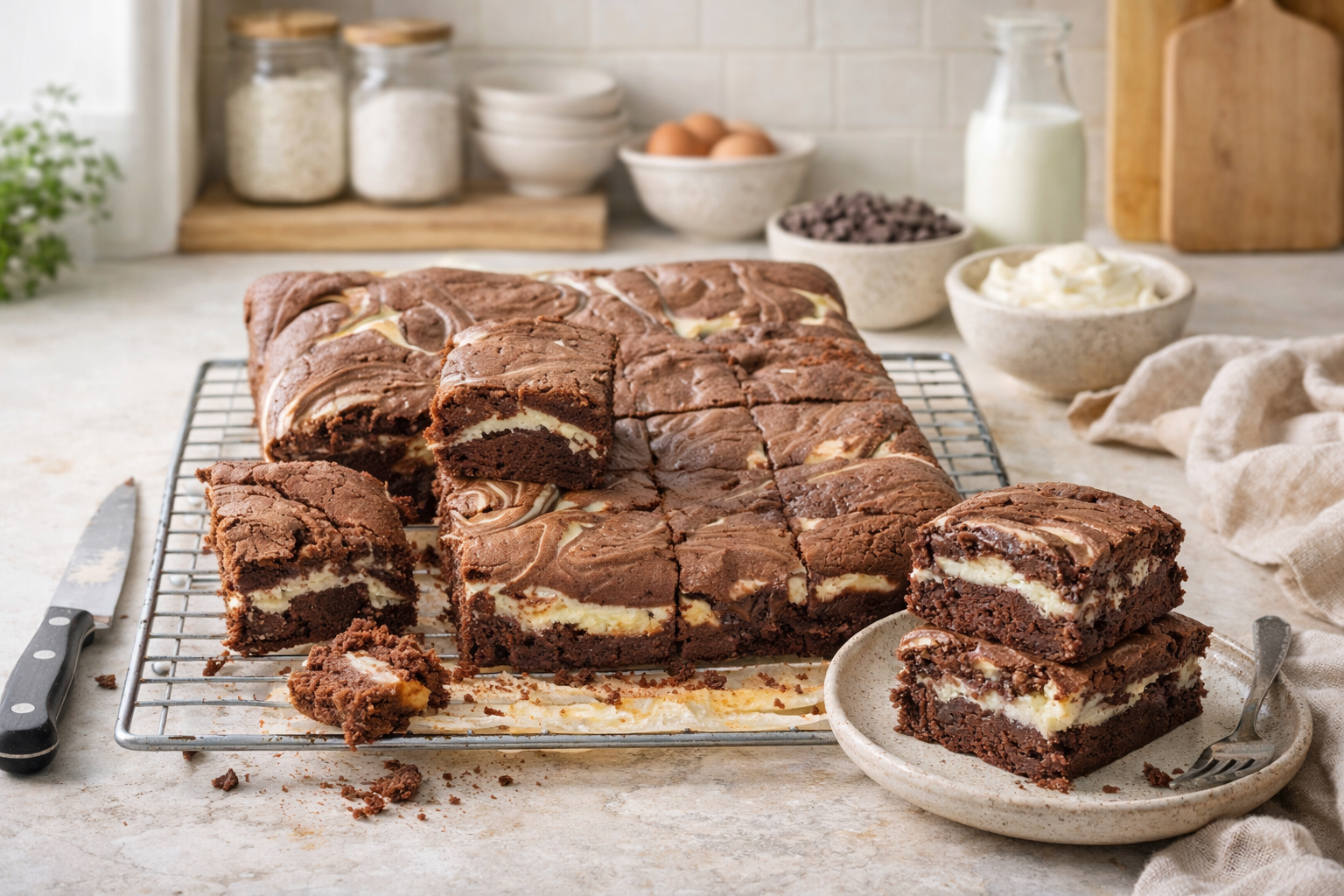
Sourdough Dessert Cheesecake Brownies
Perfect for special occasions, celebrations, or satisfying chocolate cravings, these brownies showcase sourdough’s versatility beyond bread baking. The combination of chocolate, sourdough tang, and creamy cheesecake creates complex flavors that make these brownies truly memorable.
20
minutes1
hour36
minutes1
hour56
minutesIngredients
- Sourdough Brownie Base:
1/4 cup Sourdough discard
1/2 cup Butter, melted
1 cup Sugar
2 Eggs
1/2 tsp Salt
1/2 tsp Vanilla extract
1/2 cup All-purpose flour
- Middle Layer:
1/4 cup Chocolate Chips (Milk or White)
Cheesecake Swirl:
8 oz Cream Cheese, Room Temperature
1/4 cup Sugar
1 Egg
1/2 tsp Vanilla extract
1/2 tsp Salt
Directions
- Preheat your oven to 350°F (175°C). Prepare an 8×8 pan or glass pie tin by greasing it or lining with parchment paper.
- In a bowl, combine sourdough discard, sugar, eggs, melted butter, cocoa powder, flour, and vanilla extract. Mix until well combined. Set aside half of the mixture.
- Spread chocolate chips evenly over the bottom layer of brownie batter in the prepared pan.
- In a separate bowl or stand mixer, whisk together cream cheese, sugar, egg, vanilla extract, and salt until smooth.
- Dollop spoonful of the cream cheese mixture on top of the chocolate chips layer, alternating with dollops of the reserved brownie batter.
- Use a toothpick or knife to delicately swirl the layers together, creating a marbled pattern.
- Bake in the preheated oven for 37-40 minutes, or until the edges are set and a toothpick inserted into the center comes out clean.
- Allow the brownies to cool completely before cutting into squares. For best results, chill in the refrigerator before serving.